
- Use realistic and consistent assumptions and data sources
- Involve subject matter experts in the analysis process
- Review and update the CBA regularly to reflect changes in the project or environment.
- Common pitfalls
- Overlooking or underestimating hidden or long-term costs or benefits
- Overestimating the benefits or underestimating the costs
Not considering alternative options or the status quo
Not accounting for risks and uncertainties.
- Resource levellingResource levelling is a technique for managing project resources to achieve optimal resource utilisation. It involves adjusting the allocation of resources to tasks so that resource demand does not exceed the available supply. By smoothing out the use of resources, resource levelling can reduce overallocation and idle time.
- Key takeawaysResource levelling can lead to better resource utilisation and increased productivity.
- It can help avoid burnout and reduce project risks.It can help project managers create more realistic
schedules
.
- Quick tipsIdentify resource constraints early in the project planning process.
- Use project management software
- that includes resource levelling capabilities.Prioritise critical path activities when levelling resources.
- Communicate any resource changes to team members and stakeholders.Common pitfalls
- Strategic alignment and realised benefitsOver-optimising resources at the expense of meeting project deadlines.Business analysis aligns strategic goals with delivery by bridging stakeholders and technical teams. to sustain changeProject scope, time, cost, and qualityForgetting to account for the skill sets of individual resources when reallocating them.Clear requirements and validation reduce project risk and improve solution fit, cost and feasibility.
Example: In a software roll-out, employees learned why the upgrade was essential (Awareness, Desire), received hands-on workshops (Knowledge, Ability), and were rewarded for adoption (Reinforcement).MethodologiesFailing to update the resource levelling as the project progresses.Techniques like SWOT, gap analysis, process modelling and data analysis expose opportunities and bottlenecks.
Change management challengesMSPOverlooking the impact of resource levelling on project costs.Embedding analysis in governance strengthens planning, transparency and measurable outcomes.
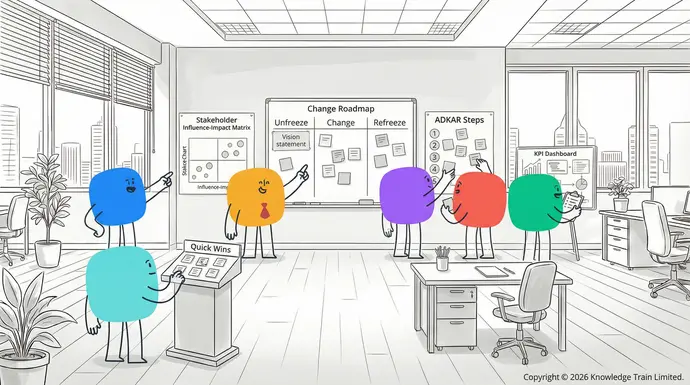
Organisations frequently encounter obstacles when managing change. Common challenges include:, ConclusionRigour can be maintained alongside speed by using consistent standards, templates and lightweight frameworks.
- Resistance to changePMIProject managers : Employees may fear job loss, uncertainty, or increased responsibilities.PRINCE2 can add the project management techniques described in this article to their project management toolkits. The larger the toolkit, the better equipped they are to handle the challenges their projects throw at them.
, PMI PMBOKProject managers who effectively implement these techniques can improve their SolutionProgramme management frameworksproject plansContents: Foster open communication, involve employees in decision-making, and provide adequate support.Proven , resource scheduling, time and cost management, risks and stakeholders’ management and project performance. - Poor communicationframeworksInformed decisions and right use of these techniques can help project managers deliver better project outcomes. : Inadequate information can cause confusion and low morale.Enhance your skills with our expert-led courses and Contents
methodologies Solution bring structure and efficiency to programme management. Some of the most utilised include:Business analysis: definition and overview: Communicate regularly, using clear and consistent messaging across channels. MSP ( - Lack of leadership commitmentSelf-pacedManaging Successful ProgrammesThe objectives and value of business analysis: Without executive support, initiatives may falter.APM PFQ blended online):
Widely used in the UK, MSP provides principles and processes for managing complex Key responsibilities of a business analystSolution£749 +vatprogrammes : Gain leadership buy-in and ensure visible commitment throughout the transition. . It emphasises leadership, benefits realisation, governance, and Main business analysis processes - Cultural misalignment risk management : Change may conflict with existing organisational culture. .Common business analysis techniques
Self-pacedPMI ( SolutionPRINCE2 Agile Practitioner (with Foundation) self-paced onlineProject Management InstituteBusiness analysis tools and methodologies: Integrate change efforts with culture change and organisational development strategies. ) Standard for Program Management: - Insufficient resources or planning£1,399 +vat Globally recognised, the PMI standard focuses on aligning programme outcomes with organisational strategy, stakeholder engagement, and progressive elaboration of programme benefits.Essential skills and competencies for business analysts: Poor planning can delay or derail change projects. PRINCE2
:Certification and career progressionSolution While primarily for : Invest in Self-pacedprojectsRelated conceptsproject managementAgilePM Practitioner (with Foundation) self-paced online, PRINCE2 techniques are often tailored within a programme context to ensure consistency and effective control across projects. , transition planning, and risk assessment. Agile Programme Management:FAQs
Change management and business functions£1,299 +vat Business analysis: definition and overview
- FAQsAgile methodsWhat are the most essential project management techniques? enable adaptive planning, incremental delivery, and continuous improvement. Agile frameworks are often applied to outcomes-focused, rapidly changing environments.
- Some of the most important and effective ones include Gantt charts, Certification is available for each methodology, supporting best practices and professional development for programme managers.Work Breakdown StructureProgramme life cycle, CPM, Kanban boards and Risk Analysis.The How do Gantt charts help in project management?programme life cycle
- Gantt charts are versatile project management tools. A Gantt chart could help in many ways: from getting you started on your tasks and giving you deadlines to plotting out your timeline and tracking your progress, all the way to giving you an eagle eye on task dependencies and seeing bottlenecks. describes the distinct phases of effective programme management. These typically include:What is the Work Breakdown Structure (WBS), and why is it important?Programme identification:
- A Work Breakdown Structure or a WBS is a project management technique that decomposes a project into smaller pieces for easier management. A Assess organisational needs, define objectives, and evaluate strategic alignment.WBSProgramme definition:
- is critical for task organisation, time and cost estimation and more it allows you to build a clear scope for your project and help you to not get overwhelmed and not forget anything important. Develop the How can Kanban boards improve project workflow?business case
Kanban boards are visual tools that can help you and your team to visualise and manage tasks and workflows. Kanban boards will help your team collaborate, limit work-in-progress, and manage processes more efficiently, they also help you to see the bottlenecks easily. Kanban boards are a more popular tool for recurring processes and , programme charter, and key performance indicators. Identify stakeholders and establish governance structures.
- Agile project managementProgramme planning:. Outline benefits realisation plans,
- What is the Critical Path Method (CPM), and how does it help in scheduling?risk managementThe Critical Path Method or CPM is a project scheduling technique that analyses your project in terms of tasks’ sequence and duration. CPM will help you to identify the longest chain of dependent tasks in your project, the so-called critical path, which would then help you in your decision-making: it will allow you to see what your project’s minimal duration is and what tasks can be delayed or rescheduled without affecting the project in general. The CPM is very useful in resource planning and allocation, as well as ensuring you have a solid deadline. strategies, and communication protocols. Define deliverables and allocate resources.
- What is Scrum, and how does it fit into Agile project management?Delivery and execution:Scrum Manage related projects, monitor progress, manage risks and changes, and ensure ongoing stakeholder engagement.
- is an Agile project management framework that organises the work into short iterative cycles (sprints). Scrum relies on defined roles (Product Owner, Development Team and Closure and benefits realisation:Scrum Master Finalise all activities, conduct post-programme reviews, ensure benefits are realised and sustained, and formally close the programme.
- ), events (sprint planning, daily stand-ups) and tools (sprint backlog). Scrum helps teams to plan and manage their work, adapt to changing requirements, and deliver value quickly.Roles and responsibilitiesHow does Agile project management differ from traditional methods?
- Agile is an iterative and incremental approach to product development that values flexibility, collaboration, and customer satisfaction over following a rigid plan. Agile teams embrace change even late in the project, and they focus on delivering working solutions regularly rather than following a fixed set of requirements. Agile is all about continuous improvement and responding to feedback, and there are different ways (frameworks) to do it.
| Subscribe to our exclusive offers and promotions | Subscribe now | |
|---|---|---|
| {"@context":"https://schema.org","@type":"ImageObject","contentUrl":"https://www.knowledgetrain.co.uk/training-courses/gantt-chart-example.webp ","description":"Example of a Gantt chart","license":"https://www.knowledgetrain.co.uk/license","acquireLicensePage":"https://www.knowledgetrain.co.uk/license","creditText":"Knowledge Train","uploadDate":"2024-10-20T09:00:29.000Z","copyrightNotice":"© 2024 Knowledge Train Limited. All rights reserved.","creator":{"@type":"Organization","name":"Knowledge Train","url":"https://www.knowledgetrain.co.uk"}} | ||
| {"@context":"https://schema.org","@type":"ImageObject","contentUrl":"https://www.knowledgetrain.co.uk/training-courses/project-network-diagram-example.webp","description":"Example of a project network diagram","license":"https://www.knowledgetrain.co.uk/license","acquireLicensePage":"https://www.knowledgetrain.co.uk/license","creditText":"Knowledge Train","uploadDate":"2024-10-20T09:00:29.000Z","copyrightNotice":"© 2024 Knowledge Train Limited. All rights reserved.","creator":{"@type":"Organization","name":"Knowledge Train","url":"https://www.knowledgetrain.co.uk"}} | ||
| {"@context":"https://schema.org","@type":"ImageObject","contentUrl":"https://www.knowledgetrain.co.uk/training-courses/critical-path-method-example.webp","description":"Example of a Critical Path Method (CPM)","license":"https://www.knowledgetrain.co.uk/license","acquireLicensePage":"https://www.knowledgetrain.co.uk/license","creditText":"Knowledge Train","uploadDate":"2024-10-20T09:00:29.000Z","copyrightNotice":"© 2024 Knowledge Train Limited. All rights reserved.","creator":{"@type":"Organization","name":"Knowledge Train","url":"https://www.knowledgetrain.co.uk"}} | {"@context":"https://schema.org","@type":"ImageObject","contentUrl":"https://www.knowledgetrain.co.uk/training-courses/kanban-board-example-1.webp","description":"Example of a kanban board.","license":"https://www.knowledgetrain.co.uk/license","acquireLicensePage":"https://www.knowledgetrain.co.uk/license","creditText":"Knowledge Train","uploadDate":"2024-10-20T09:00:29.000Z","copyrightNotice":"© 2024 Knowledge Train Limited. All rights reserved.","creator":{"@type":"Organization","name":"Knowledge Train","url":"https://www.knowledgetrain.co.uk"}} |