SwedenFrance

.employee engagementIT Learning Library (ITLL)™ .Importance of change managementBusiness solutionsChange management challenges
Here are some reasons why change management is important.Organisational change is inevitable as businesses adapt to evolving markets, technologies, and regulations. By using structured frameworks and engaging leadership, organisations can minimise risks, foster innovation, and achieve sustainable success._blank
External factorsEffective Free toolsChange management and business functions
External factors play a big role in change managementAbout organisational change ensures smooth transitions, maintains productivity during transformation, increases return on investment, and supports _blankChange management best practices. Globalisation and the rapid developments in new digital solutions are forcing organisations to respond. Ignoring such external factors is likely to jeopardise your organisation’s success.employee engagementBlog
Nokia was once the biggest mobile phone company in the world, but it almost went out of business. That’s because it didn’t keep up with changes in mobile technologies. As a result, Nokia’s products didn’t appeal to consumers, and its market share rapidly declined.. Related concepts in change management
Making ideas succeed Here are some reasons why change management is important.EXPLORE SUBJECTS
Many organisations use change management methodologies to enable ideas to succeed. Working alongside External factorsSelect your preferred subject.FAQsproject managersExternal factors play a big role in What is change management? who deliver new capabilities into an organisation, organisational changePROJECT MANAGEMENT QUALIFICATIONS & WORKSHOPSChange managementchange managers. Globalisation and the rapid developments in new digital solutions are forcing organisations to respond. Ignoring such external factors is likely to jeopardise your organisation’s success.Select your preferred qualification or workshop. refers to the systematic process of planning, implementing, and overseeing organisational changes to achieve desired business outcomes. and change agents help ensure staff are able to fully utilise the new capabilities.Nokia was once the biggest mobile phone company in the world, but it almost went out of business. That’s because it didn’t keep up with changes in mobile technologies. As a result, Nokia’s products didn’t appeal to consumers, and its market share rapidly declined. Change management encompasses strategies, techniques, and tools that help organisations prepare for, execute, and sustain change, whether related to processes, technologies, culture, or organisational structure.
Enabling cross-functional changesMaking ideas succeed PRINCE2 COURSESEffective change management seeks to minimise disruption, address resistance to change, and strengthen engagement among all
Almost every functional unit within a modern organisation relies on change management to enable it to:Many organisations use change management methodologies to enable ideas to succeed. Working alongside Select your preferred training course below:stakeholders
- Align the change plan to the business’s overall strategy.project managers .
- Improve internal and external services and requests. who deliver new capabilities into an organisation, APM COURSESImportance of change management
- Track and resolve issues.Select your preferred training course below:change managersOrganisational change is inevitable as businesses adapt to evolving markets, technologies, and regulations. By using structured frameworks and engaging leadership, organisations can minimise risks, foster innovation, and achieve sustainable success.
Engaging people with the change process and change agents help ensure staff are able to fully utilise the new capabilities.Effective
A key part of AGILE PROJECT MANAGEMENT COURSESEnabling cross-functional changeschange managementmanaging changeSelect your preferred training course below:Almost every functional unit within a modern organisation relies on change management to enable it to: ensures smooth transitions, maintains productivity during transformation, increases return on investment, and supports in an organisation is to engage those people affected by a change initiative. Staff will be involved in the change process eventually, therefore communicating and engaging with staff about a change plan early helps lay the groundwork for its later success. Align the change plan to the business’s overall strategy.employee engagement
Preparing for organisational transitionPRINCE2 AGILE COURSESImprove internal and external services and requests..
Change managersSelect your preferred training course below:Track and resolve issues.Here are some reasons why change management is important. are often appointed to make organisational change go smoothly. They use Engaging people with the change processExternal factorschange management frameworksBETTER BUSINESS CASES COURSESA key part of External factors play a big role in to make changes such as:Select your preferred training course below:managing changeorganisational change
- Restructuring job roles. in an organisation is to engage those people affected by a change initiative. Staff will be involved in the change process eventually, therefore communicating and engaging with staff about a change plan early helps lay the groundwork for its later success.. Globalisation and the rapid developments in new digital solutions are forcing organisations to respond. Ignoring such external factors is likely to jeopardise your organisation’s success.
- Restructuring business processes.P3O COURSESPreparing for organisational transitionNokia was once the biggest mobile phone company in the world, but it almost went out of business. That’s because it didn’t keep up with changes in mobile technologies. As a result, Nokia’s products didn’t appeal to consumers, and its market share rapidly declined.
- Implementing new technologies.Select your preferred training course below:Change managersMaking ideas succeed
Decreasing resistance to a change initiative are often appointed to make organisational change go smoothly. They use Many organisations use change management methodologies to enable ideas to succeed. Working alongside
Resistance is inevitable in any change initiative because people often find it unsettling being asked to work in new and different ways. So, change managers can often expect a denial reaction from staff. It takes time to overcome those reactions. When WORKSHOPSchange management frameworksproject managerschange managersSelect your preferred workshop below: to make changes such as: who deliver new capabilities into an organisation, are transparent from day one, the less resistance they are likely to face. Restructuring job roles.change managers
Improving performance and productivityAGILE QUALIFICATIONSRestructuring business processes. and change agents help ensure staff are able to fully utilise the new capabilities.
When an organisation adapts improved ways of working, it tends to increase productivity. At the same time, it encourages innovation. As a result, it guarantees improved performance and places an organisation in a healthier environment better able to succeed.Select your preferred qualification.Implementing new technologies.Enabling cross-functional changes
Reducing costs Decreasing resistance to a change initiativeAlmost every functional unit within a modern organisation relies on change management to enable it to:
When positive change is applied correctly, it helps to reduce waste and therefore reduce costs. Effective change management helps an organisation make smart choices. It increases productivity, decreases risks, and helps to improve the profitability of an organisation.AGILE PROJECT MANAGEMENT COURSESResistance is inevitable in any change initiative because people often find it unsettling being asked to work in new and different ways. So, change managers can often expect a denial reaction from staff. It takes time to overcome those reactions. When Align the change plan to the business’s overall strategy.
Change management principlesSelect your preferred training course below:change managersImprove internal and external services and requests.
- Clear communication are transparent from day one, the less resistance they are likely to face.Track and resolve issues.: Ensure transparency and regular updates throughout the process.PRINCE2 AGILE COURSESImproving performance and productivityEngaging people with the change process
- Leadership involvementSelect your preferred training course below:When an organisation adapts improved ways of working, it tends to increase productivity. At the same time, it encourages innovation. As a result, it guarantees improved performance and places an organisation in a healthier environment better able to succeed.A key part of : Leaders must champion change and encourage desired behaviours. Reducing costsmanaging change
- Stakeholder engagementSCRUM COURSESWhen positive change is applied correctly, it helps to reduce waste and therefore reduce costs. Effective change management helps an organisation make smart choices. It increases productivity, decreases risks, and helps to improve the profitability of an organisation. in an organisation is to engage those people affected by a change initiative. Staff will be involved in the change process eventually, therefore communicating and engaging with staff about a change plan early helps lay the groundwork for its later success.: Involve and listen to those affected by the change.Select your preferred training course below:Change management principlesPreparing for organisational transition
- Process improvement Clear communicationChange managers: Focus on refining and optimising business processes.AGILE BUSINESS ANALYSIS COURSES: Ensure transparency and regular updates throughout the process. are often appointed to make organisational change go smoothly. They use
- Proactive Select your preferred training course below:Leadership involvementchange management frameworksrisk management : Leaders must champion change and encourage desired behaviours. to make changes such as:: Identify, assess, and mitigate potential challenges.BUSINESS ANALYSIS QUALIFICATIONSStakeholder engagementRestructuring job roles.
- Continuous feedback and adaptationSelect your preferred qualification.: Involve and listen to those affected by the change.Restructuring business processes.: Monitor outcomes and adjust strategies where necessary. Process improvementImplementing new technologies.
Change management processesBCS BUSINESS ANALYSIS COURSES: Focus on refining and optimising business processes.Decreasing resistance to a change initiative
- Identify the need for changeSelect your preferred training course below:Proactive Resistance is inevitable in any change initiative because people often find it unsettling being asked to work in new and different ways. So, change managers can often expect a denial reaction from staff. It takes time to overcome those reactions. When : Recognise drivers such as technological advancements, market shifts, or process inefficiencies. risk managementchange managers
- Define the vision and objectivesAGILE BUSINESS ANALYSIS COURSES: Identify, assess, and mitigate potential challenges. are transparent from day one, the less resistance they are likely to face.: Set clear goals for what the change will achieve.Select your preferred training course below:Continuous feedback and adaptationImproving performance and productivity
- Engage stakeholders : Monitor outcomes and adjust strategies where necessary.When an organisation adapts improved ways of working, it tends to increase productivity. At the same time, it encourages innovation. As a result, it guarantees improved performance and places an organisation in a healthier environment better able to succeed.: Involve key groups early to build support and address concerns.CHANGE MANAGEMENT QUALIFICATIONSChange management processesReducing costs
- Develop a change management planSelect your preferred qualification.Identify the need for changeWhen positive change is applied correctly, it helps to reduce waste and therefore reduce costs. Effective change management helps an organisation make smart choices. It increases productivity, decreases risks, and helps to improve the profitability of an organisation.: Outline actions, timelines, resources, and communication strategies. : Recognise drivers such as technological advancements, market shifts, or process inefficiencies.Change management principles
- Implement the changeAPMG CHANGE MANAGEMENT COURSESDefine the vision and objectivesClear communication: Launch the initiative, ensuring leadership guidance and active support from Select your preferred training course below:: Set clear goals for what the change will achieve.: Ensure transparency and regular updates throughout the process.change agents Engage stakeholdersLeadership involvement.PROGRAMME MANAGEMENT QUALIFICATIONS: Involve key groups early to build support and address concerns.: Leaders must champion change and encourage desired behaviours.
- Manage resistance to changeSelect your preferred qualification.Develop a change management planStakeholder engagement: Identify the sources of resistance and address them through communication and support. : Outline actions, timelines, resources, and communication strategies.: Involve and listen to those affected by the change.
- Monitor progress and reinforceMSP COURSESImplement the changeProcess improvement: Use metrics to track success and celebrate milestones.Select your preferred training course below:: Launch the initiative, ensuring leadership guidance and active support from : Focus on refining and optimising business processes.
- Sustain change change agentsProactive : Embed new ways of working into culture and practices for lasting results.PMI COURSES.risk management
Change management frameworksSelect your preferred training course below:Manage resistance to change: Identify, assess, and mitigate potential challenges.
Several : Identify the sources of resistance and address them through communication and support.Continuous feedback and adaptationchange management frameworksPMI COURSESMonitor progress and reinforce: Monitor outcomes and adjust strategies where necessary. guide organisations through transitions. The most prominent include:Select your preferred training course below:: Use metrics to track success and celebrate milestones.Change management processes
- Kotter’s 8-Step Process Sustain changeIdentify the need for change
- Lewin’s Change FrameworkPRINCE2 COURSES: Embed new ways of working into culture and practices for lasting results.: Recognise drivers such as technological advancements, market shifts, or process inefficiencies.
- ADKAR frameworkSelect your preferred training course below:Change management frameworksDefine the vision and objectives
Kotter’s 8-Step Process Several : Set clear goals for what the change will achieve.
- Establish a sense of urgencyAPM COURSESchange management frameworksEngage stakeholders
- Form a guiding coalitionSelect your preferred training course below: guide organisations through transitions. The most prominent include:: Involve key groups early to build support and address concerns.
- Create a vision for change Kotter’s 8-Step ProcessDevelop a change management plan
- Communicate the visionAGILE PROJECT MANAGEMENT COURSESLewin’s Change Framework: Outline actions, timelines, resources, and communication strategies.
- Empower broad-based actionSelect your preferred training course below:ADKAR frameworkImplement the change
- Generate short-term wins Kotter’s 8-Step Process: Launch the initiative, ensuring leadership guidance and active support from
- Consolidate gains and produce more changePRINCE2 AGILE COURSESEstablish a sense of urgencychange agents
Manage resistance to change
: Identify the sources of resistance and address them through communication and support.
- Monitor progress and reinforce: Use metrics to track success and celebrate milestones.Generate short-term wins
- Sustain changeConsolidate gains and produce more change: Embed new ways of working into culture and practices for lasting results.Anchor new approaches in the culture
- Change management frameworksExample: A retailer launching a new digital platform began with urgency around changing customer expectations, formed a cross-functional team, communicated a compelling vision, and celebrated early improvements to build momentum.Several Lewin’s Change Model
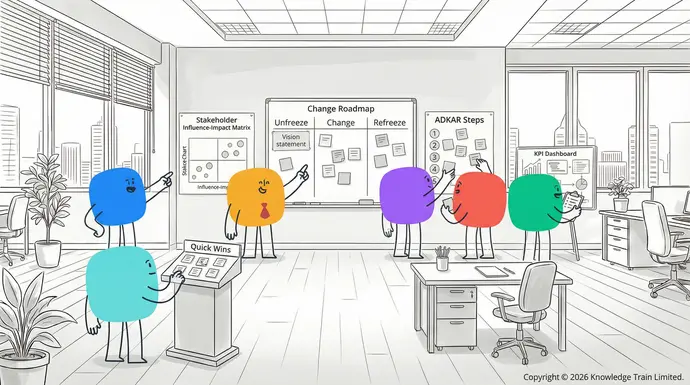
change management frameworksUnfreeze
guide organisations through transitions. The most prominent include:: Prepare the organisation to accept change by challenging the status quo.
- Kotter’s 8-Step ProcessChangeLewin’s Change Framework: Transition through adoption of new behaviours and processes.
- ADKAR frameworkRefreezeKotter’s 8-Step Process: Stabilise the organisation by embedding changes into everyday practice.
- Establish a sense of urgencyExample: A manufacturer seeking to improve quality first destabilised old habits, implemented new protocols, then reinforced behaviours through training and recognition.Form a guiding coalitionADKAR model
- Awareness of the need for change
- Desire to support the change
Knowledge
of how to change
Ability
- to implement changeReinforcement
to sustain changeExample: In a software roll-out, employees learned why the upgrade was essential (Awareness, Desire), received hands-on workshops (Knowledge, Ability), and were rewarded for adoption (Reinforcement).Change management challenges - Organisations frequently encounter obstacles when managing change. Common challenges include:Resistance to change
: Employees may fear job loss, uncertainty, or increased responsibilities. Solution - : Foster open communication, involve employees in decision-making, and provide adequate support.Poor communication
: Inadequate information can cause confusion and low morale. Solution - : Communicate regularly, using clear and consistent messaging across channels.Lack of leadership commitment
: Without executive support, initiatives may falter. Solution - : Gain leadership buy-in and ensure visible commitment throughout the transition.Cultural misalignment
: Change may conflict with existing organisational culture. Solution: Integrate change efforts with culture change and organisational development strategies.Insufficient resources or planning
: Poor planning can delay or derail change projects.
- Solution
- : Invest in project management, transition planning, and risk assessment.Change management and business functions
- Organisational development: Change management techniques are often a core part of organisational development, aiming for long-term improvement in effectiveness.
- Project management: Integrating change management with
- project management ensures project deliverables are adopted and sustained.
Business transformation
- : Large-scale initiatives such as mergers or digitalisation depend on robust change management for success.Stakeholder engagement
- : Identifying and actively involving key stakeholders is crucial in minimising resistance and ensuring buy-in.Leadership
- : Strong, credible leadership drives the success of change initiatives through clear direction and support.Change management best practices
- Establish clear communication strategies tailored to different stakeholder groups.
- Appoint dedicated change agents to guide and support the change process.
- Use data to inform decisions and measure progress through key performance indicators (KPIs).
| from employees at every stage. | Provide training and support | to build new skills and confidence. |
|---|---|---|
| Integrate change into company culture | to ensure lasting results. | Summary of key frameworks used in change management |
| Model | Core Steps | Main Focus |
| Kotter’s 8-Step | 8 outlined steps | Building urgency, vision, momentum |
FAQs Core StepsLeadership in change management
What is change management and why is it important?Knowledge Train is a PRINCE2 Agile Accredited Training Organization.Main Focus: The role of leaders in inspiring, directing, and supporting people through transitions.
Change management is the process of guiding organisations, individuals, or teams through transitions. It is important because it enables smoother implementation of change, reduces resistance, and ensures that strategic objectives are achieved efficiently. Kotter’s 8-StepRisk management
What are common change management frameworks?Knowledge Train is a Lean Six Sigma Accredited Training Organization.8 outlined steps: Identifying, analysing, and mitigating risks that arise during change initiatives.
The most common frameworks are Kotter’s 8-Step Process, Lewin’s Change, and the Building urgency, vision, momentumProcess improvementADKARBCS accredited training partner for Business Analysis.Lewin’s Change: Reviewing and enhancing business processes to align with new goals. framework. Each provides a structured approach to planning and implementing change. FAQsUnfreeze, Change, Refreeze
How do you overcome resistance to change?Knowledge Train is a Change Management Accredited Training Organization.What is change management and why is it important?Preparing, transitioning, embedding
Overcome resistance by communicating benefits clearly, involving stakeholders, offering support and training, addressing concerns promptly, and recognising employee contributions throughout the transition. Change management is the process of guiding organisations, individuals, or teams through transitions. It is important because it enables smoother implementation of change, reduces resistance, and ensures that strategic objectives are achieved efficiently.ADKAR
What role do leaders play in change management?Knowledge Train is an MSP Accredited Training Organization.What are common change management frameworks?Awareness, Desire, Knowledge, Ability, Reinforcement
Leaders set the direction, communicate the vision, build trust, allocate resources, and provide motivation and support to drive successful change. The most common frameworks are Kotter’s 8-Step Process, Lewin’s Change, and the Individual adoption stages
How can employees be engaged during change initiatives?AXELOS Peoplecert accredited training organisation for ITIL (IT Infrastructure Library).ADKARRelated concepts in change management
Engage employees by involving them early, asking for input, addressing worries, providing training, celebrating successes, and continuously seeking feedback to make improvements. framework. Each provides a structured approach to planning and implementing change.Organisational development