Change management: models, steps, and best practicesSee all dates

Key takeawaysImpact
Effective change management blends clear planning with sustained support for adoption.Prevent budget problems by performing a detailed cost analysis and ensuring financial reporting is transparent throughout the project.
- Use structured frameworks such as Kotter, Lewin, or ADKAR to sequence activities and maintain momentum.Schedule delays
- Visible leadership sponsorship and consistent communication reduce uncertainty and resistance.Common causes
- Engage stakeholders early, using influence and impact mapping to target effort where it matters most.Schedule delays
- Integrate change work with project delivery so training, readiness, risks, and benefits stay aligned. can occur due to a variety of reasons:
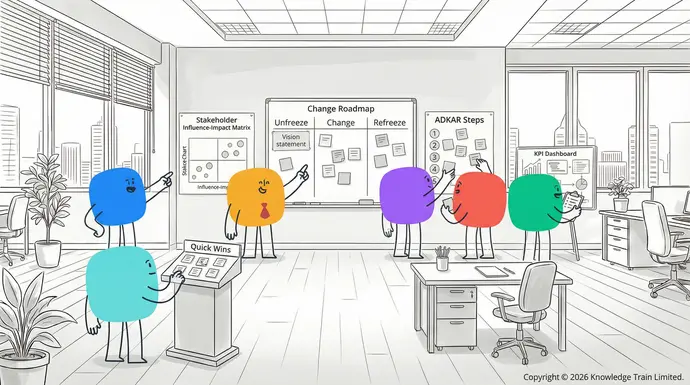
- Measure adoption with KPIs and feedback, then reinforce new behaviours through governance, coaching, and policy.Unrealistic time estimates
Operational changes. can include:
Importance of change managementOrganisational restructuring
Organisational change is inevitable as businesses adapt to evolving markets, technologies, and regulations. By using structured frameworks and engaging leadership, organisations can minimise risks, foster innovation, and achieve sustainable success.Process modifications
Effective Technology upgradeschange managementRegulatory changes. ensures smooth transitions, maintains productivity during transformation, increases return on investment, and supports Impact on project executionemployee engagementOperational changes can affect .projects
Here are some reasons why change management is important. by disrupting established workflows, requiring additional training or resources, altering project priorities and necessitating scope or timeline adjustments.
External factorsStay informed about potential organisational changes and maintain flexibility in
External factors play a big role in project planningorganisational change to accommodate operational shifts.. Globalisation and the rapid developments in new digital solutions are forcing organisations to respond. Ignoring such external factors is likely to jeopardise your organisation’s success.By knowing about common project management risks, you can make specific plans to help prevent or overcome them. In addition, proactive risk management involves:
Nokia was once the biggest mobile phone company in the world, but it almost went out of business. That’s because it didn’t keep up with changes in mobile technologies. As a result, Nokia’s products didn’t appeal to consumers, and its market share rapidly declined.Regular risk assessments
Making ideas succeed Clear communication with stakeholders
Many organisations use change management methodologies to enable ideas to succeed. Working alongside Robust change management processesproject managersContinuous monitoring and adaptation. who deliver new capabilities into an organisation, Keep in mind that effective risk management is an ongoing process that needs careful monitoring and flexibility throughout the project. If you plan and work for these common risks, you will be able to increase the probability of success in your project.change managersRisk management process and change agents help ensure staff are able to fully utilise the new capabilities.Risk identification
Enabling cross-functional changesThe first step in risk management is to identify potential risks that could impact your project. Some common techniques include:
Almost every functional unit within a modern organisation relies on change management to enable it to:Brainstorming with team members
- Align the change plan to the business’s overall strategy.Reviewing historical information from similar
- Improve internal and external services and requests.projects
- Track and resolve issues.Conducting stakeholder interviews
Engaging people with the change processAnalysing project documentation.
A key part of Create a managing changerisk register in an organisation is to engage those people affected by a change initiative. Staff will be involved in the change process eventually, therefore communicating and engaging with staff about a change plan early helps lay the groundwork for its later success. to document all identified risks.
Preparing for organisational transitionRisk assessment and prioritisation
Change managersAfter identifying risks, assess their potential impact and likelihood of occurrence. Tools you can use include: are often appointed to make organisational change go smoothly. They use Risk matrixchange management frameworks: Plot risks on a chart based on their probability and impact to make changes such as:Quantitative analysis
- Restructuring job roles.: Assign numerical values to risks
- Restructuring business processes.Qualitative analysis
- Implementing new technologies.: Categorise risks based on severity.
Decreasing resistance to a change initiativePrioritise risks based on their potential impact.
Resistance is inevitable in any change initiative because people often find it unsettling being asked to work in new and different ways. So, change managers can often expect a denial reaction from staff. It takes time to overcome those reactions. When Risk response planningchange managersFor each prioritised risk, develop a response strategy. Common responses include: are transparent from day one, the less resistance they are likely to face.Avoidance
Improving performance and productivity: Eliminate the threat by changing
When an organisation adapts improved ways of working, it tends to increase productivity. At the same time, it encourages innovation. As a result, it guarantees improved performance and places an organisation in a healthier environment better able to succeed.project plans
Reducing costsMitigation
When positive change is applied correctly, it helps to reduce waste and therefore reduce costs. Effective change management helps an organisation make smart choices. It increases productivity, decreases risks, and helps to improve the profitability of an organisation.: Reduce the probability or impact of the risk
Change management principlesTransfer
- Clear communication: Shift the risk to a third party (e.g. insurance): Ensure transparency and regular updates throughout the process.Acceptance
- Leadership involvement: Acknowledge the risk and prepare contingency plans.: Leaders must champion change and encourage desired behaviours.Document your response strategies in a risk management plan.
- Stakeholder engagementRisk monitoring and control: Involve and listen to those affected by the change.Continuously monitor risks throughout the project lifecycle. This includes:
- Process improvementRegular risk reviews and updates: Focus on refining and optimising business processes.Tracking risk triggers and early warning signs
- Proactive Implementing planned responses when necessaryrisk managementEvaluating the effectiveness of risk responses.: Identify, assess, and mitigate potential challenges.Adjust your risk management approach as needed based on new information and changing project conditions.
- Continuous feedback and adaptationBy following this structured process, you can effectively manage risks and increase your project’s chances of success.: Monitor outcomes and adjust strategies where necessary.Enhance your skills with our expert-led courses
Change management processes
- Identify the need for change : Recognise drivers such as technological advancements, market shifts, or process inefficiencies.
- Define the vision and objectivesInstructor-led: Set clear goals for what the change will achieve.Introduction to Project Management course
- Engage stakeholders : Involve key groups early to build support and address concerns.£499 +vat
- Develop a change management plan : Outline actions, timelines, resources, and communication strategies.See all dates
- Implement the change : Launch the initiative, ensuring leadership guidance and active support from change agents .Instructor-led
- Manage resistance to changeProject Management Essentials: Identify the sources of resistance and address them through communication and support.
- Monitor progress and reinforce£899 +vat: Use metrics to track success and celebrate milestones.
- Sustain changeSee all dates: Embed new ways of working into culture and practices for lasting results.Tools and techniques for project risk management
Change management frameworksRisk register
Several A change management frameworksrisk register guide organisations through transitions. The most prominent include: is a document that lists all identified risks along with their potential impact and planned mitigation. Components to include are:
- Kotter’s 8-Step ProcessRisk description
- Lewin’s Change FrameworkProbability and impact assessment
- ADKAR frameworkRisk owner
Build buffer time into Solution: Communicate regularly, using clear and consistent messaging across channels.- Lack of leadership commitmentproject schedules: Without executive support, initiatives may falter.Regularly review and adjust timelines based on progress updates.
Optimising resource allocationSolutionConduct thorough resource planning at the outset of the project: Gain leadership buy-in and ensure visible commitment throughout the transition.Utilise - Cultural misalignmentresource levelling: Change may conflict with existing organisational culture. techniques to balance workloads
Maintain a skills inventory to quickly identify and address skill gaps.SolutionImproving communication: Integrate change efforts with culture change and organisational development strategies.Establish clear communication channels and protocols - Insufficient resources or planningSchedule regular team meetings and stakeholder updates: Poor planning can delay or derail change projects.Utilise collaboration tools to facilitate information sharing.
Ensuring clarity in project requirementsSolutionConduct thorough requirements gathering sessions with stakeholders: Invest in Create detailed, unambiguous project specificationsproject managementImplement formal requirements review and approval process., transition planning, and risk assessment.Adapting to changes
Change management and business functionsStay informed of potential changes within the organisation
- Organisational developmentBuild flexibility into : Change management techniques are often a core part of organisational development, aiming for long-term improvement in effectiveness.project plans
- Project management to accommodate operational shifts: Integrating change management with Develop contingency plans for significant operational disruptions.project managementBy following these tips, you can avoid most of the common pitfalls that can cause problems in your projects. Keep in mind that risk management is a continuous process. It is important to revisit the steps in this process as you continue with your project. ensures project deliverables are adopted and sustained.Best practices for effective risk management
- Business transformationProactive approach to risk identification: Large-scale initiatives such as mergers or digitalisation depend on robust change management for success.Try to spot potential risks at the start of a
- Stakeholder engagementproject: Identifying and actively involving key stakeholders is crucial in minimising resistance and ensuring buy-in.Ask team members to raise red flags as soon as possible
- LeadershipLook at past data and apply any relevant lessons learnt.: Strong, credible leadership drives the success of change initiatives through clear direction and support.Regular risk assessment
Change management best practicesHold
- Establish clear communication strategiesregular check-ins to review tailored to different stakeholder groups. identified risks and their status
- Appoint dedicated change agentsRe-evaluate risks as the project progresses and circumstances change to guide and support the change process.Revise risk mitigation plans as necessary.
- Use data to inform decisionsStakeholder involvement in risk management and measure progress through key performance indicators (KPIs).Include stakeholders in identifying and assessing risks
- Encourage feedbackKeep stakeholders informed of risk management plans and progress from employees at every stage.Seek stakeholder input on risk mitigation strategies.
- Provide training and supportContinuous learning and improvement to build new skills and confidence.Share information with other project teams to improve organisational risk management
- Integrate change into company cultureInvest in ongoing training and development of risk management skills. to ensure lasting results.Follow these tips to help you establish a positive risk management culture and improve project success.
| Model | Core Steps | Main Focus |
|---|---|---|
| Kotter’s 8-StepInstructor-led | 8 outlined stepsIntroduction to Project Management course | Building urgency, vision, momentum |
| Lewin’s Change£499 +vat | Unfreeze, Change, Refreeze | Preparing, transitioning, embeddingSee all dates |
| ADKAR | Awareness, Desire, Knowledge, Ability, Reinforcement | Individual adoption stages |
FAQsRisk management
What is change management and why is it important? is an ongoing process that requires constant vigilance, regular reassessment and adaptation to changing project conditions.
Change management is the process of guiding organisations, individuals, or teams through transitions. It is important because it enables smoother implementation of change, reduces resistance, and ensures that strategic objectives are achieved efficiently.By prioritising risk management throughout the project lifecycle, you increase the likelihood of project success. Remember, proactive risk management is an investment in your project’s future, safeguarding its objectives and deliverables.
What are common change management frameworks?FAQs
The most common frameworks are Kotter’s 8-Step Process, Lewin’s Change, and the What is the difference between internal and external project risks?ADKARInternal risks are those that originate within the project or organisation, while external risks stem from outside factors beyond the direct control of the project team. framework. Each provides a structured approach to planning and implementing change.How often should risk assessments be conducted during a project?
How do you overcome resistance to change?Risk assessments should be conducted regularly throughout a project, often at predetermined intervals or key project milestones. Monthly risk assessments are typical for most projects.
Overcome resistance by communicating benefits clearly, involving stakeholders, offering support and training, addressing concerns promptly, and recognising employee contributions throughout the transition.What role do stakeholders play in project risk management?
What role do leaders play in change management?Stakeholders can provide valuable in
Leaders set the direction, communicate the vision, build trust, allocate resources, and provide motivation and support to drive successful change.put in identifying risks, assessing their potential impact, and helping to develop risk mitigation strategies.
How can employees be engaged during change initiatives?Can all project risks be eliminated?
Engage employees by involving them early, asking for input, addressing worries, providing training, celebrating successes, and continuously seeking feedback to make improvements.No, not all project risks can be eliminated. The focus should be on effectively managing and mitigating risks.