Acting as an interface between project teams, senior management, and other stakeholders.

Better risk management and realistic estimating strengthen ROI and limit scope creep.Emphasising process improvement and
Consistent methods, feedback loops, and lessons learned build morale, customer trust, and continuous improvement.change management
- .
- PMO certification & standards
- Professional recognition is available for PMO practitioners through PMO certification programmes. The Project Management Institute (PMI), a leading standards organisation, offers certifications such as the
- ContentsProject Management Professional
- (PMP) and Certified Associate in Project Management (CAPM). PMO-specific certifications such as the PMO-CP (PMO Certified Practitioner) are also available.
- Certifications
Project management also leads to improved ROI on
projectsCopied!
. It is achieved by better allocation of resources, more accurate cost estimates, and improved risk management strategies.Key takeaways
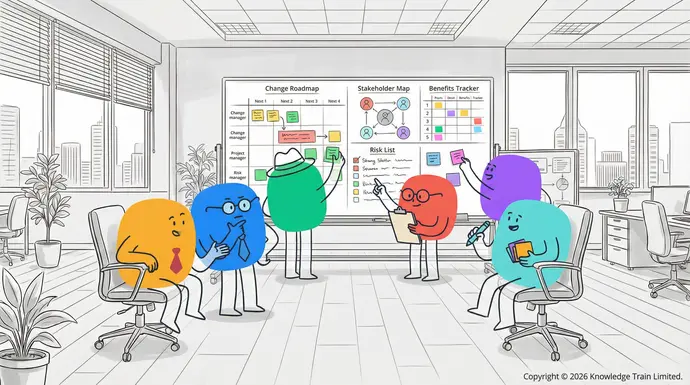
- Time management and productivity gainsChange management moves an organisation from the current state to a better future state through structured adoption.
- Faster project completion is one of the major benefits of effective project management. It is achieved by A dedicated change manager improves the odds of delivery by tailoring best practice to organisational culture.
- techniquesCore responsibilities include risk mitigation, resistance management, readiness checks, and embedding activities into the project plan.
- such as critical path analysis and Effective plans cover communications, sponsorship, coaching, training, and clear success metrics.
- Agile methodologiesProgress comes faster with real management experience and domain knowledge of the business and affected function.
- . They allow identifying critical tasks, eliminating bottlenecks, and streamlining workflows.Key competencies are communication, influencing, coaching, strategic judgement, project discipline, and self-management.
Project management also enables better use of team members’ time. It is achieved by establishing clear roles and responsibilities, better task allocation based on skills and availability, and eliminating idle time between project phases.
Quality improvements and consistency
Standardised processes lead to better results. project delivery
Project management frameworks and management.Contents
provide clear quality standards and expectations, consistent methodologies across projects, and improved communication and collaboration.Each type varies in authority and responsibility, depending on organisational needs and project complexity.
Another tangible benefit is reduced errors and rework. It is achieved by implementing robust quality control measures, encouraging continuous feedback and improvement, and utilising lessons learned from previous What does a PMO do?
projectsA Contents.PMO By focusing on these tangible impacts, organisations can measure the value of project management and justify its implementation across various departments and initiatives. Improved cost management, time efficiency, and quality significantly contribute to business performance and competitiveness. establishes and maintains project management standards across the organisation. It supports Introduction
Enhance your skills with our expert-led coursesProject Managers
, ensures project governance, and aligns initiatives with business goals. The PMO often oversees project portfolios to prioritise strategic investments and optimise resource use.Definition of change management
What does PMO stand for?
PMOWhy organisations use change managersSelf-paced stands for APM PFQ blended onlineProject Management OfficeWhat a change manager does
. It is an organisational function responsible for standardising governance processes, sharing methodologies,
£749 +vattoolsStarting a change manager career
, and Those already holding ISEB certifications do not need to re-sit any exams. ISEB qualifications are valid for life, and in some circles BCS certifications are still referred to as ISEB qualifications, the names are interchangeable.
techniquesSummaryISEB Business Analysis
- , and improving overall project success. and
- Self-pacedA PMO may vary in size—from a single individual to an enterprise-wide team—but its purpose remains the same: to improve project performance and ensure alignment with ReferencesBCS Business Analysis
- PRINCE2 Agile Practitioner (with Foundation) self-paced onlinebusiness strategyIntroduction
- .Definition of change management
- £1,399 +vatWhat is the difference between a PMO and a Project Manager?Change management
- The difference between a is the act of transitioning an organisation from an existing situation (or current state) to a situation providing more desirable outcomes (a future state). It requires teamwork, hard work, and best practise change management tools and processes to reach the future state.
- PMOApplying change in organisations requires optimism, determination and dedication. Therefore, a person must oversee the change strategy and be able to drive it to its proper destination. That person is the change manager.
and a Many change managers learn the key change management tools and techniques by attending one of these professional
Self-pacedProject Managerchange management courses
Implementing project managementChange Management Foundation self-paced online
Successful implementation of project management requires careful planning and consideration of a few factors. Choosing the right methodology£799 +vatThe choice of an appropriate project management methodology is crucial for project success. Traditional methodologies, such as Why organisations use change managers
WaterfallChange managers play a significant role in the success of change initiatives as they direct the desired outcomes down the right path. They do this using best practices and customising such practices to the organisation’s culture. Better performance from staff, improved ways of working and higher sales targets are some of the outcomes we can tangibly see., provide a structured, linear progression through project phases. These methodologies work best in projects with clear requirements and limited changes.Here are some findings after change management was implemented in companies lead by a change manager:On the other hand, Agile methodologies focus on flexibility and iterative development. They are more suitable for projects with evolving requirements or unknown outcomes.
Organisations should customise their chosen methodology to their specific needs. It involves analysis of project types, team dynamics, and organisational culture. A hybrid approach, combining elements of different methodologies, might be suitable for some organisations.
Agile method [1]
Waterfall method.