Comparing Lewin’s model with other change management theories
Kurt Lewin’s change model is often compared with frameworks such as Kotter’s 8-step process and ADKAR . Each model offers unique perspectives and methodologies for managing change within organisations.
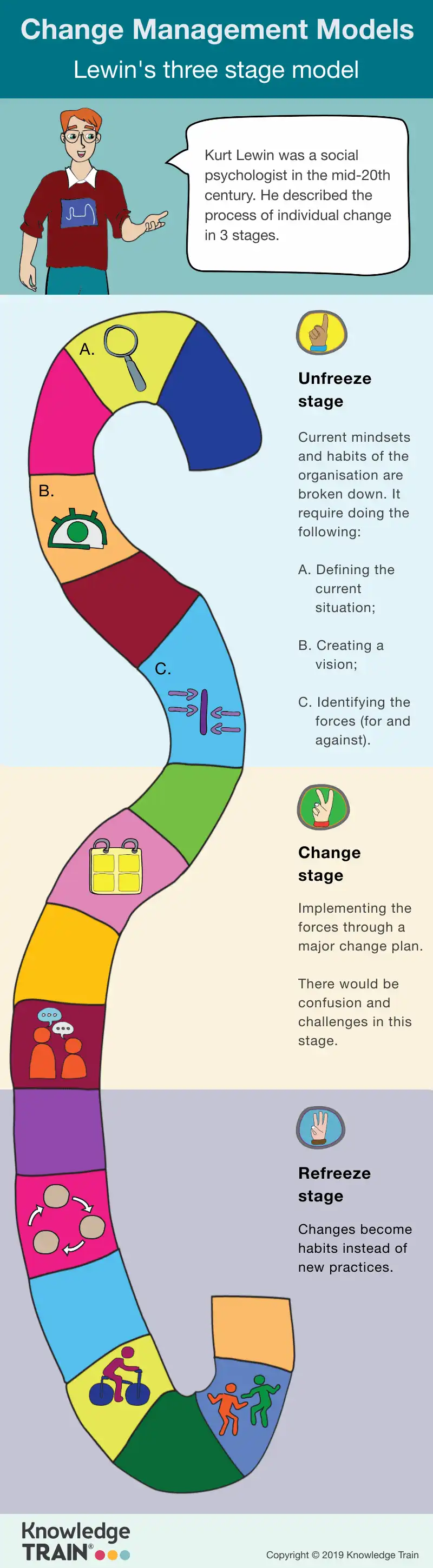
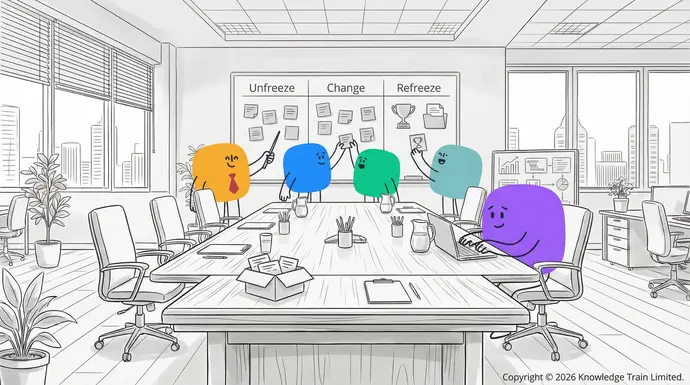
- Lewin’s model is straightforward, focusing on three stages: unfreezing, changing, and refreezing. Its strength lies in its simplicity and emphasis on the psychological aspects of change, which can reduce stress and increase acceptance.
- Kotter’s 8-step process provides a more detailed approach, outlining specific steps like establishing a sense of urgency and creating short-term wins. This model is particularly useful for large-scale transformations requiring clear guidance and extensive communication.
- ADKAR focuses on individual change and is goal-oriented, emphasising Awareness , Desire , Knowledge , Ability , and Reinforcement . It is beneficial for understanding and managing personal impacts during organisational changes.
Lewin’s model is preferred when a concise and psychologically grounded approach is needed. It is particularly effective in scenarios where resistance to change is prominent, and fostering a supportive environment is crucial. However, in complex or large-scale organisational transformations, Kotter’s detailed steps or ADKAR’s individual focus might offer additional advantages.
Ultimately, the choice of model depends on the organisational context and the specific challenges faced. Integrating elements from different frameworks can often provide a more comprehensive strategy, catering to both structural and human elements of change.
Influence tactics and work outcomes in change management
The success of change management efforts is significantly influenced by the tactics employed to guide and motivate individuals within an organisation. Effective influence tactics are essential for ensuring that changes are not only implemented but also sustained over time. These tactics include clear communication, employee involvement, and positive reinforcement, all of which contribute to a supportive environment for change.
Research on work outcomes in relation to change efforts highlights the importance of these tactics. The analysis reveals that successful change initiatives often involve:
- Effective communication : Keeping communication channels open and transparent helps align employees with the change objectives. It reduces uncertainty and stress, fostering an environment where employees feel informed and valued.
- Employee involvement : Actively involving employees in the change process enhances their commitment and ownership. It empowers them to contribute ideas and feedback, which can lead to more innovative solutions and smoother transitions.
- Positive reinforcement : Recognising and rewarding employees who adapt well to change encourages continued compliance and motivation. This reinforcement helps embed new behaviours and norms into the organisational culture.
Furthermore, the psychological benefits of these tactics, such as stress reduction and enhanced acceptance, cannot be overstated. By addressing the human aspect of change, organisations can mitigate resistance and build resilience among their workforce.
Ultimately, the strategic use of influence tactics in change management not only improves individual work outcomes but also contributes to the overall success of the organisation. By fostering an inclusive and supportive atmosphere, businesses can ensure that change is not just a temporary adjustment but a lasting transformation.
Conclusion
In this article, we explored Lewin’s change model , a foundational framework for implementing organisational change . The model’s three stages – unfreezing, changing, and refreezing – provide a structured approach that emphasises the psychological aspects of change, such as stress reduction and enhanced acceptance. We discussed its real-world applications across corporate settings, healthcare, and educational institutions, highlighting its adaptability and effectiveness. While Lewin’s model offers simplicity and clarity, it is essential to acknowledge its limitations, especially in dynamic environments requiring more iterative approaches. Comparing it with other frameworks like Kotter’s 8-Step Process and ADKAR reveals the need to tailor strategies to specific organisational contexts. Ultimately, understanding and implementing Lewin’s model can facilitate successful change management by addressing both human and structural elements, ensuring that transformations are sustainable and beneficial for organisations.
FAQs
What are the key stages of Lewin’s change model?
Lewin’s change model consists of three key stages: