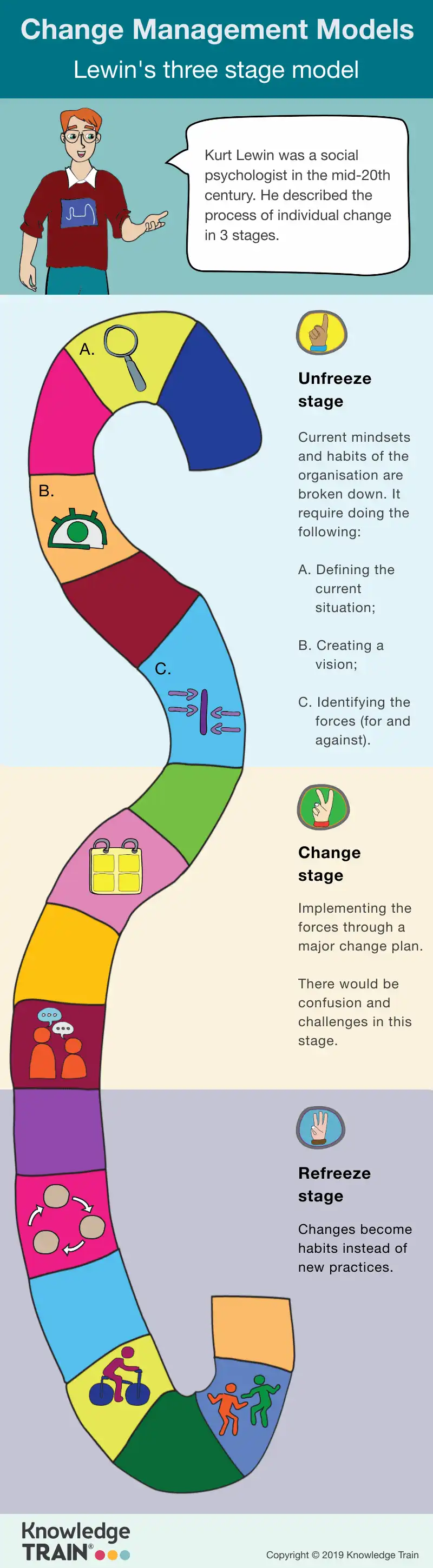
- Refreezing makes change stick through reinforcement, aligned policies, and cultural integration.
- Lewin’s simplicity is a strength, but fast moving environments may need more iterative or combined approaches such as Kotter or ADKAR.Copied!
IntroductionWhich Agile project management qualification is best for me?
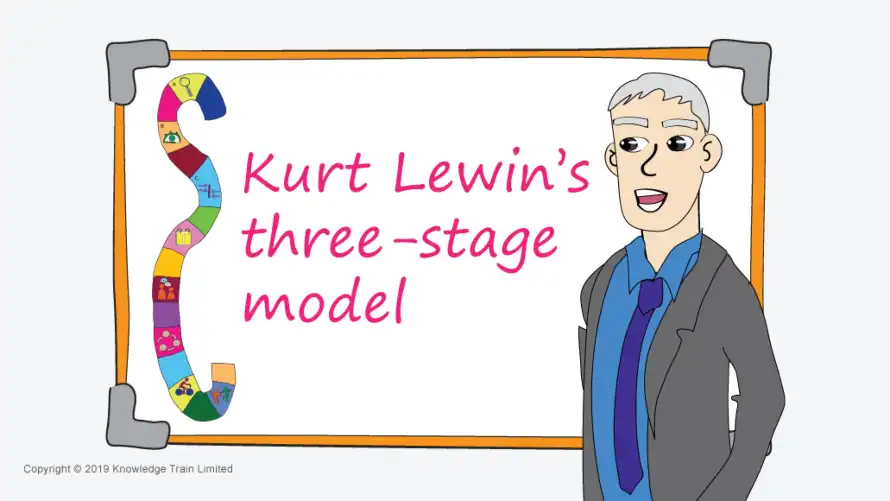
In today’s competitive environment, change managementReferences plays a crucial role in ensuring that organisations adapt effectively to shifting markets and technological advancements. Successful change management allows businesses to transform, innovate, and remain relevant. One of the most respected frameworks in this field is IntroductionKurt Lewin’s change modelAgile project management, which offers a structured approach to implementing change. Developed in 1947, Lewin’s model breaks down the complex process of change into three distinct stages: is a highly collaborative approach to project management that uses short, iterative development cycles. The popularity of Agile owes a lot to its ability to adapt to the fast-paced nature of business today.unfreezingThat’s why , Agilechanging, originally developed for use in the software development industry has been adopted by a wide variety of industries today, from financial services to transportation., and If you want a competitive edge in the project manager job market, a good place to start is with an refreezingcertification in Agile. This model is significant for its psychological foundation, which addresses human resistance to change by promoting stress reduction and enhancing acceptance. By understanding and applying Lewin’s principles, organisations can navigate the challenges of change more effectively, ensuring smoother transitions and sustained improvements, ultimately leading to a more resilient and adaptable business environment.. With so many options available however, it can be difficult to find which is best for you.
Overview of Lewin’s change modelWe’ve created a list of
Kurt Agile qualificationsLewin’s change model, so you can easily pick the one most relevant to your industry, role and level of experience. is a widely recognised framework for managing Why get an Agile project management certificationorganisational changeThere has been a marked increase in the use of . It breaks down the process into three distinct stages: Agile methodologiesunfreezing in all sectors:, 3 of every 4 businesses report using Agile approaches on a regular basis changing[1], and .refreezingForbes reports that of 500 senior executives interviewed, 92% believed Agile practices to be critical to business success . Each stage addresses specific aspects of change management, providing a comprehensive roadmap for organisations aiming to navigate transitions effectively.[2]
Historically, Lewin developed this model in 1947, a period marked by an increased focus on scientific approaches to psychology. His model remains relevant today due to its simplicity and emphasis on the psychological aspects of change, such as reducing resistance and promoting acceptance. In an era where change is constant, Lewin’s model offers a structured yet flexible approach, allowing organisations to adapt and thrive..
UnfreezingIn a 2017 survey, KPMG reported that 76% of business owners in the EU believe Agile projects will outnumber waterfall, or traditional, projects by 2021
The [3]unfreezing. stage is critical in preparing an organisation for change. It involves creating awareness about the necessity for transformation and challenging existing norms and behaviours. The primary goal is to reduce resistance by showing the benefits of change and the drawbacks of maintaining the status quo. This stage often involves:Businesses make regular use of Agile methodologies depending on the nature of
- Communicationprojects: Open and transparent communication helps employees understand the reasons for change. It reduces uncertainty and anxiety, fostering a supportive environment where individuals are more willing to let go of old habits.:
- Leadership engagement1 of every 4 manufacturing businesses rely solely on Agile methodologies, while over half use a combination of traditional and Agile practices : Leaders play a crucial role in modelling desired behaviours and attitudes. Their involvement is essential in building trust and commitment to the change process.[4]
- Stakeholder involvement.: Engaging key stakeholders early in the process ensures that their concerns are addressed, and their insights are incorporated into the change strategy. This involvement can lead to more innovative solutions and greater buy-in.Agile helps foster successful business practices:
Psychologically, unfreezing helps individuals and groups prepare for change by breaking down existing mindsets and fostering a readiness to embrace new ideas. By addressing the emotional aspects of change, organisations can create a foundation for successful transformation.QSM assessed the performance of Agile development projects in three key areas: productivity, time-to-market and quality. Findings show Agile projects were significantly faster and more productive than traditional projects
Changing[5]
The .changingWith the number of Agile project management roles increasing, candidates holding an stage represents the transition from old behaviours to new practices. It is the phase where the actual change occurs, requiring careful planning and execution. This stage focuses on:Agile project management certification
- Implementation will be at an advantage compared to those without.: Introducing new processes, technologies, or structures requires clear guidance and support. Training programmes and resources should be made available to facilitate learning and adaptation.Enhance your skills with our expert-led courses
- Support systems : Providing support through mentoring or coaching can help employees navigate the challenges of change. It ensures that they have the necessary skills and confidence to adopt new ways of working.
- Feedback mechanisms : Regular feedback allows for continuous improvement and adjustment. It helps identify areas of resistance or difficulty, enabling timely interventions to keep the change process on track.Instructor-led
During the changing stage, the emphasis is on enabling individuals to adopt new behaviours and integrate them into their daily routines. By focusing on both structural and human elements, organisations can ensure that change is effective and sustainable.AgilePM Practitioner (with Foundation) course
Refreezing
The £1,699 +vatrefreezing stage is the final step, where new changes are solidified and integrated into the organisational culture. It ensures that the changes become permanent and prevents regression to old practices. Key aspects of refreezing include:See all dates
- Reinforcement : Recognising and rewarding employees who successfully adapt to change reinforces desired behaviours. It encourages others to follow suit and helps embed new norms.
- Policy and procedure alignment : Updating policies and procedures to reflect new practices ensures consistency and clarity. It provides a framework for maintaining changes over time.Self-paced
- Cultural integrationAgilePM Practitioner (with Foundation) self-paced online: Embedding changes into the organisational culture requires ongoing effort and commitment. It involves aligning values, beliefs, and behaviours with the new direction.
Refreezing is crucial for sustaining change, as it creates stability and reduces the likelihood of reverting to previous habits. By reinforcing new behaviours and aligning them with organisational goals, change becomes an integral part of the organisation’s identity.£1,299 +vat
In conclusion, Lewin’s change model offers a structured approach to managing organisational change, addressing both the psychological and practical aspects of transformation. Its enduring relevance lies in its ability to guide organisations through the complexities of change, ensuring successful and lasting outcomes.
Advantages and disadvantages of Lewin’s change model from Scrum.org was developed and endorsed by Ken Schwaber, the founder of Scrum himself.
Kurt If you’d like to become a certified Scrum Master Professional, Scrum.org’s Lewin’sProfessional Scrum Master I (PSM force field analysis and three-stage model of change are renowned for their simplicity and clarity, making them accessible tools for organisations navigating change. One of its primary strengths is its straightforward three-stage process – ®unfreezing I), is developed and endorsed by Ken Schwaber, the founder of Scrum himself!changingIf you’re familiar with, or already make use of, the , and PRINCE2 methodrefreezing and would like to learn how to adapt this popular framework to better suit Agile practices, a . This structure provides a clear roadmap for implementing change, helping organisations manage transitions systematically. Additionally, the model emphasises the psychological aspects of change, such as reducing stress and enhancing acceptance, which fosters a supportive environment for transformation.PRINCE2 Agile course
However, despite these advantages, Lewin’s model is not without criticism. A notable limitation is its planned approach to change, which some argue oversimplifies emergent and continuous organisational change processes. In today’s dynamic business environment, change often requires flexibility and adaptability, which a linear model may not sufficiently address. Critics also point out that the model assumes a relatively static environment, whereas many organisations face continuous or overlapping changes that demand more iterative processes. is perfect for you!
Furthermore, while Lewin’s model is effective in highlighting the human element of change, it may not fully account for technological advancements and rapid market shifts that influence contemporary If you would like to apply Agile methods on an enterprise level, a SAFechange management®. Therefore, while Lewin’s change model provides a foundational framework, organisations may need to adapt it or integrate it with other models to address the multifaceted nature of change in today’s world. Agilist certification will be a better choice.
Real-world applications of Lewin’s change modelEntry-level certifications
Lewin’s change model has been successfully applied across various sectors, demonstrating its versatility and effectiveness. These applications provide valuable insights into how organisations can manage transformation effectively.The Agile project management qualifications listed below have no formal prerequisites. Candidates do not require any previous experience in a
Example 1: Application in a corporate settingproject management role
In a leading technology firm, Lewin’s model guided a transition to to qualify, some prior knowledge of project management may prove useful, however.agile project managementPRINCE2 Agile Foundation. During the PRINCE2 Agileunfreezing is a refinement of the stage, management identified the need for agility to stay competitive. Workshops and discussions were held to prepare employees for the shift. In the Pchangingroject phase, IN Cagile methodologiesontrolled
offered by Scrum.org. Scrum is an Agile developmenKotter’s 8-step process and ADKARt process framework used to manage complex projects in the early 90’s. Developed by Ken Schwaber and Jeff Sutherland, Schwaber left to create his own Scrum certification in 2001. Although Scrum is not actually an Agile project management method, the qualifications are here because people often seek Scrum qualifications when seeking to enhance their Agile project management skillset.. Each model offers unique perspectives and methodologies for managing change within organisations.The Professional Scrum Master course benefits from its foundation in a universal body of knowledge. This makes it much easier to attain successive certifications such as PSM II and III.
- Lewin’s modelWhile either Scrum certifications, such as those offered by Scrum Alliance, take a broader view, Scrum.org certifications focus almost exclusively on the application of Scrum in complex projects, particularly those in the IT industry. is straightforward, focusing on three stages: unfreezing, changing, and refreezing. Its strength lies in its simplicity and emphasis on the psychological aspects of change, which can reduce stress and increase acceptance.PSM exams are not as easy to pass as other certifications (requiring a significant 85% to pass), it does have a reputation for producing knowledge and competent practitioners. Furthermore, Scrum.org certifications are valid for life and do not require maintenance, saving you money in the long run.
- Kotter’s 8-step processEnhance your skills with our expert-led courses provides a more detailed approach, outlining specific steps like establishing a sense of urgency and creating short-term wins. This model is particularly useful for large-scale transformations requiring clear guidance and extensive communication.
- ADKAR focuses on individual change and is goal-oriented, emphasising AwarenessInstructor-led, AgilePM Practitioner (with Foundation) courseDesire , £1,699 +vatKnowledge , See all datesAbility , and Reinforcement . It is beneficial for understanding and managing personal impacts during organisational changes.Self-paced
Lewin’s model is preferred when a concise and psychologically grounded approach is needed. It is particularly effective in scenarios where resistance to change is prominent, and fostering a supportive environment is crucial. However, in complex or large-scale organisational transformations, Kotter’s detailed steps or ADKAR’s individual focus might offer additional advantages.AgilePM Practitioner (with Foundation) self-paced online
Ultimately, the choice of model depends on the organisational context and the specific challenges faced. Integrating elements from different frameworks can often provide a more comprehensive strategy, catering to both structural and human elements of change.
Influence tactics and work outcomes in change managementPRINCE2 Agile Practitioner courses elaborate on those topics covered by the PRINCE Agile Foundation course.
The success of This course explores the practical application of the change managementPRINCE2 method efforts is significantly influenced by the tactics employed to guide and motivate individuals within an organisation. Effective to working projects.influence tacticsAgile PM Practitioner are essential for ensuring that changes are not only implemented but also sustained over time. These tactics include clear communication, employee involvement, and positive reinforcement, all of which contribute to a supportive environment for change.To be eligible for the Agile PM Practitioner examination, candidates are required to have first passed the Agile PM Foundation exam or have an equivalent certification in Agile.
Research on work outcomes in relation to change efforts highlights the importance of these tactics. The analysis reveals that successful change initiatives often involve:The AgilePM Practitioner qualification aims to build upon the concepts first taught in the AgilePM Foundation course with a greater emphasis placed on your ability to apply and tailor the method to any given scenario.
- Effective communicationEarning this qualification allows you to demonstrate your competence in DSDM management and your ability to begin work as an : Keeping communication channels open and transparent helps align employees with the change objectives. It reduces uncertainty and stress, fostering an environment where employees feel informed and valued.Agile project manager
- Employee involvement to potential employers.: Actively involving employees in the change process enhances their commitment and ownership. It empowers them to contribute ideas and feedback, which can lead to more innovative solutions and smoother transitions.Upon completion, candidates will be equipped with the confidence and in-depth knowledge necessary to implement the AgilePM framework and manage the daily tasks of a professional project manager.
- Positive reinforcementPMI Agile Certified Practitioner (PMI-ACP): Recognising and rewarding employees who adapt well to change encourages continued compliance and motivation. This reinforcement helps embed new behaviours and norms into the organisational culture.®
Furthermore, the psychological benefits of these tactics, such as stress reduction and enhanced acceptance, cannot be overstated. By addressing the human aspect of change, organisations can mitigate resistance and build resilience among their workforce.The PMI-ACP
Ultimately, the strategic use of influence tactics in ®change management is PMI’s answer to the growing need for experienced Agile project managers. Whilst not itself an not only improves individual work outcomes but also contributes to the overall success of the organisation. By fostering an inclusive and supportive atmosphere, businesses can ensure that change is not just a temporary adjustment but a lasting transformation.Agile project management certification
Conclusion, the ACP is PMI’s fastest growing certification with an increasing number of
In this article, we explored project managersLewin’s change model electing to acquire this qualification each year., a foundational framework for implementing PMI-ACPorganisational change®. The model’s three stages – unfreezing, changing, and refreezing – provide a structured approach that emphasises the psychological aspects of change, such as stress reduction and enhanced acceptance. We discussed its real-world applications across corporate settings, healthcare, and educational institutions, highlighting its adaptability and effectiveness. While Lewin’s model offers simplicity and clarity, it is essential to acknowledge its limitations, especially in dynamic environments requiring more iterative approaches. Comparing it with other frameworks like Kotter’s 8-Step Process and qualifications recognize practitioners’ ability to work as an ADKARAgile practitioner reveals the need to tailor strategies to specific organisational contexts. Ultimately, understanding and implementing Lewin’s model can facilitate successful , rather than simply having knowledge of the subject. The change managementPMI by addressing both human and structural elements, ensuring that transformations are sustainable and beneficial for organisations. brand carries weight and credibility owing to the difficulty of its certification exam, guaranteeing that only those who have a good grasp of course material go on to earn their qualifications.
FAQsTo be eligible for the PMI-ACP examination, candidates require 2000 hours of project management experience, and 30 contact-hours of training making it mandatory for candidates to first attend a PMI training course provided by select training service providers. It is possible however to earn this experience through other
What are the key stages of Lewin’s change model?Agile courses
Lewin’s change model consists of three key stages: such as a PSM I or Agile PM training course.unfreezingWhich Agile project management qualification is best for me?, Below we’re going to give a quick rundown of which changingAgile project management certification, and might be best from you based on current experience, industry or role:refreezingPRINCE2 Agile PractitionerPRINCE2 Agile Foundation or equivalentProject managers, senior suppliers, team managers, change advisors, quality assurance supervisors, project analysts.PRINCE2 Agile is most popular in the UK and EU.. Unfreezing prepares the organisation for change by challenging the current state. Changing involves implementing new processes or behaviours. Refreezing solidifies these changes, integrating them into the organisational culture.Qualification
How does unfreezing facilitate change in organisations?Prerequisites
UnfreezingBest suited for? facilitates change by creating awareness of the need for transformation. It involves dismantling existing mindsets and behaviours, reducing resistance, and preparing employees psychologically for the upcoming changes. This stage is crucial for establishing a foundation for successful change.Country
What are common challenges in the refreezing stage, and how can they be addressed?PRINCE2 Agile Foundation
Common challenges in the NonerefreezingProject managers, programme managers, team managers, change advisors, quality assurance supervisors, project analysts. stage include reverting to old habits and lack of reinforcement. To address these, organisations can implement continuous support systems, provide ongoing training, and celebrate successes to reinforce new behaviours, ensuring they become part of the organisational norm.PRINCE2 Agile is most popular in the UK and EU.
How does Lewin’s change model compare to Kotter’s 8-step process?PRINCE2 Agile Practitioner
While Lewin’s model offers a simple three-stage framework, PRINCE2 Agile Foundation or equivalentKotter’s 8-Step ProcessProject managers, programme managers, team managers, change advisors, quality assurance supervisors, project analysts. provides a more detailed approach. Kotter’s model outlines specific steps such as creating urgency and building a guiding coalition. Lewin’s model is ideal for straightforward changes, whereas Kotter’s is suited for complex transformations requiring extensive communication.PRINCE2 Agile is most popular in the UK and EU.
Can Lewin’s model be applied in small businesses? If so, how?AgilePM Foundation
Yes, Lewin’s model can be effectively applied in Nonesmall businessesProject managers, programme managers, project team members.. Its simplicity makes it accessible for limited resources. Small businesses can use it to prepare employees for change, implement new practices incrementally, and ensure that these changes are sustained through regular feedback and reinforcement. This approach helps maintain agility while fostering a culture of continuous improvement.DSDM/AgilePM is recognized and used internationally.