
Learn the fundamentals of enterprise change management.Support and training
Providing ongoing Practitioner support and trainingIncludes Foundation & Practitioner combined option. is essential to help team members adapt to change. Training programmes can equip individuals with the skills needed for new roles or processes, reducing anxiety and promoting confidence. Additionally, offering emotional support through coaching and counselling services can address personal challenges faced during transitions. Leaders should encourage a culture of learning and adaptability, where team members feel supported in acquiring new competencies and embracing change.PROGRAMME MANAGEMENT
Monitoring progressMSP
Regularly ®monitoring progressFoundation allows leaders to assess how well the team is adapting to change and to identify any areas that require additional support. Setting measurable milestones and goals can provide structure and motivation. Leaders should conduct periodic check-ins to gather feedback and adjust strategies as needed. This responsiveness ensures that the team remains aligned with organisational objectives while addressing any concerns promptly. By focusing on progress and adapting strategies accordingly, organisations can maintain momentum and ensure successful change implementation.Learn the fundamentals of programme management.
ConclusionPractitioner
In summary, the Includes Foundation & Practitioner combined option.change curveINFORMATION TECHNOLOGY (IT) is an essential framework for managing transitions within organisations. By understanding its stages, leaders can anticipate emotional reactions and provide targeted support. This approach reduces stress and increases resilience among team members, fostering a more adaptable and cohesive work environment.ITIL
The benefits of utilising the change curve extend beyond improved ®change managementFoundation . It enhances team morale, boosts productivity, and helps align organisational goals with personal growth. Effective communication, support, and progress monitoring are key strategies in navigating the curve.Learn the fundamentals of ITIL service management.
Ultimately, embracing the change curve empowers leaders to guide their teams through transitions with confidence and empathy. By recognising and addressing the psychological journey of change, organisations can achieve smoother transitions and sustained success.Strategist DPI
FAQs3-day ITIL Strategist: Direct, Plan & Improve (DPI) course.
What is the change curve?Specialist: DSV
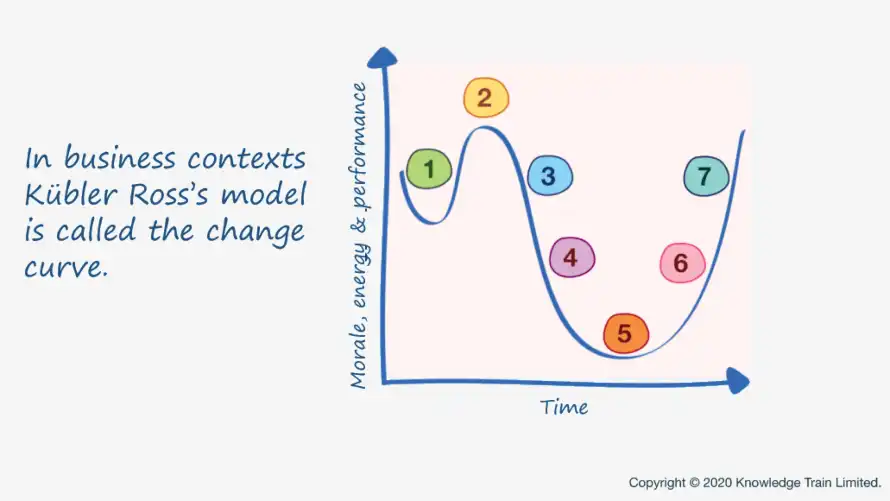
The 3-day ITIL Specialist: Drive Stakeholder Value (DSV) course.change curve is a model that outlines the emotional stages individuals experience during transitions, inspired by Kübler-Ross’s work with terminal illness patients.
How can understanding the change curve benefit my team?
Knowledge of the change curve helps leaders anticipate reactions, tailor support, and improve team dynamics, leading to reduced stress and enhanced productivity.
What are some common challenges faced during the change curve stages?
