Navigating the change curve for successful transitions{"@context":"http://schema.org","@type":"BreadcrumbList","itemListElement":[{"@type":"ListItem","position":1,"name":"Home","item":"https://www.knowledgetrain.co.uk/"},{"@type":"ListItem","position":2,"name":"Agile","item":"https://www.knowledgetrain.co.uk/agile"},{"@type":"ListItem","position":3,"name":"Agile Project Management","item":"https://www.knowledgetrain.co.uk/agile/agile-project-management"},{"@type":"ListItem","position":4,"name":"Agile Project Management Course","item":"https://www.knowledgetrain.co.uk/agile/agile-project-management/agile-project-management-course"},{"@type":"ListItem","position":5,"name":"What is the best Agile Project Management certification","item":"https://www.knowledgetrain.co.uk/agile/agile-project-management/agile-project-management-course/what-is-best-agile-project-management-certification"}]}

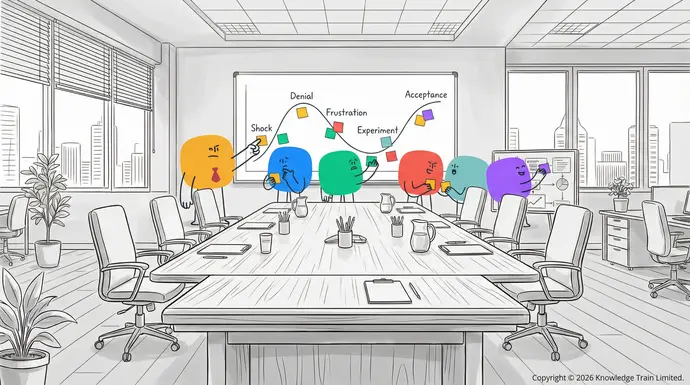
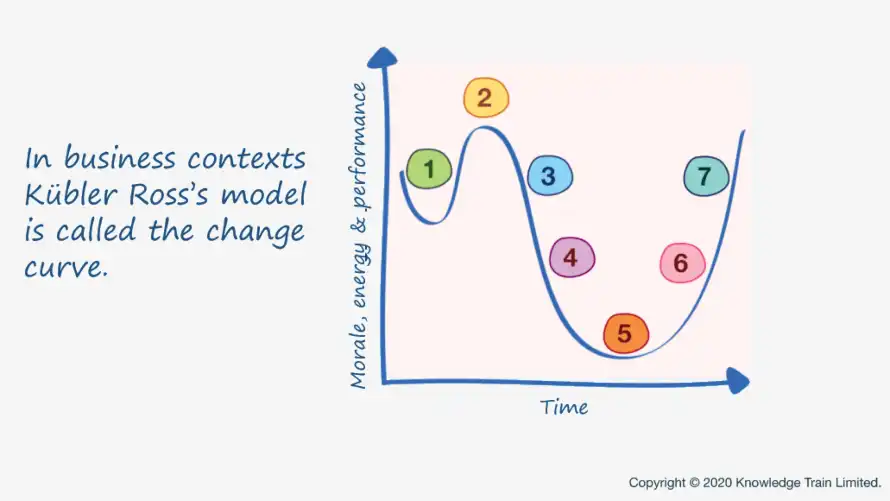
is a powerful model that helps to understand and manage the emotional responses individuals and organisations experience during transitions. Inspired by Elisabeth Kübler-Ross’s work on terminal illness patients, the change curve has been adapted to depict the stages of personal and organisational change. By mapping emotional responses, it provides a framework for predicting reactions and offering necessary support.
Definition of the change curveReferences
The change curve illustrates the psychological phases individuals experience when faced with change. Initially derived from the study of grief, this model has been adapted to depict the transition stages within organisational contexts. In organisational contexts, it typically progresses through Introductionshock and denialAgile project management, is a highly collaborative approach to project management that uses short, iterative development cycles. The popularity of Agile owes a lot to its ability to adapt to the fast-paced nature of business today.anger and fearThat’s why , Agiledepression and confusion, originally developed for use in the software development industry has been adopted by a wide variety of industries today, from financial services to transportation., and ultimately If you want a competitive edge in the project manager job market, a good place to start is with an acceptance and integrationcertification in Agile. By understanding these stages, leaders can anticipate challenges and prepare strategies to effectively support their teams.. With so many options available however, it can be difficult to find which is best for you.
Importance of understanding the change curveWe’ve created a list of
For managers, grasping the change curve’s nuances is crucial for effective Agile qualificationschange management, so you can easily pick the one most relevant to your industry, role and level of experience.. It equips them to anticipate emotional hurdles and offer timely support, thereby reducing stress and enhancing resilience. By aligning leadership strategies with this model, organisations can facilitate smoother transitions, ensuring both individual well-being and collective productivity.Why get an Agile project management certification
Stages of the change curveThere has been a marked increase in the use of
The change curve shows how people move through emotional stages during organisational change. Understanding these five stages helps leaders guide their teams effectively.Agile methodologies
Stage 1. Shock and denial in all sectors:
People first react to change with shock and denial. They might ignore the changes or deny how these affect their work. This natural defensive response gives people time to process what is happening.3 of every 4 businesses report using Agile approaches on a regular basis
Stage 2. Anger and fear[1]
When reality becomes clear, people often feel angry and fearful. They worry about their future and may resist changes actively. This reaction can strain team relationships and affect work quality. Leaders need to address worries openly through clear communication..
Stage 3. Exploration and bargainingForbes reports that of 500 senior executives interviewed, 92% believed Agile practices to be critical to business success
People start exploring what the change means. They suggest different approaches or try to negotiate aspects of the change. Although this might look like resistance, it shows people are beginning to engage with the changes. This stage offers chances to involve team members in planning.[2]
In a 2017 survey, KPMG reported that 76% of business owners in the EU believe Agile projects will outnumber waterfall, or traditional, projects by 2021
As people understand what change truly means, they might lose motivation and confidence. Work quality and team spirit often decrease as everyone adjusts to new ways. Leaders should offer extra support and clear guidance during this difficult time.[3]
Stage 5. Acceptance and integration.
Finally, people begin to accept and work well with the changes. They notice new opportunities and benefits, leading to better engagement and fresh ideas. This shows successful movement through the change curve.Businesses make regular use of Agile methodologies depending on the nature of
Leaders who understand these stages can support their teams properly, helping create successful projectsorganisational change:.1 of every 4 manufacturing businesses rely solely on Agile methodologies, while over half use a combination of traditional and Agile practices
Benefits of understanding the change curve[4]
Understanding the .change curveAgile helps foster successful business practices: offers significant advantages to both leaders and teams. It provides a framework for navigating transitions effectively, ensuring that organisational change is managed smoothly. Recognising the emotional stages individuals experience allows for strategic interventions that can mitigate resistance and enhance acceptance.QSM assessed the performance of Agile development projects in three key areas: productivity, time-to-market and quality. Findings show Agile projects were significantly faster and more productive than traditional projects
Improved change management[5]
Grasping the change curve enables leaders to anticipate emotional reactions and plan appropriate responses. By knowing which stage their team members are in, leaders can tailor their communication and support strategies. This anticipation reduces disruptions and resistance, making the change more manageable. Furthermore, it facilitates a proactive approach to addressing concerns, ensuring that transitions are smoother and less stressful..
Enhanced team moraleWith the number of Agile project management roles increasing, candidates holding an
Effectively navigating the change curve can significantly boost Agile project management certificationteam morale will be at an advantage compared to those without. and productivity. By providing support that aligns with each stage, leaders can foster a sense of security and trust. This approach helps in reducing anxiety and stress, as individuals feel understood and supported. When teams see that their leaders are attuned to their emotional journeys, it enhances engagement and commitment, ultimately leading to a more motivated and cohesive workforce.Enhance your skills with our expert-led courses
Strategies for guiding teams through the change curve
Successfully guiding a team through the change curve requires thoughtful strategies. These strategies should address communication, support, and progress monitoring. By implementing these approaches, leaders can facilitate smoother transitions and foster a positive environment.Instructor-led
Communication strategiesAgilePM Practitioner (with Foundation) course
Effective communication£1,699 +vat is crucial at every stage of the change curve. Leaders must tailor their messages to the team’s current emotional state. During the initial stages of shock and denial, it is important to provide clear, concise information to alleviate uncertainty. As the team progresses through anger and bargaining, open forums for discussion can help address concerns and reduce frustration. In the later stages, such as acceptance and integration, reinforcing positive outcomes and recognising achievements can boost morale. Consistent and empathetic communication helps in maintaining trust and engagement throughout the process.
Support and trainingSee all dates
Providing ongoing
