Navigating the change curve for successful transitions

Key takeawaysDeny
Use the change curve to match leadership support to how the team is feeling during a transition.
- The change curve maps common emotional stages, helping leaders predict reactions during organisational change.View preferences
- Expect early shock, denial, anger, and fear, and reduce disruption with clear, timely communication.
- Treat exploration and bargaining as engagement, and involve characters (team members) in shaping practical plans.Save preferences
- During depression and confusion, provide extra guidance, training, and emotional support to protect morale and quality.
- Monitor progress with check-ins and milestones, then reinforce wins to embed acceptance and integration.View preferences
Introduction to the change curve
The change curve
Definition of the change curve
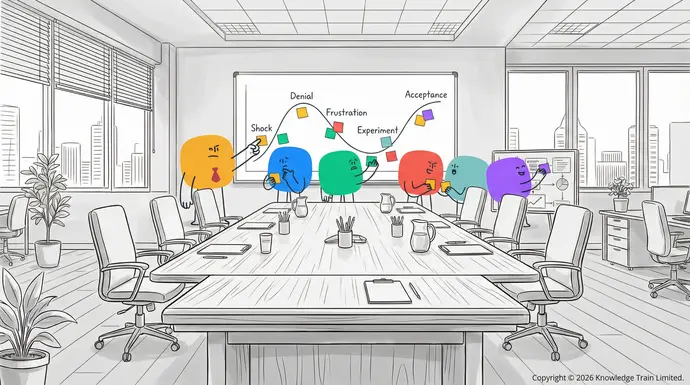
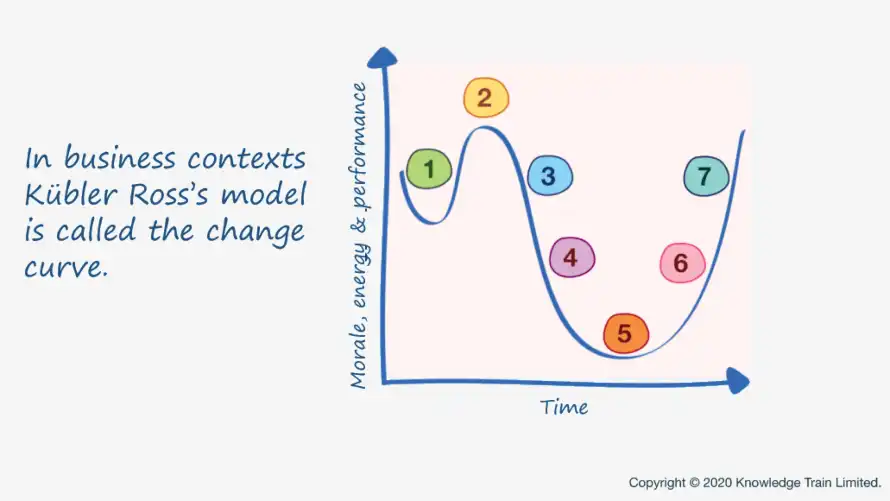
The change curve illustrates the psychological phases individuals experience when faced with change. Initially derived from the study of grief, this model has been adapted to depict the transition stages within organisational contexts. In organisational contexts, it typically progresses through shock and denialPreferences, anger and fear,
Benefits of understanding the change curve
Understanding the change curve offers significant advantages to both leaders and teams. It provides a framework for navigating transitions effectively, ensuring that organisational change is managed smoothly. Recognising the emotional stages individuals experience allows for strategic interventions that can mitigate resistance and enhance acceptance.
Improved change managementThe technical storage or access that is used exclusively for statistical purposes.
Grasping the change curve enables leaders to anticipate emotional reactions and plan appropriate responses. By knowing which stage their team members are in, leaders can tailor their communication and support strategies. This anticipation reduces disruptions and resistance, making the change more manageable. Furthermore, it facilitates a proactive approach to addressing concerns, ensuring that transitions are smoother and less stressful.
Enhanced team moraleThe technical storage or access that is used exclusively for anonymous statistical purposes. Without a subpoena, voluntary compliance on the part of your Internet Service Provider, or additional records from a third party, information stored or retrieved for this purpose alone cannot usually be used to identify you.
Effectively navigating the change curve can significantly boost team morale and productivity. By providing support that aligns with each stage, leaders can foster a sense of security and trust. This approach helps in reducing anxiety and stress, as individuals feel understood and supported. When teams see that their leaders are attuned to their emotional journeys, it enhances engagement and commitment, ultimately leading to a more motivated and cohesive workforce.
Strategies for guiding teams through the change curve
Successfully guiding a team through the change curveMarketing requires thoughtful strategies. These strategies should address communication, support, and progress monitoring. By implementing these approaches, leaders can facilitate smoother transitions and foster a positive environment.
Communication strategies
Effective communicationMarketing is crucial at every stage of the change curve. Leaders must tailor their messages to the team’s current emotional state. During the initial stages of shock and denial, it is important to provide clear, concise information to alleviate uncertainty. As the team progresses through anger and bargaining, open forums for discussion can help address concerns and reduce frustration. In the later stages, such as acceptance and integration, reinforcing positive outcomes and recognising achievements can boost morale. Consistent and empathetic communication helps in maintaining trust and engagement throughout the process.
Support and training
Providing ongoing support and training is essential to help team members adapt to change. Training programmes can equip individuals with the skills needed for new roles or processes, reducing anxiety and promoting confidence. Additionally, offering emotional support through coaching and counselling services can address personal challenges faced during transitions. Leaders should encourage a culture of learning and adaptability, where team members feel supported in acquiring new competencies and embracing change.
Monitoring progress
Regularly monitoring progressThe technical storage or access is required to create user profiles to send advertising, or to track the user on a website or across several websites for similar marketing purposes. allows leaders to assess how well the team is adapting to change and to identify any areas that require additional support. Setting measurable milestones and goals can provide structure and motivation. Leaders should conduct periodic check-ins to gather feedback and adjust strategies as needed. This responsiveness ensures that the team remains aligned with organisational objectives while addressing any concerns promptly. By focusing on progress and adapting strategies accordingly, organisations can maintain momentum and ensure successful change implementation.
This infographic shows the Kubler Ross change curve model.
