
Use the change curve to match leadership support to how the team is feeling during a transition.Contents
- The change curve maps common emotional stages, helping leaders predict reactions during organisational change.
- Expect early shock, denial, anger, and fear, and reduce disruption with clear, timely communication. Introduction
- Treat exploration and bargaining as engagement, and involve characters (team members) in shaping practical plans.
- During depression and confusion, provide extra guidance, training, and emotional support to protect morale and quality. What is a business case?
- Monitor progress with check-ins and milestones, then reinforce wins to embed acceptance and integration.
Introduction to the change curve
The £2,400 +vatchange curve is a powerful model that helps to understand and manage the emotional responses individuals and organisations experience during transitions. Inspired by Elisabeth Kübler-Ross’s work on terminal illness patients, the change curve has been adapted to depict the stages of personal and organisational change. By mapping emotional responses, it provides a framework for predicting reactions and offering necessary support.See all dates
Definition of the change curve
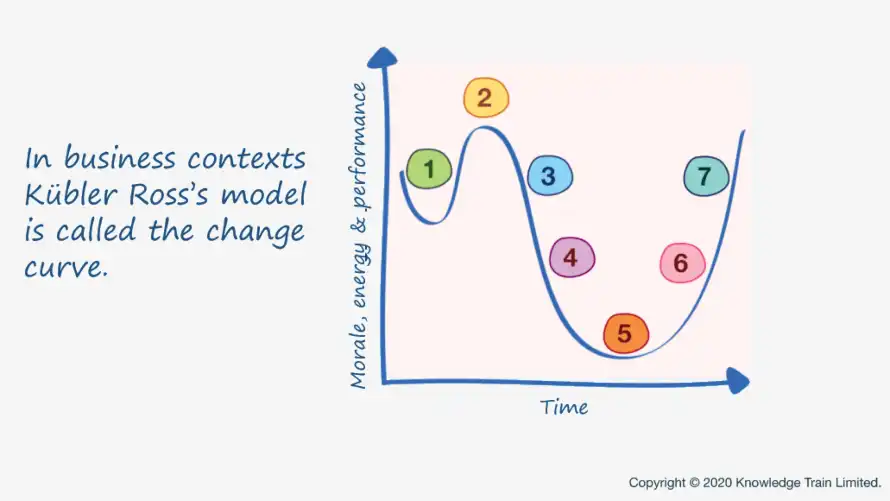
The change curve illustrates the psychological phases individuals experience when faced with change. Initially derived from the study of grief, this model has been adapted to depict the transition stages within organisational contexts. In organisational contexts, it typically progresses through shock and denial , Self-paced anger and fearBetter Business Cases Practitioner (with Foundation) self-paced online , depression and confusion£1,199 +vat , and ultimately Request a quoteacceptance and integration . By understanding these stages, leaders can anticipate challenges and prepare strategies to effectively support their teams.
Importance of understanding the change curveSelf-paced[email protected]
For managers, grasping the change curve’s nuances is crucial for effective Better Business Cases Foundation self-paced online change management +44 (0)207 148 5985. It equips them to anticipate emotional hurdles and offer timely support, thereby reducing stress and enhancing resilience. By aligning leadership strategies with this model, organisations can facilitate smoother transitions, ensuring both individual well-being and collective productivity.£699 +vatCourses
Stages of the change curveWhat is a business case?PROJECT MANAGEMENT
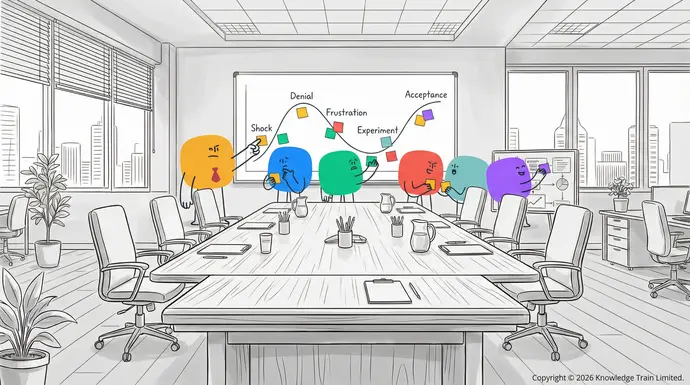
The change curve shows how people move through emotional stages during organisational change. Understanding these five stages helps leaders guide their teams effectively.A business case is the justification for some activity (e.g. a project) undertaken by your organisation. It weighs up the timescales, costs and risks of doing the activity against the benefits to be gained. Think of it as weighing up the pros and cons and then taking a sensible decision.PRINCE2
Stage 1. Shock and denialA business case forms an essential component of the curriculum of the ®
People first react to change with shock and denial. They might ignore the changes or deny how these affect their work. This natural defensive response gives people time to process what is happening.best project management coursesFoundation
Stage 2. Anger and fear.Learn the fundamentals of the PRINCE2 method.
When reality becomes clear, people often feel angry and fearful. They worry about their future and may resist changes actively. This reaction can strain team relationships and affect work quality. Leaders need to address worries openly through clear communication.Personal business casePractitioner
Stage 3. Exploration and bargainingYou may also use a business case to justify an investment you make in your personal life. For example, when you’re thinking of moving home to another area. You and your spouse will need to understand the costs of moving, the timescales and risks involved, and weigh these up against the benefits to be gained e.g. saving time traveling to your office, or your children able to go to a better school.Includes Foundation & Practitioner combined option.
People start exploring what the change means. They suggest different approaches or try to negotiate aspects of the change. Although this might look like resistance, it shows people are beginning to engage with the changes. This stage offers chances to involve team members in planning.Why have a business case?Association for Project Management (APM)
.Stage 5. Acceptance and integrationProject Management Qualification (PMQ)
Finally, people begin to accept and work well with the changes. They notice new opportunities and benefits, leading to better engagement and fresh ideas. This shows successful movement through the change curve.For business organisations, justification for a project usually takes a commercial form i.e. evaluating how much money could be made from the investment. For example, investing money in developing a new software app to bring first to market, might be deemed to bring certain monetary benefits (in terms of sales) which exceeds the costs of investment.Advance your APM project management expertise.
Leaders who understand these stages can support their teams properly, helping create successful For government organisations, justification is probably not a commercial one, but could be based upon giving value for money to achieve certain benefits. For example, a public health campaign extolling the benefits of flu-vaccinations for elderly people, might be judged as giving greater value for money than having no campaign, and instead relying on treating patients in hospital once they have contracted the virus.Project Risk Single Certificate Level 1 organisational changeWith so many competing claims being made on scarce funds, organisations need the assurance that the decision they are taking is the right one. After all, there will not be enough funds to pay for all the ideas for projects which are floating around the organisation.Enhance your project risk management skills..Who uses a business case?AgilePM
Benefits of understanding the change curveBusiness cases can be used by many different levels of management within an organisation. Not only are they used to justify the investment in an individual project, but also they are typically used by a ®
Understanding the portfolio management – Agile Project Managementchange curve office to help it decide which projects will contribute to the organisation’s strategic goals. That way, they can filter out the bad ideas for projects, and only fund projects which will contribute to strategic goals.PESTLE Analysis | Knowledge TrainFoundation offers significant advantages to both leaders and teams. It provides a framework for navigating transitions effectively, ensuring that organisational change is managed smoothly. Recognising the emotional stages individuals experience allows for strategic interventions that can mitigate resistance and enhance acceptance.A business case is also often used by a project sponsor or project executive to help it decide if they should invest in a specific project.Learn the key principles of Agile Project Management.
Improved change managementIn all cases, the business case must be written and approved prior to any major commitment of resources.Practitioner
What form does a business case take?Includes Foundation & Practitioner combined option.
Business cases can take many forms – digital or analogue. The tools you use to create one are also many and varied. Common business tools such as Microsoft Office might be used. Rather than being a document or slide deck however, it could equally be in the form of an email.PRINCE2
Equally, a business case could be written by hand on a whiteboard or flipchart, or on the back of a cigarette packet!®What you should always remember is that a business case does not have to be a huge long document. In fact, it should be as short as possible, and only include the most important information. That way it cuts out the noise and provides decision-makers with just the right information to enable them to take sensible decisions. AgileFor those of you interested in Foundation
project managementLearn the fundamentals of the PRINCE2 Agile method.
, the project management methodology known as Practitioner PRINCE2Includes Foundation & Practitioner combined option. focuses its decision-making on a project on having a viable business case.AI Project Governance Framework (AIPGF)
Business case examplesFoundation
We will now give you 2 business case examples. The first example is one which you might find useful for taking decisions in your personal life. The 2nd business case example is more business focused project.Learn the fundamentals of the governance framework.Business case example 1: Moving homePractitioner Suppose you and your spouse are considering moving to a new home. You will need to weigh up the pros and cons of moving. This is done using a business case. You might not call it that, but that’s what it is. Let’s look at an example.Includes Foundation & Practitioner combined option.
ReasonBetter Business Cases
As you can see from the example, the first thing to be clear about in a business case is the reason for doing the project or activity. In this example, the couple has answered the question ™Why?Foundation In fact, there are two problems here – the local school and John’s long commute.Learn the fundamentals of Better Business cases.
Options consideredPractitioner
A business case should weigh up the competing options which have been considered. After all, there is usually more than one option. Perhaps an alternative option would have been for John to change his job to one nearer their current house. However, this wouldn’t solve the issue with the school.Includes Foundation & Practitioner combined option.BenefitsP3OThe benefits of a project or activity are the positive things you’re going to get back in return for your investment of time and money. In this case, the kids will get a better education, and John will save time each day.®
