Navigating the change curve for successful transitions

Key takeawaysItaly
Use the change curve to match leadership support to how the team is feeling during a transition.Latvia
- The change curve maps common emotional stages, helping leaders predict reactions during organisational change.Lithuania
- Expect early shock, denial, anger, and fear, and reduce disruption with clear, timely communication.Luxemburg
- Treat exploration and bargaining as engagement, and involve characters (team members) in shaping practical plans.Malta
- During depression and confusion, provide extra guidance, training, and emotional support to protect morale and quality.Netherlands
- Monitor progress with check-ins and milestones, then reinforce wins to embed acceptance and integration.Poland
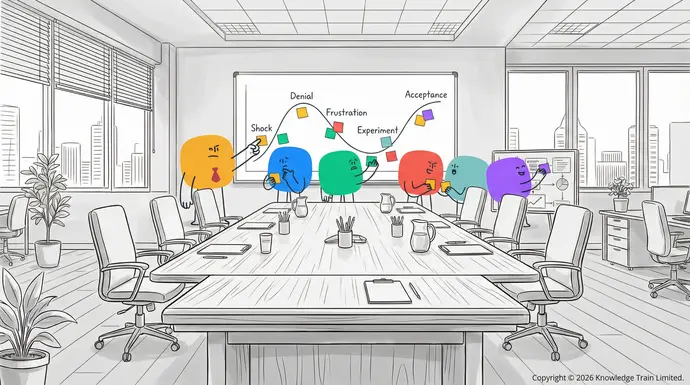
Introduction to the change curve
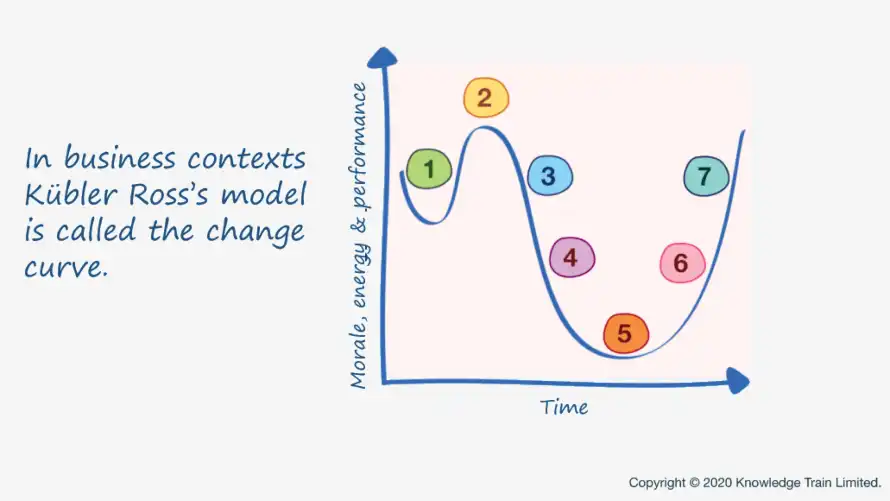
The change curve is a powerful model that helps to understand and manage the emotional responses individuals and organisations experience during transitions. Inspired by Elisabeth Kübler-Ross’s work on terminal illness patients, the change curve has been adapted to depict the stages of personal and organisational change. By mapping emotional responses, it provides a framework for predicting reactions and offering necessary support.
Definition of the change curve
The change curve illustrates the psychological phases individuals experience when faced with change. Initially derived from the study of grief, this model has been adapted to depict the transition stages within organisational contexts. In organisational contexts, it typically progresses through shock and denial , anger and fear , depression and confusion , and ultimately acceptance and integration . By understanding these stages, leaders can anticipate challenges and prepare strategies to effectively support their teams.
Importance of understanding the change curve
For managers, grasping the change curve’s nuances is crucial for effective change management . It equips them to anticipate emotional hurdles and offer timely support, thereby reducing stress and enhancing resilience. By aligning leadership strategies with this model, organisations can facilitate smoother transitions, ensuring both individual well-being and collective productivity.
