Which certification is best for business analysis?Identifying and removing impediments

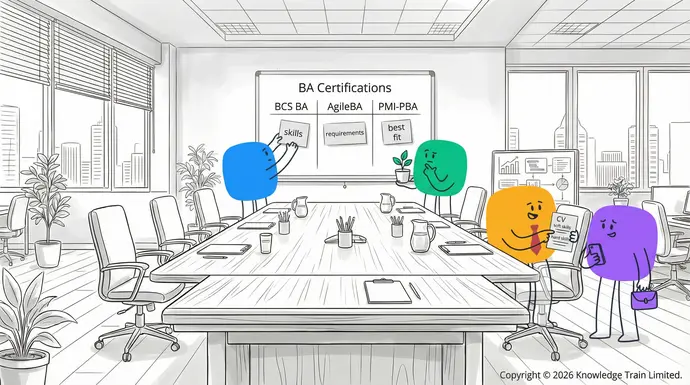
- BCS qualifications are widely favoured in the UK and offer a flexible pathway from foundation to diploma level.Scrum Alliance Certified ScrumMaster (CSM)
- AgileBA suits characters working in agile teams, progressing from overview knowledge to applied practitioner capability.Style:
- PMI-PBA is highly respected but has strict eligibility requirements, making it a strong differentiator for experienced candidates. Multiple-choice
Introduction: You receive a password to take the PSM1 certification exam by email. All students on this Scrum Master training are emailed a password upon completion of the course.
Business analysisYour path to success as a discipline has evolved from work previous allotted to project managers as businesses have grown more complex, and projects more multi-faceted.
As such, business analysts (BAs) can expect to work closely with Learn project managers , stakeholders and related project support roles. Some have likened the techniques used in business analysis to those of systems analysis. Trainer-led learning with practical examples and activities.
Business analysis however focuses more on overall business goals than specific technology or systems design. The role of a business analyst is to deliver an understanding of users and the general business environment.
What do business analysts do?
Business analysts Practice are agents of change, they use a disciplined and structured approach to research, plan and implement meaningful change in organizations. Business analysts are charged with identifying and defining solutions that maximize the value an organization can deliver to stakeholders.
As such, the role can potentially operate across multiple levels of any given organization, from defining strategy, assuming a leadership role, defining project requirements, supporting the implementation of new IT systems or designing enterprise architecture. Apply concepts through exercises and scenario discussion.
BA skills
Business analysts must possess specialized knowledge and understanding that enables them to act as mentors, guides and business leaders. The effective use of business analysis methods can ensure that organizations improve their way of doing business. Pass
Doing this requires a business analyst (or teams of Business analysts) able to identify new opportunities, avoid risks, address the human side of change, model business practices and much more.
It is not a role for the faint hearted, but BAs enjoy a level of respect and freedom rarely accorded to middle-management roles. Build confidence with exam-focused guidance and revision support.
accredited trainers with 450+ years of combined experienceBusiness analysts need a good mix of ‘soft-skills’ and ‘hard-skills.’ You will need to be good at solving problems and analysing data. You will also need to have excellent communication skills.
If you don’t have any IT experience, don’t fret! Often some basic knowledge of SQL is all you’ll be required to have, as systems analysis is a closely related, but otherwise entirely distinct discipline that you won’t have to worry about as a Business analyst.
‘Soft skills’ vs. ‘hard skills’Trusted by professionals at
Recruiters will generally look for work experience or an education that may have imparted desirable skills. Any experience you may have had as a manager or team-leader will be especially desirable. Soft skills you may want to highlight in your CV include:
- Attention to detail.
- Communication.
- Interpersonal skills.
- Leadership.
- Organisation.
- Problem-solving.
- Teamwork.
- Time-management.Join thousands of successful Scrum learners
Additionally, a post-graduate qualification in any of the following studies will make you more marketable as a BA:
- Business information systems.Enrol today!
- Business management.
- Computing and systems development.FAQs
- Computer science.Which Scrum Master certification route should I choose?
Beyond this, many employers view recognized business analyst qualifications as an industry-standard. That’s not to say you can’t find work as a business analyst without one, but they will make you more desirable to potential employers and are a great way to make up for a lack of experience if you’re looking for your first business analyst role.Scrum.org and Scrum Alliance are both widely recognised Scrum Master routes. In most cases, either is a good choice. If your organisation already has a preferred route (or colleagues already hold one), it’s usually best to follow that for consistency. If you’re booking as an individual, choose the route that best fits your learning preference and career goals – and if you’re unsure, we can help you decide.
Business analysis qualifications are offered by several professional bodies, namely the International Institute of Business Analysis UK (IIBA), The Chartered Institute for IT (BCS) and the Do Scrum Master qualifications follow the Scrum Guide?Project Management Institute (PMI). In the UK, BCS business analysis qualificationsYes. The Scrum framework is defined b are the most popular amongst employers.
What is the best business analyst certification?
We offer 3 internationally recognized business analysis qualification schemes to aid your career progression in the business analysis profession. Each is tailored to suit a different type of candidate and as such, there’s no ‘best’ qualification. For more information on each individual course read on!
BCS Business Analysis
BCS business analysis certifications are unique in that BCS offers a structured training and career progression path.
BCS business analysis qualifications range from entry-level BCS Business Analysis Foundation certification which requires no previous experience in business analysis, to the more advanced BCS Business Analysis Diploma certification.
Owing to the flexibility of their training scheme, and the fact that you never have to venture outside the BCS scheme throughout your entire business analysis career, it’s no wonder BCS remains a firm favourite among business owners and practicing business analysts alike.
We offer a range of online Foundation and Practitioner BCS BA modules including:
- BCS Foundation Certificate in Business Analysis
- BCS Practitioner Certificate in Business Analysis Practice
- BCS Requirements Engineering
- BCS Modelling Business Processes
Each of these modules helps candidates work towards the highly regarded BCS International Diploma in Business Analysisy the Scrum Guide, and recognised Scrum Master qualifications are based on the same core roles, events and artifacts. The exam style and supporting materials can vary by awarding body, but the underlying Scrum knowledge is consistent..Can I take this course if I’m new to agile?
This qualification validates the experience you gain through our individual training modules and is designed for business and IT professionals who want to demonstrate they have a detailed understanding of business analysis tools, techniques, strategies and best-practices.
If you’re looking to begin a career in business analysisYes. This course teaches Scrum from the ground up and is suitable for people who are new to agile ways of working. If you want a lighter introduction before taking a role-based course, you can also start with Scrum Essentials. and Is this course suitable for project managers?don’t want to work in an agile environment, there’s no better choice than a BCS BA Diploma.
Agile BAYes. Many project managers take Scrum Master training when they move into agile delivery environments or work closely with Scrum Teams. The course is especially useful if you need to facilitate Scrum events, support team collaboration, and understand how Scrum delivery differs from traditional project approaches.
Offered by APMG International, this What’s included in the course price?Business Analysis certification is designed to help BAs work within agile environments.
APMG courses are generally favoured by agile practitioners because, in addition to giving an overall understanding of What’s included depends on the certification route you choose, but typically you’ll receive the live instructor-led training, course materials, and exam preparation support aligned to your route. Full inclusions are shown during booking, and we’ll confirm exactly what’s included before you enrol.AgileDo you offer private/team Scrum Master training?, they train candidates in the use of practical business analysis tools and techniques that you will go on to use in your career.
We offer this qualification at two levels:
AgileBA FoundationYes. We deliver Scrum Master training for organisations as private courses. This is ideal if you want consistent capability across a team or want the training aligned to your context. We can also advise on the best certification route for your organisation.
This entry-level course is best suited for any of the following:Can I study alongside a full-time job?
- Product owners and managers who require an understanding of agile business analysis .Yes. Many learners take this course alongside work. Instructor-led online training runs on scheduled dates, and you’ll be guided on how to prepare and revise efficiently alongside your day job. If you need a different schedule, team training may be a better fit.
- Working business analysts who wish to move into an agile environment.Still have questions? Contact us by phone on 0207 148 5985, via live chat, email, or by completing the form below.
- Experienced agile team-members who want to work as agile business analysts.How to find us
An 20 Old Bailey, London, EC4M 7AN,AgileBA Foundation course England, United Kingdom. provides a general overview of Agile and the roles of an agile business analyst. The course includes the exam which leads to the Foundation certification. Topics include:Call
- The philosophy and +44 (0)207 148 5985principles of AgileOpening hours.Monday to Friday – 09:00 to 17:15
- The business analysis processes within an Agile project.Get in touch
- The practices used in an Agile project.
- The benefits and limitations of Agile.
- The roles and responsibilities within an Agile project .
AgileBA Foundation & PractitionerName
An AgileBA Foundation and Practitioner course includes 2 exams leading to the AgileBA Practitioner certification. This course is best suited to practicing business analysts and those who wish to begin a career in agile business analysis.Phone
This course teaches candidates how to apply the AgileBA approach to any given context. Topics include:
- The philosophy and principles of Agile.
- The business analysis processes within an Agile project.Email
- The roles and responsibilities within an Agile project.
ional in Business Analysis (PMI-PBA)®
PMI qualifications are, by a wide margin, some of the most widely recognized and respected qualifications in the project management world and are highly sought after.
The high opinions many people hold of this certification is due to the demanding and strict entry requirements which candidates must meet to be eligible for the PMI-PBA® exam. Eligibility requirements are as follows:
| Education: | Required experience: | Required training: |
|---|---|---|
| High school diploma, associate degree or global equivalent | 5 years working as a business analyst | 35 hours in the topic of business analysis practices. |
| Bachelor’s degree, higher degree or global equivalent. | 3 years working as a business analyst | 35 hours in the topic of business analysis practices. |