Key takeaways®
PESTLE helps organisations anticipate external change and make steadier strategic choices., and the Swirl logo are registered trademarks of the PeopleCert group. Used under licence from PeopleCert. All rights reserved. AgilePM
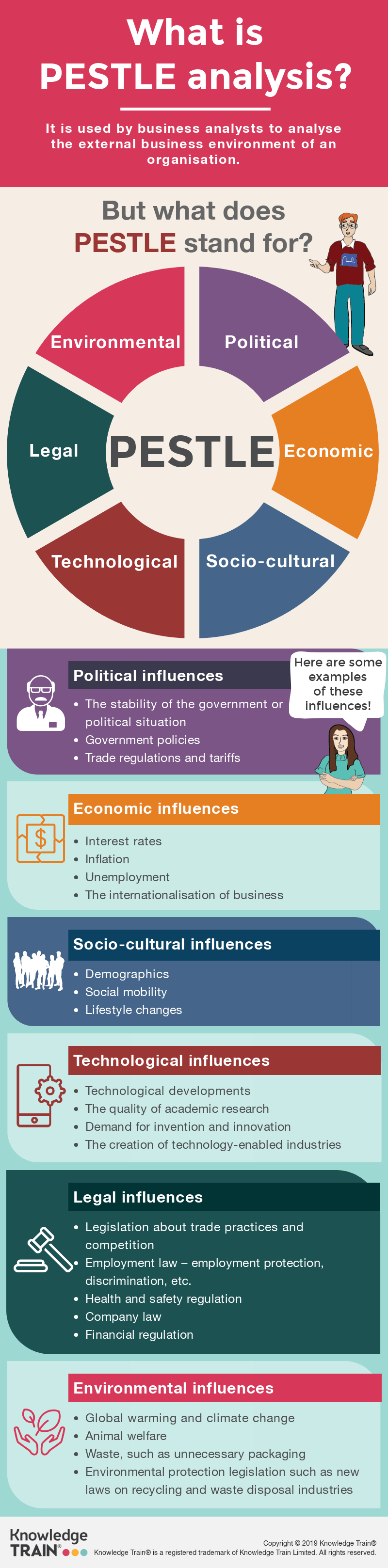
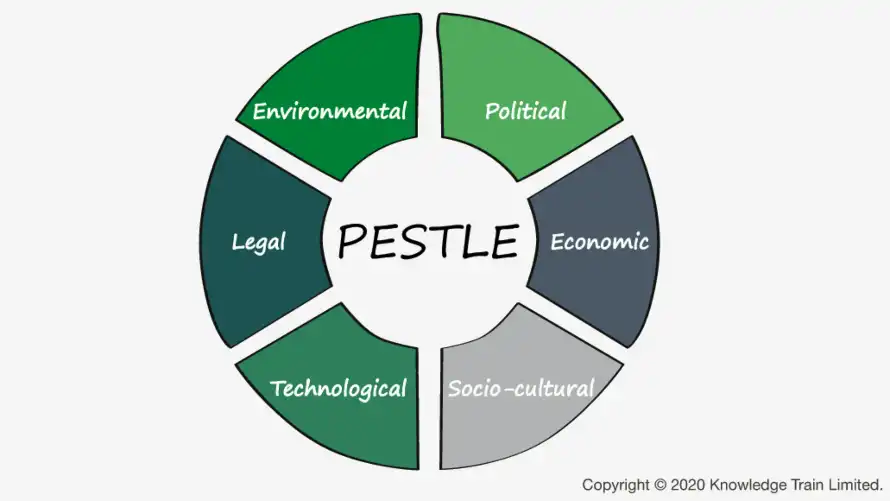
- PESTLE examines Political, Economic, Social, Technological, Legal and Environmental forces shaping performance.®
- It supports proactive planning by surfacing opportunities early and highlighting threats that need mitigation. and AgileBA
- Using PESTLE to inform SWOT links external conditions to internal strengths and weaknesses for better decisions.®
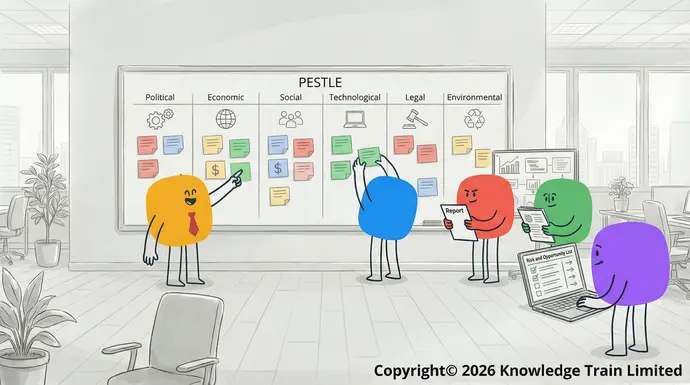
- A useful template captures the key drivers under each factor and assesses likely impact on the organisation. are registered trademarks of Agile Business Consortium Limited. All rights reserved. The APMG International AgilePM and Swirl Device logo, APMG International AgileBA and Swirl Device Logo, APMG International Change Management and APMG International Better Business Cases and Swirl Device logo are trademarks of The APM Group Limited, used under permission of The APM Group Limited. All rights reserved. Better Business Cases™ is a trademark of Her Majesty’s Treasury. All rights reserved. DevOps Foundation
- Regular reviews, often quarterly, keep the analysis current as policies, markets and technology shift.®
Introduction to PESTLE analysis
Definition and purpose
PESTLE analysis is a strategic tool used to identify and assess the external factors that can impact a business. It stands for Political, Economic, Social, Technological, Legal, and Environmental factors. The primary purpose of PESTLE analysis is to provide a comprehensive understanding of the macro-environmental conditions affecting an organisation. By evaluating these external forces, businesses can anticipate changes and adapt their strategies accordingly. This proactive approach aids in mitigating risks and capitalising on potential opportunities.
Inflation and interest rates profoundly impact consumer behaviour. High inflation erodes purchasing power, while interest rates influence borrowing costs. Businesses must adjust their pricing strategies to remain competitive and manage debt effectively during fluctuating economic conditions.
Legal factors
Employment and labour lawsPreferences
Employment and labour laws affect human resources by governing hiring practices, workplace safety, and employee rights. Businesses must ensure compliance with these laws to avoid litigation and foster a fair and productive work environment.
Regulatory compliance
Regulatory compliance is vital for business operations across various sectors. Organisations must follow advertising standards, consumer protection legislation and product safety requirements. By doing so, they protect themselves from legal issues and build consumer trust, ensuring long-term success in the marketplace.
Environmental factorsPreferences
Climate change and sustainability
Climate change and sustainability are increasingly important for industries worldwide. Businesses must consider their environmental impact and adopt sustainable practices to meet consumer expectations and regulatory requirements. This focus on sustainability can also result in cost savings and enhanced brand reputation.
Environmental regulations
Compliance with environmental regulations is essential for legal operation and maintaining a positive public image. Regulations may dictate waste management, emissions, and resource usage. Organisations must adapt processes to meet these standards, reducing their environmental footprint and avoiding legal penalties.
This framework provides businesses with a structured approach to analysing external factors, enabling informed strategic planning. By understanding these components, organisations can position themselves to navigate challenges and seize opportunities effectively.
Satir Change Model | Knowledge Train
- Organise information : Structure the data under the relevant categories in the template.View preferences
- Evaluate Impact{title} : Assess how each factor might present opportunities or threats.{title}
- Review and update{title} : Regularly revisit the template to incorporate new developments.Manage Consent
By following these steps, you can ensure your PESTLE analysis remains relevant and actionable. This structured approach not only aids strategic planning but also reduces uncertainty, fostering a stable environment for decision-making. In turn, this can enhance workplace morale by clarifying organisational priorities and aligning them with external realities.
To provide the best experiences, we use technologies like cookies to store and/or access device information. Consenting to these technologies will allow us to process data such as browsing behavior or unique IDs on this site. Not consenting or withdrawing consent, may adversely affect certain features and functions.