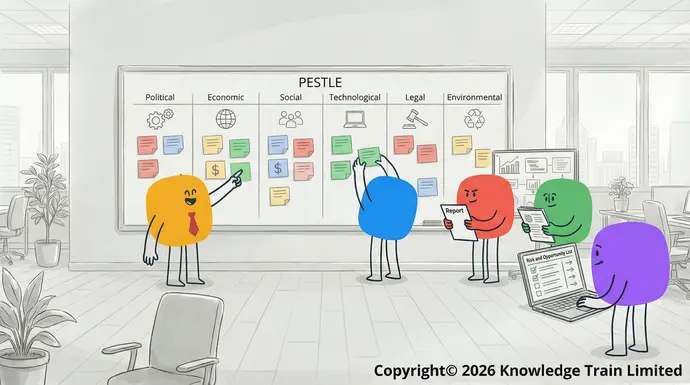
Uncovering the benefits of PESTLE analysis for informed decision-making

Key takeaways
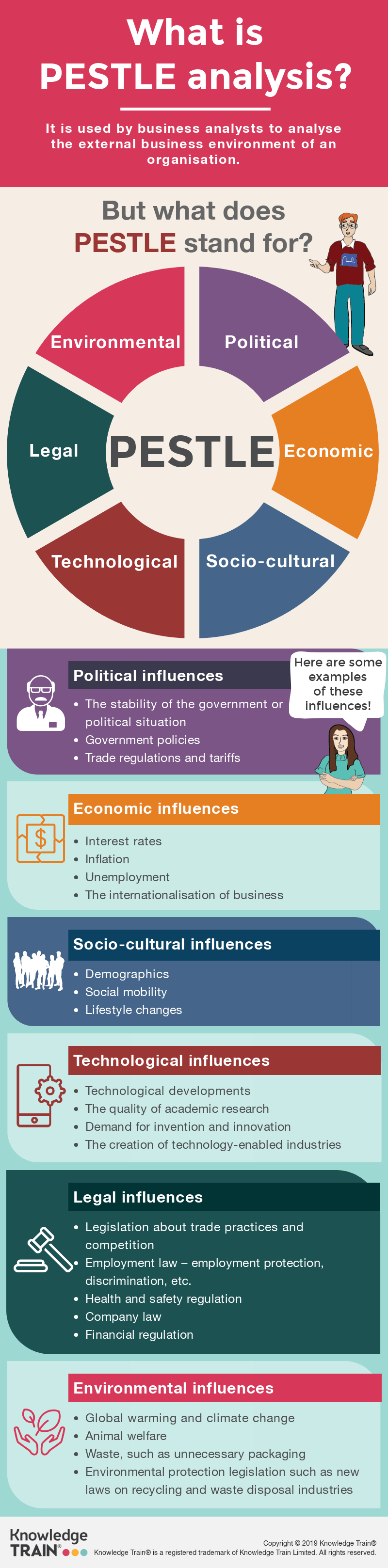
PESTLE helps organisations anticipate external change and make steadier strategic choices.
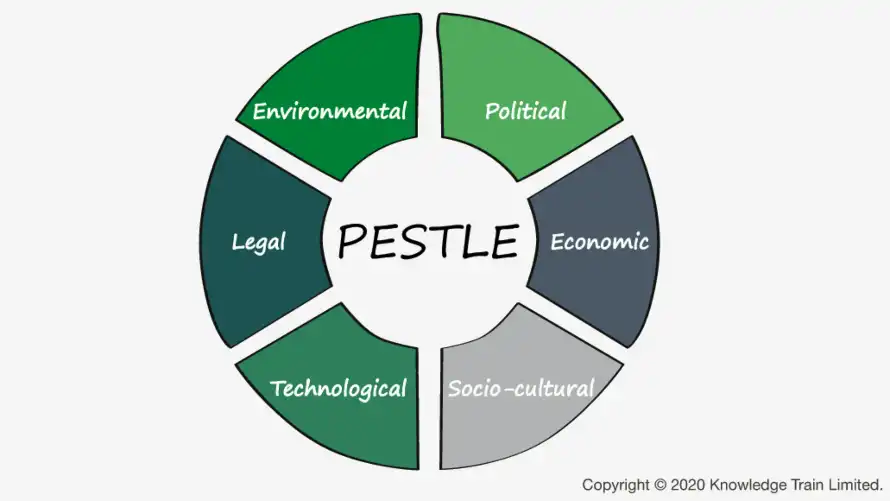
- PESTLE examines Political, Economic, Social, Technological, Legal and Environmental forces shaping performance. Request a quote
- It supports proactive planning by surfacing opportunities early and highlighting threats that need mitigation.
- Using PESTLE to inform SWOT links external conditions to internal strengths and weaknesses for better decisions.
- A useful template captures the key drivers under each factor and assesses likely impact on the organisation.[email protected]
- Regular reviews, often quarterly, keep the analysis current as policies, markets and technology shift.
P3O
Economic growth is a key indicator of market potential. During periods of growth, consumer spending typically increases, leading to higher demand for goods and services. Exchange rates also play a pivotal role, affecting the cost of imports and exports. Businesses must adapt pricing and sourcing strategies to manage currency fluctuations.®
Inflation and interest ratesFoundation
Inflation and interest rates profoundly impact consumer behaviour. High inflation erodes purchasing power, while interest rates influence borrowing costs. Businesses must adjust their pricing strategies to remain competitive and manage debt effectively during fluctuating economic conditions.Learn the fundamentals of the P3O project management office.
Social factorsPractitioner
Cultural norms and demographicsIncludes Foundation & Practitioner combined option.
Cultural norms and demographics shape consumer preferences and behaviours. Understanding these social factors helps businesses tailor products and marketing strategies to meet the needs of diverse populations. Demographic shifts, such as an ageing population, can also create new market opportunities.Workshops
Lifestyle changesIntroduction to Project Management
Lifestyle changes, driven by shifts in social values and technological advancements, affect consumer demands. As lifestyles evolve, businesses must innovate to offer products and services that align with emerging trends, such as increased health consciousness or digital engagement.1-day workshop to learn the basics of project management.
Technological factorsProject Management Essentials
Technological advancements2-day workshop to learn how to manage projects without getting certified.
Technological advancements drive business transformation by enhancing operational efficiency and enabling new business models. Companies must stay abreast of technological trends to capitalise on innovation, whether through automation, artificial intelligence, or other emerging technologies.Writing Business Cases
Research and developmentHalf-day workshop to learn to write robust business cases.
Investment in research and development (R&D) is crucial for maintaining a competitive edge. Businesses that prioritise R&D can lead in innovation, delivering unique products and services. This focus on R&D supports long-term growth and adaptability in a rapidly changing market.AI in Project Management
Legal factorsLearn how to use AI tools in everyday project work.
Employment and labour lawsARTIFICIAL INTELLIGENCE (AI)
Employment and labour laws affect human resources by governing hiring practices, workplace safety, and employee rights. Businesses must ensure compliance with these laws to avoid litigation and foster a fair and productive work environment.BCS AI
Regulatory complianceFoundation
Regulatory compliance is vital for business operations across various sectors. Organisations must follow advertising standards, consumer protection legislation and product safety requirements. By doing so, they protect themselves from legal issues and build consumer trust, ensuring long-term success in the marketplace.Learn the fundamentals of artificial intellegence.
Environmental factorsAI Project Governance Framework (AIPGF)
Climate change and sustainabilityFoundation
Climate change and Learn the fundamentals of the governance framework.sustainability
- Research and gather data: Collect data from reliable sources to understand the impact of each factor.Gain practitioner certificate in requirements engineering.
PESTLE analysis is a crucial tool in strategic planning and decision-making. It provides a comprehensive view of external factors influencing an organisation, enabling businesses to identify opportunities and mitigate threats. By integrating PESTLE with other analytical tools, organisations can develop informed strategies that align with both internal strengths and external realities. This approach not only enhances operational effectiveness but also reduces strategic uncertainty. In workplace settings, the use of PESTLE instils confidence and clarity, contributing to stress reduction and improved decision-making. Ultimately, PESTLE analysis supports sustainable growth and competitive advantage in a complex business environment.
FAQs
What is the difference between PEST and PESTLE analysis?
PEST analysis stands for Political, Economic, Social, and Technological factors. PESTLE expands this framework by including Legal and Environmental factors. This expansion provides a more comprehensive view of external influences on a business.
How frequently should organisations conduct PESTLE analysis?APMG Change Management
Organisations should review their PESTLE analysis quarterly to monitor changes in external factors and adjust strategies accordingly.Foundation
Can PESTLE analysis be used for small businesses?Learn the fundamentals of enterprise change management.
Yes, PESTLE analysis is valuable for small businesses. It helps them understand the external environment, identify opportunities, and mitigate risks. This knowledge is crucial for strategic planning and competitive positioning.Practitioner
What are the limitations of PESTLE analysis?Includes Foundation & Practitioner combined option.
PESTLE analysis can be subjective, relying on the accuracy of available data and the analyst’s interpretation. It may not capture rapid changes, and its broad scope can make it challenging to focus on specific business needs.PROGRAMME MANAGEMENT
How does PESTLE analysis contribute to risk management?MSP
PESTLE analysis contributes to ®risk managementFoundation by identifying external threats and opportunities. It informs strategic decisions and helps businesses prepare for potential challenges, reducing uncertainty and enhancing organisational resilience.Learn the fundamentals of programme management.
InfographicPractitioner