Application of PESTLE analysis in strategic planningSave preferencesAgile Learning Library (ALL)™
Identifying opportunities and threats Business Analysis Learning Library (BALL)™
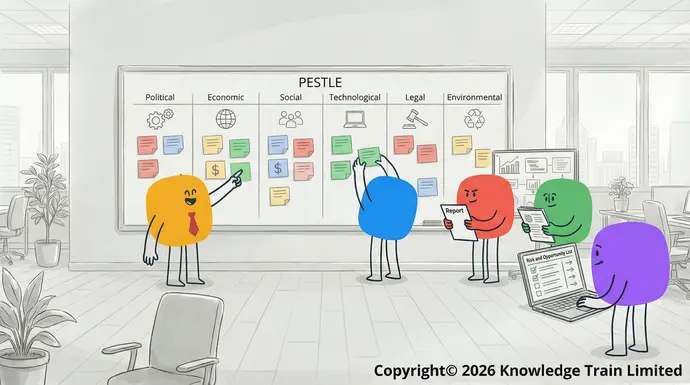
PESTLE analysis is a vital tool for recognising external opportunities and threats. By systematically examining Political, Economic, Social, Technological, Legal, and Environmental factors, businesses can identify potential growth areas and foresee challenges. This analysis enables organisations to adapt their strategies, ensuring they remain competitive. For instance, a change in government policy might present a new market opportunity, while economic downturns could pose threats that need mitigation. Understanding these dynamics allows companies to capitalise on favourable conditions and devise contingency plans for adverse scenarios, thus enhancing their strategic positioning.View preferencesCompliance Learning Library (CLL)™
Integrating PESTLE with SWOT analysis{title}IT Learning Library (ITLL)™
Integrating PESTLE with {title}Business solutionsSWOT analysis{title}_blank provides a comprehensive strategic framework. While PESTLE focuses on external factors, SWOT examines internal strengths and weaknesses alongside external opportunities and threats. This combined approach offers a holistic view of the business environment, facilitating informed decision-making. By using PESTLE to inform SWOT, organisations can align their internal capabilities with external conditions, optimising strategic initiatives. This synergy not only aids in identifying areas for improvement but also highlights where the business can excel. Furthermore, the integration of these analyses can reduce stress and enhance confidence among stakeholders by providing clarity and direction. In workplace settings, this combined approach fosters a proactive culture, encouraging employees to anticipate changes and innovate accordingly. Ultimately, this strategic alignment drives sustainable growth and resilience in an ever-evolving business landscape.Manage consentAbout
Creating a PESTLE analysis templateManage consent_blank
Key elements to includeBlog
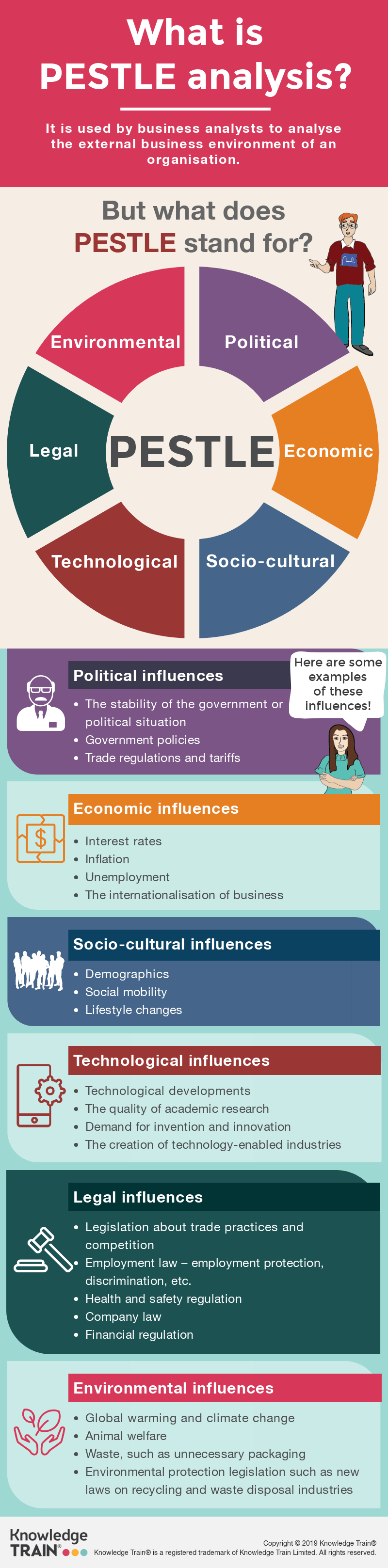
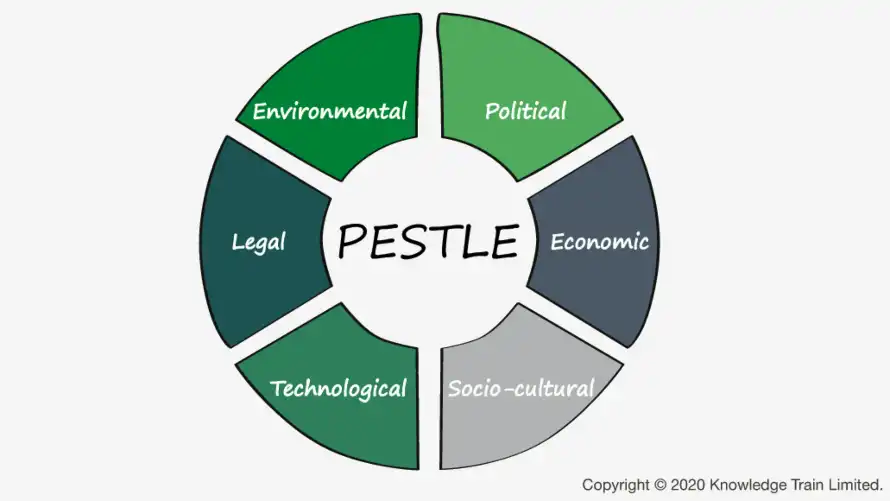
A comprehensive PESTLE analysis template should encompass all six macro-environmental factors: Political, Economic, Social, Technological, Legal, and Environmental. For each factor, consider including:
- PoliticalEXPLORE SUBJECTS: Government policies, stability, tax policiesSelect your preferred subject.
- Economic : Growth rates, inflation, exchange ratesPROJECT MANAGEMENT QUALIFICATIONS & WORKSHOPS
- SocialSelect your preferred qualification or workshop.: Demographics, lifestyle changes, cultural norms
- TechnologicalPRINCE2 COURSES: Innovations, R&D trends, technological infrastructureSelect your preferred training course below:
- Legal : Employment laws, regulatory compliance, industry-specific regulationsAPM COURSES
- EnvironmentalSelect your preferred training course below:: Climate policies, sustainability initiatives, environmental regulations.
These elements are crucial for gaining a holistic view of external influences on the organisation.AGILE PROJECT MANAGEMENT COURSES
Steps to develop your templateSelect your preferred training course below:
Creating a tailored PESTLE template involves a step-by-step approach:
- Identify relevant factorsPRINCE2 AGILE COURSES: Begin by listing factors that are pertinent to your industry and geographical location.Select your preferred training course below:
- Research and gather data : Collect data from reliable sources to understand the impact of each factor.BETTER BUSINESS CASES COURSES
- Organise informationWORKSHOPS: Structure the data under the relevant categories in the template.Select your preferred workshop below:
- Evaluate Impact : Assess how each factor might present opportunities or threats.AGILE QUALIFICATIONS
- Review and updateSelect your preferred qualification.: Regularly revisit the template to incorporate new developments.
By following these steps, you can ensure your PESTLE analysis remains relevant and actionable. This structured approach not only aids strategic planning but also reduces uncertainty, fostering a stable environment for decision-making. In turn, this can enhance workplace morale by clarifying organisational priorities and aligning them with external realities.AGILE PROJECT MANAGEMENT COURSES
Real-world examples of PESTLE analysisSelect your preferred training course below:
Case study 1: Industry application
In the automotive industry, PESTLE analysis has been instrumental in shaping strategic decisions. For instance, the shift towards electric vehicles (EVs) is influenced by several PESTLE factors. Governments worldwide are implementing stricter emissions regulations and offering subsidies to promote EV adoption. These political and environmental factors create opportunities for car manufacturers to innovate. Organisations that proactively adapt to these changes by investing in R&D and expanding their EV offerings can gain a competitive edge, aligning with both consumer demands and regulatory pressures.PRINCE2 AGILE COURSES
Case study 2: Country analysisSelect your preferred training course below:
PESTLE analysis is also valuable for assessing national economic conditions, as demonstrated in the case of India. The country presents diverse market opportunities and challenges, with varying economic conditions across different regions and sectors. However, challenges such as complex legal regulations and environmental concerns persist. By applying PESTLE, businesses can navigate India’s dynamic market landscape. Understanding these factors helps organisations tailor their strategies to leverage economic opportunities while addressing social and legal challenges, ultimately facilitating successful market entry and expansion. This approach reduces strategic uncertainty, leading to enhanced organisational confidence and stability.
ConclusionSCRUM COURSES
PESTLE analysis is a crucial tool in strategic planning and decision-making. It provides a comprehensive view of external factors influencing an organisation, enabling businesses to identify opportunities and mitigate threats. By integrating PESTLE with other analytical tools, organisations can develop informed strategies that align with both internal strengths and external realities. This approach not only enhances operational effectiveness but also reduces strategic uncertainty. In workplace settings, the use of PESTLE instils confidence and clarity, contributing to stress reduction and improved decision-making. Ultimately, PESTLE analysis supports sustainable growth and competitive advantage in a complex business environment.Select your preferred training course below:
FAQs
What is the difference between PEST and PESTLE analysis?AGILE BUSINESS ANALYSIS COURSES
PEST analysis stands for Political, Economic, Social, and Technological factors. PESTLE expands this framework by including Legal and Environmental factors. This expansion provides a more comprehensive view of external influences on a business.Select your preferred training course below:
How frequently should organisations conduct PESTLE analysis?
Organisations should review their PESTLE analysis quarterly to monitor changes in external factors and adjust strategies accordingly.BUSINESS ANALYSIS QUALIFICATIONS
Can PESTLE analysis be used for small businesses?Select your preferred qualification.
Yes, PESTLE analysis is valuable for small businesses. It helps them understand the external environment, identify opportunities, and mitigate risks. This knowledge is crucial for strategic planning and competitive positioning.
What are the limitations of PESTLE analysis?BCS BUSINESS ANALYSIS COURSES
PESTLE analysis can be subjective, relying on the accuracy of available data and the analyst’s interpretation. It may not capture rapid changes, and its broad scope can make it challenging to focus on specific business needs.Select your preferred training course below:
How does PESTLE analysis contribute to risk management?
PESTLE analysis contributes to AGILE BUSINESS ANALYSIS COURSESrisk managementSelect your preferred training course below: by identifying external threats and opportunities. It informs strategic decisions and helps businesses prepare for potential challenges, reducing uncertainty and enhancing organisational resilience.
InfographicCHANGE MANAGEMENT QUALIFICATIONS