Uncovering the benefits of PESTLE analysis for informed decision-making

Key takeaways Accredited training course materials
PESTLE helps organisations anticipate external change and make steadier strategic choices. Expert, experienced trainers to support you
- PESTLE examines Political, Economic, Social, Technological, Legal and Environmental forces shaping performance. Course manual where applicable.
- It supports proactive planning by surfacing opportunities early and highlighting threats that need mitigation.
- Using PESTLE to inform SWOT links external conditions to internal strengths and weaknesses for better decisions. SELF-PACED ONLINE TRAINING COURSES
- A useful template captures the key drivers under each factor and assesses likely impact on the organisation. Self-paced online training courses (e-learning) include:
- Regular reviews, often quarterly, keep the analysis current as policies, markets and technology shift. Certification exam(s) where applicable
Introduction to PESTLE analysis
Definition and purpose
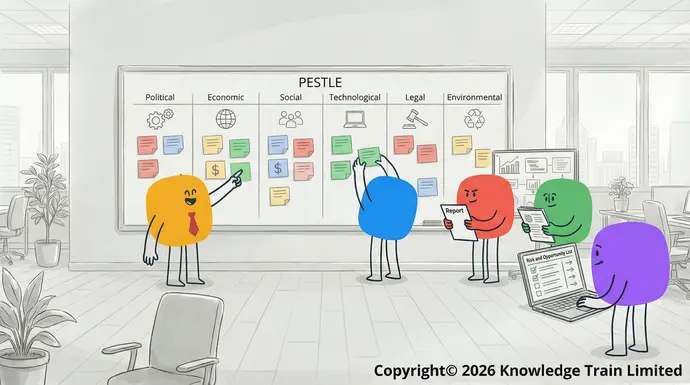
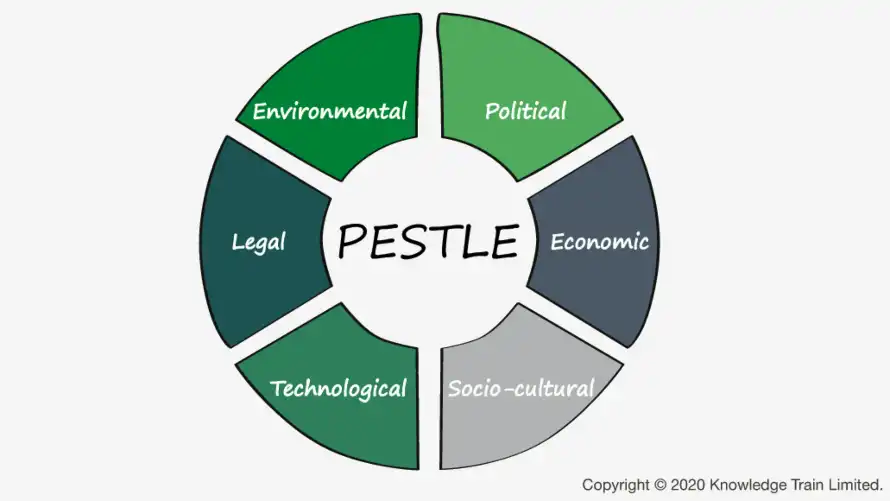
PESTLE analysis is a strategic tool used to identify and assess the external factors that can impact a business. It stands for Political, Economic, Social, Technological, Legal, and Environmental factors. The primary purpose of PESTLE analysis is to provide a comprehensive understanding of the macro-environmental conditions affecting an organisation. By evaluating these external forces, businesses can anticipate changes and adapt their strategies accordingly. This proactive approach aids in mitigating risks and capitalising on potential opportunities.
Evolution from PEST to PESTLE
The framework began as ETPS, created by Francis Aguilar in 1967, before being rearranged to PEST, focusing on Political, Economic, Social and Technological aspects. Over time, the need to address Legal and Environmental factors led to the evolution of PEST into PESTLE analysis. This expansion reflects the growing complexity of the business environment, where legal compliance and Name sustainability have become crucial considerations. The incorporation of these additional factors allows organisations to build a more robust strategic plan. PESTLE analysis complements SWOT analysis Email , offering insights into external factors whilst SWOT examines both external and internal elements. This combined approach enhances decision-making by aligning organisational strengths with external opportunities while addressing potential threats.
Components of PESTLE analysis
Political factors Phone
Government policies and stability
Government policies are a significant influence on business environments. Changes in taxation, labour laws, or trade restrictions can alter market dynamics. Political stability is equally important, as it fosters a predictable environment for investment. Businesses must monitor policy changes to maintain compliance and align strategies with governmental priorities.
Trade regulations and tariffs How can we help?
Trade regulations and tariffs affect businesses entering or expanding in new markets. Import duties may limit market access whilst trade agreements can create opportunities. Understanding these regulations helps businesses navigate international markets effectively, mitigating risks associated with cross-border trade.
Economic factors
Economic growth and exchange rates Submit
Economic growth is a key indicator of market potential. During periods of growth, consumer spending typically increases, leading to higher demand for goods and services. Exchange rates also play a pivotal role, affecting the cost of imports and exports. Businesses must adapt pricing and sourcing strategies to manage currency fluctuations.
Inflation and interest rates
Inflation and interest rates profoundly impact consumer behaviour. High inflation erodes purchasing power, while interest rates influence borrowing costs. Businesses must adjust their pricing strategies to remain competitive and manage debt effectively during fluctuating economic conditions. OUR VALUES
Social factors Our 6 core values are everything we do. They include:
Cultural norms and demographics Integrity
Cultural norms and demographics shape consumer preferences and behaviours. Understanding these social factors helps businesses tailor products and marketing strategies to meet the needs of diverse populations. Demographic shifts, such as an ageing population, can also create new market opportunities. Diversity
Lifestyle changes Fairness
Lifestyle changes, driven by shifts in social values and technological advancements, affect consumer demands. As lifestyles evolve, businesses must innovate to offer products and services that align with emerging trends, such as increased health consciousness or digital engagement. Quality
Technological factors Innovation
Technological advancements Social responsibility
Technological advancements drive business transformation by enhancing operational efficiency and enabling new business models. Companies must stay abreast of technological trends to capitalise on innovation, whether through automation, artificial intelligence, or other emerging technologies.
Research and development SOCIAL RESPONSIBILITY
Investment in research and development (R&D) is crucial for maintaining a competitive edge. Businesses that prioritise R&D can lead in innovation, delivering unique products and services. This focus on R&D supports long-term growth and adaptability in a rapidly changing market. Some of the charities we have helped over the years:
Legal factors
Employment and labour laws
Employment and labour laws affect human resources by governing hiring practices, workplace safety, and employee rights. Businesses must ensure compliance with these laws to avoid litigation and foster a fair and productive work environment.