Introduction to PESTLE analysis
Definition and purposeInfographic
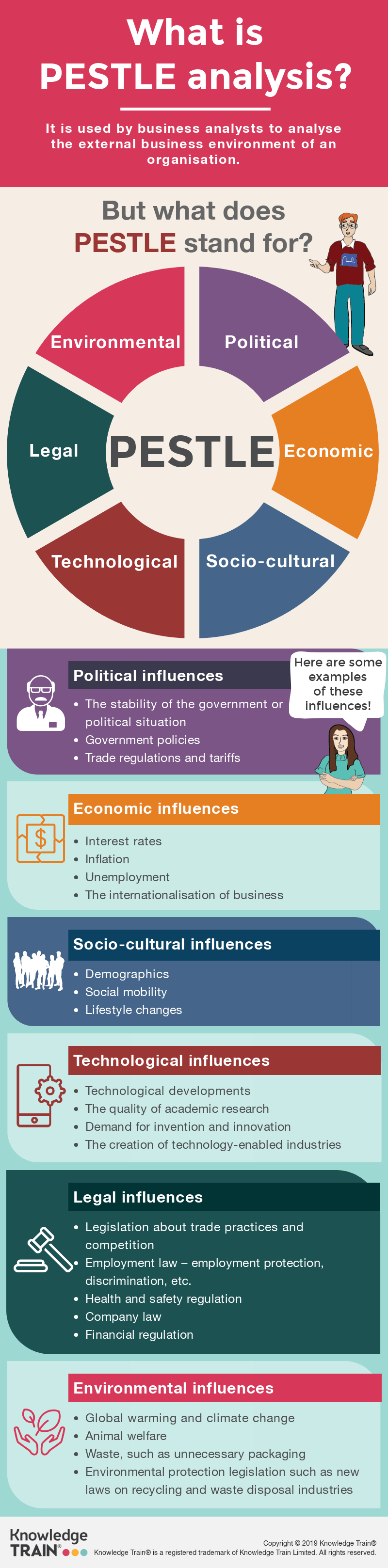
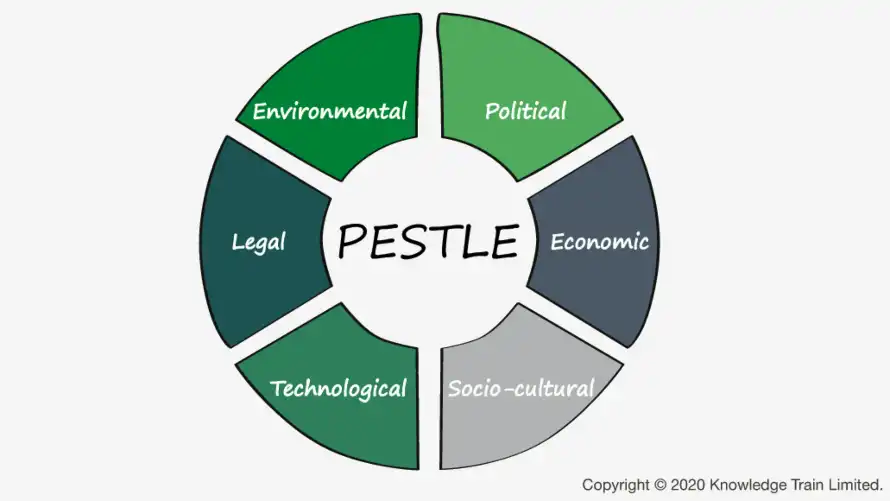
PESTLE analysisIntroduction to Senge’s system thinking model is a strategic tool used to identify and assess the external factors that can impact a business. It stands for Political, Economic, Social, Technological, Legal, and Environmental factors. The primary purpose of PESTLE analysis is to provide a comprehensive understanding of the macro-environmental conditions affecting an organisation. By evaluating these external forces, businesses can anticipate changes and adapt their strategies accordingly. This proactive approach aids in mitigating risks and capitalising on potential opportunities.Overview of system thinking
Evolution from PEST to PESTLEDefinition and significance
The framework began as ETPS, created by Francis Aguilar in 1967, before being rearranged to PEST, focusing on Political, Economic, Social and Technological aspects. Over time, the need to address Legal and Environmental factors led to the evolution of PEST into PESTLE analysis. This expansion reflects the growing complexity of the business environment, where legal compliance and System thinking is a holistic approach to understanding how various parts of an organisation interrelate. It focuses on recognising patterns and interdependencies rather than isolated events. This approach is crucial in today’s organisational contexts because it allows leaders to foresee long-term consequences and make informed decisions. By considering the broader picture, organisations can address complex problems more effectively and sustainably.sustainabilityHistorical background have become crucial considerations. The incorporation of these additional factors allows organisations to build a more robust strategic plan. PESTLE analysis complements Systems thinking emerged from General Systems Theory developed by Ludwig von Bertalanffy in the 1940s and cybernetics by Norbert Wiener. These foundations shaped modern systems thinking approaches in organisations. Pioneers in management theory recognised that understanding these interactions is essential for fostering innovation and resilience. As a result, system thinking became integral to modern management practices.SWOT analysisIntroduction to Peter Senge, offering insights into external factors whilst SWOT examines both external and internal elements. This combined approach enhances decision-making by aligning organisational strengths with external opportunities while addressing potential threats.About Peter Senge
Components of PESTLE analysisPeter Senge
Political factors is a renowned scholar and author in the field of management. He is a senior lecturer at MIT, and his work has revolutionised how organisations approach learning and change. Senge’s research emphasises the importance of creating learning organisations that continuously adapt and grow.
Government policies and stabilityThe fifth discipline
Government policies are a significant influence on business environments. Changes in taxation, labour laws, or trade restrictions can alter market dynamics. Political stability is equally important, as it fosters a predictable environment for investment. Businesses must monitor policy changes to maintain compliance and align strategies with governmental priorities.In his seminal book, “The fifth discipline,” Senge outlines five key disciplines necessary for building a learning organisation. These include personal mastery, mental models, shared vision, team learning, and systems thinking. His work highlights how these disciplines can transform organisational culture, enhancing efficiency and strategic thinking.
Trade regulations and tariffsCore principles of Senge’s model
Trade regulations and tariffs affect businesses entering or expanding in new markets. Import duties may limit market access whilst trade agreements can create opportunities. Understanding these regulations helps businesses navigate international markets effectively, mitigating risks associated with cross-border trade.Understanding the five disciplines
Economic factorsPersonal mastery
Economic growth and exchange ratesPersonal mastery centres on recognising the gap between current reality and personal vision. This gap creates ‘creative tension’ which drives individual growth and learning. It requires both clarifying what matters and seeing current reality clearly. In the context of system thinking, personal mastery encourages individuals to see their role within a larger system. This self-awareness helps them contribute more effectively to organisational goals.
Economic growth is a key indicator of market potential. During periods of growth, consumer spending typically increases, leading to higher demand for goods and services. Exchange rates also play a pivotal role, affecting the cost of imports and exports. Businesses must adapt pricing and sourcing strategies to manage currency fluctuations.Mental models
Inflation and interest ratesMental models are deeply ingrained assumptions that influence how we understand the world. Senge incorporated Chris Argyris’s ‘ladder of inference’ alongside the ‘left-hand column’ technique to examine these assumptions. These tools help organisations identify and challenge limiting beliefs. By examining and challenging mental models, individuals and teams can eliminate biases and embrace new perspectives. This process is crucial for fostering open-mindedness and adaptability.
Inflation and interest rates profoundly impact consumer behaviour. High inflation erodes purchasing power, while interest rates influence borrowing costs. Businesses must adjust their pricing strategies to remain competitive and manage debt effectively during fluctuating economic conditions.Shared vision
Social factorsA shared vision is a collective aspiration that provides direction and purpose. It unifies team members, motivating them to work towards common goals. When everyone in an organisation shares the same vision, it creates a sense of belonging and commitment. This alignment enhances collaboration and drives consistent efforts across all levels.
Cultural norms and demographicsTeam learning
Cultural norms and demographics shape consumer preferences and behaviours. Understanding these social factors helps businesses tailor products and marketing strategies to meet the needs of diverse populations. Demographic shifts, such as an ageing population, can also create new market opportunities.Team learning develops through dialogue and discussion. Senge emphasises two distinct practices: dialogue (free exploration of complex issues) and discussion (where different views are presented and defended). This discipline requires managing defensive routines that undermine collective learning. By learning together, teams can solve problems more effectively and innovate continuously. This discipline emphasises the importance of knowledge sharing and encourages a culture of mutual support.
Lifestyle changesSystems thinking
Lifestyle changes, driven by shifts in social values and technological advancements, affect consumer demands. As lifestyles evolve, businesses must innovate to offer products and services that align with emerging trends, such as increased health consciousness or digital engagement.Systems thinking, which Senge named ‘The Fifth Discipline’ in his 1990 book, integrates the other four disciplines. It examines how systems interconnect and change over time through feedback loops, system archetypes and delays. By recognising patterns and relationships, organisations can address root causes rather than symptoms. Systems thinking provides a comprehensive framework for analysing complex issues, making it the cornerstone of Senge’s model.
Technological factorsInterconnectedness of the disciplines
Technological advancementsSynergistic effects
Technological advancements drive business transformation by enhancing operational efficiency and enabling new business models. Companies must stay abreast of technological trends to capitalise on innovation, whether through automation, artificial intelligence, or other emerging technologies.The integration of these five disciplines leads to synergistic effects that enhance organisational effectiveness. When combined, they provide a holistic approach to tackling challenges. Each discipline complements the others, creating a dynamic interplay that fosters resilience and adaptability. This synergy helps organisations navigate complex environments more successfully.
Research and developmentDiscipline
Investment in research and development (R&D) is crucial for maintaining a competitive edge. Businesses that prioritise R&D can lead in innovation, delivering unique products and services. This focus on R&D supports long-term growth and adaptability in a rapidly changing market.Key benefit
Legal factorsPersonal mastery
Employment and labour lawsEnhances individual contribution
Employment and labour laws affect human resources by governing hiring practices, workplace safety, and employee rights. Businesses must ensure compliance with these laws to avoid litigation and foster a fair and productive work environment.Mental models
Regulatory compliancePromotes open-mindedness
Regulatory compliance is vital for business operations across various sectors. Organisations must follow advertising standards, consumer protection legislation and product safety requirements. By doing so, they protect themselves from legal issues and build consumer trust, ensuring long-term success in the marketplace.Shared vision
Application of PESTLE analysis in strategic planning
Identifying opportunities and threatsSelf-paced
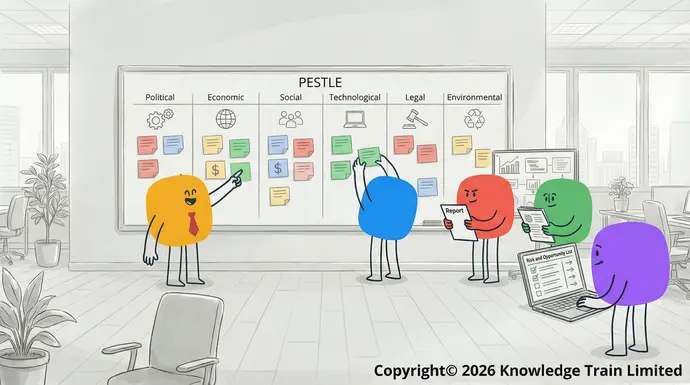
PESTLE analysis is a vital tool for recognising external opportunities and threats. By systematically examining Political, Economic, Social, Technological, Legal, and Environmental factors, businesses can identify potential growth areas and foresee challenges. This analysis enables organisations to adapt their strategies, ensuring they remain competitive. For instance, a change in government policy might present a new market opportunity, while economic downturns could pose threats that need mitigation. Understanding these dynamics allows companies to capitalise on favourable conditions and devise contingency plans for adverse scenarios, thus enhancing their strategic positioning.Change Management Foundation self-paced online
Integrating PESTLE with SWOT analysis
Integrating PESTLE with £799 +vatSWOT analysisApplications of Senge’s system thinking model provides a comprehensive strategic framework. While PESTLE focuses on external factors, SWOT examines internal strengths and weaknesses alongside external opportunities and threats. This combined approach offers a holistic view of the business environment, facilitating informed decision-making. By using PESTLE to inform SWOT, organisations can align their internal capabilities with external conditions, optimising strategic initiatives. This synergy not only aids in identifying areas for improvement but also highlights where the business can excel. Furthermore, the integration of these analyses can reduce stress and enhance confidence among stakeholders by providing clarity and direction. In workplace settings, this combined approach fosters a proactive culture, encouraging employees to anticipate changes and innovate accordingly. Ultimately, this strategic alignment drives sustainable growth and resilience in an ever-evolving business landscape.Organisational strategy and change management
Creating a PESTLE analysis templateStrategic planning
Key elements to includeSystem thinking plays a crucial role in strategic planning by offering a comprehensive view of organisational dynamics. It encourages leaders to consider the long-term effects of their decisions. By recognising patterns and feedback loops, organisations can develop robust strategies that anticipate potential challenges. This approach ensures that plans are adaptable and aligned with the organisation’s vision.
A comprehensive PESTLE analysis template should encompass all six macro-environmental factors: Political, Economic, Social, Technological, Legal, and Environmental. For each factor, consider including:Change management
- Political: Government policies, stability, tax policiesIn the realm of
- Economicchange management: Growth rates, inflation, exchange rates, system thinking provides a framework for understanding the complexities of organisational transitions. It helps identify underlying causes of resistance and facilitates smoother implementation of change initiatives. By focusing on relationships and interdependencies, leaders can craft strategies that address concerns and engage stakeholders effectively. This holistic view reduces disruptions and enhances the success of change efforts.
- SocialProblem-solving and decision-making
- Implementing Senge’s model can significantly enhance organisational efficResearch and gather data
- Challenges and limitations: Structure the data under the relevant categories in the template.
- Evaluate Impact: Assess how each factor might present opportunities or threats.
- Review and updateImplementation barriers: Regularly revisit the template to incorporate new developments.Despite its benefits, adopting system thinking presents several implementation barriers. Organisations often face resistance from employees accustomed to traditional methods. The shift to a more interconnected approach requires changes in mindset and behaviour, which can be difficult to achieve. Additionally, the complexity of system thinking may overwhelm those unfamiliar with its principles.
By following these steps, you can ensure your PESTLE analysis remains relevant and actionable. This structured approach not only aids strategic planning but also reduces uncertainty, fostering a stable environment for decision-making. In turn, this can enhance workplace morale by clarifying organisational priorities and aligning them with external realities.Overcoming resistance
Real-world examples of PESTLE analysisTo overcome resistance, organisations can employ several strategies. Providing comprehensive training and support helps employees understand the value of system thinking. Encouraging small-scale pilot projects allows teams to experience its benefits firsthand. Leadership plays a crucial role in modelling the desired behaviours and reinforcing the importance of the new approach. By creating a supportive environment, organisations can cultivate a system thinking culture.
Case study 1: Industry applicationIn conclusion, while implementing Senge’s model can enhance efficiency, innovation, and collaboration, it requires overcoming significant challenges. By addressing these barriers and fostering a culture of openness and learning, organisations can realise the full potential of system thinking. This transformation not only improves performance but also contributes to a more resilient and adaptable organisational culture.
In the automotive industry, PESTLE analysis has been instrumental in shaping strategic decisions. For instance, the shift towards electric vehicles (EVs) is influenced by several PESTLE factors. Governments worldwide are implementing stricter emissions regulations and offering subsidies to promote EV adoption. These political and environmental factors create opportunities for car manufacturers to innovate. Organisations that proactively adapt to these changes by investing in R&D and expanding their EV offerings can gain a competitive edge, aligning with both consumer demands and regulatory pressures.Case studies and real-world examples
Case study 2: Country analysisSuccessful implementations
PESTLE analysis is also valuable for assessing national economic conditions, as demonstrated in the case of India. The country presents diverse market opportunities and challenges, with varying economic conditions across different regions and sectors. However, challenges such as complex legal regulations and environmental concerns persist. By applying PESTLE, businesses can navigate India’s dynamic market landscape. Understanding these factors helps organisations tailor their strategies to leverage economic opportunities while addressing social and legal challenges, ultimately facilitating successful market entry and expansion. This approach reduces strategic uncertainty, leading to enhanced organisational confidence and stability.Corporate examples
ConclusionSeveral companies have successfully integrated Senge’s system thinking model into their operations. For instance, Royal Dutch Shell applied systems thinking through scenario planning in the 1970s and 1980s, which helped them prepare for major oil market changes. Similarly, Unilever adopted system thinking to improve sustainability practices, resulting in significant reductions in waste and resource consumption.
PESTLE analysis is a crucial tool in strategic planning and decision-making. It provides a comprehensive view of external factors influencing an organisation, enabling businesses to identify opportunities and mitigate threats. By integrating PESTLE with other analytical tools, organisations can develop informed strategies that align with both internal strengths and external realities. This approach not only enhances operational effectiveness but also reduces strategic uncertainty. In workplace settings, the use of PESTLE instils confidence and clarity, contributing to stress reduction and improved decision-making. Ultimately, PESTLE analysis supports sustainable growth and competitive advantage in a complex business environment.Sector-specific applications
FAQsIn the healthcare sector, system thinking has been applied to streamline patient care pathways, improving outcomes and reducing costs. Educational institutions have also embraced this model to foster collaborative learning environments, enhancing both teaching methods and student engagement. These sector-specific applications demonstrate the versatility of Senge’s model across different fields.
What is the difference between PEST and PESTLE analysis?Lessons learned
PEST analysis stands for Political, Economic, Social, and Technological factors. PESTLE expands this framework by including Legal and Environmental factors. This expansion provides a more comprehensive view of external influences on a business.Key takeaways
How frequently should organisations conduct PESTLE analysis?The key takeaway from these examples is the importance of aligning the organisation’s vision with system thinking principles. Successful implementations often involve a strong commitment from leadership and a willingness to challenge existing mental models. Organisations that foster a culture of learning and open communication tend to reap the most benefits.
Senge’s system thinking model offers a holistic framework that enhances efficiency, innovation, and collaboration. By integrating personal mastery, mental models, shared vision, team learning, and systems thinking, organisations can address complex challenges effectively.
Can PESTLE analysis be used for small businesses?Future outlook
Yes, PESTLE analysis is valuable for small businesses. It helps them understand the external environment, identify opportunities, and mitigate risks. This knowledge is crucial for strategic planning and competitive positioning.The future of system thinking in organisational development is promising. As businesses navigate increasing complexity, this model’s principles will become even more relevant. By fostering a culture of continuous learning and adaptability, organisations can not only improve performance but also enhance employee well-being, leading to sustainable success.
What are the limitations of PESTLE analysis?FAQs
PESTLE analysis can be subjective, relying on the accuracy of available data and the analyst’s interpretation. It may not capture rapid changes, and its broad scope can make it challenging to focus on specific business needs.What is Senge’s system thinking model?
How does PESTLE analysis contribute to risk management?A framework for understanding organisational complexity through five interconnected disciplines. The model emphasises how personal mastery, mental models, shared vision, team learning, and systems thinking work together to create sustainable
PESTLE analysis contributes to organisational changerisk management. by identifying external threats and opportunities. It informs strategic decisions and helps businesses prepare for potential challenges, reducing uncertainty and enhancing organisational resilience.How can system thinking improve organisational performance?
InfographicBy enhancing efficiency, collaboration, and innovation. The approach helps organisations identify root causes of problems, understand feedback loops, and develop more sustainable solutions through holistic analysis.