
Key takeawaysPersonal business case
Business analyst certification validates capability and signals credibility to employers across industries.You may also use a business case to justify an investment you make in your personal life. For example, when you’re thinking of moving home to another area. You and your spouse will need to understand the costs of moving, the timescales and risks involved, and weigh these up against the benefits to be gained e.g. saving time traveling to your office, or your children able to go to a better school.
- Choose a certification that matches your experience level, career goals, and the roles you want next.Why have a business case?
- Expect eligibility checks such as training hours, work experience, and professional references for advanced credentials.Projects should not just start on a whim or because of vanity – although a lot of money has been wasted over the years on such
- Prepare using official guides like BABOK, accredited courses, and scenario-based practice exams.projects
- Budget for exam fees, training, and ongoing renewal costs, with many options available online..
- Certification can improve promotion prospects, salary potential, and access to professional networks and CPD.For business organisations, justification for a project usually takes a commercial form i.e. evaluating how much money could be made from the investment. For example, investing money in developing a new software app to bring first to market, might be deemed to bring certain monetary benefits (in terms of sales) which exceeds the costs of investment.
What is business analyst certification?Options considered
Business analyst certificationA business case should weigh up the competing options which have been considered. After all, there is usually more than one option. Perhaps an alternative option would have been for John to change his job to one nearer their current house. However, this wouldn’t solve the issue with the school. is the process by which professionals validate their understanding, skills, and experience in Benefitsbusiness analysisThe benefits of a project or activity are the positive things you’re going to get back in return for your investment of time and money. In this case, the kids will get a better education, and John will save time each day.
The next section is where the costs and timescales and risks are weighed up. For this project, it’s a simple decision for the couple to decide if it’s worth spending money over the next 5 years to give their kids better schooling and to save John 2 hours a day commuting. from the Project Management InstituteFor an organisation to decide if an investment is worthwhile, however, there are several different ways in which it can decide about the investment. (PMI)Often in organisations there are rules defined to help business analysts or , demonstrates a thorough mastery of techniques and principles such as those from the project managersBusiness Analysis Body of Knowledge (BABOK) write what’s called an investment appraisal. In the next example, we’ll look at one example known as net benefits.
- Review your career goals, current experience, and the types of business analysis roles you are interested in before choosing a certification.
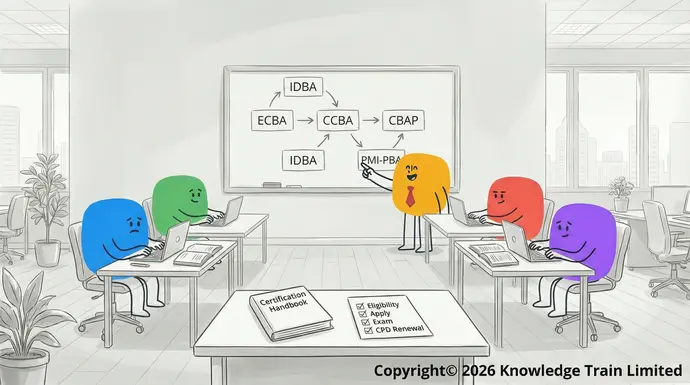
- Choose the right certification: Compare key options from the BCS, IIBA, and PMI based on their eligibility requirements, recognition, and suitability to your experience level and industry.
- Check eligibility criteria: Evaluate prerequisites such as education, work experience, and professional development units (PDUs) for your chosen certification .Instructor-led
- Prepare for the exam:Better Business Cases Practitioner (with Foundation) course Use exam study materials like BABOK, take preparation courses from accredited training providers, and practise with sample questions.
- Apply for certification:£2,400 +vat Complete your application via the relevant body’s official website (BCS, IIBA or PMI) and submit required documents and payment.
- Schedule and sit the certification exam:See all dates Book a suitable date for the exam (via online certification options or test centres) and complete the assessment.
- Maintain your certification: Engage in continuing professional development and renew your credential according to the provider’s certification renewal policy.
| None | ||||
| PCRE | BCS | No experience; training required | High | None |
| PCMBP | BCSPRINCE2 practices: Free ebook | No experience; training required | HighSimon Buehring | None19 Feb 2026 |
| IDBA | BCSGet a free ebook on PRINCE2 practices to prepare for your PRINCE2 Foundation exam. Discover the integrated elements of PRINCE2 by reading further. | No experience; training required | High | None |
| ECBA | IIBA | No experience; training required | High | Annual renewalProject management steps |
| CCBA | IIBAKnowledge Train | 3,750 hours BA in 7 years19 Feb 2026 | ||
20 Mar 2026Business analyst certification cost
Certification costs vary by level, provider, and membership status (BCS, IIBA or PMI), typically ranging from £192 for entry-level to over £1,200 for advanced certifications. Many preparation courses and exams offer online certification optionsChoosing the right project management qualification can be crucial. Learn about the options and which suits your career goals best., including remote proctored exams, e-learning modules, and digital study materials. Costs should also take into account renewal fees and continuing professional development requirements.
Certification exam tips
- Study the BABOK guide and related exam study materials thoroughly.
- Take practice exams from accredited training providers.
- Join online study groups or forums to discuss scenario-based questions.
- Ensure you meet all eligibility requirements before applying.
- Develop a study plan covering all exam topics well in advance of your exam date.