
Definition of AgileOf course, nothing is really free. It’s a sales pitch. And, more than likely, the training location is not luxury and the statistics have been fiddled. The past few years have seen an explosion of cheap PRINCE2 training providers, all sporting variations on these tag lines. Why is it that these remain effective, despite the fact that most prospective PRINCE2 students are fully aware of the illusory nature of sales strategies and marketing?
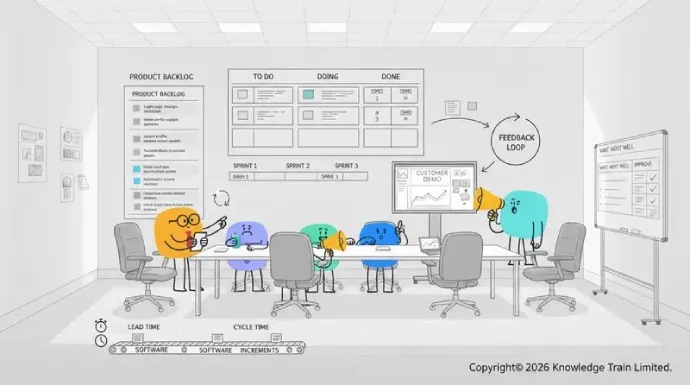
AgileOne reason is perhaps the difficulty of knowing the best way to select a PRINCE2 training provider. There are many factors involved, not immediately apparent to the PRINCE2 novice. The nature of refers to a set of principles and practices that guide teams in developing software products through incremental delivery, adaptive planning, and continual improvement. Agile emphasises iterative development, close team collaboration, and frequent customer feedback to deliver high-quality solutions quickly and efficiently.PRINCE2 training
Agile methodology at a glance means that there are a narrow range of end results for any
| AspectPRINCE2 course | |
|---|---|
| Purpose | Deliver working software frequently, respond to change rapidly (i.e., choosing |
| Key valuesPRINCE2 Foundation | Individuals and interactions, working software, customer collaboration, responding to change or |
| ApproachPRINCE2 Practitioner | Iterative, adaptive, and incremental), and most courses tend to be the same length. Thus, the only remaining variable seems to be cost, which can be strikingly different from one training provider to another. |
| Popular frameworksThe training experience matters | ScrumHowever, while cost may be the most obvious variable from the purchasing end, it is perhaps the least important from the perspective of the experience and effectiveness of the training. Understanding the , Kanban, Extreme Programming (XP)PRINCE2 methodology |
| Stakeholders and | Customers, product owners, cross-functional teams, Scrum Masterspassing the PRINCE2 examinations |
Summary of the Agile Manifesto and Its values is dependent upon a training experience that allows students sufficient time to absorb the material, to communicate with an experienced PRINCE2 trainer, and to discuss the
The PRINCE2 methodAgile Manifesto in relation to their own project management situations., published in 2001 by 17 software development experts, established the foundation for All too often, cost-cutter training courses preclude these aspects of the PRINCE2 training experience. In order to offer students cheap courses, training providers cut back in four basic areas: materials, venue, time and Agile methodologiestrainers. It promotes four core values and twelve underlying principles to guide teams toward continuous improvement and customer satisfaction..
Agile Manifesto: Four valuesEnhance your skills with our expert-led courses
- Individuals and interactions over processes and tools
- Working software over comprehensive documentation
- Customer collaboration over contract negotiation
- Responding to change over following a planInstructor-led
Agile principlesPRINCE2 Practitioner (with Foundation) course
Agile is supported by twelve guiding principles, intended to help teams create successful products in an ever-changing environment. These principles inform day-to-day Agile practices.
- Satisfy the customer through early and continuous delivery of valuable software£1,899 +vat
- Welcome changing requirements, even late in development
- Deliver working software frequently, from a couple of weeks to a couple of monthsSee all dates
- Collaborate daily between business people and developers
- Build projects around motivated individuals and provide supportSelf-paced
- Convey information face-to-face whenever possiblePRINCE2 Practitioner (with Foundation) self-paced online
- Working software is the primary measure of progress
- Maintain a sustainable development pace£1,399 +vat
- Continuous attention to technical excellence and good design
- Simplicity – the art of maximising the work not done – is essential
- Self-organising teams produce the best architectures, requirements, and designs
- Regularly reflect and adapt to improve effectivenessInstructor-led
Historical origins and evolution of AgilePRINCE2 Foundation course
The Agile approach originated in the late 1990s as software teams sought alternatives to rigid project management models like the Waterfall£1,299 +vat model. In 2001, seventeen thought leaders signed the Agile ManifestoSee all dates, formalising Agile values and sparking the formation of the Agile Alliance. Since then, Agile has evolved beyond software development into Materialsproject managementPRINCE2, product development, and operations. is a comprehensive methodology, and it is vital that students have access to clear and reliable training materials, in order to grasp the ins and outs of each process, the interrelation of the
Benefits of Agilemanagement products
- Flexibility:, and the role each principle and theme plays in the overall framework. Respond rapidly to changing customer needs and market conditions.Death by PowerPoint
- Continuous improvement:Cheap training courses have a preference for PowerPoint, often printed six to a page. There are some PRINCE2 training providers who offer their students more than 360 PowerPoint slides in 3 days. Talk about death by PowerPoint! Regular retrospectives help teams adapt and improve their processes.Ask about the materials
- Customer satisfaction:When selecting a Frequent delivery ensures customer requirements are met early and often.PRINCE2 course
- Transparency: for yourself or your team, take a few minutes to enquire about, or peruse the training materials available: Are they printed, for example, in black and white or colour (a significant concern, given the quantity of PRINCE2 charts and diagrams)? Are training materials available online? What kind of pre-course materials are offered? Iterative development and open communication foster stakeholder trust.Need to be continuously improved
- Reduced risk:Less reputable training providers will not devote time to improving their course materials because they see this as a cost. If they can get away with using the same materials time after time, even though they aren’t effective, then they will do so. Incremental delivery allows for earlier issue detection and correction.Better training providers know how important the whole learning experience is, and take the time to improve their materials over time.
- Enhanced team collaboration: The team and trainers at KT were great and the materials much better than what I have seen from other providers. Cross-functional teams communicate daily to resolve challenges efficiently.
Agile vs waterfall model
| Aspect | AgileSarah P. | WaterfallProject Manager, NHS. |
|---|---|---|
| ProcessVenue | Iterative and incrementalAvoid supermarket courses | Sequential and linearPile ’em high, sell ’em cheap—that’s the motto of a growing number of PRINCE2 training providers, and in today’s tight financial climate, the strategy has its successes. However, it also results in students crammed thirty to a room (yes, you read it right – more than thirty!), sharing desks, training materials, and sometimes even chairs. (I’m not kidding – these are all examples taken by students who have attended such courses with other providers, failed and then came to |
| FlexibilityKnowledge Train | Adaptive to change to take another course with us). | Resistant to change after initial planningThe bigger the size, the lower the educational value |
| Customer involvementThe problem with high class sizes means the higher the ratio of students to teacher, the less one-to-one communication is possible, and the harder it becomes for the student to grasp the course material. In other words, the more students in the class, the less the educational value (and comfort level) for each. | High, continuous feedbackYou need to be able to ask questions | Typically only during requirements and acceptance stagesThis is starkly illustrated by the situations of some classrooms, in which students are barred from asking questions, as there are simply too many for any kind of interaction beyond the lecture theatre set-up. One student who came to Knowledge Train after failing their exam with another provider said the first thing the trainer told his students on the first morning was that “nobody could ask questions because otherwise I don’t have enough time to get through the materials”. |
| DeliveryTime | Frequent, partial releasesMost PRINCE2 trainers will ask their students to study in advance of the course, and to complete a certain amount of homework and revision before their | Full product delivered at project endPRINCE2 exam |
| Risk. In cost-cutting training organizations, however, this can be taken to extremes. | Problems discovered earlyAvoid huge amounts of time beforehand | Issues often found lateWith less time available in class to ask questions to the trainer, cheap training providers compensate for this by making their students spend more time preparing for the course in advance (often up to 15 hours) and more time doing homework. |
Agile frameworks and practicesWhile I wouldn’t want to prevent any keen student from going that extra mile, it is important to be aware, when choosing your
Scrum frameworkPRINCE2 training
Scrum, that such excessive extra study time is a clear indication that the classroom hours and environment are not sufficient to support a high success rate or effective PRINCE2 training. is a widely adopted Agile framework structured around short, timeboxed periods called Everyone thought the course was very enjoyable and engaging, much more than they were expecting. I am definitely looking to get more staff onto this course.sprints . Teams maintain a product backlog of features and tasks, delivering increments of working software at the end of each sprint. Roles in Scrum include Product Owner, Jack E,Scrum MasterBusiness Analyst, Siemens., and Development Team. Daily stand-ups, sprint planning, reviews, and retrospectives reinforce team collaboration and transparency.Trainers
KanbanGood trainers cost money
Kanban emphasises visualising work, limiting work in progress, and optimising flow. Teams use Kanban boards to track tasks and identify bottlenecks, often integrating continuous improvement practices.One crucial way that cheap training providers use to save money is to employ inexperienced trainers. Those trainers just starting out in their training career are glad to get any work. The most experienced PRINCE2 trainers (and therefore more costly) can
User stories and Product Backlog
Features are typically described as user stories in a product backlog. This backlog is prioritised by the Product Owner and guides the work to be pulled into each sprint or iteration.
Agile project management pick and choose who they work for.
Agile project managementBy choosing the cheapest PRINCE2 training providers, it’s very likely that your trainer will be relatively inexperienced in delivering focuses on iterative planning, adaptive resource allocation, and continuous stakeholder engagement. Leaders support self-organising, cross-functional teams, encourage regular customer feedback, and facilitate incremental value delivery.PRINCE2
Key concepts: Iterative and incremental delivery.
Agile projects proceed in small iterations, each resulting in an incrementally improved product. This iterative approach enables rapid adaptation, regular feedback, and incremental value to stakeholders.We’ve even heard of one academy bringing PRINCE2 trainers in from India to deliver courses in the UK. There’s no shortage of qualified, experienced PRINCE2 trainers in the UK, so they can only be doing this to save money.
Team collaboration and cross-functional teams The best thing about the course was the tutor who made the material really easy to understand and the exam a much less stressful process. I would recommend this course as I now feel I’m much more able to steer projects in a more meaningful way.
Agile emphasises collaboration between customers, stakeholders, and team members from diverse disciplines. Cross-functional teams are empowered to make decisions and deliver complete solutions within each iteration.
Continuous improvement practices
Agile teams conduct regular retrospectives to identify areas for improvement and adjust their processes. This culture of continuous improvement leads to increased quality, productivity, and team morale over time.
FAQsBig is not better
What is Agile methodology?Some companies like to tell you they are the largest provider. You know what large companies are often like – think of your mobile, or gas or electric provider. Good customer service? Probably not. It’s the same with training providers.
Agile methodologyThe sales staff trying to sell you a course cares nothing about you, or your career goals. They are only interested in their sales commission. That’s why they will try to sell you a course which might be totally unsuitable for you. That includes making all kinds of untrue claims simply because they want to close the sale. is a set of practices and values that promote adaptive planning, evolutionary development, early delivery, and continual improvement. Agile methods empower teams to respond quickly to change and collaborate closely with stakeholders.Don’t be treated as a sales target
What are the 12 principles of Agile?It’s generally the case that the larger the company, the less the individual customer is valued. You just become a number, a sales target, something to be shifted between departments as part of a system.
The A smaller provider is much more likely to treat you as an individual, not as a potential sales target. The best providers will try to understand your training needs before offering you advice about which course (if any) would suit you.12 Agile principlesIs the provider ethical? include prioritising customer satisfaction through early and continual delivery, welcoming changing requirements, delivering working software frequently, fostering daily collaboration, supporting motivated teams, preferring face-to-face communication, using working software as the main progress measure, maintaining a sustainable pace, focusing on technical excellence, maximising simplicity, enabling self-organising teams, and reflecting regularly for process improvement.You might think that all training organisations are ethical in the sense that they advertise a course, you pay for it, and then you attend and hopefully get accreditation at the end. Sounds simple doesn’t it?
What is the difference between Agile and waterfall?However, there are some unethical training organizations who have no intention of ever running a course in a particular location. They advertise it however, will take your money but often don’t deliver.
Agile is iterative, adaptable, and focuses on incremental delivery with frequent stakeholder feedback. The typical way this works is that the unethical provider will advertise the same course running in 5 or 6 cities in the same country all on the same date. They will then advertise the same course in the same cities the next month. They hope to get one or two people from each city and will then cancel all the courses except one and tell people from the other cities the location has changed and they must travel to the other city to attend the course, take their Waterfallonline learning is linear, sequential, and requires upfront planning, often only allowing changes late in the project cycle. instead, or lose their money.
What are Scrum and Kanban frameworks?Enhance your skills with our expert-led courses
Scrum is an Agile framework that organises work into fixed-length sprints and uses roles like Product Owner and Scrum Master . Kanban is a visual method for managing workflow, limiting work in progress, and focusing on incremental improvements.Instructor-led
How does Agile improve team collaboration?PRINCE2 Practitioner (with Foundation) course
Agile improves collaboration through daily communication, cross-functional team structures, and regular stakeholder engagement, ensuring all members align towards shared goals.