What is Scrum? An Introduction to the Scrum FrameworkSimon Buehring

Definition of Scrum with the adaptive, flexible practices of
ScrumAgile is an agile framework designed to help teams develop, deliver, and sustain complex products through collaboration, transparency, and iterative progress. Most widely used in software development, Scrum offers a structured approach to frameworks. It is widely used for managing project managementprojects by defining specific roles, events, and artifacts that guide work and foster continuous improvement. across industries in ways that embrace iterative development, collaborative teams, and adaptive planning.
What is Scrum?Defining PRINCE2, Agile and PRINCE2 Agile
Scrum is an iterative and incremental agile framework that enables teams to manage complex projects by delivering work in short cycles called What is PRINCE2?SprintsPRINCE2. It is characterised by roles, events, and artifacts, all of which facilitate transparency and adaptability. Scrum empowers cross-functional teams to achieve high productivity and deliver value quickly. (Projects in Controlled Environments, version 2) is a
History of Scrumproject management methodology
The based on best practice principles for project governance, roles, processes, and controls. It was developed to provide a universally applicable structure for running projects of any size.Scrum frameworkWhat is Agile? was formalised in the early 1990s by Ken Schwaber and Jeff Sutherland, who drew inspiration from iterative development concepts described in a 1986 Harvard Business Review article. Since then, Scrum has evolved and become one of the most recognised frameworks in AgileAgile refers to a group of methodologies, such as software development, with its core guidance outlined in the ScrumScrum Guide, .Kanban
Core principles of Scrum, and
- Empirical process control:AgilePM Decisions are based on observation, experience, and experimentation., that focus on incremental delivery, collaboration, responsiveness to change, and customer feedback. Agile frameworks are commonly associated with software development but are increasingly used across various sectors.
- Transparency:How PRINCE2 Agile Integrates PRINCE2 and Agile Important aspects of the process must be visible to those responsible for the outcome.PRINCE2 Agile
- Inspection: integrates PRINCE2’s project governance and management principles with Agile tools and techniques, enabling structured yet flexible Scrum users inspect Scrum artifacts and progress regularly to detect undesirable variances.project delivery
- Adaptation:. Processes are adjusted as soon as possible if inspection reveals an aspect outside acceptable limits.PRINCE2
Key roles in Scrum focuses on what needs to be delivered, while Agile determines how it will be delivered and how teams collaborate. This combination allows for adaptability without compromising on control or quality.
- Scrum MasterKey features and principles of PRINCE2 Agile:Governance: Facilitates the Scrum process, removes obstacles, and supports the team in adhering to Scrum practices. Maintains clear roles, responsibilities, and processes aligned with
- Product Owner:PRINCE2 Represents stakeholder interests, manages the .Product BacklogTailoring:, and ensures the team delivers value. Adapts the methodology to fit project type, size, and environment.
- Development Team:Collaboration: A cross-functional group responsible for delivering a potentially releasable Emphasises team communication using IncrementAgile at the end of each Sprint. practices such as daily stand-ups.
Scrum eventsIterative delivery:
- Sprint: Encourages incremental project progress typical of Agile frameworks. A time-boxed period (typically two weeks) in which a usable product Increment is created.Focus on value:
- Sprint Planning: Aligns project outputs closely with stakeholder needs and business objectives. The team defines the goals and selects items from the Product Backlog.Flexibility:
- Daily Scrum: Supports rapid change adaptation through iterative approaches like A short daily meeting for the team to inspect progress and plan the next 24 hours.Scrum
- Sprint Review: and Kanban. The team demonstrates the Increment to stakeholders and receives feedback.Benefits of PRINCE2 Agile
- Sprint Retrospective:Combines strong project direction with rapid, adaptive delivery. The team reflects on the Sprint and identifies ways to improve.Helps teams manage project risk while remaining responsive to change.
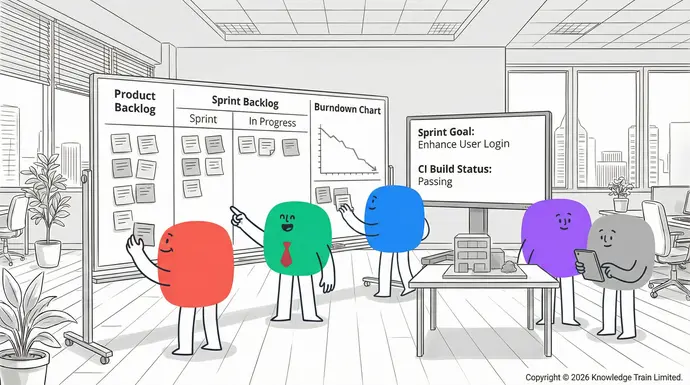
Scrum artifactsWidely recognised
- Product Backlog:certification An ordered list of everything that might be needed in the product, maintained by the Product Owner. that enhances career prospects for
- Sprint Backlog:project managers The set of Product Backlog items selected for the Sprint, plus a plan for delivering the Increment., scrum masters, product owners, and team leads.
- Increment:Applicable to a range of industries including IT, construction, finance, and healthcare. The sum of all completed Product Backlog items during a Sprint and previous Sprints, which must be in a usable condition.Certification structure: Foundation and Practitioner levels
- Burndown chart:PRINCE2 Agile certification A visual representation tracking the remaining work in the Sprint. is managed by
- User storyAXELOS: and delivered by A concise, simple description of a feature or requirement from the user’s perspective.Knowledge Train
Scrum vs Agile and other accredited training organisations. There are two main certification levels:
Scrum is a framework within the broader Foundation level:agile methodology Introduces basic concepts, ensuring awareness of the fundamentals of PRINCE2, Agile, and their integration. The exam focuses on knowledge and comprehension.. While Practitioner level:Agile Develops advanced skills to apply and tailor PRINCE2 Agile to real-world projects. The exam tests application and analysis abilities. is a set of principles and values for iterative development, Scrum provides a specific structure for roles, events, and artifacts that enable Certification process and exam structureAgile principlesCandidates typically undertake formal in practice.training
Scrum certification through an
Various organisations offer accredited training organizationScrum certification, followed by an online or classroom exam. The Foundation exam is multiple choice, while the Practitioner exam involves scenario-based questions. Examination standards and costs are established by the certification body (, including professional designations for AXELOSScrum Master). Syllabuses are updated periodically to align with industry practice., Product Owner, and Development Team members. Who should get PRINCE2 Agile certified?CertificationsThis qualification is suitable for demonstrate understanding of Scrum principles and can support professional development.project managers
How to implement Scrum, team leaders, Scrum Masters, Product Owners,
- Form cross-functional teams with defined Scrum roles.business analysts
- Train team members in Scrum principles and the Scrum Guide., and any professionals involved in
- Create and prioritise a Product Backlog with project deliveryuser stories using PRINCE2, Agile, or hybrid approaches..PRINCE2 Agile compared to other frameworks
- Plan and execute Sprints using Scrum events.Framework
- Review progress, adapt processes, and incrementally deliver value.Approach
FAQsFocus
What is the main purpose of Scrum?Best for
Scrum’s main purpose is to help teams develop and deliver complex products by encouraging collaboration, adaptability, and incremental value delivery in short cycles called Sprints.PRINCE2
How does Scrum differ from Agile?Structured, sequential (Waterfall)
AgileGovernance, is a set of guiding principles for software development, whereas Scrum is a specific framework within Agile that defines roles, events, and artifacts for teamwork and accountability.project control
What are the key roles in a Scrum team?All sizes and types of project
The key Scrum roles are PRINCE2 AgileScrum MasterHybrid, Product Owner, and Development Team. Each has defined responsibilities to ensure effective collaboration and delivery.Governance with flexibility
What are Scrum events and why are they important?Organisations needing both control and adaptability
Scrum events include Sprint, Sprint Planning, Daily Scrum, Sprint Review, and Sprint Retrospective. These events facilitate communication, inspection, and continuous improvement.AgilePM
How can a team start with Scrum?Agile
A team can start with Scrum by learning the framework, defining roles, creating a Product Backlog, planning Sprints, and using Scrum events and artifacts to guide work.Iterative delivery, flexibility
What is a Burndown Chart in Scrum?Projects requiring rapid response
A Burndown Chart visually tracks the amount of work remaining in a Sprint, helping teams monitor progress and forecast completion.Scrum