DSDM principles: A visual guideProject management consultant

Key takeaways
DSDM is an agile framework that blends iterative delivery with built-in project management discipline.
- Keep decisions anchored to the business case by prioritising with MoSCoW and delivering within fixed timeboxes.
- Build one collaborative team by involving business, technical staff and stakeholders throughout via workshops and empowered roles.
- Fix quality expectations early and protect them with continuous testing and frequent reviews.
- Agree firm foundations upfront, then deliver increments that are regularly revalidated against viability and feedback.
- Maintain control through clear communication, visible plans and progress measured by outcomes delivered, not activity.
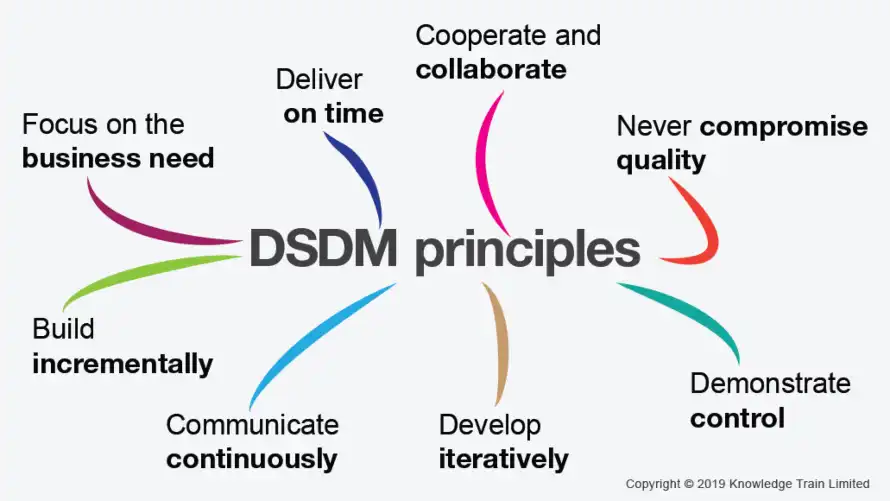
project management consultant other than software projects. It can also be applied on any product development projects. By delivering a workable product incrementally at the end of each timebox, DSDM can deliver business value early in the product development lifecycle., from the role itself to the jobs and the challenges of this exciting career path.
DSDM provides agile project managementWhat is a project management consultant?
In the UK, the Agile Business Consortium worked in partnership with APMG International to create Agile Project Management (AgilePM), an agile project management certification scheme with exams. agileKRC offers both classroom training in AgilePM, as well as e-learning solutions. Both training options include the A project management consultant is a specialist who advises organisations on AgilePM examproject management practices., processes, and methodologies. They will work with the client to help them make their projects more efficient, find solutions to difficult problems, and make their projects more successful.
Provides expert recommendationsShould be, Responsible for project execution and deliveryCOften works on a contract basisould be or Usually, a permanent employeeWBroader industry exposureon’t be delivered. Timeboxing helps to separate work into manageable chunks of time, with each chunk having its own deliverables and deadline.Deeper knowledge of specific organisational processes
The Foundation phase in DSDM also helps the team build focus. During this phase, team roles are established. The team then form the overall strategy, decide how risk/quality will be assessed, how technology will be used and how the project will be managed.The success of an organisation largely depends on the projects they have implemented and how these projects are managed. Therefore, the job of a
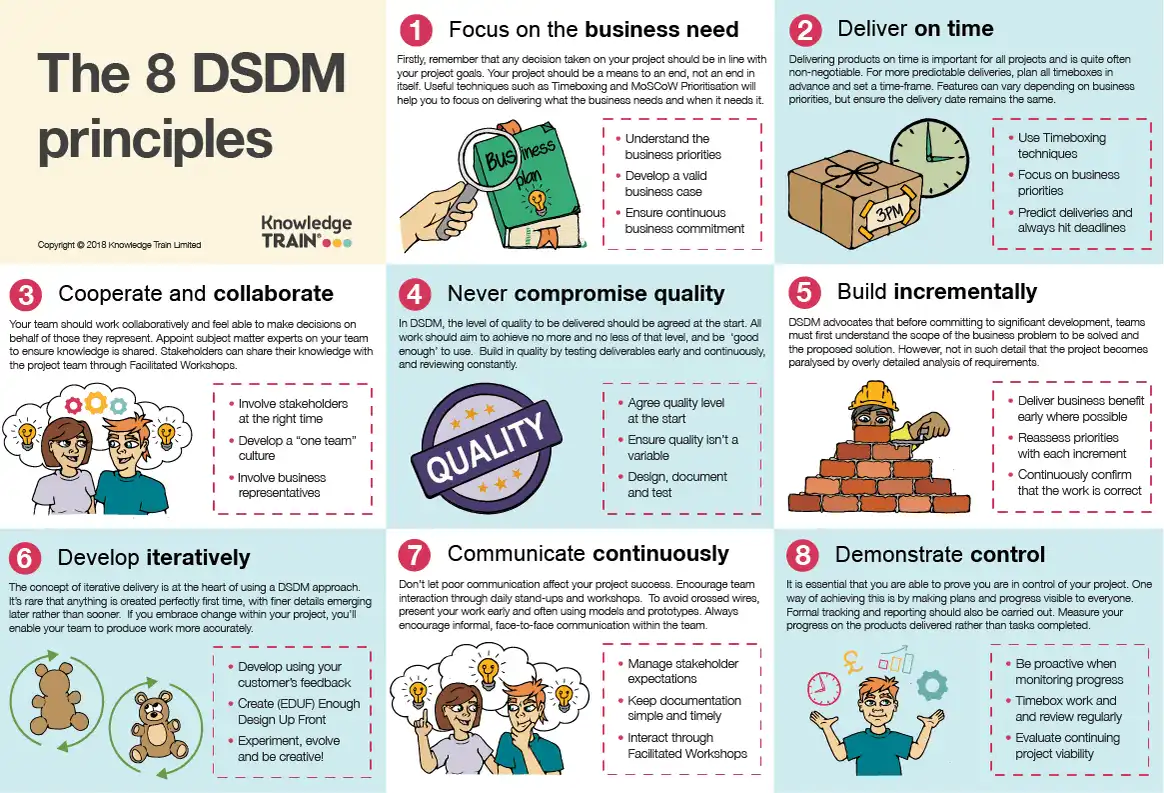
2. Deliver on timeproject manager
Fixed time periods is essential to the success of the organisation. However, project managers may not have the expertise to assist the organisation in the long term in terms of managing projects. In such cases, project management consultants come in. The role of a project management consultant is to analyse the
DSDM is an agile framework that works plans work in fixed time periods (timeboxes), rather like sprints in project management approachAgile Scrum and make recommendations to improve the overall organisation’s processes and ensure a streamlined and more effective approach.. The aim is to deliver a useable software product at the end of each timebox (iteration). DSDM is thus an incremental approach, as well as an iterative development approach to delivering software.Skills and qualifications for project management consultants
DSDM places a strong emphasis on prompt delivery, proposing that even projects without any need for a fixed deadline still benefit from one. This is because having deadlines is the best way to control changing requirements. To stick to this principle, DSDM teams should focus on priorities, hit deadlines and manage their time by using the Here are some of the key skills and qualifications required to become a project management consultant:MoSCoWStrong foundation in project management methods and timeboxing techniques.. You must be familiar with the different
3. Collaborateproject management methodologies
Team spirit and collaboration is highly important for DSDM teams. This is based on a rejection of having multiple departments that rarely interact. Teams should instead work as one unit and collaborate to encourage understanding, higher performance and shared ownership. (e.g.,
Business and technical staff work together Agile
DSDM teams fulfil this principle by having business and technical staff together in the team, instead of separately. The team involve stakeholders throughout the project and ensure each team member feels empowered to make decisions. The team use ‘workshops’ to meet stakeholders and involve them in the project.,
Ensuring collaborationScrum
The visionary, ambassador and business advisor roles also ensure collaboration. The visionary conveys the sponsor’s needs to the team and ensures the business case objectives are achieved. Ambassadors communicate user’s needs to the development team, whilst business advisors assist with areas such as law or marketing. On a non-agile project, these roles would be performed outside of the project or would not exist at all.,
4. Never compromise qualityPRINCE2
Quality is always fixed on DSDM projects and must be decided at the start. The final product shouldn’t be any more or any less than the quality decided upon.) and be able to identify which one is most suitable for the project. You must be able to decide which methodology to use based on the client’s requirements.
Continuous testingAnalytical thinking
To adhere to this principle, DSDM teams must ensure quality doesn’t become a variable by testing continuously and reviewing constantly. This testing and reviewing occurs during the ‘exploration’ and ‘engineering’ iterative development phases. Testing should happen early in the project. Again, MoSCoW and timeboxing can be used to ensure testing is appropriate and organized.. This is one of the most important skills for a project management consultant. As a project management consultant, you will have to analyse a situation and provide practical and creative solutions. For this, you will need to analyse a lot of data and come up with the right solution.
5. Build incrementally from firm foundationsCommunication
DSDM differs from other agile methodsskills as it requires the foundations of the project to be agreed early. The foundations don’t need to be in too much detail – just agree on what the problem is and how to solve it. Once foundations are established, the solution must be delivered incrementally.. Communication is key in the consulting industry. You must be a good communicator, especially when it comes to explaining concepts to your clients and their team members. You must be able to communicate effectively and concisely. Your communication skills must be adapted based on the different situations and the audience.
Just enough design up frontLeadership
To adhere to this principle, DSDM teams must ensure they perform analysis and ‘enough design up front’ (EDUF) at the start of the project. During each increment, the team must re-assess priorities and project viability, ensuring they have taken stakeholder feedback into consideration. Both the feasibility and foundation phases allow for establishing a foundation; the exploration and engineering phases allow for incremental delivery.
6. Develop iterativelyand
DSDM proposes that nothing is created perfectly first time and projects operate in a constantly changing world. Incremental delivery allows for such change to be embraced and leads to higher stakeholder satisfaction. Each iteration is combined with testing, demonstrations and feedback. This ensures that each iteration improves upon the last and leads to a decent final product.
Feedback loopinterpersonal
DSDM teams can adhere to this principle by building feedback into each iteration. They must also be in the mindset that details should emerge later, not sooner, and they must embrace change. During each iteration, they should encourage creativity and experimentation, which will lead to learning and improvement. Constant review and feedback allow for change and progress to occur.
To deliver an incremental working release of software at the end of each iteration DSDM recommends the skillsMoSCoW prioritisation. A project management consultant must be able to guide and influence people. You will need to lead teams and persuade others to adopt a change and believe in the change that you are advocating. Consultants must quickly understand and adapt to new environments and challenges. user storiesacumen.. As a