Sustainable project management

Key takeaways
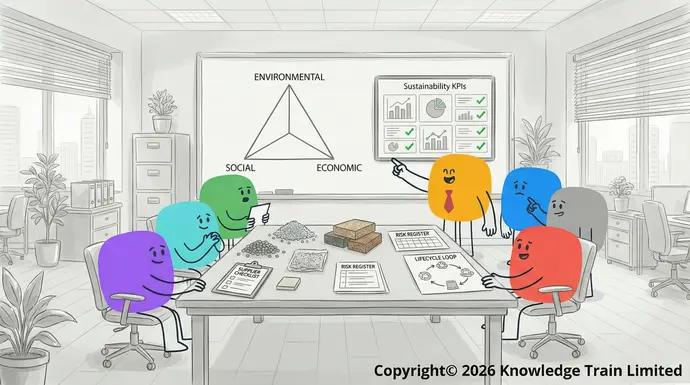
Introduction
Sustainable project management is a holistic approach that integrates environmental , social , and economic considerations into all stages of the project lifecycle. It extends the traditional project management focus on scope, time, and cost to include the long-term impacts and value creation of a project.
With growing awareness of sustainability issues, sustainable project management has become a critical capability for organisations seeking to reduce their environmental footprint, increase social responsibility, and ensure economic viability.
Project managers who implement sustainable practices can help organisations address these challenges while still achieving successful project outcomes.
Key concepts in sustainable project management include:
- Triple bottom line : This approach emphasises the importance of considering people, planet, and profit (also known as the three Ps) in project management decisions.
- Stakeholder engagement : Sustainable project management involves actively engaging with all stakeholders affected by the project throughout its lifecycle.
- Life cycle thinking : This concept encourages project managers to consider the entire life cycle of a project, from inception to disposal or recycling, to identify opportunities for sustainability improvements.
- Risk management : Sustainable project management requires the identification and mitigation of potential risks associated with environmental, social, and economic factors.
- Innovation : Developing innovative solutions and technologies is critical for addressing sustainability challenges in project management.
As we delve into the concept of sustainable project management, we will explore how these key ideas can be applied throughout each stage of the project lifecycle. We will also provide practical tools, techniques, and real-world examples that demonstrate the effectiveness of this approach in creating value for both organisations and society.
Monitor sustainability metrics defined during the planning phase throughout the project execution to ensure the project is on track in terms of sustainability goals . Use a sustainability dashboard with KPIs to track progress and have regular reporting and review of sustainability metrics to identify areas where corrective actions may be required if targets are not being met.
For example, a KPI could be the “Percentage of waste diverted from landfill during construction.”
Adapting to changing sustainability requirements
Sustainability requirements can change during the project execution phase. Implement a change management process for sustainability-related changes and regularly review and update sustainability goals and strategies. Create a culture of continuous improvement in sustainability practices to ensure the project adapts to emerging sustainability issues and opportunities.
Closing
Evaluating sustainability outcomes
Monitoring and evaluating the project’s sustainability performance should also be an integral part of organisational learning. Measure the final sustainability outcomes against the initial objectives and quantify the environmental, social, and economic impact. Develop a sustainability report that summarises the sustainability achievements and areas of improvement for future projects.
ned for future projects
Documenting and sharing sustainability lessons learned can help to enhance the performance of future projects. Establish a process for capturing sustainability lessons learned and organise dedicated knowledge sharing sessions focused on sustainability best practices. Incorporate the sustainability lessons learned into the organisation’s project management processes and frameworks to continuously improve the sustainable project management practices.
Incorporating these strategies into the different phases of the project lifecycle can help project managers to systematically include sustainability into their project management practices.
Remember, the integration of sustainability is an ongoing process, and continuous improvement and adaptation are key to achieving sustainable project management excellence.
Tools and techniques for sustainable project management
Tools and techniques can help project management professionals implement sustainability in their projects. They can use them to measure, plan, and report on sustainability efforts.
Life Cycle Assessment
Life Cycle Assessment is a method to assess the environmental impacts of a project or product throughout its entire life cycle. This includes all stages, from raw material extraction to disposal or recycling. Project managers can use LCA to identify the stages with the highest environmental impact, compare the impacts of different materials or processes, and make decisions to reduce the overall environmental footprint of the project. LCA can also help identify unexpected areas of impact and target improvements in the sustainability of the project.
Sustainability impact matrix Request a quote
A sustainability impact matrix is a project management resource that provides a visual representation of the potential impacts of a project on various sustainability factors, such as environmental, social, and economic considerations. This matrix typically takes the form of a table or grid where rows represent different sustainability factors, and columns represent potential project options, alternatives, or actions.[email protected]
Project managers can use the sustainability impact matrix to assess and prioritise sustainability aspects of a project, identify areas that require immediate attention or improvement, and communicate sustainability priorities to stakeholders.
Courses is specialised software tools designed to help organisations integrate sustainability considerations into their project management processes. These tools typically offer features that allow users to track and manage environmental, social, and economic aspects of projects.PROJECT MANAGEMENT
Project managers can leverage green PRINCE2project management software® to plan and execute projects with a focus on sustainability by monitoring and reducing resource consumption, energy usage, waste generation, and carbon emissions, as well as promoting sustainable practices throughout the project lifecycle.Foundation
Sustainability reporting frameworksLearn the fundamentals of the PRINCE2 method.
Sustainability reporting frameworksPractitioner are project management resources that provide standardised guidelines and principles for reporting and disclosing an organisation’s Environmental, Social, and Governance (ESG) performance. These frameworks help organisations structure their sustainability data collection, measurement, and reporting efforts.Includes Foundation & Practitioner combined option.
Project managers can utilise sustainability reporting frameworks to ensure consistency and comparability in sustainability reporting, align project-level sustainability efforts with organisational goals, and communicate sustainability performance and initiatives to stakeholders.
With the use of these tools and techniques, project managers can better incorporate sustainability practices into their projects. They also can gain valuable insight to support decision-making and to effectively communicate with stakeholders on sustainability activities.
Challenges and solutions in sustainable project managementAssociation for Project Management (APM)
The process of adopting and implementing sustainability within project management can be an obstacle at times. With creativity and an eagerness to focus on sustainable value over time, solutions can be devised.Project Fundamentals Qualification (PFQ)
Balancing competing prioritiesStart your APM project management career.
BalancingProject Management Qualification (PMQ) different aspects of the triple bottom line is a significant challenge in the sustainable project management method. Social, economic, and environmental priorities may conflict, and project managers often find themselves in a bind.Advance your APM project management expertise.
SolutionProject Risk Single Certificate Level 1 : Develop a decision-making matrix that considers a variety of sustainability factors. The matrix will help you visually evaluate your choices and how they contribute to the project’s sustainability goals.Enhance your project risk management skills.
Overcoming resistance to changeAgilePM
Project teams and stakeholders may be used to using conventional ®project management methods – Agile Project Management. Sustainable approaches are often met with criticism because of the shift in established processes and possible financial implications.Foundation
SolutionLearn the key principles of Agile Project Management.: Design and implement a solid Practitioner change management strategyIncludes Foundation & Practitioner combined option.. A persuasive communication plan, training sessions, and even small demonstration projects will help you to highlight the benefits of sustainable processes and assure people about the success of the transition to sustainability.PRINCE2
Resistance can be significantly diminished by slowly implementing various components of the sustainable approach, as well as sharing specific instances when these components provide benefits to a project.®
Measuring intangible benefits Agile
Many sustainability initiatives produce intangible benefits that are difficult to measure in traditional financial terms. This can make it challenging to communicate the value of sustainability investments to stakeholders and justify their inclusion in projects.Foundation
SolutionLearn the fundamentals of the PRINCE2 Agile method.: Leverage Practitioner integrated reportingIncludes Foundation & Practitioner combined option. techniques that combine financial and non-financial metrics. Establish a set of KPIs that reflect both tangible and intangible aspects of sustainability benefits. For example, employee satisfaction and retention rates, brand reputation and customer loyalty metrics, and ecosystem services valuation.AI Project Governance Framework (AIPGF)
These metrics provide a more holistic view of a project’s overall value creation.Foundation
Addressing supply chain sustainabilityLearn the fundamentals of the governance framework.
Achieving sustainability throughout the supply chain can be challenging, particularly when working with multiple suppliers across different geographical locations.Practitioner
Solution: Develop and implement a Includes Foundation & Practitioner combined option.sustainable procurement strategyBetter Business Cases that incorporates supplier sustainability assessments and audits, collaborative improvement programmes with key suppliers, and the use of blockchain technology for greater supply chain transparency.™
Working closely with suppliers and utilising technology can enhance visibility and control over supply chain sustainability.Foundation
Challenges such as measuring intangible benefits and addressing supply chain sustainability are just a few examples of the issues that sustainable Learn the fundamentals of Better Business cases.project managersPractitioner face. With innovative solutions and a commitment to holistic and responsible practices, it is possible to overcome these challenges and deliver successful sustainable project outcomes.Includes Foundation & Practitioner combined option.
Case studiesPractitioner
Analysing real-life examples of successful sustainable projects can offer valuable insights into effective strategies and best practices. The following case studies highlight how organisations from various sectors have embraced sustainable project management principles to achieve remarkable outcomes.Includes Foundation & Practitioner combined option.
Construction industry exampleWorkshops
ProjectAI in Project Management
Eco-friendly office complex in LondonLearn how to use AI tools in everyday project work.
DescriptionAGILE
A large construction company was responsible for the development of a multi-story office complex. The project team prioritised sustainability and incorporated various environmentally friendly features, including:AgilePM
- Energy-efficient design, using passive solar heating and natural ventilation®
- Rainwater harvesting system for non-potable water use – Agile Project Management
- Use of recycled and locally sourced materials.Foundation
OutcomeLearn the key principles of Agile Project Management.
The project received BREEAM ‘Outstanding’ certification and achieved a 40% reduction in energy consumption compared to similar buildings. The sustainable design resulted in lower operating costs and higher tenant satisfaction, which translated into higher occupancy rates and rental premiums.Practitioner
IT sector exampleIncludes Foundation & Practitioner combined option.
ProjectPRINCE2
Agile
DescriptionFoundation
A global technology company undertook a project to optimise the energy efficiency of its data centres. The project involved:Learn the fundamentals of the PRINCE2 Agile method.
- Installing advanced cooling systems with AI-driven temperature controlPractitioner
- Implementing server virtualisation to reduce hardware requirementsIncludes Foundation & Practitioner combined option.
- Utilising renewable energy sources for power supply.Scrum
OutcomeScrum Essentials
The project resulted in a 30% reduction in energy consumption at the company’s data centres and a 50,000-tonne annual decrease in carbon emissions. The cost savings from reduced energy use led to a return on investment within two years.Self-paced training course to learn the essentials of Scrum.
Non-profit organisation exampleScrum Master
ProjectChoose Scrum Alliance or Scrum.org Scrum Master training courses.
Sustainable community development in rural AfricaScrum Product Owner
DescriptionChoose Scrum Alliance or Scrum.org Product Owner training courses.
A non-profit organisation launched a project to enhance the quality of life in a rural African community. The project included:AgileBA
- Installation of solar-powered water pumps for clean water access®
- Implementation of agroforestry techniques to increase food security – Agile Business Analysis
- Training in sustainable farming practices.Foundation
OutcomeLearn the fundamentals of Agile Business Analysis.
The project improved the quality of life for 5,000 people in the community. Access to clean water reduced waterborne diseases by 60%, and sustainable farming practices increased crop yields by 40%. The project was replicated in neighbouring communities.Practitioner
The above case studies show that sustainable project management can have significant positive impacts across different industries. By considering environmental, social, and economic factors, organisations can achieve remarkable results that go beyond traditional project success metrics.4-day course including Foundation.
These examples can serve as inspiration for project managers who want to incorporate sustainable practices into their own Lean Six SigmaprojectsYellow Belt .Self-paced training course to gain LSS Yellow Belt.
The future of sustainable project managementPMI
The field of sustainable project management is likely to experience significant changes in the future.®
Emerging trendsPMI-ACP
Some of the key trends to look out for include:Self-paced course to prepare you for the exam (exam not included).
- The integration of KanbanArtificial IntelligenceEstimating for Agile Foundation (AI) and other technologies for optimising resource allocation and predicting environmental impactsAgile Learning Library (ALL)™
- The adoption of BUSINESS ANALYSIScircular economyBCS Business Analysis principles as a standard approach to project design and implementationBusiness Analysis Foundation
- The use of Learn the fundamentals of business analysis.blockchainModelling Business Processes and other emerging technologies to improve supply chain transparency and traceabilityGain practitioner certificate in modelling business processes.
- The increased use of Business Analysis Practices biomimicryGain practitioner certificate in business analysis practices. as a source of inspiration for developing innovative, nature-based solutions to project challenges.Requirements Engineering
Potential impacts on project management professionGain practitioner certificate in requirements engineering.
These trends are expected to have various implications for the project management profession, including:Business Analysis International Diploma
- Skill developmentAll 4 courses bundled into this Diploma certification package.: Project managers will need to develop new skills in sustainability assessment and managementAgileBA
- Certification programmes®: Specialised sustainability certifications for project managers may become more common – Agile Business Analysis
- Performance metricsFoundation training : The traditional project success criteria will be expanded to include sustainability metricsLearn the fundamentals of Agile Business Analysis.
- Stakeholder engagementPractitioner : There will be a greater emphasis on collaboration with a broader range of stakeholders, including environmental and social experts.4-day course including Foundation.
As the practice of sustainable project management continues to evolve, professionals who embrace these changes and adapt to new requirements will be well-positioned to deliver high-impact, future-ready projects. The integration of sustainability principles into project management will become a core competency, rather than an optional consideration.PMI
Conclusion®
Sustainable project management is a relatively new approach that expands on traditional project management methods by incorporating the 3 pillars of sustainability. In this article, we have explored what these 3 pillars are, how they can be implemented throughout the 5 stages of a project, and the different tools and techniques used for sustainable project management. We have also discussed common problems encountered with this approach and how to solve them, as well as some successful real-world examples of sustainable project management in a variety of industries.PMI-PBA
Sustainable project management focuses on incorporating environmental, social, and economic factors throughout the project lifecycle, while traditional project management emphasises time, cost, and scope constraints.
How can I incorporate sustainability into my existing project management framework?
Incorporate sustainability goals into the project charter, conduct a sustainability-focused stakeholder analysis, and integrate sustainability metrics into monitoring and control processes.
What are some common sustainability metrics used in project management?
Common metrics include carbon footprint, waste reduction, energy efficiency, water usage, social impact scores, and sustainable procurement percentages.
