Sustainable project management

IntroductionSlovenia
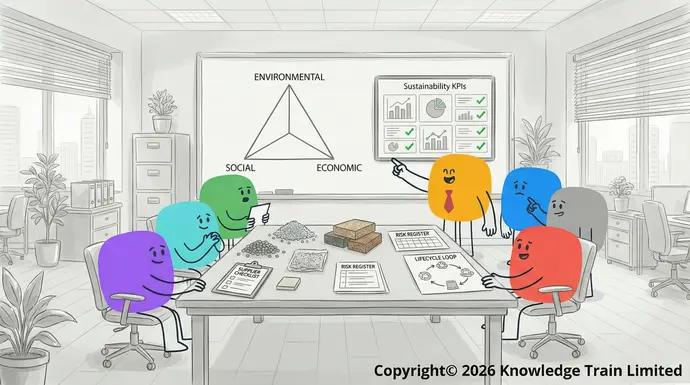
Sustainable project managementSpain is a holistic approach that integrates SwedenenvironmentalOther countries, HomesocialChange Management, and Change management courseseconomicChange Management Models considerations into all stages of the project lifecycle. It extends the traditional project management focus on scope, time, and cost to include the long-term impacts and value creation of a project.Lewin change management
With growing awareness of sustainability issues, sustainable project management has become a critical capability for organisations seeking to reduce their environmental footprint, increase social responsibility, and ensure economic viability.
Project managers{"@context":"http://schema.org","@type":"BreadcrumbList","itemListElement":[{"@type":"ListItem","position":1,"name":"Home","item":"https://www.knowledgetrain.co.uk/"},{"@type":"ListItem","position":2,"name":"Change Management","item":"https://www.knowledgetrain.co.uk/change-management"},{"@type":"ListItem","position":3,"name":"Change management courses","item":"https://www.knowledgetrain.co.uk/change-management/change-management-courses"},{"@type":"ListItem","position":4,"name":"Change Management Models","item":"https://www.knowledgetrain.co.uk/change-management/change-management-courses/change-management-models"},{"@type":"ListItem","position":5,"name":"Lewin change management","item":"https://www.knowledgetrain.co.uk/change-management/change-management-courses/change-management-models/lewin-change-management"}]} who implement sustainable practices can help organisations address these challenges while still achieving successful project outcomes.
Key concepts in sustainable project management include:
- Triple bottom line : This approach emphasises the importance of considering people, planet, and profit (also known as the three Ps) in project management decisions.The essentials of Lewin’s change model for successful change management
- Stakeholder engagement : Sustainable project management involves actively engaging with all stakeholders affected by the project throughout its lifecycle.Simon Buehring
- Life cycle thinking19 Feb 2026: This concept encourages project managers to consider the entire life cycle of a project, from inception to disposal or recycling, to identify opportunities for sustainability improvements.
- Risk management : Sustainable project management requires the identification and mitigation of potential risks associated with environmental, social, and economic factors.
- Innovation : Developing innovative solutions and technologies is critical for addressing sustainability challenges in project management.
As we delve into the concept of sustainable project management, we will explore how these key ideas can be applied throughout each stage of the project lifecycle. We will also provide practical tools, techniques, and real-world examples that demonstrate the effectiveness of this approach in creating value for both organisations and society.
Implementing sustainability in project management processesrefreezing
Ensuring sustainability within . This model is significant for its psychological foundation, which addresses human resistance to change by promoting stress reduction and enhancing acceptance. By understanding and applying Lewin’s principles, organisations can navigate the challenges of change more effectively, ensuring smoother transitions and sustained improvements, ultimately leading to a more resilient and adaptable business environment.project managementOverview of Lewin’s change model processes demands a structured approach throughout every stage of the project life cycle. This section provides detailed guidelines for the integration of sustainability in the project management process.Kurt
Project initiationLewin’s change model
Sustainability goals in project charter is a widely recognised framework for managing
The project charter is a foundational document that guides the integration of sustainability. While developing the project charter, clearly define specific, quantifiable sustainability objectives that align with the overall strategy of the organisation. Identify and allocate resources specifically for sustainability efforts to ensure their effective execution.organisational change
For instance, a sustainability goal could be “Achieve a 25% reduction in carbon emissions associated with the project compared to previous similar projects”.. It breaks down the process into three distinct stages:
Stakeholder analysis and engagementunfreezing
Identifying and engaging stakeholders is a key aspect of sustainability in project management. This involves conducting a stakeholder analysis to identify their sustainability concerns and expectations and developing a stakeholder engagement plan that addresses these issues. The engagement plan should also include communication channels for stakeholders to provide input on sustainability considerations throughout the project lifecycle.,
Planningchanging
Sustainable procurement strategies, and
Look for opportunities to incorporate sustainability into procurement processes. Develop sustainability criteria for supplier selection and evaluation and consider life cycle costing in procurement decisions. Work collaboratively with suppliers to enhance sustainability performance throughout the supply chain. These strategies can help you to achieve more resilient and sustainable project outcomes.refreezing
Risk assessment for sustainability factors. Each stage addresses specific aspects of change management, providing a comprehensive roadmap for organisations aiming to navigate transitions effectively.
Identify and plan for risks related to sustainability factors. Perform a sustainability-focused risk assessment and develop mitigation strategies for identified risks. Integrate these sustainability risks into your overall risk management plan. For example, if your project is in an area prone to drought, assess the risk of water scarcity and plan for potential impacts on project operations.Historically, Lewin developed this model in 1947, a period marked by an increased focus on scientific approaches to psychology. His model remains relevant today due to its simplicity and emphasis on the psychological aspects of change, such as reducing resistance and promoting acceptance. In an era where change is constant, Lewin’s model offers a structured yet flexible approach, allowing organisations to adapt and thrive.
ExecutionUnfreezing
Monitoring sustainability metricsThe
Monitor sustainability metrics defined during the unfreezingplanning phase stage is critical in preparing an organisation for change. It involves creating awareness about the necessity for transformation and challenging existing norms and behaviours. The primary goal is to reduce resistance by showing the benefits of change and the drawbacks of maintaining the status quo. This stage often involves: throughout the project execution to ensure the project is on track in terms of Communicationsustainability goals: Open and transparent communication helps employees understand the reasons for change. It reduces uncertainty and anxiety, fostering a supportive environment where individuals are more willing to let go of old habits.. Use a sustainability dashboard with KPIs to track progress and have regular reporting and review of sustainability metrics to identify areas where corrective actions may be required if targets are not being met.Leadership engagement
For example, a KPI could be the “Percentage of waste diverted from landfill during construction.”: Leaders play a crucial role in modelling desired behaviours and attitudes. Their involvement is essential in building trust and commitment to the change process.
Adapting to changing sustainability requirementsStakeholder involvement
Sustainability requirements can change during the project execution phase. Implement a change management process for sustainability-related changes and regularly review and update sustainability goals and strategies. Create a culture of continuous improvement in sustainability practices to ensure the project adapts to emerging sustainability issues and opportunities.: Engaging key stakeholders early in the process ensures that their concerns are addressed, and their insights are incorporated into the change strategy. This involvement can lead to more innovative solutions and greater buy-in.
ClosingPsychologically, unfreezing helps individuals and groups prepare for change by breaking down existing mindsets and fostering a readiness to embrace new ideas. By addressing the emotional aspects of change, organisations can create a foundation for successful transformation.
Evaluating sustainability outcomesChanging
Monitoring and evaluating the project’s sustainability performance should also be an integral part of organisational learning. Measure the final sustainability outcomes against the initial objectives and quantify the environmental, social, and economic impact. Develop a sustainability report that summarises the sustainability achievements and areas of improvement for future projects.The
to plan and execute projects with a focus on sustainability by monitoring and reducing resource consumption, energy usage, waste generation, and carbon emissions, as well as promoting sustainable practices throughout the project lifecycle.
Sustainability reporting frameworks
Sustainability reporting frameworks are project management resources that provide standardised guidelines and principles for reporting and disclosing an organisation’s Environmental, Social, and Governance (ESG) performance. These frameworks help organisations structure their sustainability data collection, measurement, and reporting efforts.Instructor-led
Project managers can utilise sustainability reporting frameworks to ensure consistency and comparability in sustainability reporting, align project-level sustainability efforts with organisational goals, and communicate sustainability performance and initiatives to stakeholders.Change Management Practitioner (with Foundation) course
With the use of these tools and techniques, project managers can better incorporate sustainability practices into their projects. They also can gain valuable insight to support decision-making and to effectively communicate with stakeholders on sustainability activities.
Challenges and solutions in sustainable project management£1,699 +vat
The process of adopting and implementing sustainability within project management can be an obstacle at times. With creativity and an eagerness to focus on sustainable value over time, solutions can be devised.
Balancing competing prioritiesSee all dates
Balancing different aspects of the triple bottom line is a significant challenge in the sustainable project management method. Social, economic, and environmental priorities may conflict, and project managers often find themselves in a bind.
Solution : Develop a decision-making matrix that considers a variety of sustainability factors. The matrix will help you visually evaluate your choices and how they contribute to the project’s sustainability goals.
Overcoming resistance to changeSelf-paced
Project teams and stakeholders may be used to using conventional Change Management Practitioner (with Foundation) self-paced onlineproject management methods . Sustainable approaches are often met with criticism because of the shift in established processes and possible financial implications.£1,299 +vat
Solution : Design and implement a solid change management strategy . A persuasive communication plan, training sessions, and even small demonstration projects will help you to highlight the benefits of sustainable processes and assure people about the success of the transition to sustainability.Self-paced
Resistance can be significantly diminished by slowly implementing various components of the sustainable approach, as well as sharing specific instances when these components provide benefits to a project.Change Management Foundation self-paced online
Measuring intangible benefits
Many sustainability initiatives produce intangible benefits that are difficult to measure in traditional financial terms. This can make it challenging to communicate the value of sustainability investments to stakeholders and justify their inclusion in projects.£799 +vat
SolutionAdvantages and disadvantages of Lewin’s change model: Leverage Kurt integrated reportingLewin’s techniques that combine financial and non-financial metrics. Establish a set of KPIs that reflect both tangible and intangible aspects of sustainability benefits. For example, employee satisfaction and retention rates, brand reputation and customer loyalty metrics, and ecosystem services valuation. force field analysis and three-stage model of change are renowned for their simplicity and clarity, making them accessible tools for organisations navigating change. One of its primary strengths is its straightforward three-stage process –
These metrics provide a more holistic view of a project’s overall value creation.unfreezing
Addressing supply chain sustainability,
refreezingsustainable procurement strategy that incorporates supplier sustainability assessments and audits, collaborative improvement programmes with key suppliers, and the use of blockchain technology for greater supply chain transparency.. This structure provides a clear roadmap for implementing change, helping organisations manage transitions systematically. Additionally, the model emphasises the psychological aspects of change, such as reducing stress and enhancing acceptance, which fosters a supportive environment for transformation.
Working closely with suppliers and utilising technology can enhance visibility and control over supply chain sustainability.However, despite these advantages, Lewin’s model is not without criticism. A notable limitation is its planned approach to change, which some argue oversimplifies emergent and continuous organisational change processes. In today’s dynamic business environment, change often requires flexibility and adaptability, which a linear model may not sufficiently address. Critics also point out that the model assumes a relatively static environment, whereas many organisations face continuous or overlapping changes that demand more iterative processes.
Challenges such as measuring intangible benefits and addressing supply chain sustainability are just a few examples of the issues that sustainable Furthermore, while Lewin’s model is effective in highlighting the human element of change, it may not fully account for technological advancements and rapid market shifts that influence contemporary project managerschange management face. With innovative solutions and a commitment to holistic and responsible practices, it is possible to overcome these challenges and deliver successful sustainable project outcomes.. Therefore, while Lewin’s change model provides a foundational framework, organisations may need to adapt it or integrate it with other models to address the multifaceted nature of change in today’s world.
Case studies’s model to transition from paper-based to electronic medical records. The
Analysing real-life examples of successful sustainable projects can offer valuable insights into effective strategies and best practices. The following case studies highlight how organisations from various sectors have embraced sustainable project management principles to achieve remarkable outcomes.unfreezing
Construction industry example phase involved addressing staff concerns through information sessions. During the
Projectchanging
Eco-friendly office complex in London stage, training sessions were conducted to familiarise staff with the new system. The
Descriptionrefreezing
A large construction company was responsible for the development of a multi-story office complex. The project team prioritised sustainability and incorporated various environmentally friendly features, including: stage ensured the new process was standard practice, with ongoing technical support provided.
- Energy-efficient design, using passive solar heating and natural ventilationOutcome
- Rainwater harvesting system for non-potable water use: This change increased efficiency and accuracy in patient record management.
- Use of recycled and locally sourced materials.Lesson
Outcome: Continuous support and training are vital for successful technological adoption.
The project received BREEAM ‘Outstanding’ certification and achieved a 40% reduction in energy consumption compared to similar buildings. The sustainable design resulted in lower operating costs and higher tenant satisfaction, which translated into higher occupancy rates and rental premiums.Example 3: Educational institutions
IT sector exampleA university applied Lewin’s model to innovate its teaching methodologies.
Desire
