
New to project or programme delivery?
You can still start with MSP. Many learners use it to understand how programmes are structured and governed, then build experience by supporting or managing workstreams as they progress.
- MSP qualification overview
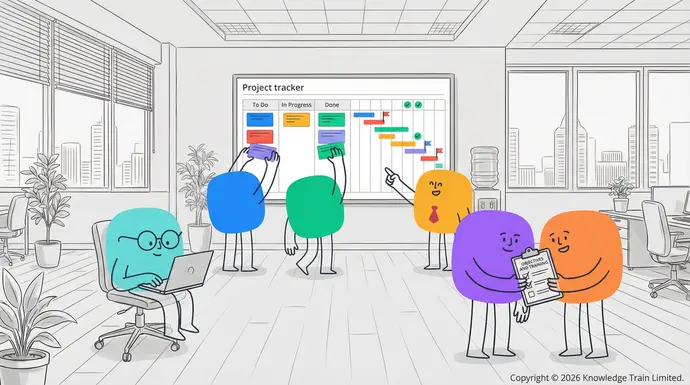
- Programme management is about coordinating related projects and workstreams to deliver outcomes and measurable benefits. MSP provides a structured approach to setting direction, establishing governance, and keeping a programme on track through change.
- What MSP helps you do:
- Define outcomes and benefits, not just outputs
Run private MSP training for your team, aligned to your governance and goals.
- FAQs
- Is MSP the right qualification for programme management?
- MSP is designed for programme management – coordinating related initiatives to deliver outcomes and benefits through clear governance. If you’re moving beyond single projects into broader change with multiple workstreams, MSP is often a strong fit.
Yes. We deliver private training for organisations and can tailor the focus, delivery approach and scheduling to match your governance and programme goals. systemLook for courses accredited by respected bodies to ensure industry recognition—such as Ofqual for UK qualifications or specific sectoral organisations.
Can I study alongside a full-time job?Focus on perfection.Leading course providers and accreditation bodies What is different are the finer details such as “What is value?” or “What creates waste?” In manufacturing, waste is created by worn-out machinery, transportation costs, poorly engineered components, or excess inventories.Type
In modern industries, waste may refer to bloated software with additional features that do not provide value to users or an online registration procedure that is convoluted and time-consuming.Examples
Yes, many learners study alongside work by choosing a format and pace that fits their schedule. Study options vary, so view MSP course options to see what’s available.Agile principlesEducation providers
- Still have questions? Tell us what you’re aiming for and we’ll help you choose the right MSP course option.At a very basic level, Lean and Agile are almost indistinguishable.Universities, colleges, adult education centres
- In Agile software development, teams apply an iterative approach to software delivery. Developers first create a minimum viable product which, though it may lack many planned features, can be put into work and immediately start generating value for customers.Course providers
- How to find usSimilarly, Lean encourages teams to deliver fast by managing workloads and limiting the amount of WIP (work-in-process) to improve focus and reduce development time. Both Lean and Agile teams manage flow by working in cross-functional teams and delivering one iteration at a time.E-learning platforms, MOOC platforms, professional training institutes
- Knowledge TrainAgileAccreditation bodies
20 Old Bailey, London, EC4M 7AN, promotes short feedback loops so that developers only do work that meets the latest business requirements.Ofqual, City & Guilds, relevant chartered institutes England, United Kingdom.Lean also encourages this in its definition of waste – if you’re making something that doesn’t meet your customers’ needs, it is a waste. Short feedback loops help eliminate activities that do not provide value.Further information and authoritative guidance are available through the
Call Agile methodsUK government education portal
+44 (0)207 148 5985 rely on disciplined governance that encourages frequent review and learning. This approach helps developers discover valuable insights after each release that can then be applied to improve the quality of future iterations. and recognised sector bodies.
- Opening hoursThe Lean principle of “Build Quality In” encourages businesses to automate any process prone to human error so that developers can focus on more complex tasks. This automation, troubleshooting, and consistent delivery process helps Lean teams continuously refine and optimize their development processes.FAQs
- Monday to Friday – 09:00 to 17:15Implementing Lean managementWhat is a training course?
- Contact usAdopting Lean into your development model isn’t as simple as learning the A training course is a structured learning programme designed to teach skills or knowledge within a particular domain, often leading to
- Lean principlescertification
. It’s a lengthy process that might fail without adequate guidance and preparation. You may want to consider soliciting the help of professional or a recognised qualification. What types of training courses are available?change managers
Types include professional development, vocational, to help ease the transition to Lean.online learning But in a more general case, if we do not consider change management issues, there is still the difficulty of deciding which of the many lean tools to use and adopt. Lean includes dozens of tools, methods, and techniques, the relevance of which are very situational. Implementing lean requires that organisations make some very important decisions (hopefully based on a lot of research!)., accredited, free, paid, and adult education courses.NameImplementing Lean always has an associated risk. Unfortunately, there are no specific tools for the selection and prioritisation of methods during implementation. To mitigate the risk of implementing Lean in your business or organization, it’s important that all key staff are adequately trained to the level of Lean suitable to their position within the organizational hierarchy. Each level of
How do I choose the right training course? Lean Six Sigma certification
- Consider your learning goals, course accreditation, delivery format, syllabus, cost, and entry requirements. , for example, corresponds to staff duties within project development. To learn more, make sure to see our selection of
- What are typical enrollment requirements?PhoneLean Six Sigma online courses and in-house training
- Requirements vary by course; some need previous qualifications or experience, while others are open to all learners. .
- Are online training courses recognised by employers? It may benefit organisations to assess the value of Lean from a cost/benefit/risk perspective and ask the following questions:
Many online courses are accredited and industry-recognised, especially those offered by reputable e-learning platforms or universities.EmailWhat is the benefit of this lean technique and how difficult is it to achieve? (Is it worth doing this? Is it worth risking failure?)What are the benefits of taking a training course? Does this lean technique benefit the sustainability of the change intervention? (Would it have long-term benefits?)
Benefits include career advancement, upskilling, certification, and personal development. While the decision to adopt lean is usually a top-down decision, always bear in mind that sudden change is likely to meet resistance. Lean is, fundamentally, an organisational culture. Adopting Lean requires a change management process that fosters positive outcomes through coaching and mentoring as opposed to merely directive top-down change.
How long do most training courses last?SubmitEnhance your skills with our expert-led courses
- Courses can last from a few hours to several years, but most professional courses range from a few days to a few months.
- Do all training courses provide certification?
- No, not all courses provide certification. Check if the course offers a certificate, diploma, or recognised qualification upon completion.{"@context":"http://schema.org","@type":"WebPage","headline":"Programme Management Training Courses Online","url":"https://www.knowledgetrain.co.uk/programme-management/programme-management-courses","significantLink":"https://www.prince2.com/uk/blog/five-steps-to-becoming-a-programme-manager","about":[{"@type":"Thing","name":"training","sameAs":["http://en.wikipedia.org/wiki/Training","https://www.google.com/search?&kgmid=/m/014jg3","https://www.wikidata.org/wiki/Q918385"]},{"@type":"Thing","name":"programme management","sameAs":["http://en.wikipedia.org/wiki/Program_management","https://www.google.com/search?&kgmid=/m/01pqtb"]}],"mentions":[{"@type":"Thing","name":"Educational technology","sameAs":["https://en.wikipedia.org/wiki/Educational_technology","https://www.google.com/search?&kgmid=/m/067_f8"]},{"@type":"Thing","name":"PRINCE2","sameAs":["https://en.wikipedia.org/wiki/PRINCE2","https://www.google.com/search?&kgmid=/m/01zlp8"]},{"@type":"Thing","name":"Project management","sameAs":["https://en.wikipedia.org/wiki/Project_management","https://www.google.com/search?&kgmid=/m/05_p2"]},{"@type":"Thing","name":"Project Management Institute","sameAs":["https://en.wikipedia.org/wiki/Project_Management_Institute","https://www.google.com/search?&kgmid=/m/03ngvz"]},{"@type":"Thing","name":"Training","sameAs":["https://en.wikipedia.org/wiki/Training","https://www.google.com/search?&kgmid=/m/014jg3"]},{"@type":"Thing","name":"Management","sameAs":["https://en.wikipedia.org/wiki/Management","https://www.google.com/search?&kgmid=/m/04_tv"]}]}
- What is a MOOC? Self-paced
A MOOC (Massive Open Online Course) is a free or low-cost online course open to large numbers of learners globally, often provided by universities and online platforms. Lean Six Sigma Yellow Belt self-paced onlineWhere can I find accredited training courses?
Accredited courses can be found through official bodies, higher education institutions, vocational providers, and established £499 +vat
online learning Subscribe to our exclusive offers and promotions
- platforms. Subscribe to our exclusive offers and promotions Subscribe now Subscribe now
- {"@context":"http://schema.org","@type":"WebPage","headline":"What is a Training Course? Types, Benefits & Certification Guide","url":"https://www.knowledgetrain.co.uk/instructor-led-training-courses","significantLink":"https://www.knowledgetrain.co.uk/instructor-led-training-courses","about":[{"@type":"Thing","name":"instructor-led training","sameAs":["http://en.wikipedia.org/wiki/Instructor-led_training","https://www.google.com/search?&kgmid=/m/05t01p3","https://www.wikidata.org/wiki/Q6041810"]}],"mentions":[{"@type":"Thing","name":"Education","sameAs":["https://en.wikipedia.org/wiki/Education","https://www.google.com/search?&kgmid=/m/02jfc"]},{"@type":"Thing","name":"Vocational education","sameAs":["https://en.wikipedia.org/wiki/Vocational_education","https://www.google.com/search?&kgmid=/m/0119zcg4"]},{"@type":"Thing","name":"Massive open online course","sameAs":["https://en.wikipedia.org/wiki/Massive_open_online_course","https://www.google.com/search?&kgmid=/m/0gyvy46"]},{"@type":"Thing","name":"Educational technology","sameAs":["https://en.wikipedia.org/wiki/Educational_technology","https://www.google.com/search?&kgmid=/m/067_f8"]},{"@type":"Thing","name":"Professional development","sameAs":["https://en.wikipedia.org/wiki/Professional_development","https://www.google.com/search?&kgmid=/m/014lbx"]},{"@type":"Thing","name":"Learning","sameAs":["https://en.wikipedia.org/wiki/Learning","https://www.google.com/search?&kgmid=/m/0191f8"]},{"@type":"Thing","name":"Professional certification","sameAs":["https://en.wikipedia.org/wiki/Professional_certification","https://www.google.com/search?&kgmid=/m/01vt2"]},{"@type":"Thing","name":"Certification","sameAs":["https://en.wikipedia.org/wiki/Certification","https://www.google.com/search?&kgmid=/m/011b7yqg"]},{"@type":"Thing","name":"Training","sameAs":["https://en.wikipedia.org/wiki/Training","https://www.google.com/search?&kgmid=/m/014jg3"]},{"@type":"Thing","name":"Exam","sameAs":["https://en.wikipedia.org/wiki/Exam","https://www.google.com/search?&kgmid=/m/01gd1c"]}]}
- Related articles
Free webinars with certificates
- Simon Buehring
- 19 Feb 2026
- Join our free webinars to stay updated on industry trends and earn certificates. Check out our upcoming sessions.
Cookies
- Privacy
- Terms
- Customer Support
- Artificial Intelligence (AI): Definition, how it works, types, examples, benefits, and risks
[email protected] Join Our TeamSimon Buehring
4 May 2026
- Artificial intelligence (AI) is a branch of computer science focused on building systems that can perform tasks that normally require human intelligence, such as learning, reasoning, language understanding, perception, and decision-making. It combines data, algorithms, models, and computing power to recognise patterns, make predictions, generate content, and support automation.
- What it is:
- AI enables machines to carry out tasks linked with human cognitive abilities.
- How it works:
AI systems learn from data training, model development, inference, and feedback loops.Major types:
Common categories include narrow AI, artificial general intelligence, and superintelligence, plus functional types such as reactive machines and limited memory systems.
Common applications:
- AI is used in healthcare, finance, transport, retail, education, manufacturing, customer service, cybersecurity, and entertainment.
- Key risks:
- Important concerns include bias in AI, privacy, hallucinations, safety, transparency, and job displacement.
- Digital certificates: a smarter way to showcase your skills