project management processes

Submit: Multi-step workflows can be automated, minimising manual tasks and errors.: Create a culture that encourages experimentation and learning.
Intelligent notificationsTraining and support systems
- : Systems will learn from user behaviour to send timely and relevant alerts and reminders.Training and support systems are vital for ability development:
- OUR VALUESAutomated reportingOngoing training
- Our 6 core values are everything we do. They include:: Scheduled reports can be generated and distributed automatically.: Offer continuous learning opportunities.
- IntegritySmart integrationsAccess to resources
- Diversity: Integrations between different tools in the project ecosystem will be more automated, ensuring seamless data flow.: Ensure availability of tools and materials needed for skill application.
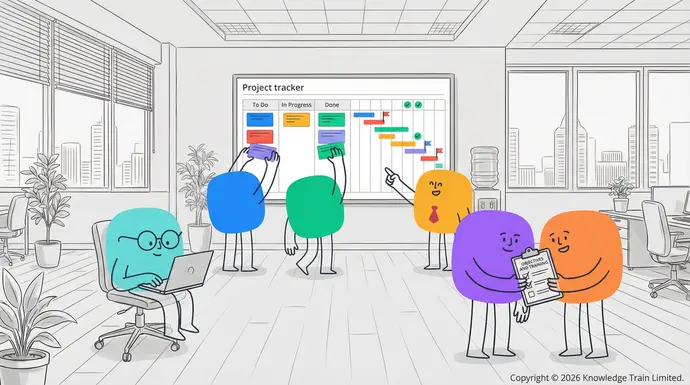
Through reinforcement, organisations can ensure that new behaviours become ingrained, leading to lasting success: Video conferencing features that integrate with digital whiteboards for online brainstorming and meetings.
[email protected]Enhance your skills with our expert-led coursesAsynchronous communication : Improvements to asynchronous communication features like leaving voice or video notes and contextual comments. Time zone management
: Better tools for understanding and scheduling across various time zones.
Instructor-ledVirtual team building Change Management Practitioner (with Foundation) course: Gamification features and team building activities in virtual environments. The changing work environment and the move to distributed work will continue to be a driving force behind some of the key features and priorities for project management software. £1,699 +vatProject managersUnited Kingdom that stay informed on these trends will be better positioned to expect what’s next and prepare their teams to take advantage of new functionality and technology.
See all datesCase studies and success stories
Learning from real-world examples of successful project management software implementations can offer valuable insights and inspiration. This section showcases case studies from different scales of businesses and industries, detailing the challenges they faced, the solutions they implemented, and the results they achieved.
- Small business implementation
- Case Study: Green Leaf Landscaping
- Green Leaf Landscaping is a small landscaping business with 15 employees. The company faced challenges with managing multiple projects simultaneously and often missed deadlines and struggled to allocate resources efficiently.
- Challenge
- SearchManual methods of tracking projects led to miscommunication and inefficient resource allocation.
, a multinational IT services company with over 5,000 employees, required a standard project management solution across its various departments and global offices to replace a patchwork of different systems that were in place.
ChallengeThe lack of standardisation and integration across departments and offices resulted in inefficiencies, data silos and difficulties in cross-departmental collaboration.
Solution
Adopted
- Microsoft Project
- , leveraging its capabilities at an enterprise scale and its seamless integration with the existing Microsoft ecosystem used within the company.
- Implementation process
- Formed a cross-functional implementation team.
Developed a phased rollout plan that prioritised departments and offices based on their needs and readiness for the new system.Created standardised project templates and workflows that aligned with the company’s project management best practices.
Conducted comprehensive training sessions for employees at all levels and offered ongoing support during the transition.
Integrated the project management system with existing ERP and CRM systems for a unified IT infrastructure.
- Results
- 20% increase in project profitability through improved planning and resource allocation.
- 40% reduction in the time spent on administrative and manual tasks by project teams.
- Streamlined resource allocation and utilisation across global teams and projects.
Key featuresKnowledge Created project templates for her common web design workflows, which saved time on setup for new projects.
- High-quality, professionally designed templates: Tailor training programs to impart skills that directly contribute to achieving strategic goals. Set up client-specific boards within Asana for each project, making it easy for her clients to access and stay updated on their project’s progress.
- Easy to edit and customiseAbility Utilised the timeline view to manage and visualise multiple project deadlines, helping her to avoid scheduling conflicts and meet client expectations.
- Compatible with Adobe Acrobat Reader: Develop capabilities that are necessary for meeting long-term objectives.CONTACT US Integrated Asana with her time-tracking and invoicing tools to streamline administrative tasks.
- Suitable for various project types and industries. Reinforcement Results
5. : Design reinforcement strategies that celebrate achievements aligned with organisational success. Reduced the time spent on project administration by 50%, allowing her to focus more on design work.Wellingtone project management templatesThis alignment ensures that change initiatives are not only implemented but also contribute meaningfully to the organisation’s mission. Improved client satisfaction due to transparent and accessible progress tracking.
Wellingtone is a knowledge-based solution in the field of project management. Their website provides users with a set of fully featured templates for different project types.Continuous improvement Increased her capacity to handle more concurrent projects by 25% without sacrificing quality.
Key featuresContinuous improvement is vital in refining the ADKAR process. It involves regularly assessing and enhancing each element to ensure effectiveness. Streamlined the invoicing process, reducing payment delays and improving cash flow.
- Templates are created based on Feedback loopsName Key takeawayPMI: Establish mechanisms for collecting feedback at each element. Use surveys, interviews, and performance metrics to gather insights. For freelancers, the selection of a project management tool that can effectively integrate project management with client communication and reporting is crucial to improving operational efficiency and professionalism in client interactions., Regular reviews Digital marketing agencyPRINCE2: Conduct periodic evaluations to identify strengths and areas for improvement within the ADKAR elements.Email Case Study: Pulse Digital, and other standard industry guidelinesAdaptive strategies Pulse Digital is a rapidly expanding digital marketing agency with a team of 25 staff members. The company was seeking a way to streamline its workflow for managing various client projects and to enhance team collaboration.
- Covers all areas of project management: Be willing to modify strategies based on feedback and evolving organisational needs. Challenge
- Updated regularly to reflect industry changesThe psychological benefits of this approach are significant. Continuous improvement reduces stress and enhances confidence by ensuring that the change process is dynamic and responsive. Employees feel valued and understood, fostering a positive environment for sustained change. This iterative process not only refines the ADKAR model but also reinforces a culture of adaptability and growth within the organisation.Phone Managing a high volume of campaigns for different clients across multiple marketing platforms, while ensuring quality and consistency for all client work.
- Suitable for both beginner and experienced Conclusion Solutionproject managersRecap of the ADKAR model ClickUp.The How can we help?Copied! was selected for its customisability and rich feature set.
6. ADKAR model Key takeawaysImplementation processAsana offers a structured and effective framework for Different change models suit different scales of change and different human impacts.Customised spaces for each client, project and marketing discipline
Asana is a managing changeSubmitUse Lewin’s three stages to frame straightforward organisational change from start to stabilisation.Customised templates for different types of campaignsproject management software within organisations. It comprises five pivotal elements: Awareness, Desire, Knowledge, Ability, and Reinforcement. Each element is crucial for guiding both leaders and employees through the change process. By systematically addressing these elements, organisations can ensure that all critical elements of change management are covered, minimising confusion and resistance. The model’s structured approach not only facilitates successful transitions but also fosters alignment with organisational goals. Apply Kotter’s eight steps when coordinating large, complex transformation programmes.Utilised dashboards for monitoring campaign performance in real-time that provides teams with a visual way to plan, organise, and track work. It offers a user-friendly interface, flexible features, and integrations with many other apps.Encouragement to adopt ADKAR Use Senge’s systems view to understand how change spreads and affects individual staff over time.Implemented time tracking for accurate client billing
Key featuresAdopting the ADKAR model can significantly enhance an organisation’s OUR VALUESBorrow Satir and Kubler Ross to anticipate emotional responses and reduce disruption during change.Set up automations for standardised tasks and notifications.
- Task dependencies and milestoneschange managementOur 6 core values are everything we do. They include:Use ADKAR to diagnose and build individual readiness through Awareness, Desire, Knowledge, Ability, and Reinforcement.Results
- Team collaboration tools efforts. It provides a clear roadmap that supports both individual and organisational transformation. By following its principles, organisations can reduce stress and uncertainty while boosting employee engagement and commitment. The psychological benefits are substantial, as employees feel more informed, involved, and confident throughout the change process. Implementing ADKAR can lead to more sustainable and successful change initiatives, making it a valuable tool for any organisation striving for effective transformation.IntegrityApply McKinsey 7-S to align key organisational elements and track progress and issues clearly.35% faster project delivery
- Integration with popular appsFAQsDiversity 20% increase in client retention
- Fairness
Quality InnovationContents
Social responsibility
- SOCIAL RESPONSIBILITYContents
- Some of the charities we have helped over the years:
- Introduction
Lewin change model
Kotter change model
- AWARDSPeter Senge model
- We don’t go seeking awards, but here are two of the awards we have received for our training.
Request a quote
- +44 (0)207 148 5985
- [email protected]
- United Kingdom – using a simple 3-step method to successfully implement change in organisations both large and small.
Read more and see a colourful infographic about the
Lewin change management model
- here.
- Enhance your skills with our expert-led courses
- Search
- Instructor-led
Latvia
Lithuania
- 19 Feb 2026Luxemburg
- Malta
- Discover the essential skills required for effective change management and how they apply to unique organizational contexts. Read further for detailed insights.Netherlands
- Poland
- Portugal here.
RomaniaPeter Senge model
SlovakiaPeter Senge Slovenia looked at change in terms of biological and ecological metaphors. Using this perspective, he developed a robust model for the management of change, particularly regarding the effect on individual members of staff. SpainRead more and see a colourful infographic about the
SwedenSenge change management model
Change management modelsOther countries here..
You should update your project tracker daily or weekly, depending on the speed and complexity of your project. HomeSatir change modelHow often should I reassess my project management software needs?
Can I use multiple project trackers for different aspects of my project?Simon BuehringProject ManagementVirginia Satir was an author and therapist. Satir’s model was made to help therapists understand the human response to death and trauma. Interestingly, this model was quickly appropriated by quick-thinking change managers and repurposed to help reduce the impact of change on businesses.It’s a good practice to reassess your needs when introducing a new team member and/or when launching a new project. Otherwise, once per year would be a good review frequency.
Although it is technically possible, it is better to use one detailed project tracker for all aspects of your project. This will help to prevent inconsistencies between different trackers.23 Feb 2026Project management phasesRead more and see a colourful infographic about the Subscribe to our exclusive offers and promotions
Are free project trackers as effective as paid ones? Satir change model
Free project trackers can be effective for smaller and simpler projects. Paid project trackers usually have more features and are better for more complex projects.Discover popular change management models and their applications. Click through for colorful infographics and detailed descriptions.{"@context":"http://schema.org","@type":"BreadcrumbList","itemListElement":[{"@type":"ListItem","position":1,"name":"Home","item":"https://www.knowledgetrain.co.uk/"},{"@type":"ListItem","position":2,"name":"Project Management","item":"https://www.knowledgetrain.co.uk/project-management"},{"@type":"ListItem","position":3,"name":"Project management phases","item":"https://www.knowledgetrain.co.uk/project-management/project-management-phases"}]} here.Subscribe now
How can I encourage my team to use the project tracker consistently? ADKAR model
Set an example and provide training. Show your team the benefits of using the tracker. Make it a regular part of your team’s workflow and meetings. The ADKAR model breaks change into 5 component elements — Awareness, Desire, Knowledge, Ability, and Reinforcement. The ADKAR model is also a key element of the Prosci change management methodology.Related articles
Can project trackers help with remote team management? Read more and see a colourful infographic about the