
- Choose fit-for-purpose tools, and use CPM or CCPM to manage critical paths, constraints, and buffers in complex projects.
IntroductionSelect your preferred training course below:
Project scheduling is an integral part of effective PROGRAMME MANAGEMENT COURSESproject managementSelect your self-paced training course topic.. Project scheduling includes the development of a project timeline, including tasks, resources, and milestones, that is necessary to ensure a project’s successful completion. A solid schedule can provide a roadmap for project execution, allowing project managersMSP COURSES to allocate resources, monitor progress and recognise potential issues in advance.Select your preferred training course below:
In the modern workplace, having an edge in project scheduling is vital to the successful delivery of projectsIT QUALIFICATIONS within the time and budget constraints. In this article, we will explore the fundamentals of project scheduling. We will discuss key concepts, techniques, and best practices for project scheduling. In addition, we will analyse the challenges commonly faced in project scheduling and review tools and software solutions that can simplify and optimise the process.Select your preferred qualification.
Understanding project scheduling
What is a project schedule?ITIL COURSES
A Select your preferred training course below:project schedule is a detailed document that outlines the timeline of tasks and milestones that must be completed to accomplish the project. It acts as a roadmap for project execution and monitoring.IT QUALIFICATIONS
Components of a project scheduleSelect your preferred qualification.
- Tasks and activities
- Duration and deadlinesITIL COURSES
- Resource allocationSelect your preferred training course below:
- Dependencies and constraints
- Milestones and deliverables.LEARNING LIBRARIES
Difference between project schedule and project planSelect your preferred training course topic.
A projectAI QUALIFICATIONS & WORKSHOPS Select your preferred qualification or workshop.plan is a more comprehensive document that encompasses the schedule, as well as other project aspects such as scope, budget, and resources. The project schedule, on the other hand, focuses on the time aspect, including task sequencing and deadlines.AIPGF COURSES
Benefits of using a project scheduleSelect your preferred training course below:
- Provides clarity and direction : A project schedule offers a clear path for project execution, ensuring that all team members are aware of their responsibilities and deadlines.BCS AI COURSES
- Improves time managementSelect your preferred training course below:: A schedule helps to prioritise tasks and allocate time efficiently, reducing the risk of missing deadlines.
- Allows efficient resource allocationAIPGF COURSES: A project schedule enables the optimal distribution of personnel, equipment, and materials across project tasks.Select your preferred training course below:
- Helps in effective risk management : A project schedule helps to identify potential bottlenecks, and resource conflicts in advance, allowing for timely risk mitigation.AI WORKSHOPS
By utilising these advantages, Select your preferred workshop below:project managers can significantly improve the chances of project success and timely delivery.Knowledge Train is a PRINCE2 Accredited Training Organization.
Six steps to create a project schedule
A project schedule is a comprehensive document that outlines a project’s timeline. It is one of the most important project management tools. Scheduling is one of the key tasks in project management. To help you along, here are six steps that will allow you to create a solid schedule for your project.Knowledge Train is an AgilePM Accredited Training Organization.
1. Define tasks and milestones
List all the tasks that are necessary to complete the project. Then determine the Knowledge Train is a PRINCE2 Agile Accredited Training Organization.project milestones , and group tasks that make up each milestone into work packages. The process of preparing a comprehensive list of project tasks is known as Knowledge Train is a Better Business Cases Accredited Training Organization.Work Breakdown Structure (WBS).Knowledge Train is a P3O Accredited Training Organization.
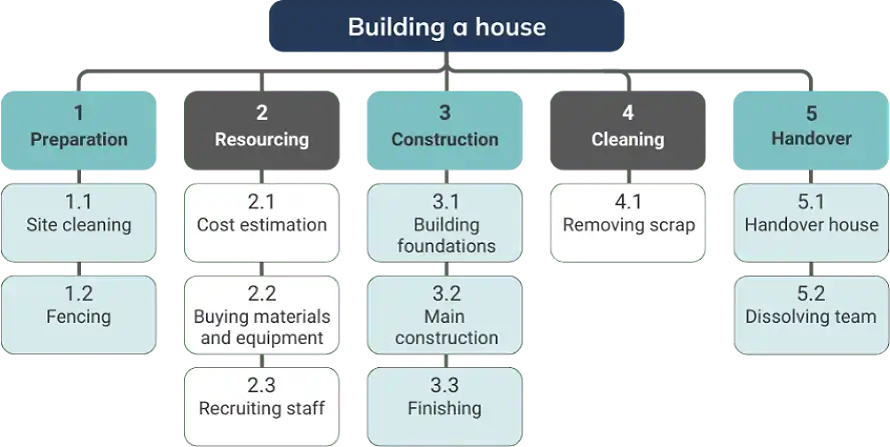
- List all required tasks
- Determine project milestonesKnowledge Train is an AgilePM Accredited Training Organization.
- Group related tasks into work packages.
2. Sequence activitiesKnowledge Train is a PRINCE2 Agile Accredited Training Organization.
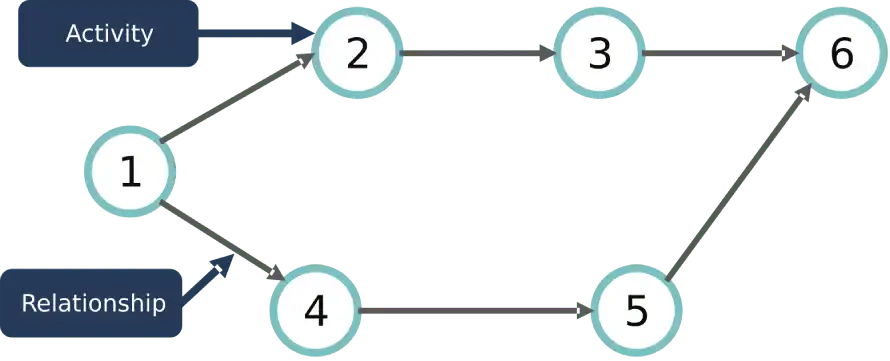
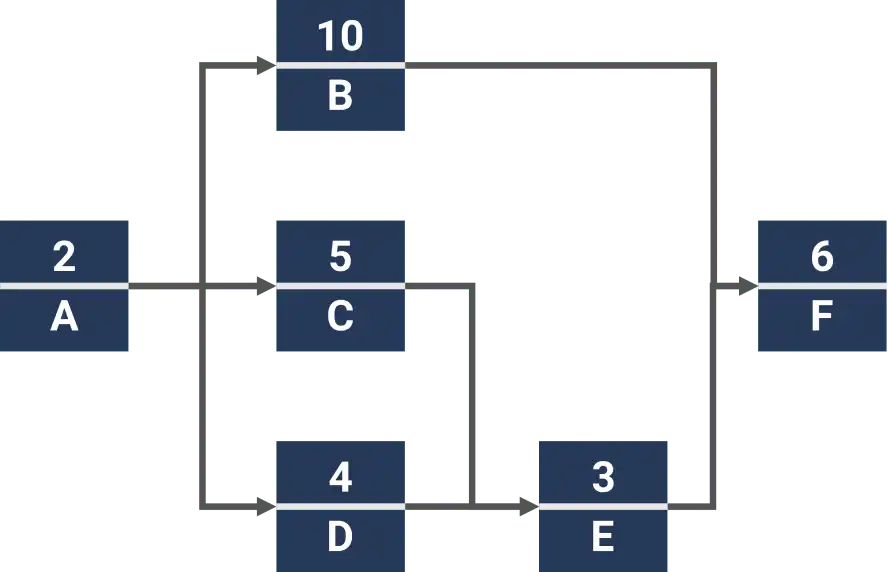
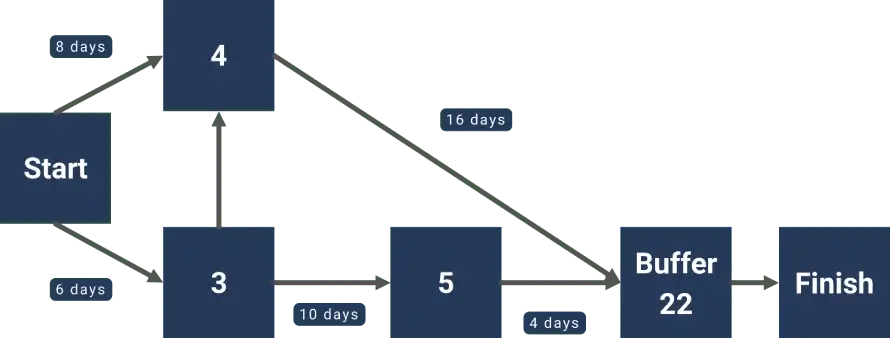
Sequence the tasks, establishing the order in which the work will be performed. Use a network diagramKnowledge Train is an Agile BA Accredited Training Organization. to visualise the dependencies and the critical path.
3. Estimate task durationsBCS accredited training partner for Business Analysis.
Estimate the time required for each task, then assign the estimates to each task. For more accurate results, ask your team members to help, and make use of the historical data for tasks of a similar nature to the ones in the current project. As a rule of thumb, provide three-point estimatesKnowledge Train is an Agile BA Accredited Training Organization.:
- Optimistic estimateKnowledge Train is a Change Management Accredited Training Organization.
- Most likely estimate
- Pessimistic estimate.Knowledge Train is an MSP Accredited Training Organization.
4. Assign resources
Identify the resources needed for each task, then assign them to the relevant tasks. Be sure to consider team members’ skills and experience, availability and current workloads.Knowledge Train is a PRINCE2 Accredited Training Organization.
6. Share and monitor progress
Share the finalised schedule with the team members and stakeholders and track and report on the progress. Consider using
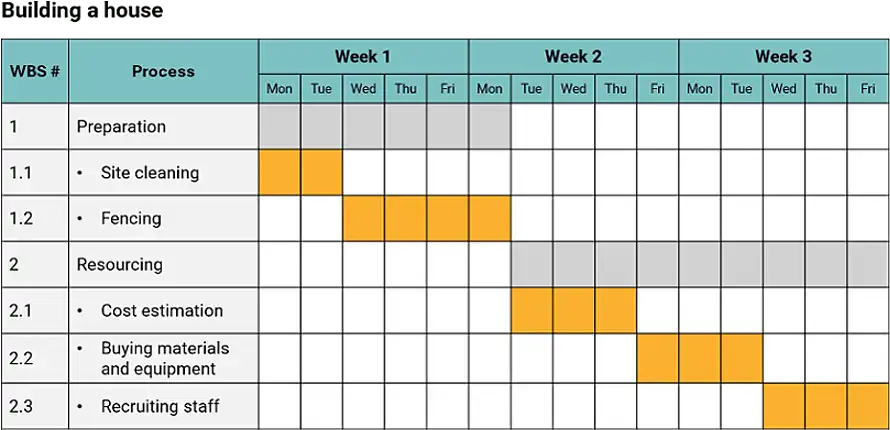
- Provides a visual representation of task dependenciesLatest educational technology.
- Simplifies the identification of the critical path
- Capable of showing progress against the planned schedule.BUSINESS SOLUTIONS
Limitations
- Can become cluttered and difficult to read for larger projects with many tasks
- Can be time-consuming to create and maintainTO HELP ORGANISATIONS IMPROVE
- Limited ability to show detailed task dependencies and resource allocation.We offer solutions to help improve team performance including:
Task listsConsultancy services
When to use task listsStaff development
Task lists are often used in project management as a basic tool for organising and tracking project activities. They can be useful in the early stages of a project, or as a supplement to more advanced scheduling techniques. Task lists are appropriate to use when the project is relatively simple, and the team members are familiar with the tasks.Compliance training
Benefits for small projectsApprenticeship training
LithuaniaInclude
risk management plan that will help you address potential problems and issues on time.
If you identify these issues and incorporate the ways to mitigate them into your project management process, you will become a better scheduler, and your projects will reach completion more successfully.
Conclusion
Project scheduling is a vital aspect of successful project management . By grasping key concepts, using the right tools and following best practices, project managers can create effective schedules. Developing strong scheduling skills will lead to better resource allocation, risk management and overall project success. Keep refining your techniques and you’ll be well on your way to learning the art of project scheduling.
What are IT certificates?What’s the difference between a milestone and a task in project scheduling?
A task is a specific work item, while a milestone is a significant point or event in the project.
How can I handle unexpected delays in my project schedule?
Comparison of popular IT certificatesConsider dependencies, resource availability and overall impact on project objectives.