
Introduction
What is a project plan
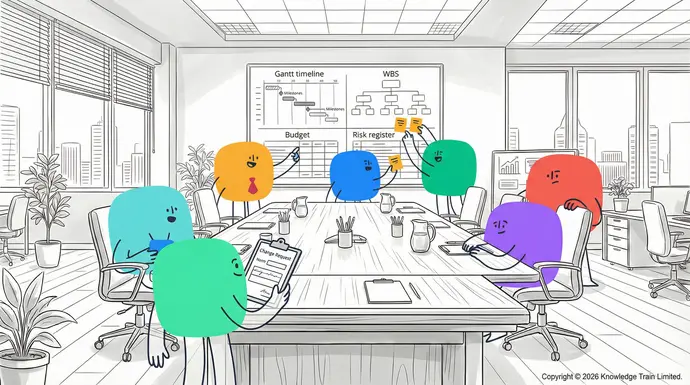
A project plan is a document that outlines the objectives, scope, structure, resources, and timeline of a project. It serves as a roadmap for project managers and team members to guide them through the project lifecycle.
- Definition and purpose : A project plan defines the goals of a project and how to achieve them. It provides a structured approach to project execution and management.
- Key components : Essential elements include:
- Executive summary
- Project scope Request a quote
- Work Breakdown Structure (WBS)
- Timeline and milestones[email protected]
- Resource allocation
- Budget +44 (0)207 148 5985
- Risk management plan.Courses
A project plan is a vital part of Project Fundamentals Qualification (PFQ) project managementStart your APM project management career., as it outlines the steps needed to complete a project, as well as the resources and stakeholders involved.Project Management Qualification (PMQ)
Project planning processAdvance your APM project management expertise.
Understanding the project planning phaseProject Risk Single Certificate Level 1
It’s time to understand the project planning phase. This is an essential step in the project management process, and one that will have a significant impact on your chances of successfully completing your project. Let’s look at the project lifecycle in general and then the key tasks that make up the planning phase.Enhance your project risk management skills.
Project management lifecycle overviewAgilePM
The four phases of the project management lifecycle are as follows:®
- Project initiation – Agile Project Management: This is where you first identify a business need or problem, then offer a potential solution. Key activities here include:Foundation
- Preparing a project charterLearn the key principles of Agile Project Management.
- Identifying project stakeholdersPractitioner
- Conducting feasibility studies and research.Includes Foundation & Practitioner combined option.
- Project planningPRINCE2: This is the second phase and an extremely important one. We will be discussing this in more detail below.®
- Project execution Agile: This phase sees your team begin to execute the project plan. This involves:Foundation
- Allocating and managing resourcesLearn the fundamentals of the PRINCE2 Agile method.
- Tracking progressPractitioner
- Communicating with stakeholders.Includes Foundation & Practitioner combined option.
- Project close-outAI Project Governance Framework (AIPGF): The last phase involves looking back at your project, analysing its success, and determining what can be improved upon next time. Key activities include:Foundation
- Reviewing project performanceLearn the fundamentals of the governance framework.
- Conducting a post-mortemPractitioner
- Archiving documents.Includes Foundation & Practitioner combined option.
Key tasks in the project planning phaseBetter Business Cases
The planning phase of a project typically includes the following important activities:™
- Establishing a budgetFoundation : The cost estimate and allocation of financial resources is a critical step. The following may be considered:Learn the fundamentals of Better Business cases.
- LabourPractitioner
- Materials and equipmentIncludes Foundation & Practitioner combined option.
- Overheads.P3O
- Defining the project schedule®: It is necessary to create a timeline to include:
- Duration of tasksFoundation
- MilestonesLearn the fundamentals of the P3O project management office.
- Task dependencies.Practitioner
- Developing WBSIncludes Foundation & Practitioner combined option.: A Work Breakdown Structure (WorkshopsWBSIntroduction to Project Management ) is a hierarchical representation of the project. The following are useful:1-day workshop to learn the basics of project management.
- Identification of all necessary tasksProject Management Essentials
- Assignment of responsibilities2-day workshop to learn how to manage projects without getting certified.
- Resource estimation.Writing Business Cases
- Identification of resourcesHalf-day workshop to learn to write robust business cases.: The resources needed to complete the project need to be identified. The following may be considered:AI in Project Management
- Human resources (team members, skills required)Learn how to use AI tools in everyday project work.
Essential elements of a project planScrum Essentials
Components of an effective project planSelf-paced training course to learn the essentials of Scrum.
A well-structured project plan includes several critical elements that work in unison to offer a comprehensive guide for carrying out a project. Let’s delve into these vital components.Scrum Master
Executive summaryChoose Scrum Alliance or Scrum.org Scrum Master training courses.
The Scrum Product Owner executive summaryChoose Scrum Alliance or Scrum.org Product Owner training courses. offers a concise overview of the entire project plan. It should:AgileBA
- A brief description of the project’s purpose and goals®
- Highlights of key deliverables and timelines – Agile Business Analysis
- A summary of resource requirements and budgetFoundation
- A summary of potential risks and mitigation strategies.Learn the fundamentals of Agile Business Analysis.
The executive summary is typically a concise section that allows readers to quickly understand the project’s essence without having to read the entire plan.Practitioner
Project scope and objectives4-day course including Foundation.
Defining the Lean Six Sigmaproject scopeYellow Belt is essential to prevent scope creep and ensure successful project completion. This section should cover:Self-paced training course to gain LSS Yellow Belt.
- Specific project goals and objectivesPMI
- Project boundaries and limitations®
- Deliverables and acceptance criteriaPMI-ACP
- Any exclusions or out-of-scope items.Self-paced course to prepare you for the exam (exam not included).
Clear articulation of the project scope helps manage stakeholders’ expectations and sets a solid foundation for the project’s execution.Kanban
Work Breakdown Structure (WBS)Estimating for Agile Foundation
A Agile Learning Library (ALL)™work breakdown structureBUSINESS ANALYSIS is a hierarchical decomposition of the project into smaller, manageable components. The purpose of a WBS is to:BCS Business Analysis
- Identify all required tasks and subtasksBusiness Analysis Foundation
- Organise the work into logical groupingsLearn the fundamentals of business analysis.
- Establish a basis for resource allocation and scheduling.Modelling Business Processes
Creating a WBS helps to ensure that all aspects of the project are considered and nothing is overlooked.Gain practitioner certificate in modelling business processes.
Project timeline and milestonesBusiness Analysis Practices
The Gain practitioner certificate in business analysis practices.project timelineRequirements Engineering provides a visual representation of the project’s duration and key events. It should include:Gain practitioner certificate in requirements engineering.
- Start and end dates for each taskBusiness Analysis International Diploma
- Important milestones and deadlinesAll 4 courses bundled into this Diploma certification package.
- Task dependencies and critical path.AgileBA
Using visual tools like Gantt charts can effectively illustrate the project timeline and make it easier for stakeholders to understand the project’s schedule.®
Resource allocation – Agile Business Analysis
List the Foundation training resourcesLearn the fundamentals of Agile Business Analysis. needed to complete the project, including:Practitioner
- Human resources (team members, roles, and responsibilities)4-day course including Foundation.
- Equipment and materialsPMI
- External resources or contractors.®
Specifying the resources required for the project can help to ensure that the necessary resources are available to support its successful completion.PMI-PBA
Budget and cost estimatesSelf-paced course to prepare you for the exam (exam not included).
Include a Business Analysis Learning Library (BALL)™budgetCHANGE MANAGEMENT or cost estimates for the project, covering:APMG Change Management
- Estimated costs for each component of the projectFoundation
- Labour, materials, and overhead costsLearn the fundamentals of enterprise change management.
- Contingency funds for unforeseen expensesPractitioner
- Cash flow projections, if applicable.Includes Foundation & Practitioner combined option.
A comprehensive budget or cost estimate provides a financial roadmap for the project, enabling effective financial management and control.PROGRAMME MANAGEMENT
Risk management planMSP
Include a ®riskFoundation management plan, which should:Learn the fundamentals of programme management.
- List identified risks and their potential impactPractitioner
- Describe the strategies for mitigating each riskIncludes Foundation & Practitioner combined option.
- Assign risk owners and response plansINFORMATION TECHNOLOGY (IT)
- Explain the process for ongoing risk monitoring and management.ITIL
Proactively managing risks is crucial to minimise their impact on the project and increase the likelihood of its success.®
Communication planFoundation
Define a Learn the fundamentals of ITIL service management.communicationStrategist DPI plan, which should:3-day ITIL Strategist: Direct, Plan & Improve (DPI) course.
- Identify the key stakeholders and their information needsSpecialist: DSV
- Describe the communication methods and frequency
- Establish reporting structures and escalation procedures
- Specify the tools and platforms for information sharing.
Effective communication is key to project success, and a well-defined communication plan
- Define project constraints (time, budget, resources)
Select your preferred training course below:
Change is a common part of most projects. Setting up a process for dealing with change can help keep the project on track and avoid disruption.
Planning for change managementPMI COURSES
- Document the process for submitting and reviewing change requestsSelect your preferred training course below:
- Define the criteria for evaluating the impact of proposed changes
- Identify who has the authority to approve changes.PMI COURSES
Establishing change control processesSelect your preferred training course below:
- Set up a change request form or system
- Establish a change control board or designated approversPRINCE2 COURSES
- Develop a process for communicating approved changes to the project team.Select your preferred training course below:
By following these six steps, you can create a well-thought-out and detailed project plan that will set you up for success. It’s important to remember that a project plan is not set in stone and should be reviewed and updated regularly throughout the project’s lifecycle.
Project planning tools and templatesSelect your preferred training course below:
Essential project planning tools
Project planning is an important step to successfully managing any project and having the right tools to help make this process simpler, more streamlined and more collaborative is critical. Here are the best project planning tools that will surely give you a hand in your project management endeavours.SCRUM COURSES
Project management software optionsSelect your preferred training course below:
Project management software is a digital platform that serves as a one-stop shop for planning, executing, and tracking LEAN SIX SIGMA COURSESprojectsSelect your preferred training course below:. Some of the most popular project management software options include:
- Microsoft ProjectBUSINESS ANALYST COURSES: A comprehensive project planning and resource management tool with robust features for scheduling and tracking project progressSelect your self-paced training course topic.
- Trello : A visual, card-based task management platform that is great for team collaboration and keeping tasks organisedBCS BUSINESS ANALYST COURSES
- AsanaSelect your preferred training course below:: A team collaboration and project management tool with features for task tracking, project timelines, and communication
- JiraCHANGE MANAGEMENT COURSES: A popular Select your self-paced training course topic.Agile project management and software development tool with powerful features for sprint planning, issue tracking, and workflow automation.APMG CHANGE MANAGEMENT COURSES
When choosing a project management software, it’s important to consider your team’s needs, the complexity of your projects, and how well the software will integrate with your existing tools and systems.Select your preferred training course below:
Gantt charts and timeline tools
Gantt chartsPROGRAMME MANAGEMENT COURSES are a popular tool for visualising project timelines and dependencies. Some of the best Gantt chart tools include:Select your self-paced training course topic.
- TeamGantt : A user-friendly tool for creating and collaborating on Gantt charts, with features for task tracking, file sharing, and MSP COURSESproject managementSelect your preferred training course below:
- GanttPRO : A customisable Gantt chart software with features for resource management, task assignment, and team collaborationIT QUALIFICATIONS
- SmartsheetSelect your preferred qualification.: A spreadsheet-like platform that combines the functionality of a project management tool with Gantt chart visualisation.
These tools make it easy for ITIL COURSESproject managersSelect your preferred training course below: to create clear and informative Gantt charts that show project timelines and milestones at a glance.
Resource management toolsIT QUALIFICATIONS
Proper Select your preferred qualification.resource allocation and management is critical to any project’s success, so having a resource management tool can be an important part of project planning. Consider these options for managing your team’s resources:ITIL COURSES
- Resource GuruSelect your preferred training course below:: A resource scheduling and team capacity planning tool that helps project managers avoid overallocation of team members
Handling unexpected changes and risksSubmit
Unexpected changes and risks can disrupt the project plan. To manage them:
- Identify and assess potential risks early in the project
- Develop a risk management plan with mitigation strategiesOUR VALUES
- Include contingency time and budget in your plan for unforeseen events.Our 6 core values are everything we do. They include:
Overcoming communication barriersIntegrity
Poor communication among team members and stakeholders can lead to misunderstandings and project delays. To improve communication:Diversity
- Establish clear communication channels and protocolsFairness
- Use collaborative tools for effective information sharingQuality
- Hold regular team meetings and status updates.Innovation
By being aware of these common projects planning mishaps and taking proactive steps to avoid them, Social responsibility project managers can steer their projects towards a successful outcome.SOCIAL RESPONSIBILITY
Conclusion
The importance of thorough project planning
Effective project planning is a critical aspect of successful project management . By utilising the steps and best practices outlined in this guide, you can develop robust project plans that:
- Clearly define project scope and objectivesUnited Kingdom
- Allocate resources efficiently
- Identify and mitigate risks proactively
- Enhance communication.
Remember that project planning is not a one-time activity but an ongoing process. Review and update your plans regularly to ensure they remain relevant and actionable. Embrace thorough project planning techniques to enhance your project management skills and consistently deliver successful projectsSearch .
FAQs
What’s the difference between a project plan and a project charter?
AA project charter starts the project and defines the main goals and scope. A project plan outlines the detailed steps, timelines, and resources needed to complete the project.
How often should I update my project plan?
Review and update your project plan regularly, at least once a week or after major milestones. This helps ensure that the plan stays relevant and accurate. United Kingdom
Can I use the same project plan template for all my projects? Austria
You can start with a standard template but be sure to customise it for each project’s specific needs and characteristics. Belgium
What should I do if my project plan isn’t working? Bulgaria
Revisit the plan and identify where things are going wrong. Adjust as needed and get input from stakeholders and team members on how to improve. Croatia
How detailed should my project plan be? Cyprus
A project plan should be detailed enough to guide the project execution without being so detailed that it becomes unmanageable. The level of detail will depend on the project’s complexity and size. Czech Republic
What’s the best way to share my project plan with stakeholders? Denmark
Use collaborative project management tools or shared documents to share your project plan. Visualise key information in an easily digestible format, such as Gantt charts or project dashboards. Estonia
How can I ensure my team follows the project plan? Finland
Franceproject management software Germany to track tasks and deadlines. Greece
These are some of the most asked questions about writing a project plan. Remember that project planning is an iterative process and being flexible and communicative will help you stay on track and achieve project success. Ireland