How to create an effective project plan

Key takeaways
An effective project plan aligns scope, time, cost, resources, and communication into one workable roadmap.
- Start with an executive summary that clarifies purpose, outcomes, timing, budget, and headline risks.
- Define scope and acceptance criteria early to prevent scope creep and manage expectations.
- Use a WBS and a timeline with dependencies to make work, milestones, and the critical path visible.
- Allocate resources realistically, including skills, tools, contractors, and contingency budget.
- Manage risk and change proactively with owners, mitigation actions, and a clear approval process.
- Review and update the plan regularly, supported by consistent stakeholder communication.
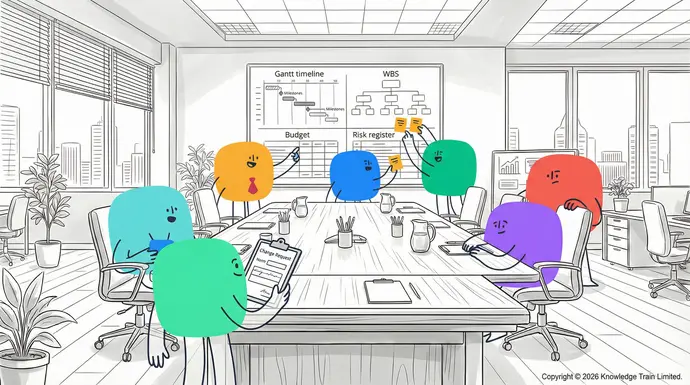
Introduction
What is a project plan
A project plan is a document that outlines the objectives, scope, structure, resources, and timeline of a project. It serves as a roadmap for project managers and team members to guide them through the project lifecycle.
- Definition and purpose: A project plan defines the goals of a project and how to achieve them. It provides a structured approach to project execution and management.
- Key components: Essential elements include:
- Executive summary
- Project scope
- Work Breakdown Structure (WBS)
- Timeline and milestones
- Resource allocation
- Budget
- Risk management plan.
- Importance: Effective project plans:
- Keep projects on track
- Prevent scope creep
- Improve resource management
- Enhance communication
- Increase project success rates.
A project plan is a vital part of project management, as it outlines the steps needed to complete a project, as well as the resources and stakeholders involved.
Project planning process
Understanding the project planning phase
It’s time to understand the project planning phase. This is an essential step in the project management process, and one that will have a significant impact on your chances of successfully completing your project. Let’s look at the project lifecycle in general and then the key tasks that make up the planning phase.
Project management lifecycle overview
The four phases of the project management lifecycle are as follows:
- Project initiation: This is where you first identify a business need or problem, then offer a potential solution. Key activities here include:
- Preparing a project charter
- Identifying project stakeholders
- Conducting feasibility studies and research.
- Project planning: This is the second phase and an extremely important one. We will be discussing this in more detail below.
- Project execution: This phase sees your team begin to execute the project plan. This involves:
- Allocating and managing resources
- Tracking progress
- Communicating with stakeholders.
- Project close-out: The last phase involves looking back at your project, analysing its success, and determining what can be improved upon next time. Key activities include:
- Reviewing project performance
- Conducting a post-mortem
- Archiving documents.
Key tasks in the project planning phase
The planning phase of a project typically includes the following important activities:
- Establishing a budget: The cost estimate and allocation of financial resources is a critical step. The following may be considered:
- Labour
- Materials and equipment
- Overheads.
- Defining the project schedule: It is necessary to create a timeline to include:
- Duration of tasks
- Milestones
- Task dependencies.
- Developing WBS: A Work Breakdown Structure (WBS) is a hierarchical representation of the project. The following are useful:
- Identification of all necessary tasks
- Assignment of responsibilities
- Resource estimation.
- Identification of resources: The resources needed to complete the project need to be identified. The following may be considered:
- Human resources (team members, skills required)
- Equipment and tools
- Materials and supplies.
- Evaluating potential roadblocks: Conducting a risk assessment involves:
- Identification of risks and potential issues
- Development of risk mitigation strategies
- Creation of contingency plans.
Completing these key activities during the planning phase allows the project manager to develop a detailed project plan. This plan guides the project throughout its lifecycle, significantly increasing the chance of a successful project.
Essential elements of a project plan
Components of an effective project plan
A well-structured project plan includes several critical elements that work in unison to offer a comprehensive guide for carrying out a project. Let’s delve into these vital components.
The project timeline provides a visual representation of the project’s duration and key events. It should include:
- Start and end dates for each task
- Important milestones and deadlines
- Task dependencies and critical path.
Using visual tools like Gantt charts can effectively illustrate the project timeline and make it easier for stakeholders to understand the project’s schedule.
Resource allocation
List the resources needed to complete the project, including:
- Human resources (team members, roles, and responsibilities)
- Equipment and materials
- External resources or contractors.
Specifying the resources required for the project can help to ensure that the necessary resources are available to support its successful completion.
Budget and cost estimates
Include a budget or cost estimates for the project, covering:
- Estimated costs for each component of the project
- Labour, materials, and overhead costs
- Contingency funds for unforeseen expenses
- Cash flow projections, if applicable.
A comprehensive budget or cost estimate provides a financial roadmap for the project, enabling effective financial management and control.
Risk management plan
Include a risk management plan, which should:
- List identified risks and their potential impact
- Describe the strategies for mitigating each risk
- Assign risk owners and response plans
- Explain the process for ongoing risk monitoring and management.
Proactively managing risks is crucial to minimise their impact on the project and increase the likelihood of its success.
Communication plan
Define a communication plan, which should:
- Identify the key stakeholders and their information needs
- Describe the communication methods and frequency
- Establish reporting structures and escalation procedures
- Specify the tools and platforms for information sharing.
Effective communication is key to project success, and a well-defined communication plan can help to ensure that all stakeholders are informed and engaged throughout the project lifecycle.
Steps to create a project plan
How to write a project plan in 6 steps
A good project plan is a project manager’s best friend. Follow these six steps to write a comprehensive project plan.
Step 1: Start with an executive summary
An executive summary is a brief overview of the main points covered in the rest of the project plan. It is usually the first section to be read by stakeholders, which makes it an important one as well.
Key points to cover
- Project purpose and objectives
- A high-level overview of scope, timeline, and budget
- Key deliverables and milestones
- Potential risks and mitigation strategies.
Tips for an effective summary
- Keep it short (1-2 pages maximum)
- Use clear, concise language
- Focus on the most important information
- Customise content to your audience.
Step 2: Define the project scope
Defining a clear project scope is crucial for successful project execution. It sets the boundaries for what needs to be done and prevents scope creep (expansion of the project after its start).
Setting project boundaries
- Define project constraints (time, budget, resources)
- Clearly state what is and is not part of the project
- Outline any assumptions and dependencies.
Identifying deliverables and expectations
- List all the deliverables of the project
- Define acceptance criteria for each deliverable
- State stakeholder expectations clearly.
Addressing potential risks
- Do a preliminary risk assessment
- List potential risks and obstacles
- Provide a high-level overview of how to mitigate them.
Step 3: Structure your project
Organising your project helps ensure that everything is in the right place and in the right order.
Choosing a framework
- Select an appropriate project management framework ( Waterfall , Agile , hybrid, etc.)
- Make sure the framework aligns with the project’s needs and the team.
Organising workflows and deliverables
- Divide the project into phases or sprints
- Build a WBS
- Identify task dependencies and relationships.
Establishing communication structures
- List key stakeholders and their specific communication needs
- Decide on communication channels and frequency
- Set reporting structures and escalation procedures.
Step 4: Check available project resources
Checking available resources involves assessing the skills, tools, materials, and budget necessary for project completion.
Assessing team skills and capacity
- Evaluate the skills and expertise of available team members
- Identify any skill gaps that need to be filled, or training provided
- Consider the current workload and capacity of the team.
Evaluating budget and technology needs
- Determine the available budget and potential sources of funding
- Identify the software, tools, and technology requirements for the project
- Assess the need for any additional licenses or subscriptions.
Identifying physical resource requirements
- List the equipment, materials, and resources needed for the project
happens when project requirements or features expand beyond what was initially planned. This can lead to delays and budget overruns.AGILE
To avoid scope creep:AgilePM
- Clearly define the project scope from the beginning®
- Stick to the agreed-upon requirements and resist adding new features without a formal change request – Agile Project Management
- Regularly review and reaffirm the project scope with stakeholders.Foundation
Managing resource constraintsLearn the key principles of Agile Project Management.
Projects can suffer if there aren’t enough resources (time, money, or people) allocated to complete them. To mitigate resource constraints:Practitioner
- Plan resources carefully and realistically during the planning phaseIncludes Foundation & Practitioner combined option.
- Prioritise tasks and allocate resources based on priorityPRINCE2