
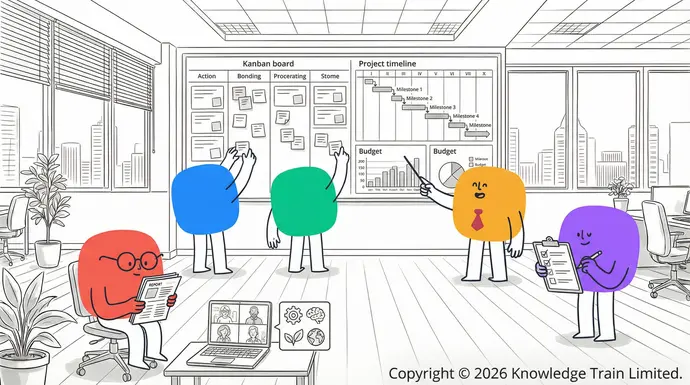
- Making ideas succeed Recruit and motivate the right team members for the project
- Delegate tasks and responsibilities to team membersMany organisations use change management methodologies to enable ideas to succeed. Working alongside
- Ensure effective communication among team members.project managers
Risk management and problem-solving who deliver new capabilities into an organisation,
- Identify and assess potential risks and issues that could affect the projectchange managers
- Prepare and change agents help ensure staff are able to fully utilise the new capabilities.contingency plansEnabling cross-functional changes to address potential risksAlmost every functional unit within a modern organisation relies on change management to enable it to:
- Resolve issues as they arise throughout the project.Align the change plan to the business’s overall strategy.
Monitoring and reportingImprove internal and external services and requests.
- Track the progress of the project regularly against established goals and milestonesTrack and resolve issues.
- Prepare and deliver reports to stakeholders on a regular basisEngaging people with the change process
- Ensure the project is completed on time and within budget.A key part of
Balancing these roles requires technical knowledge as well as strong leadership and strategic thinking. Project managers who are successful in their role are those who can adapt to each unique project and its challenges.managing change
Essential skills for project managersStakeholder engagement
Project managers need a combination of hard and soft skills to lead their : Involve and listen to those affected by the change.projectsProcess improvement to success. This is what sets great project managers apart from the rest and makes them able to deliver results.: Focus on refining and optimising business processes.
Technical skillsProactive
- In-depth understanding of risk managementproject management methodologies: Identify, assess, and mitigate potential challenges. such as Continuous feedback and adaptationPRINCE2: Monitor outcomes and adjust strategies where necessary. and Change management processesAgileIdentify the need for change
- Proficiency in : Recognise drivers such as technological advancements, market shifts, or process inefficiencies.project management softwareDefine the vision and objectives like Microsoft Project or Jira: Set clear goals for what the change will achieve.
- Knowledge of industry-specific tools and techniques related to the project field.Engage stakeholders
Soft skills: Involve key groups early to build support and address concerns.
- Leadership and team managementDevelop a change management plan
- Ability to inspire and motivate team members: Outline actions, timelines, resources, and communication strategies.
- Create a collaborative work environmentImplement the change
- Conflict resolution skills.: Launch the initiative, ensuring leadership guidance and active support from
- Communication and negotiationchange agents
- Clearly articulate project goals and expectations.
- Negotiation skills with stakeholders and team membersManage resistance to change
- Ability to present complex information in a simple and understandable way.: Identify the sources of resistance and address them through communication and support.
- Problem-solving and decision-makingMonitor progress and reinforce
- Analyse problems from various angles: Use metrics to track success and celebrate milestones.
- Make informed decisions under pressureSustain change
- Implement innovative solutions to overcome challenges.: Embed new ways of working into culture and practices for lasting results.
- Time management and organisationChange management frameworks
- Prioritise tasks effectivelySeveral
- Manage multiple deadlineschange management frameworks
- Maintain accurate project documentation. guide organisations through transitions. The most prominent include:
Business acumenKotter’s 8-Step Process
- In-depth understanding of business processes and organisational structures.Lewin’s Change Framework
- Financial management skills for budget and resource allocationADKAR framework
- Strategic thinking to align Kotter’s 8-Step ProcessprojectsEstablish a sense of urgency with overall business goals.Form a guiding coalition
Developing these core skills, project managers can successfully guide teams, overcome obstacles, and achieve project goals. Embracing a mindset of continuous improvement is essential in this ever-evolving discipline.Create a vision for change
Qualifications and career pathCommunicate the vision
Educational backgroundEmpower broad-based action
- Relevant degrees: Business, engineering, or Generate short-term winsITConsolidate gains and produce more change.Anchor new approaches in the culture
- Professional certifications: Example: A retailer launching a new digital platform began with urgency around changing customer expectations, formed a cross-functional team, communicated a compelling vision, and celebrated early improvements to build momentum.APMLewin’s Change Model (Association for Project Management) and UnfreezePMI: Prepare the organisation to accept change by challenging the status quo. (Project Management Institute).Change
Entry-level positions: Transition through adoption of new behaviours and processes.
- Assistant project managerRefreeze
- Sector-specific project coordinator.
| Poor communicationEntry | Assistant PM | 0-2 years: Inadequate information can cause confusion and low morale. |
| Mid-level | Project ManagerSolution | 3-5 years: Communicate regularly, using clear and consistent messaging across channels. |
| SeniorLack of leadership commitment | Senior PM/Programme Manager: Without executive support, initiatives may falter. | 6+ years |
| ExecutiveSolution | PMO Manager/Director: Gain leadership buy-in and ensure visible commitment throughout the transition. | 10+ yearsCultural misalignment |
Continual improvement of skills and adaptability to change is critical for long-term success in this field.: Change may conflict with existing organisational culture.
Future trends in project managementEstablish clear communication strategies
Here are some of the future trends in the field of tailored to different stakeholder groups.project managementAppoint dedicated change agents: to guide and support the change process.
- Increasing demandUse data to inform decisions: Increasing demand for and measure progress through key performance indicators (KPIs).project management skillsEncourage feedback across industries and organisations. from employees at every stage.
- AI and automationProvide training and support: The growing use of artificial intelligence and automation tools for to build new skills and confidence.project planningIntegrate change into company culture and resource allocation. to ensure lasting results.
- Remote managementSummary of key frameworks used in change management: The rise of remote and virtual project management as teams become more geographically dispersed.Model
- Sustainability focusCore Steps: The integration of Main FocussustainabilityKotter’s 8-Step and social responsibility considerations into project management practices.8 outlined steps
To stay ahead of the curve, project managers should consider the following tips:Building urgency, vision, momentum
- Embrace new technologies and stay updated with the latest Lewin’s Changeproject management toolsUnfreeze, Change, Refreeze and software.Preparing, transitioning, embedding
- Develop strong leadership and virtual team management skills.ADKAR
- Continuously improve your knowledge and understanding of sustainability and social responsibility practices.Awareness, Desire, Knowledge, Ability, Reinforcement
- Adapt to the growing popularity of Individual adoption stagesAgileRelated concepts in change management and hybrid Organisational developmentproject management methodologies: A discipline focused on improving organisations through planned interventions in processes and culture..Stakeholder engagement
These future trends offer exciting opportunities for growth and development in the field of : The ongoing process of involving those impacted by change in planning and implementation.project managementLeadership in change management. Whether you are just starting your career or looking to advance in the field, there is much to look forward to in the coming years.: The role of leaders in inspiring, directing, and supporting people through transitions.
ConclusionRisk management
In conclusion, : Identifying, analysing, and mitigating risks that arise during change initiatives.project managementProcess improvement can be a rewarding career path that offers a range of opportunities for professional growth and development. By building the necessary skills, gaining relevant qualifications, and staying informed about industry trends and best practices, aspiring project managers can position themselves for success in this dynamic field. So, consider exploring project management as a potential career path and embark on a fulfilling journey that combines leadership, strategic thinking, and problem-solving.: Reviewing and enhancing business processes to align with new goals.