APM qualification costCHANGE MANAGEMENT COURSESAllows probabilistic analysis of project completion times.

- Self-pacedWHAT YOU WILL GETAgilePM Practitioner (with Foundation) self-paced onlineOur courses and workshops include:
Certification exam(s) where applicable
£1,299 +vatAccredited training course materials
Financial and resource managementExpert, experienced trainers to support youEarned Value Management (EVM)Course manual where applicable.
Earned Value Management
(EVM) is a project management technique that uses scope, schedule, and cost data to assess a project’s progress and performance. It integrates scope, schedule, and cost measures to provide a comprehensive view of the project’s health. EVM compares the planned work with the actual completed work and the actual costs incurred, offering insights into both the status and future projections of the project.SELF-PACED ONLINE TRAINING COURSESThe key components of EVM are:Self-paced online training courses (e-learning) include:Planned Value (PV): The budgeted cost of work scheduled to be doneCertification exam(s) where applicable
- Earned Value (EV): The budgeted cost of work performedAccredited training course materials
- Actual Cost (AC): The actual cost incurred for work performed.Support from expert, experienced trainers
- EVM is used to compute the following metrics:Latest educational technology.
- Cookies
- Infographic PrivacyView preferences IntroductionMarketingTerms{title}Request a quote
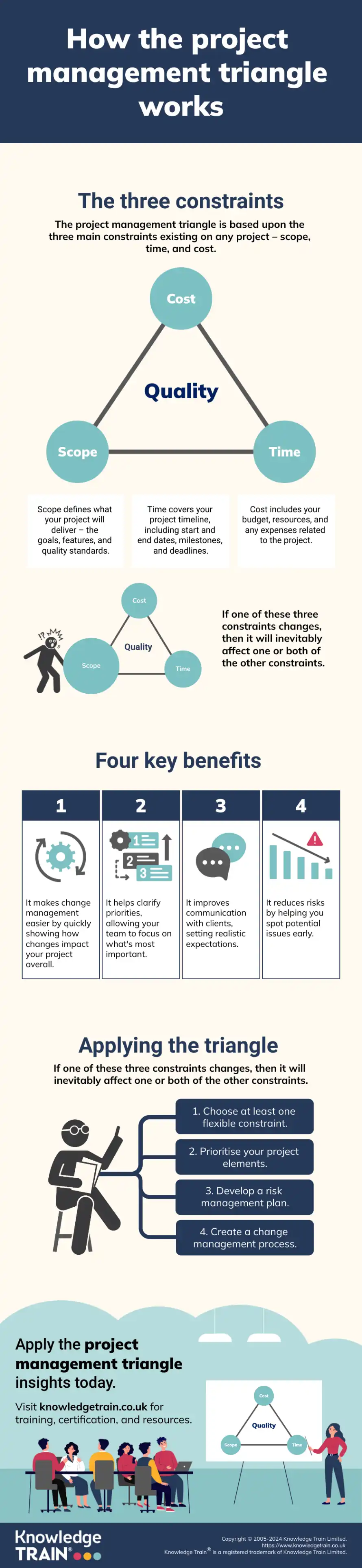
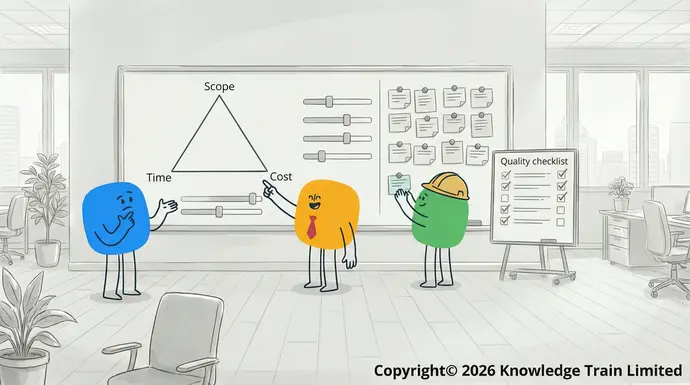
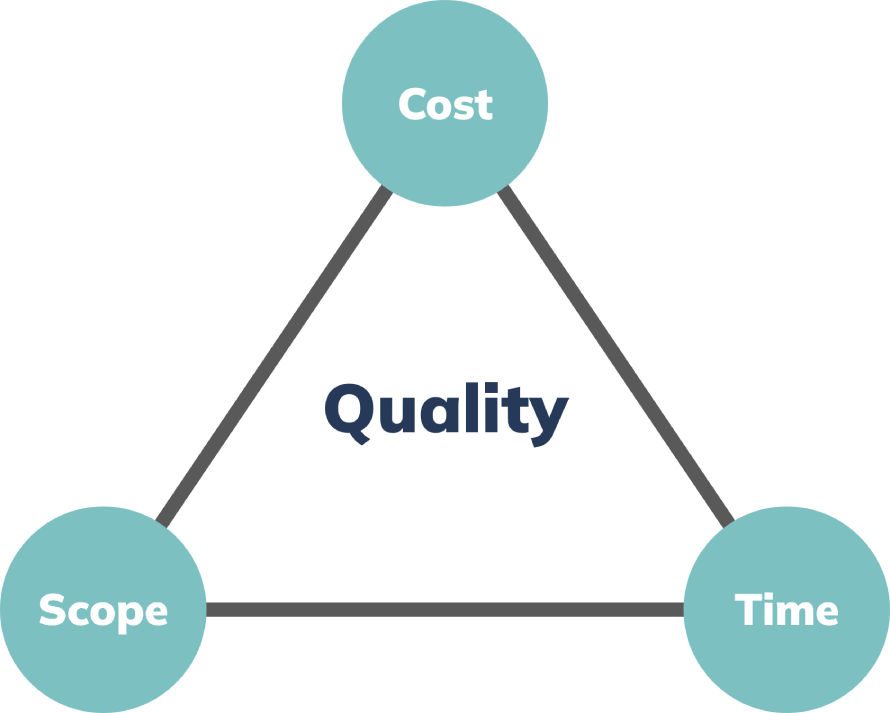
- The {title}Customer Support project management triangle {title} , also known as the triple constraint model, is a concept that visualises the constraints of Manage Consent[email protected] scope Join Our Team
, To provide the best experiences, we use technologies like cookies to store and/or access device information. Consenting to these technologies will allow us to process data such as browsing behavior or unique IDs on this site. Not consenting or withdrawing consent, may adversely affect certain features and functions.
time [email protected]
- , and Copyright © 2005-2026 Knowledge Train Limited. costThe technical storage or access is required to create user profiles to send advertising, or to track the user on a website or across several websites for similar marketing purposes. Registered in UK: 5566983. Manage Consent
- in Registered VAT: GB872413526. project managementManage optionsFunctional Knowledge TrainTo provide the best experiences, we use technologies like cookies to store and/or access device information. Consenting to these technologies will allow us to process data such as browsing behavior or unique IDs on this site. Not consenting or withdrawing consent, may adversely affect certain features and functions.
- . It highlights the interconnected nature of these three aspects in delivering a successful project.Manage services ® The triangle model is a crucial tool for project managers to understand and balance the competing demands of a Manage {vendor_count} vendors is a registered trademark of Knowledge Train Limited.
- projectRead more about these purposes 20 Old Bailey, London, EC4M 7AN, England, United Kingdom. . The scope refers to the project’s requirements, objectives, and deliverables. Time refers to the schedule and deadlines. Cost encompasses the budget and resources. The challenge is to optimise all three to meet project goals. Knowledge Train are experts in project management, PRINCE2, agile and change management training and certification. Choose from a full range of instructor-led and self-paced
Each corner of the triangle is dependent on the other two. A change in one element typically results in a change in at least one other. By understanding and managing these constraints, project teams can make informed decisions and adjustments to ensure project success.AcceptFunctionalproject management coursesFunctional
The project management triangle is a fundamental concept that helps , a
- project managers Deny Always active PRINCE2 course visualise and optimise the key constraints of any project. By balancing scope, time, and cost, project teams can deliver successful outcomes that meet stakeholder expectations. , or an
- Understanding the project management triangleView preferences agile project management course The three constraints explained to boost your career. Functional
- The project management triangle is made up of three main constraints: Save preferences PRINCE2 scope ® Always active
- , View preferences , MSP {title}timeThe technical storage or access is strictly necessary for the legitimate purpose of enabling the use of a specific service explicitly requested by the subscriber or user, or for the sole purpose of carrying out the transmission of a communication over an electronic communications network.®
{title} and , ITIL
{title}cost ®
- Manage Consent. Let’s have a detailed look at each of these. , P3O Scope ®
- To provide the best experiences, we use technologies like cookies to store and/or access device information. Consenting to these technologies will allow us to process data such as browsing behavior or unique IDs on this site. Not consenting or withdrawing consent, may adversely affect certain features and functions.: Scope refers to the boundaries, objectives and deliverables of a project. It includes the goals and requirements of the project, as well as the specific features, functionalities and quality standards.Preferences, PRINCE2 Time ®
- : The time constraint of a project refers to its duration and schedule. It involves factors such as the project start and end dates, milestones and deadlines, as well as the sequencing and dependencies of tasks. Agile, RESILIA Cost ®
- : The cost constraint relates to the financial and resource aspects of a project. This includes the budget allocated to the project as well as the human resources and labour costs, and equipment and material expenses.Preferences, and the Swirl logo are registered trademarks of the PeopleCert group. Used under licence from PeopleCert. All rights reserved. AgilePM FunctionalRelationship between constraints ®Preferences
The three constraints of scope, time and cost are interconnected and can impact each other. Changes to one constraint will likely influence the other constraints. For example, an increase in scope will often require additional time and resources, whereas a reduction in time may increase costs or decrease scope. Similarly, a reduction in budget may affect the project scope or timeline. and AgileBA
Project managers ®
must carefully balance these constraints throughout the project lifecycle. are registered trademarks of Agile Business Consortium Limited. All rights reserved. The APMG International AgilePM and Swirl Device logo, APMG International AgileBA and Swirl Device Logo, APMG International Change Management and APMG International Better Business Cases and Swirl Device logo are trademarks of The APM Group Limited, used under permission of The APM Group Limited. All rights reserved. Better Business Cases™ is a trademark of Her Majesty’s Treasury. All rights reserved. DevOps Foundation
Impact on project quality ®Preferences
- FunctionalThe balance of scope, time and cost also has an impact on the is a registered mark of the DevOps Institute. “PMI”, “PMBOK quality ®
- Always active of the project outcomes. If the three constraints are well-balanced, the project is more likely to achieve high-quality results. On the other hand, if there is an imbalance in any of the constraints, the quality of the project may be compromised. For example:The technical storage or access is necessary for the legitimate purpose of storing preferences that are not requested by the subscriber or user. Guide”, “PMP” and “CAPM” are registered marks of Project Management Institute, Inc. Knowledge Train Scrum Essentials™, Business Learning Library (BLL)™, Business Analysis Learning Library (BALL)™, Agile Learning Library (ALL)™, IT Learning Library (ITLL)™, and Compliance Learning Library (CLL)™ are trademarks of Knowledge Train Limited. All rights reserved. A tight deadline may lead to a rushed project, resulting in lower quality outputs. Knowledge Train Ltd is an Introducer Appointed Representative of NewDay Cards Ltd for the Newpay finance product provided by NewDay Ltd. NewDay Cards Ltd acts as a credit broker, not a lender. We will introduce you exclusively to Newpay finance products provided by NewDay Limited under this Introducer Appointed Representative arrangement. Finance available from other lenders is not covered by this arrangement. NewDay Ltd and Newday Cards Ltd are authorised and regulated by the Financial Conduct Authority (ref nos 690292 and 682417 respectively).
- A limited budget may result in a project being understaffed or under-resourced, which may also affect quality. A project with an overambitious scope can strain resources and time, leading to poor results. Successful project management involves finding the right balance and making trade-offs between the three constraints while maintaining the desired level of quality. By understanding the impact of these constraints on each other, project managers can make informed decisions to lead the project StatisticsThe technical storage or access is necessary for the legitimate purpose of storing preferences that are not requested by the subscriber or user.
to a successful outcome.
Benefits of using the project management triangleThe technical storage or access is strictly necessary for the legitimate purpose of enabling the use of a specific service explicitly requested by the subscriber or user, or for the sole purpose of carrying out the transmission of a communication over an electronic communications network. Search
- Utilising the project management triangle provides some distinct benefits to the project team and stakeholders. These are as follows. Easier change management Statistics
- The triangle model helps to Statistics make changes easier
- . This is because if a change arises, the project managers can easily evaluate how this change will affect the scope, time and cost, decide, as such it helps to quickly evaluate a change request, understand the ripple effects, and make an informed decision on change.Preferences Priority clarification
- Visualising the three constraints helps to Statistics clarify priorities
- . This will make it possible for the team to quickly identify important elements in the project, direct resources to important tasks and make trade-offs as required based on the project goals.Preferences Improved client communication The technical storage or access that is used exclusively for statistical purposes. Request a quote
- The triangle is a helpful communication tool The technical storage or access that is used exclusively for anonymous statistical purposes. Without a subpoena, voluntary compliance on the part of your Internet Service Provider, or additional records from a third party, information stored or retrieved for this purpose alone cannot usually be used to identify you.
- to both communicate with and educate clients. The project managers can use the triangle to show the project’s constraints to the clients, visualise how changes would affect them, and set realistic expectations regarding project deliverables. Risk reduction
Utilising the triangle will help in The technical storage or access that is used exclusively for statistical purposes.
Project Management Essentials Read more about these purposes The technical storage or access is required to create user profiles to send advertising, or to track the user on a website or across several websites for similar marketing purposes.
The technical storage or access that is used exclusively for anonymous statistical purposes. Without a subpoena, voluntary compliance on the part of your Internet Service Provider, or additional records from a third party, information stored or retrieved for this purpose alone cannot usually be used to identify you.
£999 +vat Accept Manage options Manage services
See all dates DenyThe technical storage or access is strictly necessary for the legitimate purpose of enabling the use of a specific service explicitly requested by the subscriber or user, or for the sole purpose of carrying out the transmission of a communication over an electronic communications network.Manage {vendor_count} vendors
- Managing the project management triangle Read more about these purposes
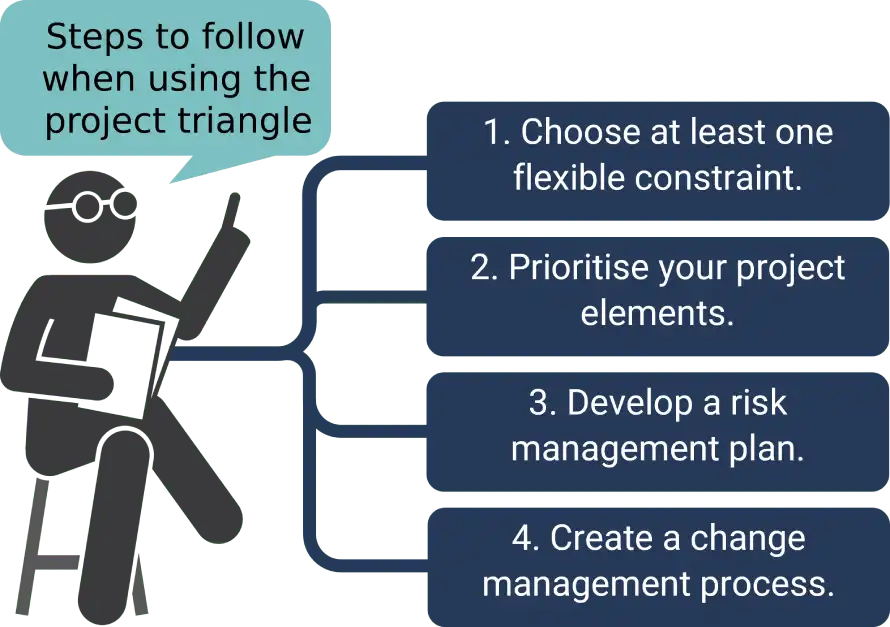
- Maintaining the balance of the project management triangle requires strategic decisions and careful trade-offs between scope, time, and cost. Here are some tips to help: View preferences
- Choose at least one flexible constraintMarketing Accept
- One constraint should be identified as more flexible than the others. This allows some wiggle room when dealing with changes or issues. Ask yourself: Save preferences
Which constraint is easiest or least impactful to change? Deny Preferences
Are stakeholders willing to adjust scope, extend deadlines, or increase budget if necessary? View preferences How will increased flexibility in one constraint impact the other two?MarketingView preferences{title} Identifying a flexible constraint up-front allows for better risk management and issue resolution. {title}
Prioritise features and requirements Save preferences{title}Preferences
- It is important to carefully evaluate the importance of each project deliverable. This will help you focus on what is essential to project success. Create a comprehensive list of features and requirements, then: Manage consent
- Rank or score each based on value and importance View preferencesManage consent PMI (
- Clearly define “must-have” vs. “nice-to-have” features {title} Project Management Institute
- Leverage prioritisation to inform trade-off decisions. {title} )
This prioritisation process allows for objective trade-off discussions if needed. {title} Certifications:
Develop a risk management planThe technical storage or access is required to create user profiles to send advertising, or to track the user on a website or across several websites for similar marketing purposes.Manage Consent PMO Certification, PMP, CAPMProactively identifying and managing risks will help avoid imbalances in the triangle. A Examples:
risk managementManage optionsTo provide the best experiences, we use technologies like cookies to store and/or access device information. Consenting to these technologies will allow us to process data such as browsing behavior or unique IDs on this site. Not consenting or withdrawing consent, may adversely affect certain features and functions.The technical storage or access is necessary for the legitimate purpose of storing preferences that are not requested by the subscriber or user. Corporate IT PMOs, government programme offices.
- planManage services Related terms:
- should include:Manage {vendor_count} vendors Project Portfolio, Project Manager, Stakeholders, Best Practices, PMO Tools.
- Identification of risks that could impact any of the constraintsRead more about these purposes Learn more on Wikipedia
- Risk scoring based on probability and impact Visit PMI.org
Detailed contingency plans for high-priority risksAcceptFunctionalStatisticsA monitoring process to reassess risks throughout the project. Risk managementDeny
ensures prevention of imbalances before they happen.
- Create a change management planView preferences Statistics
- Change is inevitable on projects. A Functional
- change management planSave preferences
- provides a process for considering how changes impact the constraints. A plan should include: Always active
A system for submitting, reviewing, and approving changesView preferences
Procedures for assessing change impact on each constraint{title}
Approval thresholds based on change type and size{title}
Communication plans for approved changes{title}
A structured change management process helps to prevent imbalances.Manage consent The technical storage or access that is used exclusively for statistical purposes.Match management methodology to priority constraintsManage consent The project management methodology used should complement the project’s constraints. Consider:The technical storage or access is strictly necessary for the legitimate purpose of enabling the use of a specific service explicitly requested by the subscriber or user, or for the sole purpose of carrying out the transmission of a communication over an electronic communications network.The technical storage or access that is used exclusively for anonymous statistical purposes. Without a subpoena, voluntary compliance on the part of your Internet Service Provider, or additional records from a third party, information stored or retrieved for this purpose alone cannot usually be used to identify you.
- Waterfall methodologies
- like traditional or predictive project management focus on upfront planning and are best suited for fixed-scope projects where time and cost can be more flexible.
- Agile methodologies
- like Scrum or Kanban emphasise iterative development and are best for projects where scope may need to be flexible or change over time.
Lean approachesPreferences
prioritise efficiency and cost control and are useful when budget is the main constraint. MarketingChoosing the right approach from the beginning aligns with the key constraints. Follow the tips above to help manage the project management triangle and balance constraints throughout your project. The most important thing is to continuously monitor and maintain alignment of the three sides. Assess the status of scope, time, and cost regularly to identify imbalances. Be willing to make informed decisions and trade-offs as necessary. And communicate clearly with stakeholders about any changes to plans or constraints.
- Strategies for balancing constraintsPreferences
- Managing constraints effectively requires specific strategies for each side of the project management triangle. Here are some tips for balancing scope, time, cost and quality: Marketing
- Scope management techniques
- When managing project scope, you can try these tips:
Define project boundaries
: Clearly outline the scope of the project and its deliverables at the beginning.
- Scope change control
- : Establish a process for handling changes to
- The technical storage or access is required to create user profiles to send advertising, or to track the user on a website or across several websites for similar marketing purposes.
Manage optionsManage servicesManage {vendor_count} vendorsStakeholder Engagement:
- Read more about these purposes Acting as an interface between project teams, senior management, and other stakeholders.
- Change Management
- Accept:
- Supporting change initiatives and minimising resistance through structured strategies.
DenyTypes of PMOs
PMOs are not one-size-fits-all. Their structure, authority and level of influence can vary significantly. The three primary PMO types are:
View preferencesSupportive PMO:
Provides consultative services, best practices, templates, and guidance. Has low control and operates as a resource for Project Managers.
Save preferencesControlling PMO: Requires compliance with View preferencesproject management
{title} standards and methodologies. Has moderate control—enforces processes and reviews adherence.
{title}Directive PMO:{title} Directly manages projects and assigns Project Managers. Exercises high control and is responsible for
Manage Consentproject delivery
and outcomes.To provide the best experiences, we use technologies like cookies to store and/or access device information. Consenting to these technologies will allow us to process data such as browsing behavior or unique IDs on this site. Not consenting or withdrawing consent, may adversely affect certain features and functions.Organisations may adapt their PMO model based on size, maturity, and strategic needs. A PMO may evolve from supportive to controlling or directive as project management capability matures. PMO best practices
Implementing a PMO involves defining objectives, selecting the right PMO type, securing stakeholder support, setting up governance structures, and continuously reviewing processes. Best practices for successful PMO implementation include:
Aligning PMO objectives with organisational strategy.
Functional
Functional Always active