Introduction
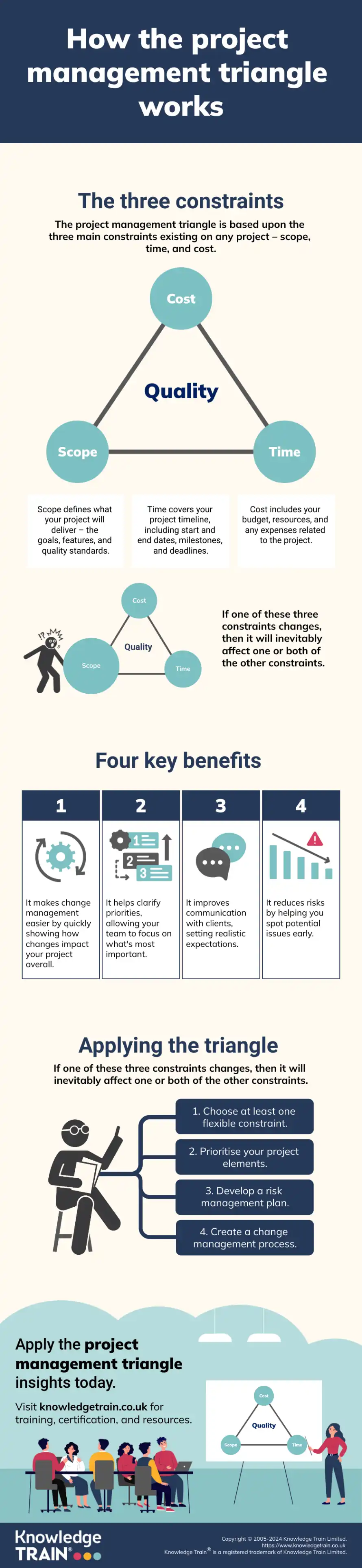
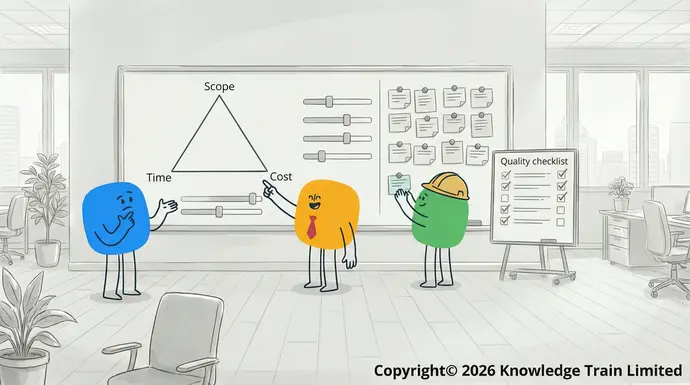
The project management triangle , also known as the triple constraint model, is a concept that visualises the constraints of scope , time , and cost in project management . It highlights the interconnected nature of these three aspects in delivering a successful project.
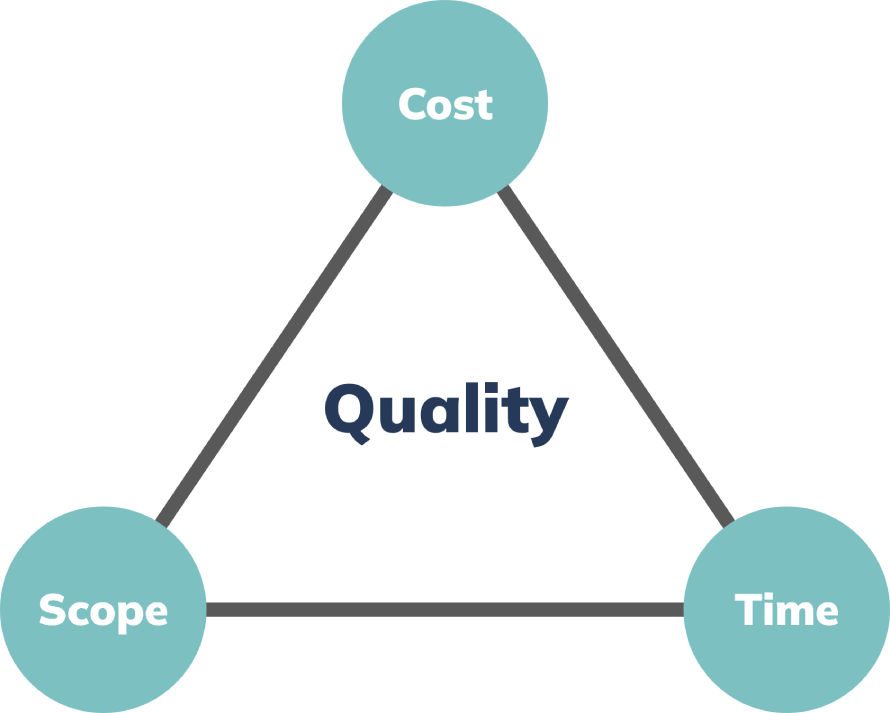
The triangle model is a crucial tool for project managers to understand and balance the competing demands of a project . The scope refers to the project’s requirements, objectives, and deliverables. Time refers to the schedule and deadlines. Cost encompasses the budget and resources. The challenge is to optimise all three to meet project goals.
Each corner of the triangle is dependent on the other two. A change in one element typically results in a change in at least one other. By understanding and managing these constraints, project teams can make informed decisions and adjustments to ensure project success.
The project management triangle is a fundamental concept that helps project managers visualise and optimise the key constraints of any project. By balancing scope, time, and cost, project teams can deliver successful outcomes that meet stakeholder expectations.
Understanding the project management triangle
The three constraints explained
The project management triangle is made up of three main constraints: scope , time and cost . Let’s have a detailed look at each of these.
- Scope : Scope refers to the boundaries, objectives and deliverables of a project. It includes the goals and requirements of the project, as well as the specific features, functionalities and quality standards.
- Time : The time constraint of a project refers to its duration and schedule. It involves factors such as the project start and end dates, milestones and deadlines, as well as the sequencing and dependencies of tasks.
Common challenges and solutionsFoundation
Scope creepLearn the fundamentals of Better Business cases.
Scope creepPractitioner involves changes or expansion in the project’s scope after it has already started. This can lead to an increase in resources, time, and effort needed to complete the project.Includes Foundation & Practitioner combined option.
SolutionsP3O
- Establish a formal change control process to manage scope changes effectively.®
- Clearly define project scope and requirements during the planning phase.Foundation
- Communicate regularly with stakeholders to manage expectations.Learn the fundamentals of the P3O project management office.
- Implement a prioritisation system for new requests and changes.Practitioner
Time constraintsIncludes Foundation & Practitioner combined option.
Projects often face Workshopstight deadlinesIntroduction to Project Management , which can put pressure on the team and the quality of work.1-day workshop to learn the basics of project management.
SolutionsProject Management Essentials
- Use critical path analysis to identify and focus on essential tasks.2-day workshop to learn how to manage projects without getting certified.
- Implement time-boxing techniques to improve focus and productivity.Writing Business Cases
- Consider parallel processing of tasks where possible.Half-day workshop to learn to write robust business cases.
Includes Foundation & Practitioner combined option. in deliverables.
Solutions
- Establish and communicate clear quality standards at the beginning of the project.
- Implement regular quality checks throughout the project lifecycle.Workshops
- Involve stakeholders in continuous feedback loops.AI in Project Management
- Allocate resources for testing and quality assurance processes.Learn how to use AI tools in everyday project work.
With preparation of ways to address these hurdles, you will be one step closer to coping with the strain on the project management triangle. Keep in mind that this is where some creative strategising can help you maintain control of all these factors. It’s good to frequently ask “how are things going” and be willing to switch things around to keep them in balance.AGILE
Best practices for implementing the project management triangleAgilePM
Best practices for implementing the project management triangle include the following:®
Stakeholder communication – Agile Project Management
One of the most important aspects of effectively implementing the project management triangle is Foundation communicatingLearn the key principles of Agile Project Management. with stakeholders. Project managers should communicate regularly with stakeholders to keep them informed and manage their expectations. It can also help to keep stakeholders engaged and on board with the project. There are several best practices for communicating with stakeholders, including the following:Practitioner
- Schedule regular meetings with stakeholders to discuss the project.Includes Foundation & Practitioner combined option.
- Provide stakeholders with a visual representation of the triangle. This can help them to understand the trade-offs that are being made.PRINCE2
- Use plain language when communicating with stakeholders. Avoid jargon and technical terms that may be confusing.®
- Encourage stakeholders to ask questions and share their concerns. Agile
Regular monitoring and adjustmentsFoundation
Another important aspect of the project management triangle is Learn the fundamentals of the PRINCE2 Agile method.monitoring and adjustingPractitioner . Project managers need to keep a close eye on the project and make adjustments as needed to keep it on track. There are several best practices for monitoring and adjusting, including the following:Includes Foundation & Practitioner combined option.
- Use a tracking system to monitor the project. This will help you to keep track of progress and adjust as needed.Scrum
- Review the project plan on a regular basis. This will help you to stay on track and make changes as necessary.Scrum Essentials
- Adjust the plan when necessary. If you find that you are off track, you can always make adjustments to get back on track.Self-paced training course to learn the essentials of Scrum.
- Decisions based on information to revise project plans.Scrum Master
Team collaboration and accountabilityChoose Scrum Alliance or Scrum.org Scrum Master training courses.
Project managers can also foster collaboration and teamwork among team members by holding them accountable for their part of the work. When team members know that they will be held accountable for their work, they are more likely to collaborate with others to complete the project successfully. There are several best practices for collaborating and holding team members accountable, including the following:Scrum Product Owner
- Assign clear roles and responsibilities to each team member. This will help everyone to understand what they need to do and be held accountable for their part of the project.Choose Scrum Alliance or Scrum.org Product Owner training courses.
- Encourage team members to collaborate with each other. This can be done by setting up regular team meetings and encouraging team members to communicate with each other.AgileBA
- Track team members’ progress and hold them accountable for their work. This can be done by regularly reviewing each team member’s progress and providing feedback.®
- Recognise and reward efforts that support successful constraint management. – Agile Business Analysis
Continuous improvementFoundation
Adopt a culture of Learn the fundamentals of Agile Business Analysis.continuous improvementPractitioner when working with the project triangle.4-day course including Foundation.
- Review the project after completion to determine lessons learnedLean Six Sigma
- Evaluate what worked and didn’t work for finding the balance between the constraintsYellow Belt
- Promote team members to share ideas for process improvementsSelf-paced training course to gain LSS Yellow Belt.
- Stay updated on emerging project management methodologies and tools.PMI
Incorporating these best practices can help project managers to learn the project management triangle. However, success will depend on dedication, flexibility, and the ability to learn from both successes and failures.®
Applying the project management trianglePMI-ACP
To help us see how we can do this, it’s worth looking at some examples of best practice in real-world situations. We will take three case studies below and see how things were managed in each of them.Self-paced course to prepare you for the exam (exam not included).
Large-scale IT projectKanban
A global corporation launched a Estimating for Agile Foundationworldwide ERP implementationAgile Learning Library (ALL)™. The Project Manager in this case struggled to ensure the best balance between the different project triangle dimensions.BUSINESS ANALYSIS
Key measures include prioritised the most important core functionalities to manage scope, implemented a phased rollout to manage time and cost constraints, and utilised change management processes to assess and evaluate new requirements.BCS Business Analysis
ResultBusiness Analysis Foundation : The project delivered under budget, with minimal impact on time, and fulfilled all essential business requirements.Learn the fundamentals of business analysis.
Construction projectModelling Business Processes
A commercial Gain practitioner certificate in modelling business processes.
cost. By learning this concept, project managers can make informed decisions when trade-offs are required and ensure that they deliver high-quality results.
We hope that our blog post on the project management triangle has provided you with a clear and concise understanding of the concept. Remember, project management is not just about executing tasks but also involves communication with stakeholders, ongoing monitoring and adjustment of project parameters, team collaboration, and accountability, and continuous process improvement. Balancing these constraints is critical for project success, regardless of the industry or project type. As the case studies have shown, the effective application of the project management triangle can lead to exceptional outcomes.
We encourage you to apply these principles to your projects and experience the benefits of successful project management. With the right mindset, tools, and techniques, you will be able to navigate through challenges, meet stakeholder expectations, and consistently deliver successful outcomes. Embrace the project management triangle as an invaluable part of your project management toolkit.