Project management triangle

Key takeawaysPRINCE2 COURSES
Scope, time and cost move together, so every change needs a conscious trade-off.Select your preferred training course below:
- Any shift in scope, schedule, or budget typically forces an adjustment in at least one other constraint.
- Imbalances often show up as rushed work, under-resourcing, or overambitious deliverables that reduce quality.APM COURSES
- Pick at least one flexible constraint early so you can respond to issues without losing control.Select your preferred training course below:
- Use prioritisation and formal change control to prevent scope creep and keep decisions objective.
- Monitor risks and progress continuously, and communicate trade-offs clearly to stakeholders.AGILE PROJECT MANAGEMENT COURSES
Introduction
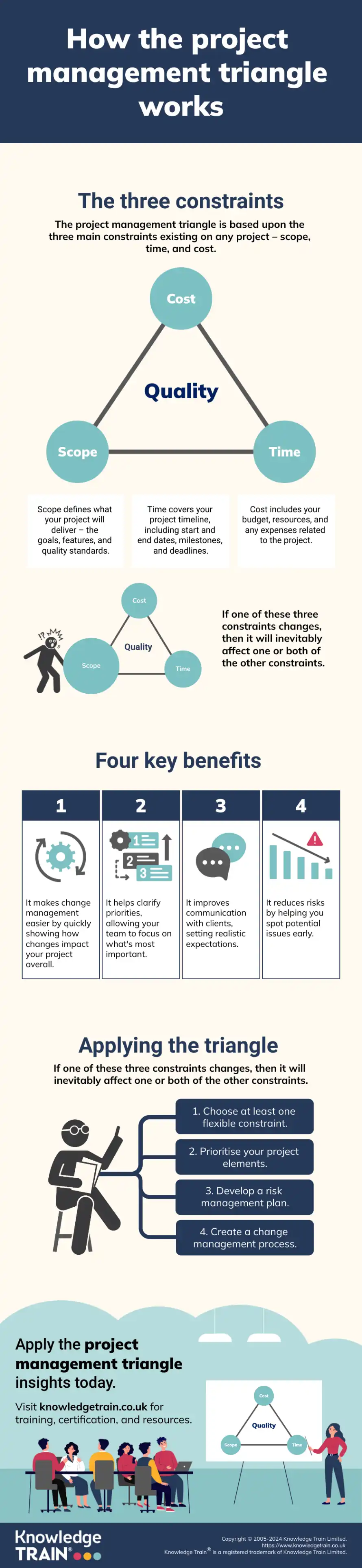
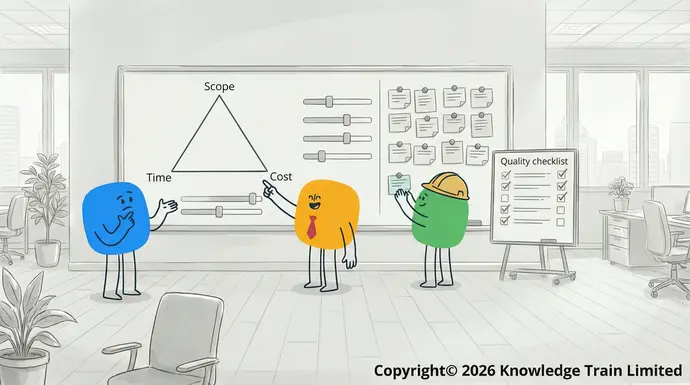
The APMG CHANGE MANAGEMENT COURSESproject management triangleSelect your preferred training course below:, also known as the triple constraint model, is a concept that visualises the constraints of scopePROGRAMME MANAGEMENT COURSES, Select your self-paced training course topic.time , and MSP COURSEScostSelect your preferred training course below: in project managementIT QUALIFICATIONS. It highlights the interconnected nature of these three aspects in delivering a successful project.Select your preferred qualification.
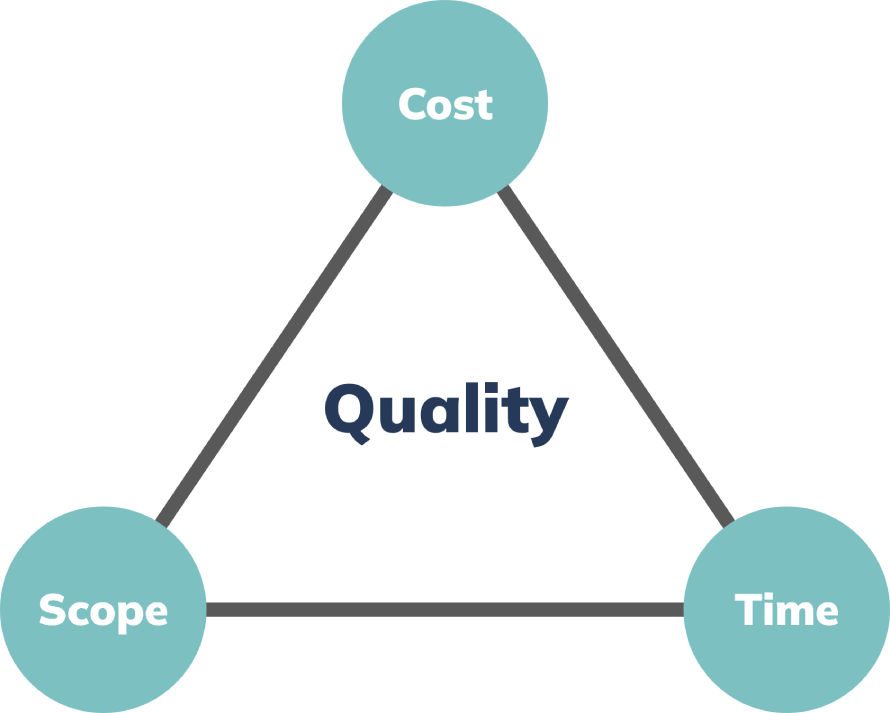
The triangle model is a crucial tool for project managers to understand and balance the competing demands of a projectITIL COURSES. The scope refers to the project’s requirements, objectives, and deliverables. Time refers to the schedule and deadlines. Cost encompasses the budget and resources. The challenge is to optimise all three to meet project goals.Select your preferred training course below:
Each corner of the triangle is dependent on the other two. A change in one element typically results in a change in at least one other. By understanding and managing these constraints, project teams can make informed decisions and adjustments to ensure project success.
The project management triangle is a fundamental concept that helps IT QUALIFICATIONSproject managers Select your preferred qualification.visualise and optimise the key constraints of any project. By balancing scope, time, and cost, project teams can deliver successful outcomes that meet stakeholder expectations.
Understanding the project management triangleITIL COURSES
The three constraints explainedSelect your preferred training course below:
. Let’s have a detailed look at each of these.AIPGF COURSES
- ScopeSelect your preferred training course below:: Scope refers to the boundaries, objectives and deliverables of a project. It includes the goals and requirements of the project, as well as the specific features, functionalities and quality standards.
- TimeBCS AI COURSES: The time constraint of a project refers to its duration and schedule. It involves factors such as the project start and end dates, milestones and deadlines, as well as the sequencing and dependencies of tasks.Select your preferred training course below:
- Cost : The cost constraint relates to the financial and resource aspects of a project. This includes the budget allocated to the project as well as the human resources and labour costs, and equipment and material expenses.AIPGF COURSES
Relationship between constraintsSelect your preferred training course below:
The three constraints of scope, time and cost are interconnected and can impact each other. Changes to one constraint will likely influence the other constraints. For example, an increase in scope will often require additional time and resources, whereas a reduction in time may increase costs or decrease scope. Similarly, a reduction in budget may affect the project scope or timeline.
Project managersAI WORKSHOPS must carefully balance these constraints throughout the project lifecycle.Select your preferred workshop below:
Impact on project quality
The balance of scope, time and cost also has an impact on the Knowledge Train is a PRINCE2 Accredited Training Organization.quality of the project outcomes. If the three constraints are well-balanced, the project is more likely to achieve high-quality results. On the other hand, if there is an imbalance in any of the constraints, the quality of the project may be compromised. For example:Knowledge Train is an AgilePM Accredited Training Organization.
- A tight deadline may lead to a rushed project, resulting in lower quality outputs.
- A limited budget may result in a project being understaffed or under-resourced, which may also affect quality.Knowledge Train is a PRINCE2 Agile Accredited Training Organization.
- A project with an overambitious scope can strain resources and time, leading to poor results.
Successful project management involves finding the right balance and making trade-offs between the three constraints while maintaining the desired level of quality. By understanding the impact of these constraints on each other, project managers can make informed decisions to lead the Knowledge Train is a Better Business Cases Accredited Training Organization.project
Knowledge Train is an Agile BA Accredited Training Organization.
Improved client communication
The triangle is a helpful Knowledge Train is a Change Management Accredited Training Organization.communication tool to both communicate with and educate clients. The project managers can use the triangle to show the project’s constraints to the clients, visualise how changes would affect them, and set realistic expectations regarding project deliverables.Knowledge Train is an MSP Accredited Training Organization.
Risk reduction
Utilising the triangle will help in Knowledge Train is a PRINCE2 Accredited Training Organization.managing risks . This is possible because this will help the team to predict potential problems earlier in the process, have a contingency plan, and balance the risks in all three constraints.Knowledge Train is an AgilePM Accredited Training Organization.
The use of the project management triangle allows for managersKnowledge Train is a PRINCE2 Agile Accredited Training Organization. to make decisions in a balanced manner. As such, it becomes possible to deal with complex projects with great ease.
Managing the project management triangle
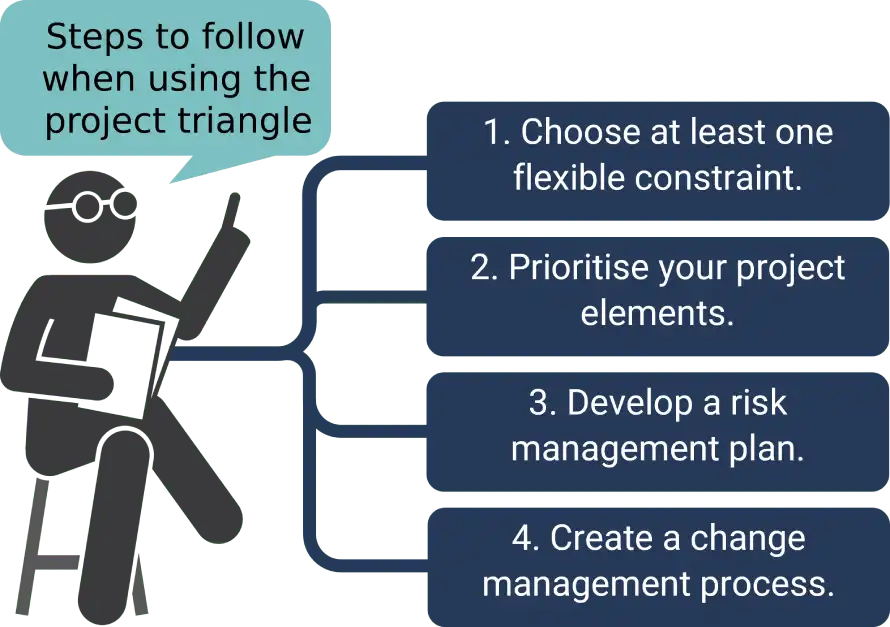
Maintaining the balance of the project management triangle requires strategic decisions and careful trade-offs between scope, time, and cost. Here are some tips to help:Knowledge Train is an AIPGF Accredited Training Organization.
Choose at least one flexible constraint
One constraint should be identified as more flexible than the others. This allows some wiggle room when dealing with changes or issues. Ask yourself:BCS accredited training partner for Business Analysis.
- Which constraint is easiest or least impactful to change?
- Are stakeholders willing to adjust scope, extend deadlines, or increase budget if necessary?WHAT YOU WILL GET
- How will increased flexibility in one constraint impact the other two?Our courses and workshops include:
Identifying a flexible constraint up-front allows for better risk management and issue resolution.Certification exam(s) where applicable
Prioritise features and requirementsAccredited training course materials
It is important to carefully evaluate the importance of each project deliverable. This will help you focus on what is essential to project success. Create a comprehensive list of features and requirements, then:Expert, experienced trainers to support you
- Rank or score each based on value and importanceCourse manual where applicable.
- Clearly define “must-have” vs. “nice-to-have” features
- Leverage prioritisation to inform trade-off decisions.SELF-PACED ONLINE TRAINING COURSES
- Find out moreCommunication plans for approved changes
- Scope change controlPhoneHow can we help?
- Monitor for scope creep : Regularly review project requirements to ensure they align with the defined scope.
- PrioritisationSubmit: Use a prioritisation method, such as MoSCoW , to determine which features are essential, desirable, optional, or not required.OUR VALUES
Time management approachesOur 6 core values are everything we do. They include:
When managing project time, you can try these tips:Integrity
- risk management and issue tracking tools for comprehensive project management.
Key features to look for in project management toolsSearch
When choosing a project management tool, consider these vital features and capabilities:
- Constraint tracking : The ability to track and manage scope, time and cost constraints concurrently
- Resource allocation : Features and tools to optimise team and resource utilisation
- Reporting and analyticsUnited Kingdom: Real-time project status and insights through intuitive dashboards and analyticsAustria
- Collaboration featuresBelgium: Shared workspaces, integrated communication tools and file-sharing capabilities for effective teamworkBulgaria
- Integration capabilitieCroatias: Compatibility with other software and tools used within your organisationCyprus
- Customisation optionsCzech Republic: Flexibility to adapt the software to your project management methodologies and processesDenmark
Common challenges and solutions
Scope creepBusiness Analysis
Scope creep involves changes or expansion in the project’s scope after it has already started. This can lead to an increase in resources, time, and effort needed to complete the project. Business analyst courses
SolutionsBCS Business Analysis certification
- Establish a formal change control process to manage scope changes effectively.
- Clearly define project scope and requirements during the planning phase.{"@context":"http://schema.org","@type":"BreadcrumbList","itemListElement":[{"@type":"ListItem","position":1,"name":"Home","item":"https://www.knowledgetrain.co.uk/"},{"@type":"ListItem","position":2,"name":"Business Analysis","item":"https://www.knowledgetrain.co.uk/business-analysis"},{"@type":"ListItem","position":3,"name":" Business analyst courses","item":"https://www.knowledgetrain.co.uk/business-analysis/business-analyst-course"},{"@type":"ListItem","position":4,"name":"BCS Business Analysis courses","item":"https://www.knowledgetrain.co.uk/business-analysis/business-analyst-course/bcs-business-analysis-certification"}]}
- Communicate regularly with stakeholders to manage expectations.
- Implement a prioritisation system for new requests and changes.
Time constraints
Projects often face tight deadlines , which can put pressure on the team and the quality of work.Instructor-led
Solutions
- Use critical path analysis to identify and focus on essential tasks.
- Implement time-boxing techniques to improve focus and productivity.
- Consider parallel processing of tasks where possible.
- Negotiate for deadline extensions when necessary.
Budget limitations
Limited budgetsSelf-paced can restrict resources, impacting the project’s scope and quality.
Solutions
- Conduct thorough cost estimation during the planning phase.
- Implement earned value management (EVM) to track project cost performance.
- Explore cost-effective alternatives for resources.BCS Business Analysis courses
- Prioritise budget allocation for critical project components.Start with BCS Business Analysis Foundation, build depth with practitioner-level modules, or achieve the International Diploma through a structured, recognised learning pathway.
Balancing constraints may sometimes lead to quality issues in deliverables.
Solutions
- Establish and communicate clear quality standards at the beginning of the project.4.9/5 average rating
- Implement regular quality checks throughout the project lifecycle.
- Involve stakeholders in continuous feedback loops.
- Allocate resources for testing and quality assurance processes.BCS accredited
With preparation of ways to address these hurdles, you will be one step closer to coping with the strain on the project management triangle. Keep in mind that this is where some creative strategising can help you maintain control of all these factors. It’s good to frequently ask “how are things going” and be willing to switch things around to keep them in balance.
Best practices for implementing the project management triangle
Best practices for implementing the project management triangle include the following:25,000 professionals trained
Stakeholder communication
One of the most important aspects of effectively implementing the project management triangle is View courses communicating with stakeholders. Project managers should communicate regularly with stakeholders to keep them informed and manage their expectations. It can also help to keep stakeholders engaged and on board with the project. There are several best practices for communicating with stakeholders, including the following: Enrol now
- Schedule regular meetings with stakeholders to discuss the project.
- Provide stakeholders with a visual representation of the triangle. This can help them to understand the trade-offs that are being made.
- Use plain language when communicating with stakeholders. Avoid jargon and technical terms that may be confusing.
- Encourage stakeholders to ask questions and share their concerns.Overview
Regular monitoring and adjustments
Another important aspect of the project management triangle is monitoring and adjusting . Project managers need to keep a close eye on the project and make adjustments as needed to keep it on track. There are several best practices for monitoring and adjusting, including the following:Compare
- Use a tracking system to monitor the project. This will help you to keep track of progress and adjust as needed.
- Review the project plan on a regular basis. This will help you to stay on track and make changes as necessary.
- Adjust the plan when necessary. If you find that you are off track, you can always make adjustments to get back on track.
- Decisions based on information to revise project plans.Delivery
Team collaboration and accountability
Project managers can also foster collaboration and teamwork among team members by holding them accountable for their part of the work. When team members know that they will be held accountable for their work, they are more likely to collaborate with others to complete the project successfully. There are several best practices for collaborating and holding team members accountable, including the following:
- Assign clear roles and responsibilities to each team member. This will help everyone to understand what they need to do and be held accountable for their part of the project.
- Encourage team members to collaborate with each other. This can be done by setting up regular team meetings and encouraging team members to communicate with each other.Enrol
- Track team members’ progress and hold them accountable for their work. This can be done by regularly reviewing each team member’s progress and providing feedback.
- Recognise and reward efforts that support successful constraint management.
Continuous improvement
Adopt a culture of Why uscontinuous improvement when working with the project triangle.
- Review the project after completion to determine lessons learned
- Evaluate what worked and didn’t work for finding the balance between the constraintsFAQs
- Promote team members to share ideas for process improvements
Conclusion
The project management triangle is a simple yet powerful tool for understanding and managing project constraints such as Business Analysis PracticescopeSee course, time , and costBusiness analysts and change professionals who want to improve how they investigate business situations and recommend effective, evidence-based improvements.. By learning this concept, project managers can make informed decisions when trade-offs are required and ensure that they deliver high-quality results.
We hope that our blog post on the project management triangle has provided you with a clear and concise understanding of the concept. Remember, project management is not just about executing tasks but also involves communication with stakeholders, ongoing monitoring and adjustment of project parameters, team collaboration, and accountability, and continuous process improvement. Balancing these constraints is critical for project success, regardless of the industry or project type. As the case studies have shown, the effective application of the project management triangle can lead to exceptional outcomes.None
We encourage you to apply these principles to your projects and experience the benefits of successful project management. With the right mindset, tools, and techniques, you will be able to navigate through challenges, meet stakeholder expectations, and consistently deliver successful outcomes. Embrace the project management triangle as an invaluable part of your project management toolkit.
FAQs3 days or 10 hours
What is the iron triangle in project management?
The iron triangle is another name for the project management triangle, emphasising the importance of balancing scope, time, and cost.Instructor-led, self-paced
How does changing one constraint affect the others in the project management triangle?
Changing one constraint typically impacts the other two, requiring adjustments to maintain balance and quality.BCS BA Practice exam
Can the project management triangle be applied to all types of projects?
Yes, the project management triangle is a versatile concept that can be applied to various industries and projects.60 minutes, multiple choice
What are some signs that a project’s constraints are out of balance?
Signs of imbalance may include frequent scope changes, missed deadlines, budget overruns or quality issues.
How often should project managers review and adjust the project management triangle?
Regular reviews are crucial, especially at significant milestones or when major changes occur.BCS Practitioner certificate
What role does innovation play in managing the project management triangle?
Innovation can help optimise processes, potentially improving all constraints simultaneously.Practice
Infographic