Project management triangle

Key takeaways
Scope, time and cost move together, so every change needs a conscious trade-off.
- Any shift in scope, schedule, or budget typically forces an adjustment in at least one other constraint.
- Imbalances often show up as rushed work, under-resourcing, or overambitious deliverables that reduce quality.
- Pick at least one flexible constraint early so you can respond to issues without losing control.
- Use prioritisation and formal change control to prevent scope creep and keep decisions objective.
- Monitor risks and progress continuously, and communicate trade-offs clearly to stakeholders.
Introduction
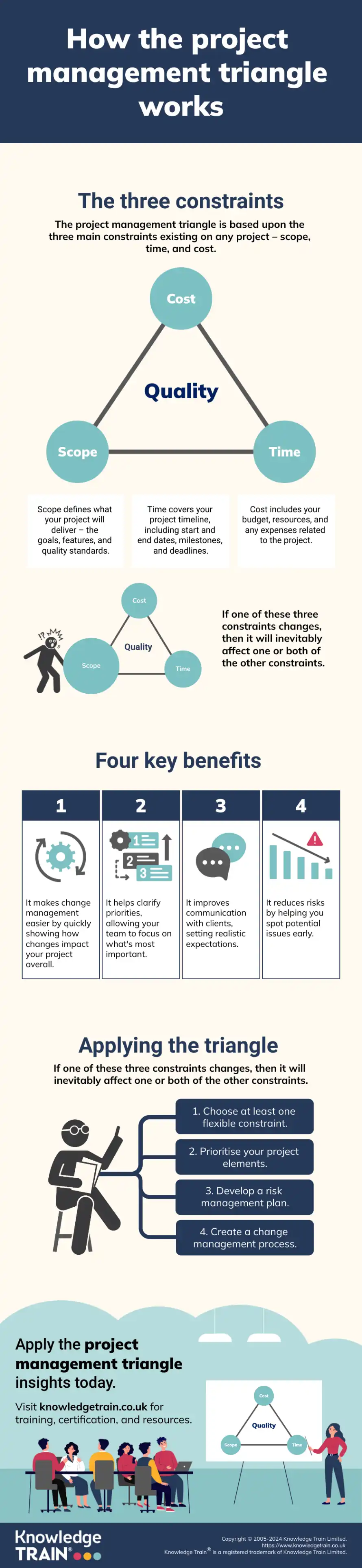
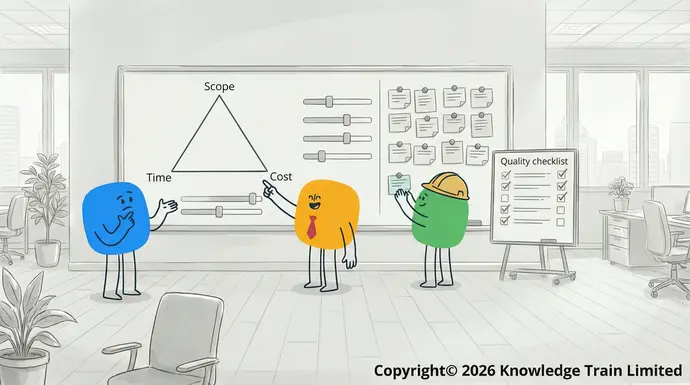
The project management triangle, also known as the triple constraint model, is a concept that visualises the constraints of scope, time, and cost in project management. It highlights the interconnected nature of these three aspects in delivering a successful project.
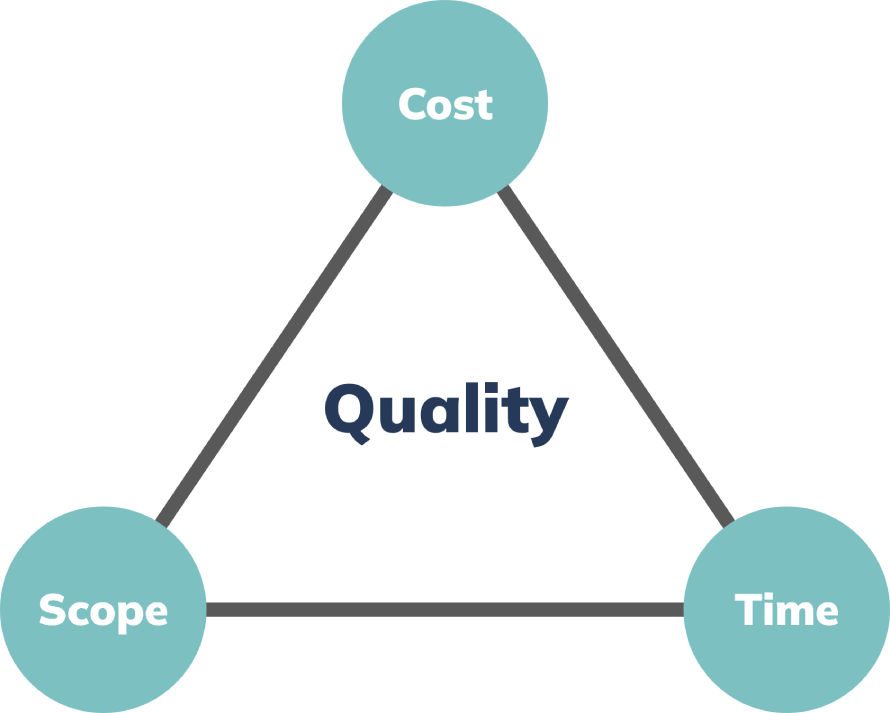
The triangle model is a crucial tool for project managers to understand and balance the competing demands of a project. The scope refers to the project’s requirements, objectives, and deliverables. Time refers to the schedule and deadlines. Cost encompasses the budget and resources. The challenge is to optimise all three to meet project goals.
Each corner of the triangle is dependent on the other two. A change in one element typically results in a change in at least one other. By understanding and managing these constraints, project teams can make informed decisions and adjustments to ensure project success.
The project management triangle is a fundamental concept that helps project managers visualise and optimise the key constraints of any project. By balancing scope, time, and cost, project teams can deliver successful outcomes that meet stakeholder expectations.
Understanding the project management triangle
The three constraints explained
The project management triangle is made up of three main constraints: scope, time and cost. Let’s have a detailed look at each of these.
- Scope: Scope refers to the boundaries, objectives and deliverables of a project. It includes the goals and requirements of the project, as well as the specific features, functionalities and quality standards.
- Time: The time constraint of a project refers to its duration and schedule. It involves factors such as the project start and end dates, milestones and deadlines, as well as the sequencing and dependencies of tasks.
- Cost: The cost constraint relates to the financial and resource aspects of a project. This includes the budget allocated to the project as well as the human resources and labour costs, and equipment and material expenses.
Relationship between constraints
The three constraints of scope, time and cost are interconnected and can impact each other. Changes to one constraint will likely influence the other constraints. For example, an increase in scope will often require additional time and resources, whereas a reduction in time may increase costs or decrease scope. Similarly, a reduction in budget may affect the project scope or timeline.
Project managers must carefully balance these constraints throughout the project lifecycle.
Impact on project quality
The balance of scope, time and cost also has an impact on the quality of the project outcomes. If the three constraints are well-balanced, the project is more likely to achieve high-quality results. On the other hand, if there is an imbalance in any of the constraints, the quality of the project may be compromised. For example:
- A tight deadline may lead to a rushed project, resulting in lower quality outputs.
- A limited budget may result in a project being understaffed or under-resourced, which may also affect quality.
- A project with an overambitious scope can strain resources and time, leading to poor results.
Successful project management involves finding the right balance and making trade-offs between the three constraints while maintaining the desired level of quality. By understanding the impact of these constraints on each other, project managers can make informed decisions to lead the project to a successful outcome.
Benefits of using the project management triangle
Utilising the project management triangle provides some distinct benefits to the project team and stakeholders. These are as follows.
Easier change management
The triangle model helps to make changes easier. This is because if a change arises, the project managers can easily evaluate how this change will affect the scope, time and cost, decide, as such it helps to quickly evaluate a change request, understand the ripple effects, and make an informed decision on change.
Priority clarification
Visualising the three constraints helps to clarify priorities. This will make it possible for the team to quickly identify important elements in the project, direct resources to important tasks and make trade-offs as required based on the project goals.
Improved client communication
The triangle is a helpful communication tool to both communicate with and educate clients. The project managers can use the triangle to show the project’s constraints to the clients, visualise how changes would affect them, and set realistic expectations regarding project deliverables.
Risk reduction
Utilising the triangle will help in managing risks. This is possible because this will help the team to predict potential problems earlier in the process, have a contingency plan, and balance the risks in all three constraints.
The use of the project management triangle allows for managers to make decisions in a balanced manner. As such, it becomes possible to deal with complex projects with great ease.
Managing the project management triangle
Maintaining the balance of the project management triangle requires strategic decisions and careful trade-offs between scope, time, and cost. Here are some tips to help:
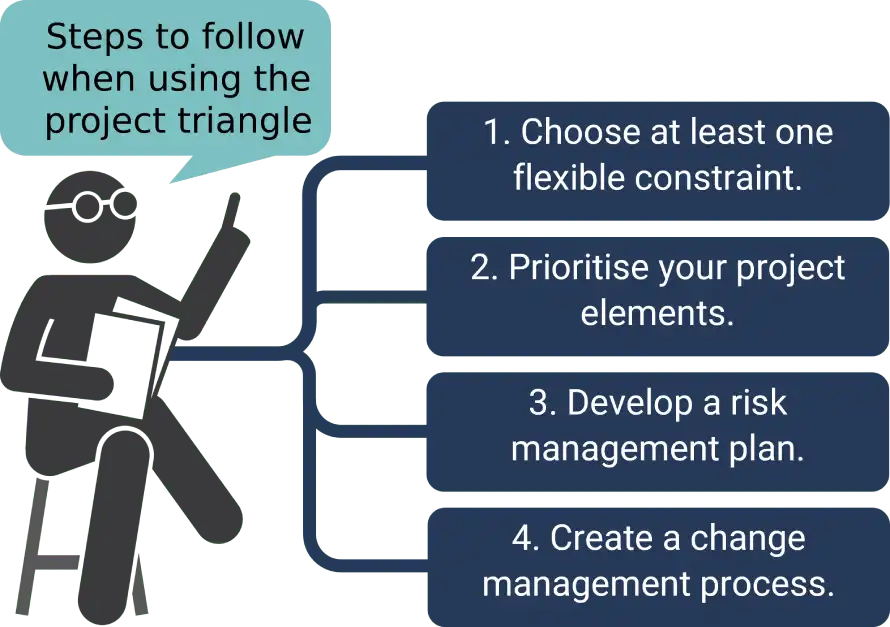
Choose at least one flexible constraint
One constraint should be identified as more flexible than the others. This allows some wiggle room when dealing with changes or issues. Ask yourself:
- Which constraint is easiest or least impactful to change?
- Are stakeholders willing to adjust scope, extend deadlines, or increase budget if necessary?
- How will increased flexibility in one constraint impact the other two?
Identifying a flexible constraint up-front allows for better risk management and issue resolution.
Prioritise features and requirements
It is important to carefully evaluate the importance of each project deliverable. This will help you focus on what is essential to project success. Create a comprehensive list of features and requirements, then:
- Rank or score each based on value and importance
- Clearly define “must-have” vs. “nice-to-have” features
- Leverage prioritisation to inform trade-off decisions.
This prioritisation process allows for objective trade-off discussions if needed.
Develop a risk management plan
Proactively identifying and managing risks will help avoid imbalances in the triangle. A risk management plan should include:
- Identification of risks that could impact any of the constraints
- Risk scoring based on probability and impact
- Detailed contingency plans for high-priority risks
- A monitoring process to reassess risks throughout the project.
Risk management ensures prevention of imbalances before they happen.
Create a change management plan
Change is inevitable on projects. A provides a process for considering how changes impact the constraints. A plan should include:
- A system for submitting, reviewing, and approving changes
- Procedures for assessing change impact on each constraint
- Approval thresholds based on change type and size
- Communication plans for approved changes
A structured change management process helps to prevent imbalances.
Match management methodology to priority constraints
The project management methodology used should complement the project’s constraints. Consider:
- Waterfall methodologies like traditional or predictive project management focus on upfront planning and are best suited for fixed-scope projects where time and cost can be more flexible.
- Agile methodologies like Scrum or Kanban emphasise iterative development and are best for projects where scope may need to be flexible or change over time.
- Lean approaches prioritise efficiency and cost control and are useful when budget is the main constraint.
Choosing the right approach from the beginning aligns with the key constraints.
Follow the tips above to help manage the project management triangle and balance constraints throughout your project. The most important thing is to continuously monitor and maintain alignment of the three sides. Assess the status of scope, time, and cost regularly to identify imbalances. Be willing to make informed decisions and trade-offs as necessary. And communicate clearly with stakeholders about any changes to plans or constraints.
Conclusion
The project management triangle is a simple yet powerful tool for understanding and managing project constraints such as scope , time , and cost . By learning this concept, project managers can make informed decisions when trade-offs are required and ensure that they deliver high-quality results.
We hope that our blog post on the project management triangle has provided you with a clear and concise understanding of the concept. Remember, project management is not just about executing tasks but also involves communication with stakeholders, ongoing monitoring and adjustment of project parameters, team collaboration, and accountability, and continuous process improvement. Balancing these constraints is critical for project success, regardless of the industry or project type. As the case studies have shown, the effective application of the project management triangle can lead to exceptional outcomes.
We encourage you to apply these principles to your projects and experience the benefits of successful project management. With the right mindset, tools, and techniques, you will be able to navigate through challenges, meet stakeholder expectations, and consistently deliver successful outcomes. Embrace the project management triangle as an invaluable part of your project management toolkit.
FAQs
What is the iron triangle in project management?
The iron triangle is another name for the project management triangle, emphasising the importance of balancing scope, time, and cost.
How does changing one constraint affect the others in the project management triangle?
Changing one constraint typically impacts the other two, requiring adjustments to maintain balance and quality.