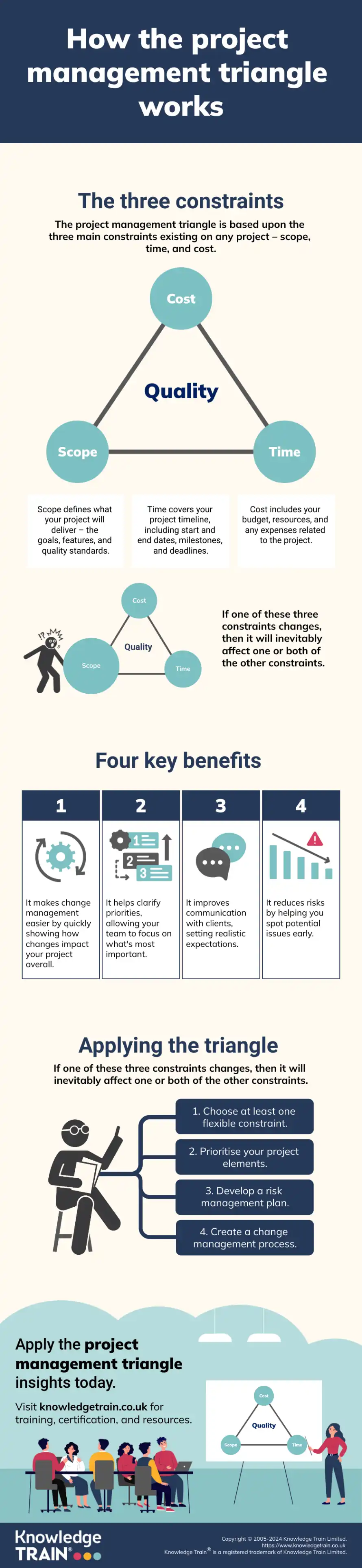
Project management triangle

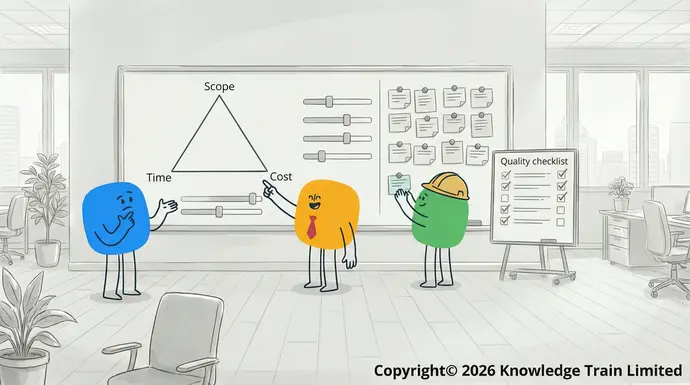
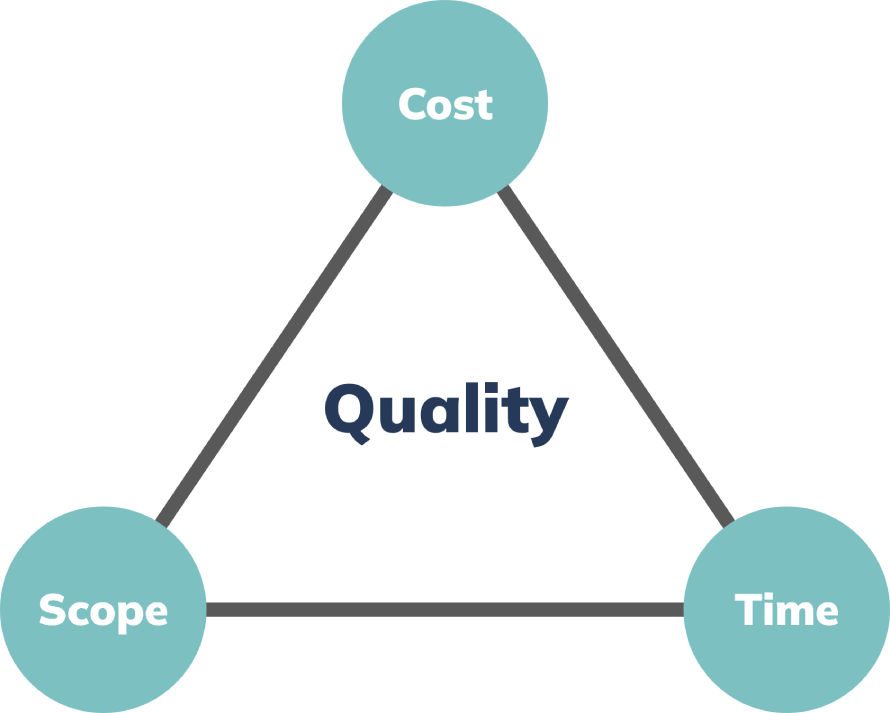
Slovakia to both communicate with and educate clients. The project managers can use the triangle to show the project’s constraints to the clients, visualise how changes would affect them, and set realistic expectations regarding project deliverables.
Risk reductionSlovenia
Utilising the triangle will help in Spainmanaging risksSweden. This is possible because this will help the team to predict potential problems earlier in the process, have a contingency plan, and balance the risks in all three constraints.Other countries
The use of the project management triangle allows for HomemanagersProject Management to make decisions in a balanced manner. As such, it becomes possible to deal with complex projects with great ease.Project management principles
Managing the project management triangle
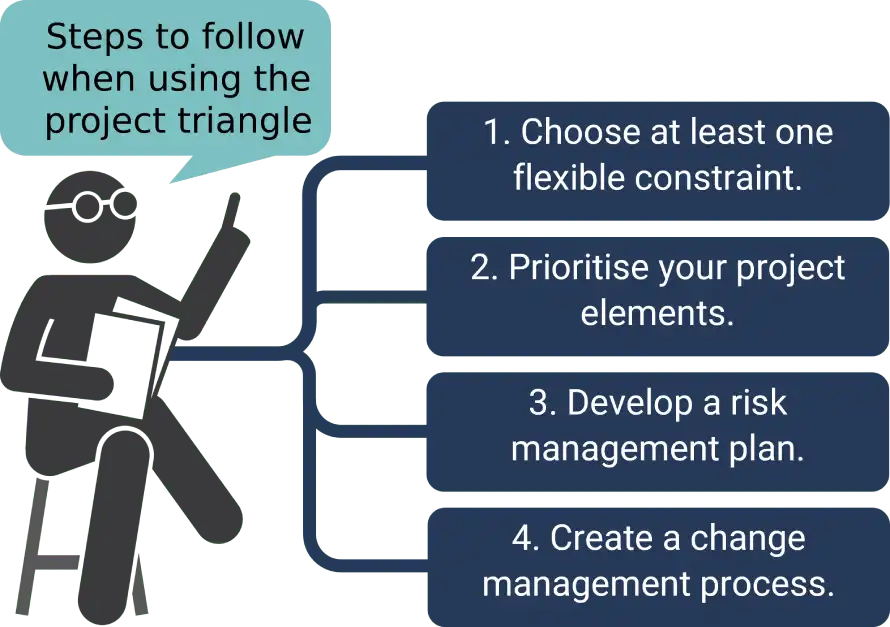
Maintaining the balance of the project management triangle requires strategic decisions and careful trade-offs between scope, time, and cost. Here are some tips to help:
Choose at least one flexible constraint
One constraint should be identified as more flexible than the others. This allows some wiggle room when dealing with changes or issues. Ask yourself:
- Which constraint is easiest or least impactful to change?
- Are stakeholders willing to adjust scope, extend deadlines, or increase budget if necessary?
- How will increased flexibility in one constraint impact the other two?
Identifying a flexible constraint up-front allows for better risk management and issue resolution.
Prioritise features and requirements
It is important to carefully evaluate the importance of each project deliverable. This will help you focus on what is essential to project success. Create a comprehensive list of features and requirements, then:
- Rank or score each based on value and importance
- Clearly define “must-have” vs. “nice-to-have” featuresCopied!
- Leverage prioritisation to inform trade-off decisions.Key takeaways
This prioritisation process allows for objective trade-off discussions if needed.Strong delivery comes from clear foundations, disciplined control, and continuous learning.
Develop a risk management planStart with a formal project structure, agreed objectives, and an engaged sponsor who removes roadblocks.
Proactively identifying and managing risks will help avoid imbalances in the triangle. A Define responsibilities early using tools like a RACI or RASCI matrix and a stakeholder register.risk managementPrevent scope creep by setting clear boundaries, acceptance criteria, and a documented change control process. planIdentify and mitigate risks early using structured assessment and practical contingency planning. should include:Track performance with aligned KPIs, baselines, and regular reporting to support data-driven decisions.
- Identification of risks that could impact any of the constraintsImprove outcomes through tailored communication, collaboration tools, value-led prioritisation, and post-project reviews.
- Risk scoring based on probability and impact
- Detailed contingency plans for high-priority risks
- A monitoring process to reassess risks throughout the project.
Risk managementContents ensures prevention of imbalances before they happen.
Create a change management plan
Change is inevitable on projects. A Contentschange management plan provides a process for considering how changes impact the constraints. A plan should include:Introduction
- A system for submitting, reviewing, and approving changes
- Procedures for assessing change impact on each constraintEstablishing a solid project foundation
- Approval thresholds based on change type and size
- Communication plans for approved changesDefining roles and responsibilities
A structured change management process helps to prevent imbalances.
Match management methodology to priority constraintsManaging project scope and changes
The project management methodology used should complement the project’s constraints. Consider:
- Waterfall methodologiesRisk management and mitigation like traditional or predictive project management focus on upfront planning and are best suited for fixed-scope projects where time and cost can be more flexible.
- Agile methodologiesMonitoring and measuring project progress like Scrum or Kanban emphasise iterative development and are best for projects where scope may need to be flexible or change over time.
- Lean approachesEffective communication and collaboration prioritise efficiency and cost control and are useful when budget is the main constraint.
- By effectively managing scope and changes, project managers can ensure projects remain on track while accommodating necessary adjustments. This balance promotes project success and stakeholder satisfaction.
- TeamworkDefining roles and responsibilities: A client-focused platform designed for team collaboration. It has a budget and expense tracking features, as well as Clearly defining roles and responsibilities within a project is essential for its success. This section will delve into aspects of team accountability and the role of the project manager.
- Informed
- Customisation options: Who else should be informed?: Flexibility to adapt the software to your project management methodologies and processesSign-off
- Mobile accessibility(RASCI only): Who should sign off or approve?: Mobile applications or responsive interfaces for on-the-go project management.Stakeholder register
Common challenges and solutions
Scope creep
Scope creepSelf-paced involves changes or expansion in the project’s scope after it has already started. This can lead to an increase in resources, time, and effort needed to complete the project.APM PFQ blended online
Solutions
- Establish a formal change control process to manage scope changes effectively.£749 +vat
- Clearly define project scope and requirements during the planning phase.
- Communicate regularly with stakeholders to manage expectations.
- Implement a prioritisation system for new requests and changes.
Time constraintsSelf-paced
Projects often face PRINCE2 Agile Practitioner (with Foundation) self-paced onlinetight deadlines , which can put pressure on the team and the quality of work.£1,399 +vat
Solutions
- Use critical path analysis to identify and focus on essential tasks.
- Implement time-boxing techniques to improve focus and productivity.
- Consider parallel processing of tasks where possible.Self-paced
- Negotiate for deadline extensions when necessary.AgilePM Practitioner (with Foundation) self-paced online
Budget limitations
Limited budgets£1,299 +vat can restrict resources, impacting the project’s scope and quality.Managing project scope and changes
SolutionsManaging project scope and change carefully helps you to manage change within your project.
- Conduct thorough cost estimation during the planning phase.Scope creep prevention
- Implement earned value management (EVM) to track project cost performance.Defining project boundaries
- Explore cost-effective alternatives for resources.It is important to clearly define project boundaries to avoid scope creep. To do this, one must document specific project deliverables, explicitly identify exclusions and set measurable acceptance criteria.
- Prioritise budget allocation for critical project components.Change management processes
Balancing constraints may sometimes lead to Robust quality issueschange control in deliverables. processes should be implemented, including:
SolutionsFormal change request submissions
- Establish and communicate clear quality standards at the beginning of the project.Impact assessment (time, cost, resources)
- Implement regular quality checks throughout the project lifecycle.Stakeholder review and approval
- Involve stakeholders in continuous feedback loops.Documentation of approved changes.
- Allocate resources for testing and quality assurance processes.Adaptability in project management
With preparation of ways to address these hurdles, you will be one step closer to coping with the strain on the project management triangle. Keep in mind that this is where some creative strategising can help you maintain control of all these factors. It’s good to frequently ask “how are things going” and be willing to switch things around to keep them in balance.Flexibility in project lifecycle
Best practices for implementing the project management triangleFlexibility should be built into the project lifecycle to allow for necessary changes:
Best practices for implementing the project management triangle include the following:Use
Stakeholder communicationiterative methods
One of the most important aspects of effectively implementing the project management triangle is when applicablecommunicatingConduct regular project reviews with stakeholders. Project managers should communicate regularly with stakeholders to keep them informed and manage their expectations. It can also help to keep stakeholders engaged and on board with the project. There are several best practices for communicating with stakeholders, including the following:Maintain open communication.
- Schedule regular meetings with stakeholders to discuss the project.Balancing change and stability
- Provide stakeholders with a visual representation of the triangle. This can help them to understand the trade-offs that are being made.Finding a balance between adaptability and project stability is important.
- Use plain language when communicating with stakeholders. Avoid jargon and technical terms that may be confusing.Aspect
- Encourage stakeholders to ask questions and share their concerns.Strategy
Regular monitoring and adjustmentsScope
Another important aspect of the project management triangle is Prioritise changes based on value and impactmonitoring and adjustingSchedule. Project managers need to keep a close eye on the project and make adjustments as needed to keep it on track. There are several best practices for monitoring and adjusting, including the following:Build buffer time into project timelines
- Use a tracking system to monitor the project. This will help you to keep track of progress and adjust as needed.Resources
to manage scope flexibly, focused on developing a Minimum Viable Product (MVP) for the initial release and utilised customer feedback to prioritise further feature development after launch.
ResultMonitor and reassess periodically: The product was able to be launched in time, within the budget, and has gained a high level of market share quickly due to its core functionality and the improvements that have been iteratively made since the launch.Medium
These examples illustrate successful applications of the project triangle in diverse industries and projects. They show how effective management of scope, time, and cost can overcome challenges and deliver value.Develop specific response strategies
Budget.We encourage you to apply these principles to your projects and experience the benefits of successful project management. With the right mindset, tools, and techniques, you will be able to navigate through challenges, meet stakeholder expectations, and consistently deliver successful outcomes. Embrace the project management triangle as an invaluable part of your project management toolkit.
FAQsElement
What is the iron triangle in project management?Integration method
The iron triangle is another name for the project management triangle, emphasising the importance of balancing scope, time, and cost.Cost
How does changing one constraint affect the others in the project management triangle?Map budget to WBS elements
Changing one constraint typically impacts the other two, requiring adjustments to maintain balance and quality.Schedule
Can the project management triangle be applied to all types of projects?Link timeline to WBS deliverables
Yes, the project management triangle is a versatile concept that can be applied to various industries and projects.Scope
What are some signs that a project’s constraints are out of balance?Align
Signs of imbalance may include frequent scope changes, missed deadlines, budget overruns or quality issues.WBS
How often should project managers review and adjust the project management triangle? with project objectives
Regular reviews are crucial, especially at significant milestones or when major changes occur.Using baselines for decision-making
What role does innovation play in managing the project management triangle?Utilise baselines to:
Innovation can help optimise processes, potentially improving all constraints simultaneously.Spot variances early
InfographicPredict project results