Key takeawaysDefining project boundaries
Scope, time and cost move together, so every change needs a conscious trade-off.It is important to clearly define project boundaries to avoid scope creep. To do this, one must document specific project deliverables, explicitly identify exclusions and set measurable acceptance criteria.
- Any shift in scope, schedule, or budget typically forces an adjustment in at least one other constraint.Change management processes
- Imbalances often show up as rushed work, under-resourcing, or overambitious deliverables that reduce quality.Robust
- Pick at least one flexible constraint early so you can respond to issues without losing control.change control
- Use prioritisation and formal change control to prevent scope creep and keep decisions objective. processes should be implemented, including:
- Monitor risks and progress continuously, and communicate trade-offs clearly to stakeholders.Formal change request submissions
IntroductionIdentifying and assessing risks
The Risk categoriesproject management triangleThe following are some of the most common risk categories:, also known as the triple constraint model, is a concept that visualises the constraints of Technical risksscopeFinancial risks, Operational riskstimeExternal risks (market, regulatory, etc.)., and Risk assessment techniquescostUse these techniques to identify and evaluate risks: in Risk probabilityproject management . It highlights the interconnected nature of these three aspects in delivering a successful project.and impact matrix
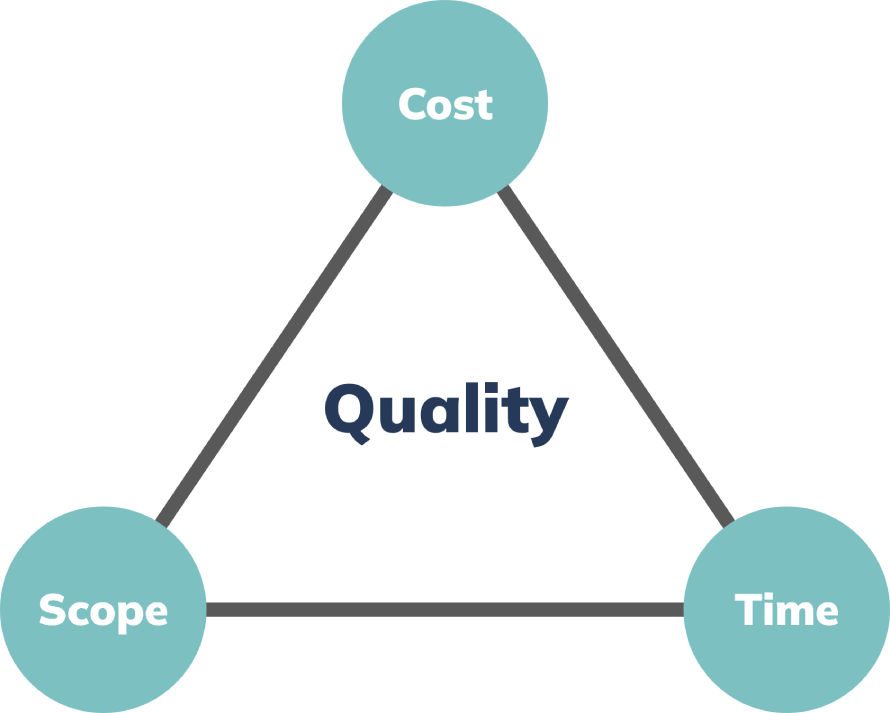
The triangle model is a crucial tool for project managers to understand and balance the competing demands of a SWOT analysisproject (Strengths, Weaknesses, Opportunities, Threats). The scope refers to the project’s requirements, objectives, and deliverables. Time refers to the schedule and deadlines. Cost encompasses the budget and resources. The challenge is to optimise all three to meet project goals.Delphi technique (expert consensus)
Each corner of the triangle is dependent on the other two. A change in one element typically results in a change in at least one other. By understanding and managing these constraints, project teams can make informed decisions and adjustments to ensure project success.Fault tree analysis.
The project management triangle is a fundamental concept that helps Developing risk mitigation strategiesproject managers Preventive measuresvisualise and optimise the key constraints of any project. By balancing scope, time, and cost, project teams can deliver successful outcomes that meet stakeholder expectations.Take the following proactive actions to reduce the likelihood of risk occurrence:
Understanding the project management triangleRegular risk reviews
The three constraints explainedClear communication channels
The project management triangle is made up of three main constraints: Quality assurance processesscopeOngoing staff training., Contingency planningtimeDevelop and contingency planscost for the following identified risks:. Let’s have a detailed look at each of these.Risk level
- ScopeAction: Scope refers to the boundaries, objectives and deliverables of a project. It includes the goals and requirements of the project, as well as the specific features, functionalities and quality standards.Low
- Time: The time constraint of a project refers to its duration and schedule. It involves factors such as the project start and end dates, milestones and deadlines, as well as the sequencing and dependencies of tasks.
- CostMonitor and reassess periodically: The cost constraint relates to the financial and resource aspects of a project. This includes the budget allocated to the project as well as the human resources and labour costs, and equipment and material expenses.Medium
Relationship between constraintsDevelop specific response strategies
The three constraints of scope, time and cost are interconnected and can impact each other. Changes to one constraint will likely influence the other constraints. For example, an increase in scope will often require additional time and resources, whereas a reduction in time may increase costs or decrease scope. Similarly, a reduction in budget may affect the project scope or timeline.High
Project managersCreate detailed action plans and allocate resources must carefully balance these constraints throughout the project lifecycle.Ongoing
Impact on project qualityrisk management
The balance of scope, time and cost also has an impact on the is critical for successful outcomes. It involves careful tracking and refinement of the risk management process. Identifying and addressing project risks early can significantly improve project resilience and success rates.qualityMonitoring and measuring project progress of the project outcomes. If the three constraints are well-balanced, the project is more likely to achieve high-quality results. On the other hand, if there is an imbalance in any of the constraints, the quality of the project may be compromised. For example:Monitoring and measuring progress are crucial aspects of project management that help ensure project success. This section will cover various aspects of monitoring and measuring project progress, including the use of key performance indicators (KPIs) and performance management baselines.
- A tight deadline may lead to a rushed project, resulting in lower quality outputs.Key Performance Indicators (KPIs)
- A limited budget may result in a project being understaffed or under-resourced, which may also affect quality.Selecting appropriate KPIs
- A project with an overambitious scope can strain resources and time, leading to poor results.Selecting the right KPIs is important to ensure effective monitoring and measuring of project progress. The KPIs should be aligned with the project objectives and should provide insights into the project’s performance. Some of the commonly used KPIs include:
Successful project management involves finding the right balance and making trade-offs between the three constraints while maintaining the desired level of quality. By understanding the impact of these constraints on each other, project managers can make informed decisions to lead the Schedule Performance Indexproject (SPI) to a successful outcome.Cost Performance Index
Benefits of using the project management triangle (CPI)
Utilising the project management triangle provides some distinct benefits to the project team and stakeholders. These are as follows.Quality metrics
Easier change managementStakeholder satisfaction scores
The triangle model helps to .make changes easierTracking and reporting methods. This is because if a change arises, the project managers can easily evaluate how this change will affect the scope, time and cost, decide, as such it helps to quickly evaluate a change request, understand the ripple effects, and make an informed decision on change.Once the KPIs are selected, it is important to have effective tracking and reporting mechanisms in place. This can include:
Priority clarificationRegular status meetings
Visualising the three constraints helps to Automated dashboardsclarify prioritiesEarned Value Management (EVM). This will make it possible for the team to quickly identify important elements in the project, direct resources to important tasks and make trade-offs as required based on the project goals.Milestone tracking.
Improved client communicationPerformance management baseline
The triangle is a helpful Integrating cost, schedule, and scopecommunication toolDevelop an integrated baseline that blends the projects: to both communicate with and educate clients. The project managers can use the triangle to show the project’s constraints to the clients, visualise how changes would affect them, and set realistic expectations regarding project deliverables.Work Breakdown Structure
Risk reduction (WBS)
Utilising the triangle will help in Schedulemanaging risksBudget.. This is possible because this will help the team to predict potential problems earlier in the process, have a contingency plan, and balance the risks in all three constraints.Element
The use of the project management triangle allows for Integration methodmanagersCost to make decisions in a balanced manner. As such, it becomes possible to deal with complex projects with great ease.Map budget to WBS elements
- Frequency
- Communication plans for approved changesExecutives
A structured change management process helps to prevent imbalances.Email reports
Match management methodology to priority constraintsMonthly
The project management methodology used should complement the project’s constraints. Consider:Team
- Waterfall methodologiesStand-up meetings like traditional or predictive project management focus on upfront planning and are best suited for fixed-scope projects where time and cost can be more flexible.Daily
- Agile methodologiesClients like Scrum or Kanban emphasise iterative development and are best for projects where scope may need to be flexible or change over time.Video conferences
- Lean approachesFortnightly prioritise efficiency and cost control and are useful when budget is the main constraint.Partners
Choosing the right approach from the beginning aligns with the key constraints.Shared dashboards
Follow the tips above to help manage the project management triangle and balance constraints throughout your project. The most important thing is to continuously monitor and maintain alignment of the three sides. Assess the status of scope, time, and cost regularly to identify imbalances. Be willing to make informed decisions and trade-offs as necessary. And communicate clearly with stakeholders about any changes to plans or constraints.As needed
Strategies for balancing constraintsCollaboration tools and techniques
Managing constraints effectively requires specific strategies for each side of the project management triangle. Here are some tips for balancing scope, time, cost and quality:Project management software
Scope management techniquesUse comprehensive project management tools that offer features such as:
When managing project scope, you can try these tips:Gantt charts
- Define project boundaries for visual timeline management: Clearly outline the scope of the project and its deliverables at the beginning.Task assignment and tracking capabilities
- Scope change controlResource allocation and budget management
Prioritise tasks that deliver the most value to stakeholders. This includes conducting regular stakeholder interviews, mapping value streams, and implementing
When managing project time, you can try these tips:Agile methodologies
- Critical path to accelerate value delivery.: Identify the tasks that must be completed on time for the project to stay on schedule.Aligning deliverables with stakeholder expectations
- Resource levelingAlign project deliverables with stakeholder needs and expectations. Develop clear acceptance criteria, conduct regular stakeholder reviews, and be flexible to adapt the project scope based on feedback.: Optimise the use of resources to avoid overloading or underutilisation.Lessons learned and project evaluation
- TimeboxingPost-project review process: Set a fixed time period for specific tasks or project phases.Conduct a comprehensive project retrospective, which includes analysing project successes and challenges. Gather feedback from team members and stakeholders and document key learnings and recommendations.
- Agile sprintsImplementing improvements in future projects: Break the project into short, focused work cycles with specific goals.Apply the
Cost control methodslessons learned
When managing project cost, you can try these tips: to future projects to improve performance. Establish a knowledge repository, update