- : Break the project into short, focused work cycles with specific goals.Customers tell developers what they need, stakeholders understand how changes may affect development and teams can make informed decisions as to how progress is to be made. No one is left out of the loop and no one is taken by surprise by unexpected developments.Benefits of using Kanban boards include:
Cost control methodsThis helps reduce stress and avoids employee ‘burn out.’Improved transparency and communication
When managing project cost, you can try these tips:9. Quality assuranceIncreased focus and productivity
- Earned value managementMany businesses prioritize speed or quantity over quality. In some cases, this makes a lot of sense. Sometimes customers don’t care as much for quality so whether or not a product works.Flexibility to adapt to changing priorities: Track the project’s progress in relation to its budget and schedule.But, if development teams neglect quality for too long, their ability to adapt the product to suit current consumer demands diminishes and it becomes less agile.Reduced waste of time and resources.
- Cost baseline Continuous attention to technical excellence and good design enhances agility.Kanban boards can be physical or digital. A physical board can be as simple as a whiteboard and some sticky notes. A digital board is a virtual representation of the physical board that can be accessed and updated by the team members using : Create a detailed budget for each phase of the project. project management software
- Forecasting . Digital boards offer more features, such as automatic updates, task details, and integration with other tools.: Regularly estimate the future costs of the project based on current performance and trends. Implementing Kanban boards is easy, but it requires the team to be committed to updating the board regularly and following the work-in-progress limits.
- Vendor management10. SimplicityRisk and stakeholder management: Negotiate favourable terms and monitor supplier costs.This principle is like number 7: working software. But while the focus of that principle was about removing unnecessary documentation, this principle focuses more on processes.
This principle can be achieved in several ways. Firstly, you can remove bloated processes that do not contribute to the overall quality or progress of a project. Secondly, you can rely on automation to complete repetitive or time-consuming tasks. Or thirdly, you might use pre-existing assets from past projects rather than creating ones from scratch each time you begin something new.
Simplicity—the art of maximizing the amount of work not done—is essential.
- This principle should be an ongoing effort. Agile teams need to recognize that there is always room for improvement. Technology provides us more varied, easier ways of doing things.
- Project management research helps managers and business continuously improve their practices to suit modern trends etc.
- Being agile requires businesses hold weekly or even daily meetings. A large part of these should be dedicated towards finding new and better ways of accomplishing tasks.11. Self-organizing teams
This principle is similar to number 5: autonomy and motivation. The difference here lies in the comparison between agile teams and traditional development teams. Traditional methods often compartmentalize their development teams. For example, ‘Team A’ completes one task, then passes it on to ‘Team B’ who layers their contribution on top of this etc.
The best architectures, requirements, and designs emerge from self-organizing teams.
- Agile teams however, are comprised of multiple individuals, who share a wide variety of skills in several disciplines. Furthermore, agile development teams often include stakeholders, managers and consumers as core team-members. This allows them to work independently as a unit without the need to look to others for assistance.
- This not only minimizes the need for upper management to micro-manage development but also ensures that processes such as quality assurance and adaptation are an inherent part of agile development and thus occur naturally and autonomously.12. Reflection and adjustment
- This final principle is almost a proof-of-concept principle that indicates whether or not agile methodologies have been adequately incorporated into business strategy. Reflection on past success or failures and responsibly changing approaches to compensate is what makes agile so successful. At regular intervals, the team reflects on how to become more effective, then tunes and adjusts its behaviour accordingly.
- Doing so requires communication, feedback, an understanding of agile methods and an environment that encourages both innovation and learning from mistakes.
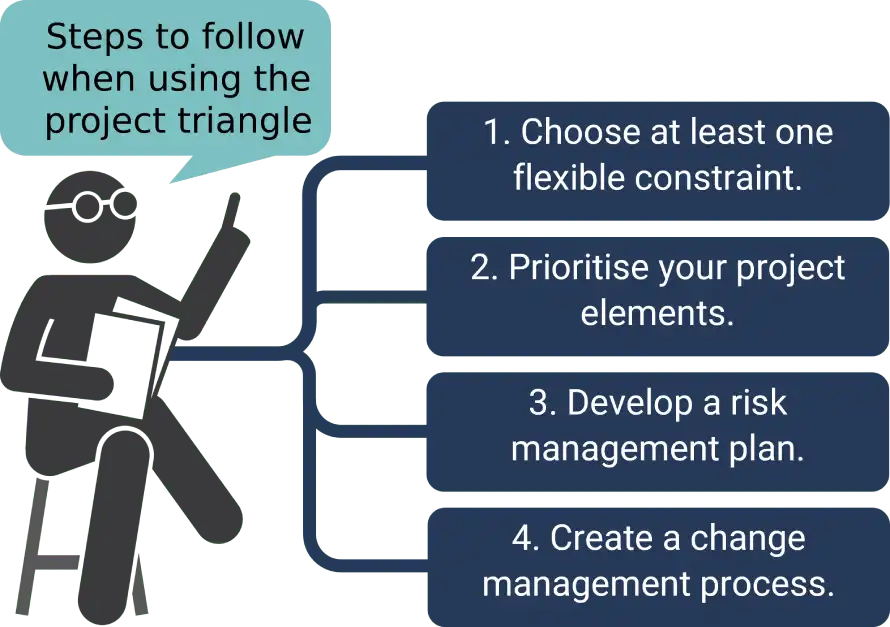
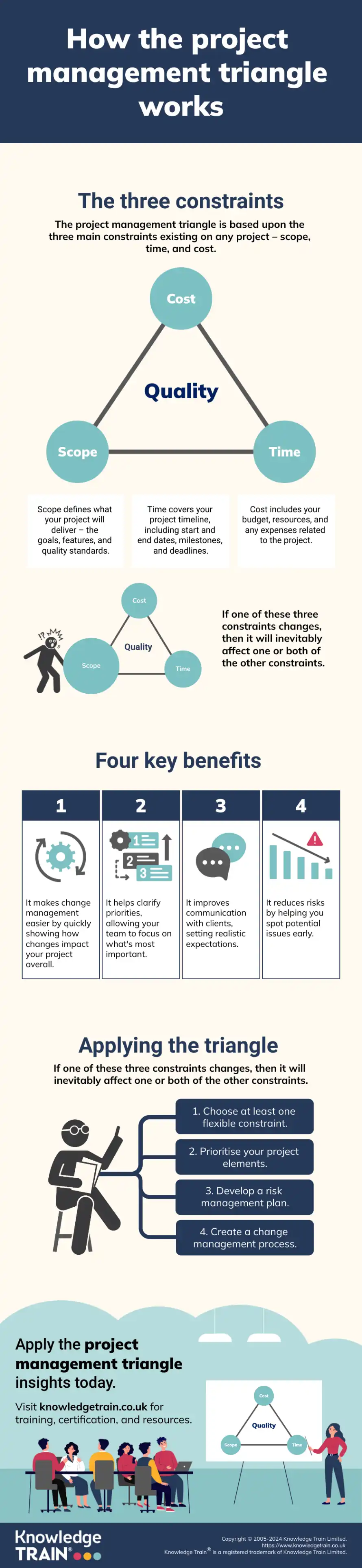
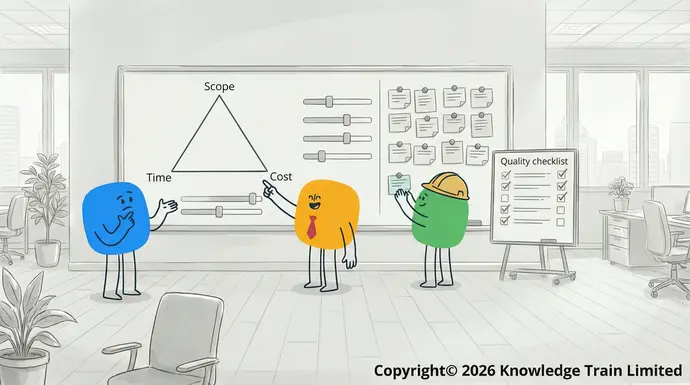
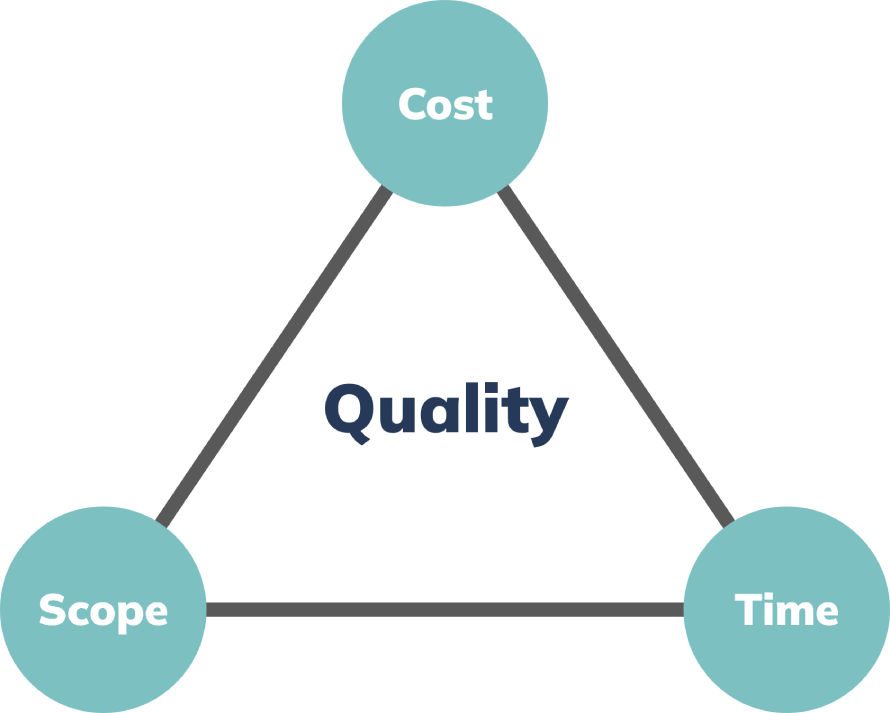
costWBS23 Feb 2026. By learning this concept, project managers can make informed decisions when trade-offs are required and ensure that they deliver high-quality results. is critical for task organisation, time and cost estimation and more it allows you to build a clear scope for your project and help you to not get overwhelmed and not forget anything important.
We hope that our blog post on the project management triangle has provided you with a clear and concise understanding of the concept. Remember, project management is not just about executing tasks but also involves communication with stakeholders, ongoing monitoring and adjustment of project parameters, team collaboration, and accountability, and continuous process improvement. Balancing these constraints is critical for project success, regardless of the industry or project type. As the case studies have shown, the effective application of the project management triangle can lead to exceptional outcomes.How can Kanban boards improve project workflow?Unlock the secrets of successful Agile transformation. Scroll down to watch the insightful webinar video now.
We encourage you to apply these principles to your projects and experience the benefits of successful project management. With the right mindset, tools, and techniques, you will be able to navigate through challenges, meet stakeholder expectations, and consistently deliver successful outcomes. Embrace the project management triangle as an invaluable part of your project management toolkit.Kanban boards are visual tools that can help you and your team to visualise and manage tasks and workflows. Kanban boards will help your team collaborate, limit work-in-progress, and manage processes more efficiently, they also help you to see the bottlenecks easily. Kanban boards are a more popular tool for recurring processes and
FAQsAgile project management
What is the iron triangle in project management?.
The iron triangle is another name for the project management triangle, emphasising the importance of balancing scope, time, and cost.What is the Critical Path Method (CPM), and how does it help in scheduling?
How does changing one constraint affect the others in the project management triangle?The Critical Path Method or CPM is a project scheduling technique that analyses your project in terms of tasks’ sequence and duration. CPM will help you to identify the longest chain of dependent tasks in your project, the so-called critical path, which would then help you in your decision-making: it will allow you to see what your project’s minimal duration is and what tasks can be delayed or rescheduled without affecting the project in general. The CPM is very useful in resource planning and allocation, as well as ensuring you have a solid deadline.
Changing one constraint typically impacts the other two, requiring adjustments to maintain balance and quality.What is Scrum, and how does it fit into Agile project management?
Can the project management triangle be applied to all types of projects?Scrum
Yes, the project management triangle is a versatile concept that can be applied to various industries and projects. is an Agile project management framework that organises the work into short iterative cycles (sprints). Scrum relies on defined roles (Product Owner, Development Team and Thriving in the 21st century with Agile – with Barbara Roberts
What are some signs that a project’s constraints are out of balance?Scrum Master
Signs of imbalance may include frequent scope changes, missed deadlines, budget overruns or quality issues.), events (sprint planning, daily stand-ups) and tools (sprint backlog). Scrum helps teams to plan and manage their work, adapt to changing requirements, and deliver value quickly.Sevcan Yasa
How often should project managers review and adjust the project management triangle?How does Agile project management differ from traditional methods?23 Feb 2026
Regular reviews are crucial, especially at significant milestones or when major changes occur.Agile
What role does innovation play in managing the project management triangle? is an iterative and incremental approach to product development that values flexibility, collaboration, and customer satisfaction over following a rigid plan. Agile teams embrace change even late in the project, and they focus on delivering working solutions regularly rather than following a fixed set of requirements. Agile is all about continuous improvement and responding to feedback, and there are different ways (frameworks) to do it.Discover the keys to thriving in the 21st century with Agile methodologies in this insightful webinar. Learn more about Agile's role in future successes.
Innovation can help optimise processes, potentially improving all constraints simultaneously.Infographic
InfographicSubscribe to our exclusive offers and promotions