Project management frameworks

Key takeawaysFrance
Choose and run frameworks as adaptable structures that fit your project and organisation, not as rigid rules.Germany
- A framework brings consistency, clarity, and simpler delivery by breaking work into defined lifecycle stages with controls and templates.Greece
- Waterfall suits stable requirements, while Scrum and Kanban suit change and flow, and Lean targets waste reduction.Ireland
- PRINCE2 fits complex or regulated work where governance and business justification matter.Italy
- Select a framework by weighing complexity, industry demands, team capability, stakeholder needs, and constraints, then pilot and refine.Latvia
- Successful rollout needs training, the right tools, active change management, and ongoing monitoring and adjustment.Lithuania
Pros and cons
- Pros: Easy to understand, well documentedFAQs
- Cons: Inflexible, difficult to change requirements, testing is performed too late.
Best use casesInfographic
- Waterfall can be used for software development IntroductionprojectsProject management, where the requirements are well-understood and unlikely to change during the project, or for hardware development projects, such as those in the automotive industry. is a challenging process that is prone to many possible failures.
Agile frameworksRisk management
Scrum is a key aspect of project management that can help increase the likelihood of project success. This involves the process of identifying, assessing, and mitigating risks that can threaten the project.
Definition and key characteristicsIn this article, we will explore some of the risks that can arise on projects and how to deal with them effectively. We will discuss the following topics:
- ScrumThe definition and importance of understanding project risks is an iterative Agile framework for developing and delivering products. In Scrum, projects are divided into sprints, typically lasting two to four weeks, during which a minimum viable product (MVP) is developed and delivered.The different types of common project risks
Pros and consThe process of risk management on projects
- Pros: Flexible, focuses on collaboration, fast delivery of working productsThe tools and techniques used in risk management
- Cons: Requires skilled and experienced team members, difficult to scale.The strategies for effective risk mitigation
Best use casesThe best practices for successful risk management on projects.
- Scrum can be used in software development projects, product development projects, and other projects where the requirements are not well-defined or where there is a need for frequent updates and client feedback.By the end of this article, you will be able to:
KanbanIdentify potential risks on your projects
Definition and key characteristicsApply effective risk management strategies
- Kanban is an Agile framework that visualises the workflow and helps teams optimise work in progress (WIP) by using a board with cards representing tasks or work items.Improve the chances of your project’s success.
Pros and consYou can also learn about project risk management on a
- Pros: Visualise workflow, reduce WIP, increase efficiencyproject management course
- Cons: May lack structure for complex such as projectsPRINCE2 course, requires discipline to maintain. or an
Best use casesAPM course
- Kanban can be used in projects where work is continuous and there is a steady stream of tasks to be completed, such as support or maintenance work, or in projects where teams are trying to improve their current processes and workflows..
LeanLet’s begin and explore the world of
Definition and key characteristicsproject risk management
- Lean is a framework that aims to optimise value while minimising waste in project processes, with a focus on streamlining and simplifying the project workflow. and how to protect your projects from potential risks.
Pros and consUnderstanding project risks
- Pros: Increases efficiency, reduces costs, improves qualityDefinition of project risk
- Cons: Requires cultural shift, can be difficult to implement in some industries.A
Best use casesproject risk
- Lean can be used in manufacturing or production projects, as well as in healthcare or service industries where there is a need to improve efficiency and reduce waste.
Popular frameworks refers to an uncertain event or condition that, if it occurs, has the potential to either positively or negatively affect the outcome of a project. Risks can impact project objectives such as scope, schedule, cost, or quality. Examples of project risks include changes in customer requirements, budget constraints, delays in schedules, technical issues, resource shortages, and more.
PRINCE2Types of project risks
Definition and key characteristicsProject risks can be classified into various categories, including:
- PRINCE2Internal risks is a structured project management method that provides processes and principles for managing a project in a controlled environment.: These risks originate from within the project or the organisation itself. They can be related to factors such as team dynamics, resource availability, or management decisions.
Pros and consExternal risks
- Pros: Highly structured, scalable, business justification is emphasised: These risks arise from factors outside the project’s control, such as economic conditions, regulatory changes, natural disasters, or market trends.
- Cons: Can be bureaucratic, requires a lot of documentation.Technical risks
Best use cases: Technical risks are associated with the technology or methodologies used in the project. They may involve issues like software glitches, hardware failures, integration challenges, or inadequate technical expertise.
- PRINCE2 can be used for large, complex projects, especially in government or highly regulated industries, or for projects where there is a need for a high degree of control and governance.Financial risks
It’s important to note that these are just some of the most popular : Financial risks impact the project’s budget, funding, or financial resources. They can include factors like unexpected cost overruns, currency fluctuations, or inadequate financial planning.projectOperational risks management frameworks, and that there are many other frameworks available that may be more suitable for your specific project or organisation.: Operational risks affect the day-to-day functioning of the project. They can encompass issues like human errors, process inefficiencies, supply chain disruptions, or equipment failures.
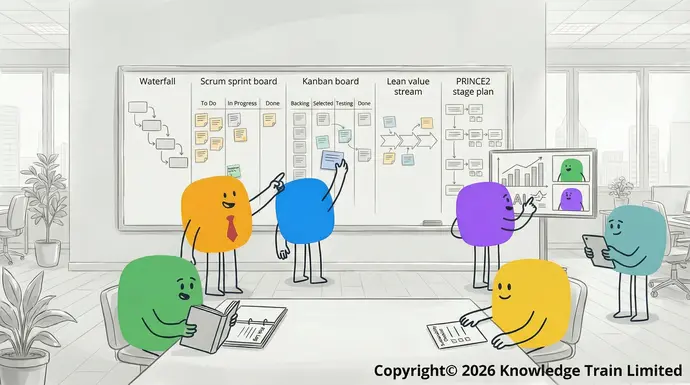
Choosing the right project management framework
Selecting the appropriate project management framework for your organisation is essential for successful project delivery. It provides a structured approach, guiding you through the various stages of a project. This article explores factors to consider when choosing a framework and provides a six-step process to help you make an informed decision.See all dates
Factors to consider
- Project complexity and size : Larger projects may benefit from more structured frameworks like PRINCE2Instructor-led, while smaller or less complex projects can thrive under Project Management EssentialsAgile methodologies .£999 +vat
- Industry and technological environment : Consider the specific requirements of your industry and the technological landscape. Some sectors may demand more rigorous documentation and regulatory compliance, influencing your framework choice.See all dates
- Team experience and preferencesCommon project management risks: Assess your team’s expertise and their preference for certain frameworks. Their input can be valuable in ensuring the selected approach aligns with their working style.Scope creep
- Stakeholder requirementsCommon causes
Future trends in project management frameworksprojects
As the field of by disrupting established workflows, requiring additional training or resources, altering project priorities and necessitating scope or timeline adjustments.project managementStay informed about potential organisational changes and maintain flexibility in continues to evolve, several emerging trends are expected to shape the future of project management frameworks. Here are three key trends to watch out for:project planning
Artificial intelligence and machine learning integration to accommodate operational shifts.
Artificial intelligenceBy knowing about common project management risks, you can make specific plans to help prevent or overcome them. In addition, proactive risk management involves: (AI) and Regular risk assessmentsmachine learning (ML) are increasingly being integrated into project management tools