What soft skills do project managers need?

Key takeaways
Strong project delivery depends on combining technical competence with human-centred skills.
- Soft skills such as communication, leadership, teamwork and problem-solving are essential for keeping teams aligned and projects on track.
- Clear, regular, non-emotive communication and active listening reduce confusion, rework and avoidable failure.
- Conflict is inevitable, so set expectations early and address disagreements quickly before morale and productivity drop.
- Influence and negotiation work better than authority when managing senior stakeholders and cross-functional priorities.
- A proactive, positive attitude improves decision-making under stress and encourages openness about risks and issues.
Introduction
What are soft skills?
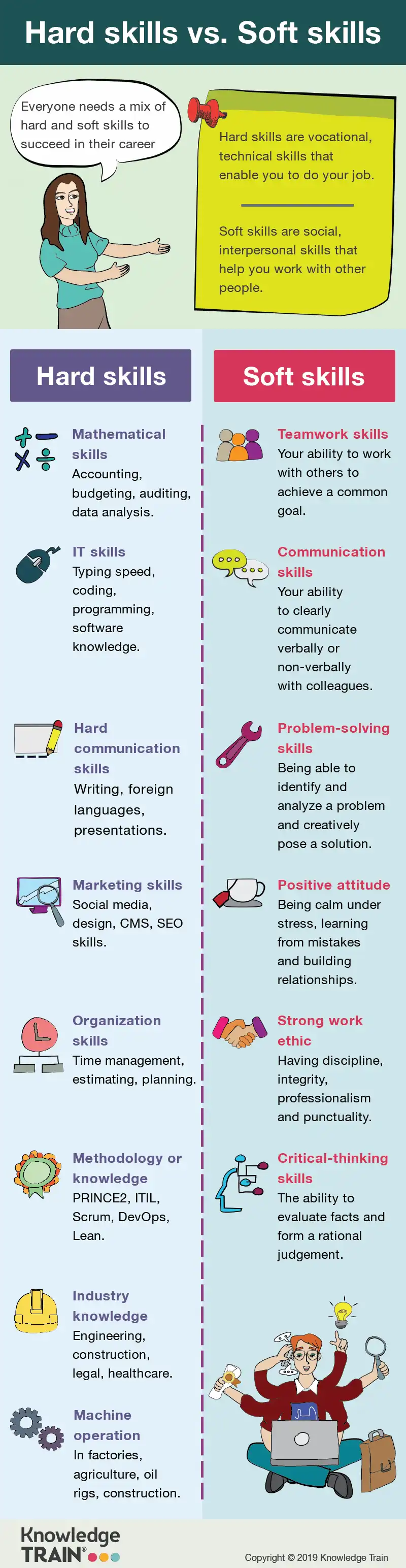
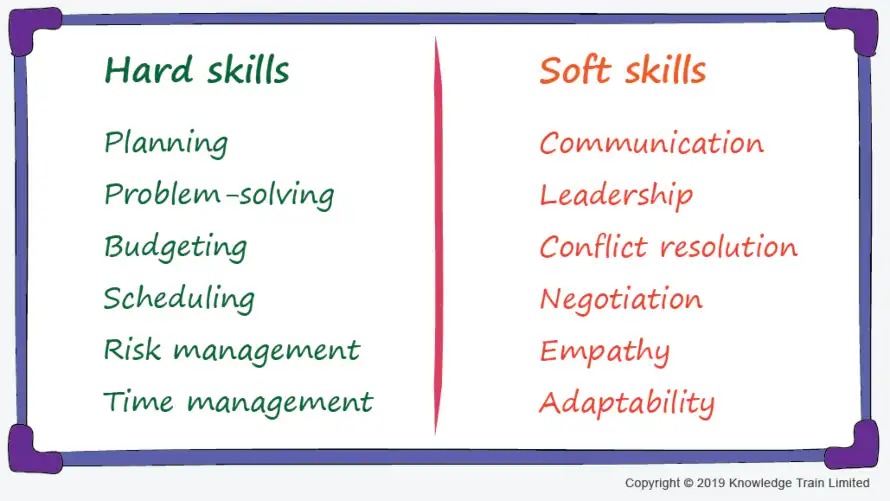
Soft skills help you work effectively with other people. The soft skills required by a project manager, are the same set of skills required by many other white-collar work. Such skills differ to hard skills, which are the vocational skills required to do your job.
For success in project management, possessing a combination of project management soft skills and hard skills is recommended.
Wikipedia defines soft skills as:
Some examples of soft skills for project managers are:
- Teamwork – your ability to work with other project team members to achieve a common goal.
- Communication – your ability to clearly communicate verbally or non-verbally with all project stakeholders.
- Problem-solving – being able to identify and analyze a problem on a project and creatively pose a solution.
- Positive attitude – being calm under stress, learning from mistakes, and building relationships.
- Strong work ethic – having discipline, integrity, professionalism, and punctuality.
- Leadership – guiding teams to achieve project goals through vision, direction, and effective decision-making.
- Critical-thinking – the ability to evaluate facts and form a rational judgement.
In contrast, project management hard skills are the technical skills and knowledge required to perform your job as a project manager. These skills are normally industry-specific and can be acquired through project management courses or on-the-job experience.
Here are some examples:
- Mathematic skills – accounting, budgeting, auditing, data analysis.
- IT skills – typing speed, coding, programming, software knowledge.
- Hard communication skills – writing, foreign languages, presentations.
- Marketing skills – social media, design, CMS, SEO skills.
- Organization skills – time management, estimating, planning.
- Industry knowledge – engineering, construction, legal, healthcare.
Both hard and soft skills are desired by employers when hiring project managers. Hard skills can be proved with a degree, diploma, apprenticeship, professional certification or other qualification. However, project manager soft skills can be difficult to prove, so it’s essential to show-off such skills at interview and provide examples on your CV.
Project management soft skills
The work of project managers involves not only managing teams, and ensuring deadlines and budgets are met, but also working with stakeholders. When engaging with stakeholders, project manager soft skills will be sorely tested especially when dealing with senior people across functional boundaries. This can be extremely challenging when such senior people have a much higher level of authority than the project manager.
The Association for Project Management (APM) in the UK recommends project managers have the soft skills listed below as core competencies.
Communication
Conflict management
Conflicts arise due to disagreement, conflicting values, and miscommunication. It causes teams to lack morale, productivity, and harmony. This can cause project failure, so conflict must be dissipated quickly. Conflict can be reduced by setting clear expectations at the start of the project.
Delegation
This is the act of giving team members responsibilities. It can be a way of motivating people to reach their full potential. Project managers must know who has the correct skills, working style and knowledge for the work. Feedback and reward mechanisms should be implemented.
Influencing
Leaders must be good influencers. This skill involves affecting the behaviours and actions of the team and stakeholders. It’s better to influence rather than authoritative, so people become willing rather than obedient. This requires empathy and understanding. Influencers must also communicate their vision and generate positivity for the project.
What type of attitude do project managers need?
It perhaps goes without saying that a positive attitude is best. Negative project managers create a lacklustre team with no passion for the project. He or she will be unable to influence, negotiate or inspire their team. They’ll panic when problems arise. And they’ll normally be at the centre of conflict.
Mariana Magalhães, Project Manager for Forty8Creates, believes a proactive attitude is essential:
Proactive leaders make things happen. They’re positive and learn from mistakes. They stay in control, even in stressful situations, and make rational decisions that help the project move forward. They give praise and deal with criticism constructively.
Reactive leaders are the opposite. They have a lack of control and wait for things to happen. They have no foresight and have a negative outlook. This type of attitude is useless on projects , where planning, control and decisiveness are vital.
How should project managers communicate?
Communication is the number one core responsibility for project managers. Team members need clear directions and guidance. Stakeholders need regular progress updates. Miscommunication leads to confusion, mistakes, and project failure. Project managers must therefore be clear, confident, and direct.
Nicci Beacham, Project Manager at Liberty Marketing, believes communication is key:
Keeping communication open is vital. Building rapport with the team and stakeholders helps achieve this. Let people know they can come to you. If people feel unable to approach you with issues, they’ll keep information from you. This causes a breakdown in communication and damages the project.
Learning project manager soft skills
Some project managers seem born with the right skills for the job. They might naturally be more extroverted or adept at leadership. It’s true that being a more naturally outgoing or empathetic person makes you perfect for this role. But this doesn’t mean such skills can’t be learned.
You can learn soft skills with:
- Books or articles
- Training or coaching
- Team-building exercises
- On the job experience
- TED Talks videos on YouTube
Some of the soft skills required for project management are briefly covered on courses like project management skills