PMO structure

Key takeaways
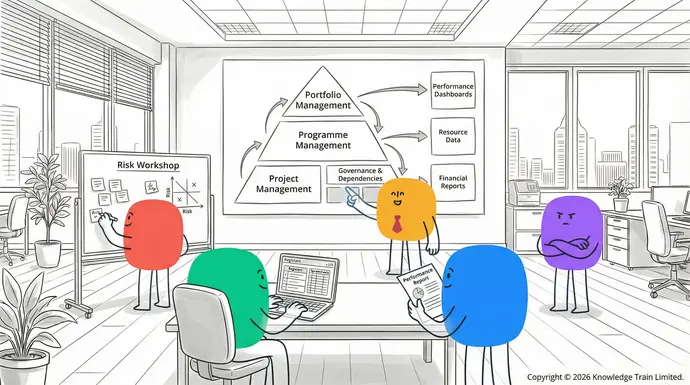
A PMO should be designed to fit the organisation and the level of control needed.
- PMOs can operate at portfolio, programme and project levels, and may be permanent, temporary, or mixed.
- There is no one-size-fits-all model, so structure should reflect culture, goals, resources and policies.
- Effective PMOs provide an independent critical eye through scrutiny, reporting, and challenge on risks, issues and change.
- Common reporting standards and dashboards strengthen governance and make progress transparent to senior decision-makers.
- Clear roles, from PMO head to specialists and officers, help avoid overlaps, manage dependencies, and improve delivery discipline.
Introduction
There are 4 levels at which a PMO can operate:
- Enterprise level – EPMO (portfolio management);
- Division level (portfolio management and programme management);
- Business unit level (programme management and project management);
- Project level (project management).
Within each of these levels, the PMO structure which is set up maybe permanent, temporary, or a combination of the two.
A key point about PMOs is that there is no one-size-fits-all approach which works for all organisations. Every organisation has its own structure, culture, business goals, resources, policies and unique circumstances. When designing a suitable PMO structure, it is important to consider all these factors.
P3O model example
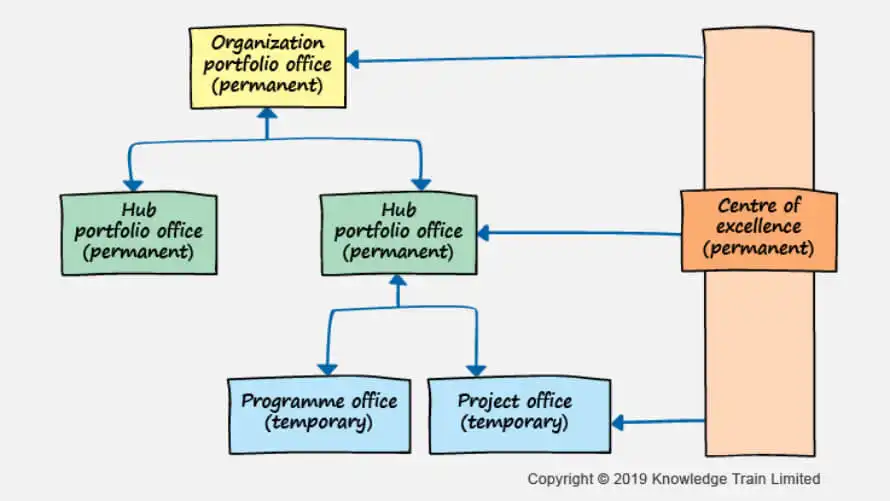
The P3O (Portfolio, Programme and Project Offices)[1] framework suggests an example PMO model shown on the diagram below.
London Olympics 2012 Programme Office example
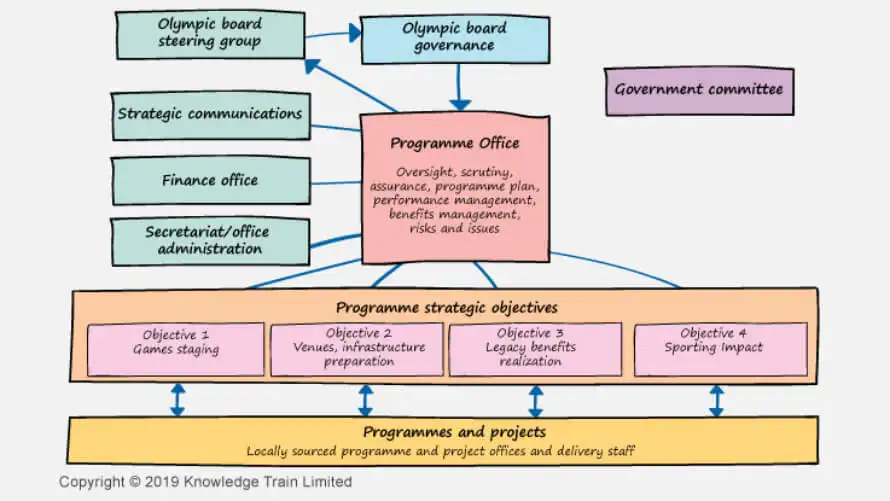
The 2012 Olympics programme office was an example[2] of a successful PMO implementation. This PMO provided assurance to high-level government bodies. It also provided oversight role for the 4 main programme objectives.
Its key role was to act as a ‘critical eye’ by providing scrutiny, reviewing and reporting of performance, monitoring and measuring progress against programme delivery plans, and proactively challenging risks, issues and changes across the programme.
It used common standards for reporting performance to government and management dashboards for the governance bodies. The PMO reported to the Programme’s Senior Responsible Owner (SRO) and was empowered to challenge at the highest levels. It was mainly concerned with putting in the right framework, rather than imposing rigid standards.
The secretariat and office administration, finance and strategic communications functions were provided through separate but linked teams. This allowed the Project Management: What Is It? PM Best PracticesPMO to provide the ‘critical eye’ without having to worry about day-to-day operational functions.
PMO roles and responsibilities
The following are the project-level PMO roles and responsibilities.
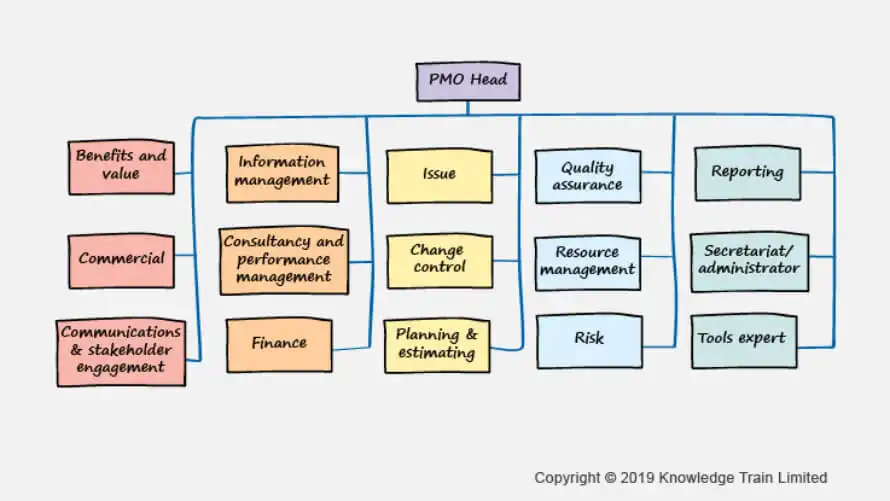
PMO head
The purpose is to manage the PMO. The role requires strong leadership and management skills, and a strong knowledge of portfolio, programme and project management (PPM).
Responsibilities
- Implement guidelines, procedures and templates to collect and maintain consistent data;
- Facilitate the creation and update of project plans ;
- Implement regular progress reporting and monitor project progress;
- Assist the project manager in the collation of highlight reports;
- Establish and maintain an information management system;
- Establish risk, issue and change control processes and templates, and assist project staff in their delivery;
- Manage or facilitate the quality review process;
- Provide a coordination service for the project.
Functional roles
In addition to the role above, there are several functional roles which may be performed by either the project specialist or project officer roles. These are:
- Benefits and value – to ensure there is a consistent approach to benefits and value management on projects;
- Commercial – to ensure the organisation acts as an ‘informed customer’ when it comes to procurement and commercial contracts;
- Communications and stakeholder engagement – to ensure effective management of stakeholders;
- Information management – be the custodian of all master copies of project information;
- Consultancy and performance management – provide internal consultancy and expertise in project management processes ;
- Finance – establish professional financial control within projects;
- Issue – ensure effective issue control processes are in place on projects;
- Change control – ensure effective change control processes are in place on projects;
- Planning and estimating – facilitate the development and maintenance of project plans
References
[1] AXELOS (2013). Portfolio, Programme and Project Offices. Norwich: TSO. p8.
of AXELOS Limited. All rights reserved.