Business Analysis International Diploma

Includes Foundation & Practitioner combined option.
INFORMATION TECHNOLOGY (IT)
- ITIL
- ®
- Foundation
- Learn the fundamentals of ITIL service management.
- Strategist DPI
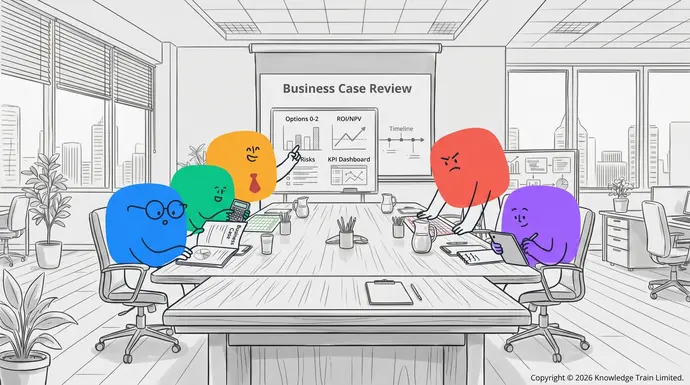
- Mind mapping and collaboration softwareAuthor: a project manager, product manager, business analyst, or subject matter expert drafts the business case with input from finance and operational teams.Data analysis tools (for example, Excel, Power BI)
- .AGILE BUSINESS ANALYSIS COURSESScope, time and cost move together, so every change needs a conscious trade-off. PrerequisitesSelect your preferred training course below:Any shift in scope, schedule, or budget typically forces an adjustment in at least one other constraint.Self-pacedexecutive sponsor The leading global standard published by : Demonstrable experience and evidence of professional practice, typically supported by membership and CPD. paced online","description":"Complete online at your own pace (Self-paced)","brand":{"@type":"Brand","name":"Knowledge Train"},"keywords":["Lean Six Sigma Yellow Belt online course","Lean Six Sigma Yellow Belt self-paced online training"],"logo":"https://www.knowledgetrain.co.uk/training-courses/apmg-lean-six-sigma-logo.svg","offers":{"@type":"Offer","url":"https://www.knowledgetrain.co.uk/agile/lean-six-sigma/lean-six-sigma-certification/lean-six-sigma-yellow-belt","price":"499","priceCurrency":"GBP","availability":"http://schema.org/InStock","category":"Paid","validFrom":"2026-05-27","priceValidUntil":"2027-05-27","hasMerchantReturnPolicy":{"@type":"MerchantReturnPolicy","applicableCountry":["GB","US","NZ","EU","CA","ZA"],"returnPolicyCategory":"https://schema.org/MerchantReturnFiniteReturnWindow","merchantReturnDays":7,"returnMethod":"https://schema.org/ReturnInStore","returnFees":"https://schema.org/FreeReturn"},"shippingDetails":{"@type":"OfferShippingDetails","shippingRate":{"@type":"MonetaryAmount","vaImbalances often show up as rushed work, under-resourcing, or overambitious deliverables that reduce quality. Pick at least one flexible constraint early so you can respond to issues without losing control.Choose course option:
- Use prioritisation and formal change control to prevent scope creep and keep decisions objective. Monitor risks and progress continuously, and communicate trade-offs clearly to stakeholders.
- Contents
Contents
- Introduction
- Understanding the project triangle
- Benefits of the project triangle
- Managing the project triangle
- Strategies for balancing constraints
- Tools for managing the project triangle
- Common challenges and solutions
- Project management triangle best practices
- Applying the project management triangle Conclusion FAQs InfographicIntroductionThe
- project management triangle, also known as the triple constraint model, is a concept that visualises the constraints of
- scope,
- time, and
- cost in
- project management. It highlights the interconnected nature of these three aspects in delivering a successful project.
The triangle model is a crucial tool for project managers to understand and balance the competing demands of a
- project. The scope refers to the project’s requirements, objectives, and deliverables. Time refers to the schedule and deadlines. Cost encompasses the budget and resources. The challenge is to optimise all three to meet project goals.
- Each corner of the triangle is dependent on the other two. A change in one element typically results in a change in at least one other. By understanding and managing these constraints, project teams can make informed decisions and adjustments to ensure project success.The project management triangle is a fundamental concept that helps
- project managers visualise and optimise the key constraints of any project. By balancing scope, time, and cost, project teams can deliver successful outcomes that meet stakeholder expectations.
- Understanding the project management triangleThe three constraints explained
- The project management triangle is made up of three main constraints: scope
- , time
- and cost
- . Let’s have a detailed look at each of these.Scope
- : Scope refers to the boundaries, objectives and deliverables of a project. It includes the goals and requirements of the project, as well as the specific features, functionalities and quality standards.Time
- : The time constraint of a project refers to its duration and schedule. It involves factors such as the project start and end dates, milestones and deadlines, as well as the sequencing and dependencies of tasks.Cost
: The cost constraint relates to the financial and resource aspects of a project. This includes the budget allocated to the project as well as the human resources and labour costs, and equipment and material expenses.Relationship between constraintsThe three constraints of scope, time and cost are interconnected and can impact each other. Changes to one constraint will likely influence the other constraints. For example, an increase in scope will often require additional time and resources, whereas a reduction in time may increase costs or decrease scope. Similarly, a reduction in budget may affect the project scope or timeline.
Project managers
must carefully balance these constraints throughout the project lifecycle.
- Impact on project qualityThe balance of scope, time and cost also has an impact on the
- quality of the project outcomes. If the three constraints are well-balanced, the project is more likely to achieve high-quality results. On the other hand, if there is an imbalance in any of the constraints, the quality of the project may be compromised. For example:
- A tight deadline may lead to a rushed project, resulting in lower quality outputs.A limited budget may result in a project being understaffed or under-resourced, which may also affect quality.
- A project with an overambitious scope can strain resources and time, leading to poor results.
- >
- li>
- span>Change programme managers
- >
- >
li>
| span>Operational line managers. | > | > |
|---|---|---|
| >"},"aggregateRating":{"@type":"AggregateRating","ratingValue":"4.8","reviewCount":"227"},"location":{"@type":"VirtualLocation","url":"https://www.knowledgetrain.co.uk/change-management/change-management-courses/apmg-change-management-course/change-management-practitioner"},"image":["https://www.knowledgetrain.co.uk/training-courses/res/logos/apmg-change-management-accredited-training-organisation-logo.svg"],"offers":{"@type":"Offer","url":"https://www.knowledgetrain.co.uk/change-management/change-management-courses/apmg-change-management-course/change-management-practitioner","price":"","priceCurrency":"","availability":"http://schema.org/InStock","validFrom":"2026-05-27"},"performer":{"@type":"Person","name":"Susan Tuttle"},"organizer":{"@type":"Organization","name":"Knowledge Train","url":"https://www.knowledgetrain.co.uk/change-management/change-management-courses/apmg-change-management-course/change-management-practitioner"}} | ||
| 20 Jul - 22 Jul | ||
| Change Management Foundation course (Online) |
- Communication plans for approved changes
- A structured change management process helps to prevent imbalances. Match management methodology to priority constraints{"@context":"http://schema.org","@type":"EducationEvent","name":"Change Management Foundation course","startDate":"2026-07-20","endDate":"2026-07-22","description":"Change Management Foundation course","url":"https://www.knowledgetrain.co.uk/change-management/change-management-courses/apmg-change-management-course/change-management-foundation","eventStatus":"EventScheduled","eventAttendanceMode":"OnlineEventAttendanceMode","audience":{"@type":"Audience","name":"
- The project management methodology used should complement the project’s constraints. Consider:ul>Waterfall methodologiesli>
like traditional or predictive project management focus on upfront planning and are best suited for fixed-scope projects where time and cost can be more flexible.span>Anyone interested in understanding the basic principles of achieving successful organisational change, transition, or transformation
- Agile methodologies> like Scrum or Kanban emphasise iterative development and are best for projects where scope may need to be flexible or change over time.>
- Lean approachesli> prioritise efficiency and cost control and are useful when budget is the main constraint.span>Team members involved in organisational change, transition, or transformation projects
- Choosing the right approach from the beginning aligns with the key constraints.>Follow the tips above to help manage the project management triangle and balance constraints throughout your project. The most important thing is to continuously monitor and maintain alignment of the three sides. Assess the status of scope, time, and cost regularly to identify imbalances. Be willing to make informed decisions and trade-offs as necessary. And communicate clearly with stakeholders about any changes to plans or constraints.>
- Strategies for balancing constraintsli>Managing constraints effectively requires specific strategies for each side of the project management triangle. Here are some tips for balancing scope, time, cost and quality:span>Professionals pursuing the Change Management Practitioner certificate – for which the Change Management Foundation certificate is a prerequisite.
Scope management techniques>When managing project scope, you can try these tips:>
Define project boundaries>"},"aggregateRating":{"@type":"AggregateRating","ratingValue":"4.8","reviewCount":"227"},"location":{"@type":"VirtualLocation","url":"https://www.knowledgetrain.co.uk/change-management/change-management-courses/apmg-change-management-course/change-management-foundation"},"image":["https://www.knowledgetrain.co.uk/training-courses/res/logos/apmg-change-management-accredited-training-organisation-logo.svg"],"offers":{"@type":"Offer","url":"https://www.knowledgetrain.co.uk/change-management/change-management-courses/apmg-change-management-course/change-management-foundation","price":"","priceCurrency":"","availability":"http://schema.org/InStock","validFrom":"2026-05-27"},"performer":{"@type":"Person","name":"Susan Tuttle"},"organizer":{"@type":"Organization","name":"Knowledge Train","url":"https://www.knowledgetrain.co.uk/change-management/change-management-courses/apmg-change-management-course/change-management-foundation"}}: Clearly outline the scope of the project and its deliverables at the beginning. Scope change control
: Establish a process for handling changes to
20 Jul - 24 Jul
Change Management Practitioner (with Foundation) course (Online)
£2,299
- Enrol now
- {"@context":"http://schema.org","@type":"EducationEvent","name":"Change Management Practitioner (with Foundation) course","startDate":"2026-07-20","endDate":"2026-07-24","description":"Change Management Practitioner (with Foundation) course","url":"https://www.knowledgetrain.co.uk/change-management/change-management-courses/apmg-change-management-course/change-management-practitioner","eventStatus":"EventScheduled","eventAttendanceMode":"OnlineEventAttendanceMode","audience":{"@type":"Audience","name":"
- gnment
<: Set a fixed time period for specific tasks or project phases.
- Name Reviews & success stories
-
Email -
- Using fishbone diagrams effectively in your projects
- Phone
- Simon Buehring<: Create a detailed budget for each phase of the project.
19 Feb 2026- How can we help?
- Examples and case studies helped me see how tools like SIPOC and basic statistics apply in real business settings.Discover how fishbone diagrams can help identify root causes of complex issues. Read on to gain insights and practical tips for using this essential problem-solving tool effectively.
- Anita R., Quality Coordinator<: Negotiate favourable terms and monitor supplier costs.
- Reporting cadenceSubmit
6. Options analysis (alternatives) - Option 0: do nothing / do minimum
- Option 1OUR VALUES I now feel better equipped to support green belt and black belt initiatives in my organisation.<: Define specific, measurable quality criteria for the project deliverables.
- Option 2Our 6 core values are everything we do. They include: Olivia N., Service Improvement Officer
- Evaluation criteria (value, risk, feasibility, time to benefit)Integrity
7. Recommended option and rationaleDiversityUnlocking potential with SMART goals in goal setting - Why this option is preferredFairness <: Leverage the expertise of team members to identify and address quality issues.
- Trade-offs acceptedQualitySimon BuehringKnowledge Train’s platform was easy to use and I appreciated being able to pause and resume exactly where I left off.
8. Benefits, costs and investment appraisalInnovation19 Feb 2026Marcus P., Operations Analyst- Benefits (quantified and qualitative)Social responsibility
- Costs (one-off and ongoing) Explore the power of SMART goals to boost productivity and success. This comprehensive guide offers practical advice and tips. Scroll down to start transforming your goal-setting process today.
- Opportunity cost considerationsSOCIAL RESPONSIBILITY
- ROISome of the charities we have helped over the years: The course was clearly structured, with short modules and questions that reinforced key ideas.
- Using fishbone diagrams effectively in your projects
- Phone
- Simon Buehring<: Create a detailed budget for each phase of the project.
19 Feb 2026- How can we help?
- Examples and case studies helped me see how tools like SIPOC and basic statistics apply in real business settings.Discover how fishbone diagrams can help identify root causes of complex issues. Read on to gain insights and practical tips for using this essential problem-solving tool effectively.
- Anita R., Quality Coordinator<: Negotiate favourable terms and monitor supplier costs.
- Reporting cadenceSubmit
6. Options analysis (alternatives) - Option 0: do nothing / do minimum
- Option 1OUR VALUES I now feel better equipped to support green belt and black belt initiatives in my organisation.<: Define specific, measurable quality criteria for the project deliverables.
- Option 2Our 6 core values are everything we do. They include: Olivia N., Service Improvement Officer
- Evaluation criteria (value, risk, feasibility, time to benefit)Integrity
7. Recommended option and rationaleDiversityUnlocking potential with SMART goals in goal setting - Why this option is preferredFairness <: Leverage the expertise of team members to identify and address quality issues.
- Trade-offs acceptedQualitySimon BuehringKnowledge Train’s platform was easy to use and I appreciated being able to pause and resume exactly where I left off.
8. Benefits, costs and investment appraisalInnovation19 Feb 2026Marcus P., Operations Analyst- Benefits (quantified and qualitative)Social responsibility
- Costs (one-off and ongoing) Explore the power of SMART goals to boost productivity and success. This comprehensive guide offers practical advice and tips. Scroll down to start transforming your goal-setting process today.
- Opportunity cost considerationsSOCIAL RESPONSIBILITY
- ROISome of the charities we have helped over the years: The course was clearly structured, with short modules and questions that reinforced key ideas.
- Option 0: do nothing / do minimum
- Option 1OUR VALUES I now feel better equipped to support green belt and black belt initiatives in my organisation.<: Define specific, measurable quality criteria for the project deliverables.
- Option 2Our 6 core values are everything we do. They include: Olivia N., Service Improvement Officer
- Evaluation criteria (value, risk, feasibility, time to benefit)Integrity
7. Recommended option and rationaleDiversityUnlocking potential with SMART goals in goal setting - Why this option is preferredFairness <: Leverage the expertise of team members to identify and address quality issues.
- Trade-offs acceptedQualitySimon BuehringKnowledge Train’s platform was easy to use and I appreciated being able to pause and resume exactly where I left off.
8. Benefits, costs and investment appraisalInnovation19 Feb 2026Marcus P., Operations Analyst- Benefits (quantified and qualitative)Social responsibility
- Costs (one-off and ongoing) Explore the power of SMART goals to boost productivity and success. This comprehensive guide offers practical advice and tips. Scroll down to start transforming your goal-setting process today.
- Opportunity cost considerationsSOCIAL RESPONSIBILITY
- ROISome of the charities we have helped over the years: The course was clearly structured, with short modules and questions that reinforced key ideas.
- Why this option is preferredFairness <: Leverage the expertise of team members to identify and address quality issues.
- Trade-offs acceptedQualitySimon BuehringKnowledge Train’s platform was easy to use and I appreciated being able to pause and resume exactly where I left off.