What is programme management? Austria

Key takeawaysOther countries
Programme management connects strategy to coordinated delivery across multiple related projects.HomeCopied!
- Programme management focuses on benefits realisation and strategic outcomes, not just delivering outputs.Business analysisKey takeaways
- Robust governance clarifies decision rights, escalation routes, and accountability across workstreams. Certification works best when it is accredited, well assessed, and tied to real job needs.
- Define measurable outcomes, baselines, and benefit owners early to make value trackable beyond closure. Certification provides formal validation of skills against defined standards and improves credibility with employers and customers.
- Actively manage interdependencies, risks, and change so local issues do not become programme failures.What is business analysis?The typical route is eligibility checks, application, exam or assessment, verified issuance, and periodic renewal.
- Adoption and operational readiness must be treated as deliverables through communications and training. Accreditation and independent oversight increase trust and protect candidate outcomes through audits and quality assurance.
- Use regular reviews, assurance gates, and data-led dashboards to keep decisions timely and evidence-based.Simon BuehringOnline and blended learning widen access, but candidates should confirm technical requirements and support before enrolling.
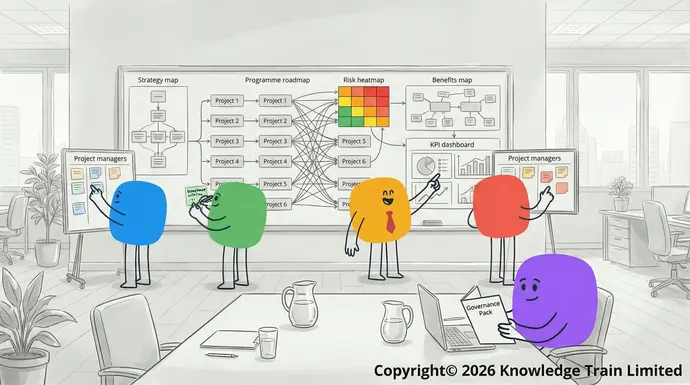
What is programme management?exam
Programme management or assessment, demonstrating certain skills or is the coordinated organisation, direction, and oversight of multiple related competencyContentsprojects, and often maintaining standards through and initiatives to achieve strategic goals and realise significant benefits. Leading authorities define it as the application of knowledge, skills, and techniques to meet a programme’s objectives and deliver lasting value aligned with organisational strategy. By linking project outcomes to broader business aims, programme management ensures effective governance, resource allocation, and benefits realisation.renewal
Programme vs project management or Contents
Programme management and continuing education project management.Business analysis: definition and overview are closely related but have distinct purposes and approaches:Comparison: Certification, accreditation, licence, and credential
| AspectTermThe objectives and value of business analysis | Programme managementDefinition | Project managementAwarded ByKey responsibilities of a business analyst |
|---|---|---|
| FocusExample | Strategic objectives; benefits realisationCertificationMain business analysis processes | Specific deliverables; outputsFormal recognition of individual competence after assessment |
| ScopeCertifying body, professional organisationCommon business analysis techniques | Coordinating multiple, related Project management certificate projectsAccreditationBusiness analysis tools and methodologies | One project at a timeRecognition that an institution meets established standards |
| Time frameAccrediting agency or governing bodyEssential skills and competencies for business analysts | Long-term, ongoingUniversity accreditation | Defined start and endLicenceCertification and career progression |
| Manager roleOfficial permission to practise an occupation after meeting legal requirements | Programme managerState board, government agencyRelated concepts | Project managerMedical licence |
| Success criteriaCredentialFAQs | Strategic alignment and realised benefitsA qualification or documented achievement demonstrating ability or statusBusiness analysis: definition and overview | Project scope, time, cost, and qualityEducational institution, employer, certifying bodyBusiness analysis |
| MethodologiesDegree, certificate, badge is a professional discipline that involves understanding business needs and problems, eliciting and documenting requirements, and proposing solutions that drive | MSPBenefits of certificationprocess improvement, Validation of skills: and deliver value. It acts as a bridge between stakeholders and technical teams, ensuring that strategic objectives are aligned with operational execution. Reputable bodies such as the PMI Provides formal recognition of knowledge and competencies.International Institute of Business Analysis (IIBA) | PRINCE2Industry standard: define business analysis as the practice of enabling change in an organisational context by defining needs and recommending solutions that yield benefits for key stakeholders., PMI PMBOK Demonstrates compliance with established requirements and best practices (e.g. The objectives and value of business analysis |
Programme management frameworksISOIdentifying business needs and opportunities for improvement
Proven or Supporting stakeholders in achieving strategic goalsframeworksANSIFacilitating and certification).change managementmethodologiesEmployability: processes bring structure and efficiency to programme management. Some of the most utilised include: Enhances job prospects and professional reputation.Reducing project risk through clear requirements and solution assessment
- MSP (Professional development:Ensuring solutions are feasible, cost-effective, and aligned with business requirementsManaging Successful Programmes Supports career progression and commitment to lifelong learning through Business analysts enable informed decision-making, increase process efficiency, and help organisations remain competitive.):continuing educationKey responsibilities of a business analyst Widely used in the UK, MSP provides principles and processes for managing complex .The programmesRecognition:business analyst. It emphasises leadership, benefits realisation, governance, and Recognised by employers, customers, and peers as evidence of capability. plays a critical role throughout project lifecycles and change initiatives. Their main responsibilities include:risk managementTypes of certificationsRequirements elicitation:.Professional certification: Facilitating workshops, interviews, and surveys to gather needs from stakeholders
- PMI ( Awarded by professional bodies or organisations in fields such as Requirements documentation:Project Management Instituteproject management Creating clear business and technical requirements using various formats (e.g., ) Standard for Program Management:, finance, user stories Globally recognised, the PMI standard focuses on aligning programme outcomes with organisational strategy, stakeholder engagement, and progressive elaboration of programme benefits.IT, use cases)
- PRINCE2, or healthcare. Examples include certifications from Gap analysis and feasibility studies::ANSI Assessing current and desired future states to highlight improvements and evaluate solution viability While primarily for or Stakeholder engagement:projectsstate boards Communicating with diverse stakeholders to ensure requirements are validated and aligned, PRINCE2 techniques are often tailored within a programme context to ensure consistency and effective control across projects..Process mapping and
- Agile Programme Management:Academic certification:business process modelling Issued by educational institutions after completing a course of study or passing qualifying exams – for instance, university :Agile methodscertificates Visualising workflows for process improvement opportunities enable adaptive planning, incremental delivery, and continuous improvement. Agile frameworks are often applied to outcomes-focused, rapidly changing environments. and diplomas.Solution assessment and validation:
Certification is available for each methodology, supporting best practices and professional development for programme managers.Technical certification: Reviewing proposals to ensure solutions address documented
Programme life cycle Validates competency in technical or vocational areas like IT, electrical work, or health and safety. Managed by certifying bodies, sometimes requiring assessment at a test centre.requirements
The and deliver valueHow to get certifiedprogramme life cycleChange managementEligibility: describes the distinct phases of effective programme management. These typically include:: Confirm you meet any prerequisites, such as specific
- Programme identification: Supporting the transition of solutions into the business and managing effects on people and processesqualifications Assess organisational needs, define objectives, and evaluate strategic alignment.Main business analysis processes, training, or work experience. These are outlined by the certifying body or
- Programme definition:Processgoverning body Develop the Description.business caseRequirements elicitationApplication:, programme charter, and key performance indicators. Identify stakeholders and establish governance structures.Gathering information from stakeholders using interviews, workshops, observation, and document analysis Submit your application and supporting evidence (e.g. qualifications, training records). Pay applicable fees.
- Programme planning:Requirements documentationExam/Assessment: Outline benefits realisation plans, Capturing business and technical requirements in written formats, such as Pass a formal risk managementuser storiesexam strategies, and communication protocols. Define deliverables and allocate resources., use cases, or requirement specifications or practical assessment, usually held at a test centre or digitally. The assessment measures your knowledge or practical abilities against industry standards.
- Delivery and execution:Requirements validationValidation and recognition: Manage related projects, monitor progress, manage risks and changes, and ensure ongoing stakeholder engagement.Ensuring requirements are accurate, feasible, and aligned with business goals Successful candidates receive a certificate as proof of certification, which can be validated by employers and professional organisations.
- Closure and benefits realisation:Stakeholder engagementRenewal: Finalise all activities, conduct post-programme reviews, ensure benefits are realised and sustained, and formally close the programme.Building relationships with all parties affected by the change to ensure their needs are met Many certifications require regular renewal, either by re-examination, showing continuing education, or completing professional development activities.
Roles and responsibilitiesProcess improvementCosts involved in certification
Key responsibilities of a programme managerAnalysing existing workflows and recommending enhancements for efficiencyThe cost of obtaining certification varies. Typical expenses may include application fees, exam fees, training costs, and renewal charges. Some certifying bodies or professional organisations may offer discounts for members or bulk applications.
The Solution assessmentKey certifying bodies and their rolesprogramme managerEvaluating potential solutions against requirementsANSI (American National Standards Institute): is the primary leader, accountable for:Change management Oversees development of standards and accredits certification programmes ensuring conformity to industry standards.
- Translating organisational strategy into actionable programme objectivesSupporting successful adoption of new processes or systemsISO (International Organization for Standardization):
- Overseeing Common business analysis techniques International body setting global benchmarks for certification and quality assurance across industries.project managersSWOT analysisState boards/governing bodies: and ensuring : Regulate professions such as medicine, law, or teaching, often requiring official projects Identifying strengths, weaknesses, opportunities, and threats related to a business area or solutionlicences remain aligned with programme goalsGap analysis: or certifications to practise legally.
- Facilitating effective governance Comparing current and target states to identify improvement areasProfessional organisations:
- Managing stakeholders and ensuring clear communicationUse case modelling: Award and manage industry-specific certifications (e.g. engineering, accountancy,
- Benefits realisation and ensuring outcomes deliver value Mapping user interactions with systems to define requirementsIT
- Overseeing risk management and change management processesBusiness process modelling:) and establish up-to-date requirements for practice via continuing education and assessment.
Other key roles Creating diagrams (such as BPMN) to visualise business processesKey facts about certification
- Project managers:Stakeholder analysis:Definition: Lead individual projects within the programme, focusing on delivery of specific outputs Identifying stakeholder interests, influence, and engagement needs Formal recognition of meeting specific standards through evaluation.
- Programme board or steering committee:User storiesExamples: Provides oversight, ensures strategic alignment, and supports decision-making: Project management certificate, occupational Health & Safety certification, IT professional certificate.
- Stakeholders: Documenting concise functional requirements, typically in Agile projectsProcess: Influence or are affected by programme outcomes, including sponsors, users, and support teamsFeasibility study: Eligibility -> Application -> Exam/Assessment -> Validation -> Renewal.
Programme management processes Analysing proposed solutions for practicality and viabilityDuration:
Programme management encompasses a range of core processes:Data analysis: Validity typically ranges from 1 to 5 years, with renewal processes in place.
- Establishing a robust Using quantitative and qualitative data to inform decision-makingTop certifying organisations:governanceBusiness analysis tools and methodologies ANSI, ISO, various state boards, and leading professional organisations. frameworkKey toolsFAQs
- Defining and communicating the Requirements management software (for example, Jira, Confluence, or Azure What is a certification?programme charterDevOpsA certification is formal recognition awarded by an independent certifying body, confirming that an individual has met specific knowledge and skill standards through assessment or an exam.
- Integrating )How do you get certified?risk managementProcess mapping tools (such as Visio, Lucidchart)To get certified, you must meet eligibility requirements, apply to a certifying body, pass the designated exam or assessment, and complete any required training or continuing education. Renewal may also be required. and Mind mapping and collaboration softwareHow long does a certification last?change managementData analysis tools (for example, Excel, Power BI)The validity of certification varies by profession and certifying body, but typically lasts between 1 and 5 years. Renewals may involve continuing education or re-examination.
- Planning and tracking MethodologiesIs certification the same as a license?benefits realisationBABOK (Business Analysis Body of Knowledge):No, certification and licence are different. A licence is a legal authorisation from a governing body to practise an occupation. Certification recognises achievement of a standard but does not, by itself, grant legal authority to practise.
- Ensuring The leading global standard published by Are certifications worth it?strategic alignmentIIBAYes, certifications can enhance your career prospects, validate your skills, promote professional development, and increase your credibility in an industry. However, their value may depend on the field and employer requirements. throughout the programme, outlining best practices and techniques for business analysisSubscribe to our exclusive offers and promotions
- Managing stakeholder expectations and engagementAgile
- Coordinating project interdependencies and deliverables:Subscribe now
Best practices An iterative methodology focusing on flexibility, frequent delivery, and collaboration (often using user stories) recommend regular reviews, transparent communication, consistent documentation, and adaptive planning.Waterfall methodology
Programme management benefits:{"@context":"https://schema.org","@type":"WebPage","name":"What is Certification? Guide, Types, Process & Standards","url":"https://www.knowledgetrain.co.uk/certification","description":"Learn about certification: definition, types, benefits, process
- Improves A linear, phased project approach suitable for well-defined requirementsto get certified, key certifying bodies, and how it differs from accreditation or licences.","significantLink":"https://www.iso.org/certification.html","mainEntity":[{"@type":"Article","headline":"Certification: Definition, Types, Process and Standards","about":[{"@type":"DefinedTerm","name":"certification","sameAs":["https://en.wikipedia.org/wiki/Certification","https://www.google.com/search?&kgmid=/m/0gyxvm","https://www.wikidata.org/wiki/Q559755"]},{"@type":"DefinedTerm","name":"accreditation","sameAs":["https://en.wikipedia.org/wiki/Accreditation","https://www.google.com/search?&kgmid=/m/09cjtw","https://www.wikidata.org/wiki/Q39906"]},{"@type":"DefinedTerm","name":"credential","sameAs":["https://en.wikipedia.org/wiki/Credential","https://www.google.com/search?&kgmid=/m/01j_2z","https://www.wikidata.org/wiki/Q15145233"]},{"@type":"DefinedTerm","name":"license","sameAs":["https://en.wikipedia.org/wiki/License","https://www.google.com/search?&kgmid=/m/04xsb","https://www.wikidata.org/wiki/Q1510473"]},{"@typWhat is a Training Course? Types, Benefits & Certification Guidestrategic alignmentChoosing the right methodology depends on project size, risk, stakeholder needs, and desired adaptability.ttps://en.wikipedia.org/wiki/Testing","https://www.google.com/search?&kgmid=/m/09gzn","https://www.wikidata.org/wiki/Q11028"]},{"@type":"DefinedTerm","name":"eligibility","sameAs":["https://en.wikipedia.org/wiki/Eligibility","https://www.google.com/search?&kgmid=/m/01c9kg","https://www.wikidata.org/wiki/Q1252126"]},{"@type":"DefinedTerm","name":"renewal","sameAs":["https://en.wikipedia.org/wiki/Renewal_(disambiguation)","https://www.google.com/search?&kgmid=/m/02q5zz","https://www.wikidata.org/wiki/Q733911"]},{"@type":"DefinedTerm","name":"assessment","sameAs":["https://en.wikipedia.org/wiki/Assessment","https://www.google.com/search?&kgmid=/m/02jkrx","https://www.wikidata.org/wiki/Q562657"]},{"@type":"DefinedTerm","name":"skills","sameAs":["https://en.wikipedia.org/wiki/Skill","https://www.google.com/search?&kgmid=/m/05gghp","https://www.wikidata.org/wiki/Q230414"]},{"@type":"DefinedTerm","name":"requirements","sameAs":["https://en.wikipedia.org/wiki/Specification_(technical_standard)","https://www.google.com/search?&kgmid=/m/0bmzm","https://www.wikidata.org/wiki/Q427626"]},{"@type":"DefinedTerm","name":"training","sameAs":["https://en.wikipedia.org/wiki/Training","https://www.google.com/search?&kgmid=/m/01dws","https://www.wikidata.org/wiki/Q1055716"]},{"@type":"DefinedTerm","name":"continuing education","sameAs":["https://en.wikipedia.org/wiki/Continuing_education","https://www.google.com/search?&kgmid=/m/04ymyv","https://www.wikidata.org/wiki/Q181163"]},{"@type":"DefinedTerm","name":"industry standard","sameAs":["https://en.wikipedia.org/wiki/Industry_standard","https://www.google.com/search?&kgmid=/m/047nl0","https://www.wikidata.org/wiki/Q1192531"]},{"@type":"DefinedTerm","name":"ANSI","sameAs":["https://en.wikipedia.org/wiki/American_National_Standards_Institute","https://www.google.com/search?&kgmid=/m/02x55s","https://www.wikidata.org/wiki/Q215330"]},{"@type":"DefinedTerm","name":"ISO","sameAs":["https://en.wikipedia.org/wiki/International_Organization_for_Standardization","https://www.google.com/search? with organisational goalsEssential skills and competencies for business analysts&kgmid=/m/04z63","https://www.wikidata.org/wiki/Q484652"]},{"@type":"DefinedTerm","name":"state boards","sameAs":["https://en.wikipedia.org/wiki/State_board","https://www.google.com/search?&kgmid=/g/11b_tgb6tm","https://www.wikidata.org/wiki/Q21160673"]},{"@type":"DefinedTerm","name":"governing body","sameAs":["https://en.wikipedia.org/wiki/Governing_body","https://www.google.com/search?&kgmid=/m/04c4m","https://www.wikidata.org/wiki/Q424488"]},{"@type":"DefinedTerm","name":"test centre","sameAs":["https://en.wikipedia.org/wiki/Testing_center","https://www.google.com/search?&kgmid=/g/11dfvthwgn","https://www.wikidata.org/wiki/Q23072928"]}],"mentions":[]},{"@type":"FAQPage","mainEntity":[{"@type":"Question","name":"What is a certification?","acceptedAnswer":{"@type":"Answer","text":"A certification is formal recognition awarded by an independent certifying body, confirming that an individual has met specific knowledge and skill standards through assessment or an exam."}},{"@type":"Question","name":"How do you
- Analytical and critical thinking, certifications can enhance your career prospects, validate your skills, promote professional development, and increase your credibility in an industry. However, their value may depend on the field and employer requirements."}}]}]}Effective communication and stakeholder engagement
- Attention to detail in requirements documentationRelated articlesProblem-solving and solution assessmentKnowledge of business and technical requirements
- Proficiency in process improvement and data analysisCertification and career progressionBCS
- offers globally recognised certifications, such as Business Analysis Foundation
- ,
International Diploma in Business Analysis
- , Practitioner certificates in
- Requirements Engineering,
- Modelling Business Processes
- , and
- Business Analysis Practices
.
- A business analyst identifies business problems, elicits requirements, engages stakeholders, and ensures that proposed solutions align with business goals. They act as a bridge between business and IT functions.What are the key techniques in business analysis?
- Common
- business analysis techniques
- include SWOT analysis, gap analysis, requirements elicitation, process mapping, use case modelling, and stakeholder analysis.
What are the main types of requirements in business analysis?
Business analysts work with business requirements (organisational goals),
stakeholder requirements
, and
technical requirements
(system or IT needs).
What is the BABOK?BABOK refers to the Business Analysis Body of Knowledge, a globally-accepted standard containing best practices, techniques, and competencies for business analysis, maintained by IIBA.What qualifications or certification should a business analyst have?