What is Information Technology?Project ManagementProject Management

Key takeaways
Information Technology links systems, data and teams to deliver secure, scalable services.
- IT combines hardware, software, networks, databases and security controls to manage and protect information.
- Its value comes from automation, faster collaboration, and better decisions through analytics and AI.
- Cybersecurity needs continuous monitoring, patching, access control, backups, and rehearsed incident response.
- Cloud and automation improve scalability, resilience and cost efficiency when matched to clear priorities.
- Measure outcomes with KPIs such as uptime, mean time to recovery, user satisfaction and cost per transaction.Copied!Copied!
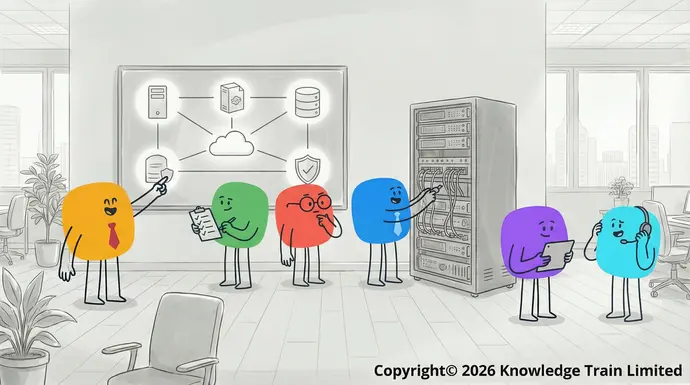
Definition of Information TechnologyEnhance your skills with our expert-led coursesThe future of sustainable PM
Information technology (IT) encompasses the use, development, and maintenance of computer systems, software, networks, and data for the storage, retrieval, transmission, and secure management of information. It is a foundational discipline enabling digital communication, business processes, and the secure handling of data in today’s world. Conclusion
Main components of IT
- Hardware:Instructor-ledFAQs The physical devices involved in computing such as desktops, laptops, servers, storage devices, and peripherals.Introduction to Project Management course
- Software: Infographic Programmes and applications running on computers and devices, including operating systems, business applications, and databases.£499 +vatIntroduction
- Networks: Sustainable project management Systems that connect hardware devices, enabling data sharing and communication, such as local area networks (LAN), wide area networks (WAN), and the internet.See all dates is a holistic approach that integrates
- Data: environmental Digital information, which may be numbers, texts, images, audio, or video, processed and analysed by IT systems. ,
- Databases: social Organised collections of data, enabling efficient storage, retrieval, and management through database management systems (DBMS).Instructor-led, and
- Internet technologies:Project Management Essentials
- £999 +vat See all dates
12 top sites
Here’s the list of the top 12 sites for project management templates.
- 1. SmartsheetSmartsheet templates
- Smartsheet is a cloud-based collaboration platform that offers a wide range of project management templates. You can find templates for almost any aspect of project management, including task lists, timelines, budgets, resource allocations, and more. Smartsheet templates are user-friendly and can be customised to suit your project’s specific needs.2. Atlassian
- Atlassian templates
- span style="display: inline-block; width: 0px; overflow: hidden; line-height: 0;" data-mce-type="bookmark" class="mce_SELRES_start">
>
| The three pillars of sustainable project management | Sustainable project management is built upon three key pillars: environmental, social, and economic sustainability. These pillars work together to create a holistic approach to project management that benefits people, planet, and profit. | 1. Environmental sustainability |
|---|---|---|
| Environmental sustainability is the first pillar of sustainable project management, which focuses on reducing negative impacts on the environment. This includes: | Reducing carbon footprint | : |
| Projects | should aim to minimise their greenhouse gas emissions throughout their lifecycle, which can be achieved with energy-efficient technologies, optimising transportation and logistics, and implementing renewable energy sources. | Resource conservation |
| : Efficient use of natural resources is crucial, and project managers should consider using recycled or sustainable materials, implementing water conservation measures, and designing products for longevity and reusability. | Waste reduction | : Minimising waste generation and promoting a circular economy. This can be achieved by implementing recycling and composting programs, adopting lean manufacturing processes, and designing products for easy disassembly and recycling. |
| 2. Social sustainability | Social sustainability is the second pillar of sustainable project management, which ensures | projects |
| have a positive impact on people and communities. This includes: | Stakeholder engagement | : Involving all affected parties in the decision-making processes by conducting thorough stakeholder analysis, implementing transparent communication channels, and addressing concerns and incorporating feedback. |
| Ethical labour practices | : Ensuring fair treatment of workers throughout the project and supply chain. This includes fair wages and working conditions, diversity and inclusion initiatives, and training and development opportunities. | Community |
impact
: Creating positive outcomes for local communities by supporting local economies and job creation, respecting cultural heritage and traditions, and contributing to community development initiatives.3. Economic sustainabilityDefinition: It means to make an organisation’s current activities do well in the long term. It also helps to create values in an environment that can continue in the long run. The main things included in economic sustainability are as follows:Long-term financial viability: Projects should aim to create lasting economic benefits and financial viability. This involves conducting a cost-benefit analysis, considering lifecycle costs and returns on investment, and aligning projects with organisational strategic goals.
Cost-effective solutions
: Implementing efficient resource allocation and management. This can include adopting innovative technologies and processes, optimising supply chain management, and implementing effective project control measures.
Risk management
: Identifying and mitigating potential economic risks. This involves conducting a comprehensive risk assessment, developing contingency plans, and implementing robust monitoring and control systems.By embracing these three pillars, project managers can establish a solid foundation for sustainability that not only benefits stakeholders but also safeguards the environment and ensures long-term economic viability.Enhance your skills with our expert-led courses