Key takeawaysEssential project management skills
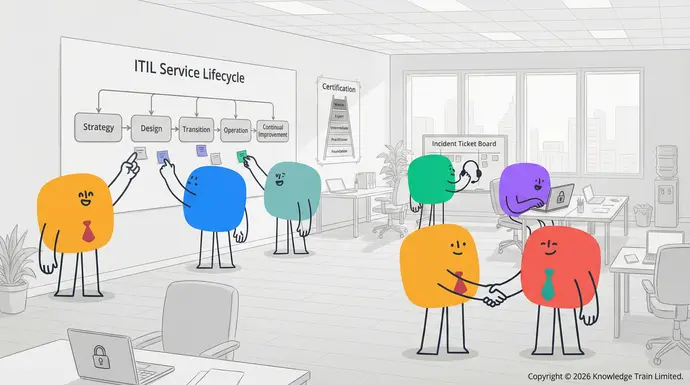
ITIL is a widely used framework for managing IT services end to end, from planning to continual improvement.Problem-solving and strategic planning
- ITIL aligns IT services with business strategy so services deliver measurable customer value.: A good project manager is a strong problem solver and can develop effective strategies to overcome any challenges that arise during the project.
- The v3 lifecycle covers Service Strategy, Design, Transition, Operation, and Continual Service Improvement to manage services consistently.Leadership and communication
- Service Transition emphasises testing, controlled deployment, and shared knowledge via an SKMS to improve decisions.: The project manager should be able to effectively lead their team and communicate with stakeholders to ensure that everyone is on the same page and working towards the same goals.
- Continual improvement depends on feedback and measurement across all lifecycle stages.Technical expertise
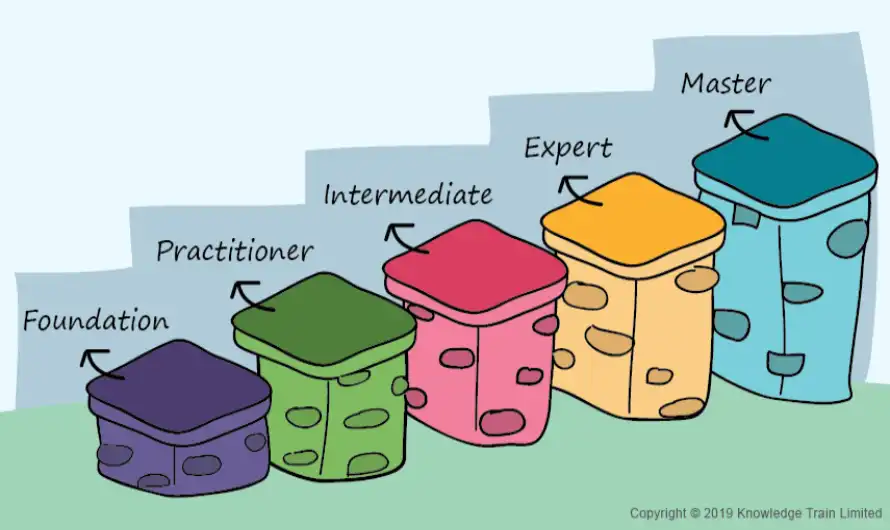
- ITIL certification, from Foundation to Master, helps demonstrate competence and supports progression into a wide range of ITSM roles.: Project managers should have a solid understanding of the technical aspects of their industry, as well as the tools and methodologies used in project management.
IntroductionThe
It will help you make a career choice about whether project managerITIL training establishes the fundraiser’s goals and objectives, including the target amount to be raised. They create a budget that includes all expenses associated with the fundraiser, such as venue rental, marketing materials, and refreshments. is a necessary step in helping you achieve your ideal job in IT service management.Volunteer management
ITIL frameworkImplementation planning
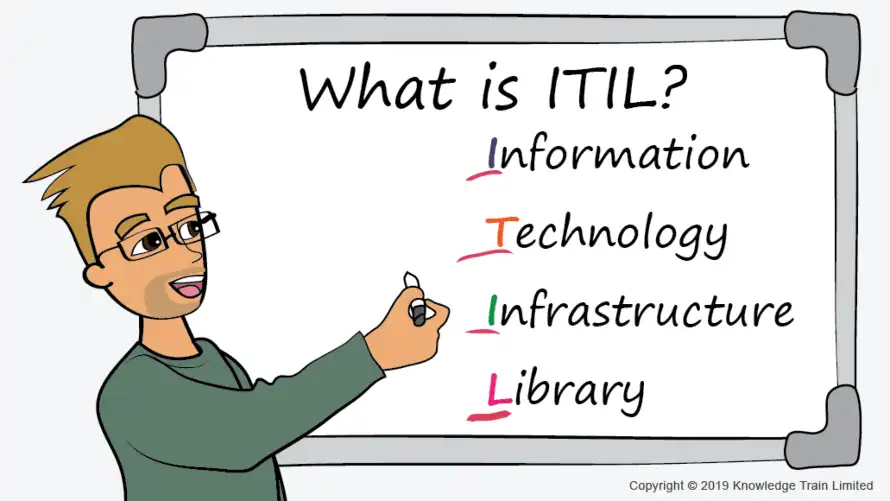
ITILOnce a solution has been selected, the project manager develops an implementation plan. They oversee the process, manage resources, and ensure that the new process or product is effectively integrated into the company’s operations., which stands for IT Infrastructure Library, is a best practice framework for managing IT in organisations. ITIL is the predominant IT service management framework in use in the world today.4. Business office consolidation
ITIL as a concept began in 1980s when, in response to a poor level of IT services, the UK government requested a framework for a more efficient and financially responsible use of IT within the government and the private sector.Facility selection and preparation
In the 1990’s, The project manager assesses the available options for the new office location, considering factors such as size, cost, and location. They coordinate with the facilities team to prepare the chosen location for the move, including any necessary renovations or installations.ITILIT infrastructure management was quickly adopted by government agencies and large corporations, especially in Europe. Since then, ITIL has undergone 2 major revisions. ITIL v3 is the latest and was released in 2007 to incorporate a lifecycle approach to IT service management. That’s the version which we shall describe below.The project manager coordinates the move of IT equipment and data, working with the IT department to plan and execute the transfer. They ensure that all necessary equipment is installed and functional in the new location and that data is safely and securely transferred.
ITIL has become extremely successful in guiding organisations to manage their IT infrastructure. By doing so, it enables those organisations to deliver benefits and achieve a return on investment to help them compete in an increasingly competitive world.Change management and communication
The goals of ITILThe project manager anticipates potential issues and plans for contingencies to mitigate their impact on the project. This may include budget overruns, delays in content delivery, or technical challenges.
ITIL sets out to achieve several crucial goals:6. Construction technology innovation
- To deliver value for customers through IT services, for example, by improving customer relationshipsIdentifying industry needs
- To integrate an organisation’s IT strategy with its business strategy (and customer needs)The project manager researches the construction industry to identify current challenges and needs. They consult with industry professionals to understand potential areas for technological innovation.
- To optimise IT services, reduce costs and improve performance by monitoring and measuringPrototype development
- To deliver IT services more effectively by managing IT budgets, risks, knowledge and resourcesCollaborating with engineers and designers, the
- To standardise the approach to IT service management across the organisationproject manager
- To change the organisation’s culture to help achieve ongoing success. oversees the development of prototypes for new construction technology. This includes multiple iterations and refinements based on testing and feedback.
ITIL v3 service lifecycleImplementation and testing

Consider the recent trend for workers to work more from home to help foster a better-balanced lifestyle, and to support those with childcare responsibilities. For a corporation to enable one of its workers to do this, it must consider several factors. What computer will the staff be allowed to use? What security factors must be considered? What tools will be required to support off-site working? What monitoring will be required to ensure efficient access? What training in security protocols and/or tools will the staff require?The project manager coordinates on-site testing of the new technology in real construction environments. They collect data on its performance, user experience, and areas for improvement. Based on the results, they guide further refinements and modifications before full-scale implementation.
Service lifecycleMarket analysis and concept development
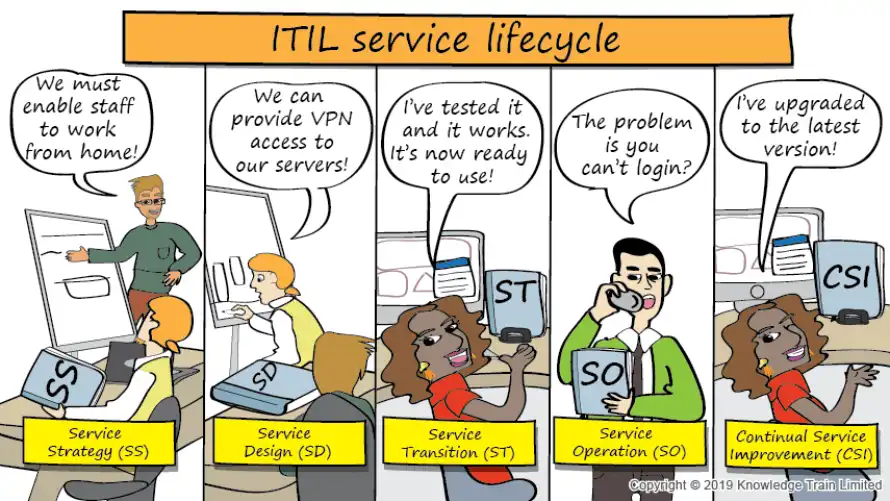
ITIL helps organisations manage such IT services by providing a service lifecycle approach. This approach focuses attention on the IT service in terms of its strategy, design, transition, operation and continual improvement of IT services. This is known as the IT service management lifecycle. It provides coordination and control across the various functions, processes and systems necessary to manage the full lifecycle of IT services.The project manager leads market research efforts to identify consumer needs and preferences. They guide the team through concept development, ensuring the product aligns with market demands and company capabilities.
The whole of ITIL’s service lifecycle is described in a series of five manuals, each one covering one stage of the service lifecycle. The 5 lifecycle stages are:Prototype creation and testing
- ITIL Service Strategy (SS) – the initial definition and analysis of business requirementsOverseeing the creation of product prototypes, the project manager coordinates testing phases. They gather feedback from potential users and stakeholders, using this information to refine the product design.
- ITIL Service Design (SD) – the design of the IT service itselfProduction and launch planning
- ITIL Service Transition (ST) – the migration of the service into the live environmentAs the product nears completion, the project manager develops a production strategy. They coordinate with manufacturing teams, create a launch timeline, and oversee marketing efforts to ensure a successful product introduction.
- ITIL Service Operation (SO) – the live operation and support of the service10. Customer loyalty programme launch
- ITIL Continual Service Improvement (CSI) – the ongoing improvement of the service.Programme design and structure
The 5 ITIL service lifecycle stages shall be described below.The project manager works with marketing and customer service teams to design an engaging loyalty programme. They define reward structures, membership tiers, and programme rules that align with company objectives and customer preferences.
ITIL Service Strategy (SS)Implementation and integration
Successful organisations tend to have clear objectives, and a clear overall business strategy explaining how the organisation intends to achieve those objectives. The overall business strategy tends to have individual strategies for the different business units within the organisation, one of which is an IT strategy. The IT strategy therefore supports and validates the business strategyCoordinating with IT teams, the project manager oversees the integration of the loyalty programme into existing systems. They ensure seamless data flow between the programme and other customer-facing platforms.[1]Monitoring and optimisation.After launch, the project manager continuously monitors programme performance. They analyse customer engagement data, gather feedback, and implement improvements to enhance the programme’s effectiveness and customer satisfaction.
An IT strategy covers multiple aspects, one of which is the IT service strategy. This explains how IT services will be used to enable IT to achieve its objectives, and how IT services support the overall business strategy.Project management methodologies and tools
The ITIL Service Strategy stage focuses on the concepts an IT service provider can use to build its IT service strategy. It describes how the IT service provider must set clear objectives and performance expectations for the IT service strategy to be successful in serving its targeted customers.Effective project management is grounded in proven methodologies and supported by robust tools. Familiarity with these can greatly improve the success rate of projects.
ITIL Service Design (SD)Popular methodologies
IT services cannot provide value to the business unless they have been designed to meet business objectives. Service design is the lifecycle stage where the service strategy is turned into an achievable plan for delivering the business objectivesWaterfall[2]: A linear and sequential approach where each phase must be completed before the next begins. Ideal for projects with well-defined requirements and minimal expected changes..Agile
The ITIL Service Design stage provides 2 things:: A flexible and iterative approach,
- Guidance for designing and developing services and service management practicesAgile
- Design principles and methods for converting strategic objectives into portfolios of services and related assets. is suited for projects with evolving requirements. It promotes continuous improvement and customer collaboration.
ITIL Service Transition (ST)Lean

After the service has been designed, it must be transitioned into operational use. This is done by a new or changed service design package being tested to ensure it meets the business needs. This is then deployed into the live production environment: Concentrates on maximising value while reducing waste and is popular in manufacturing and software development.[3]Scrum.: A subset of Agile,
The ITIL Service Transition stage introduces the concept of a service knowledge management system (SKMS), which supports organisational learning and helps to improve the efficiency and effectiveness of all the service lifecycle stages. It enables people to learn lessons, supports informed decision-making, and improves the management of services.Scrum
ITIL Service Operation (SO)utilises short, time-boxed iterations known as sprints. Effective for complex projects that need frequent reassessment.
An organisation’s strategic objectives are only realized by operating the service. This requires effective and efficient delivery and support of IT services to ensure the customer realises the value which was intendedSix Sigma[4]: A data-driven approach aimed at eliminating defects and reducing variability. Commonly used in quality improvement projects..Essential project management tools
ITIL Continual Service Improvement (CSI)Project management software
ITIL training
Since this article is aimed at people with little or no experience of ITIL, we will focus on the ITIL training available for those wanting to gain certification at either Foundation or Practitioner levels.
ITIL Foundation training
You should consider getting certification if:
- You require a basic understanding of the ITIL framework; or,Which is better, PMI-ACP
- You need to understand how ITIL can enhance an organisation’s IT service management; or,®
- You are an IT professional (or other) working in an organisation that uses ITIL and needs to be informed about, or contribute to, ongoing service improvement; or, or PMI-PMP
- You have an interest in IT service management.®
Training comes in 2 flavours: classroom and online. Take a classroom course if you prefer the face to face method of learning from a trainer. Choose the online method if you don’t have the time to attend classroom training, and/or there isn’t classroom training happening at a convenient location near you. Or, study ?ITIL online if you simply prefer to study in your own time, at your own pace.Simon Buehring
The ITIL Foundation exam is a one-hour multiple choice exam with a pass mark of 65%. If you choose to study an ITIL online course19 Feb 2026, you can also sit the ITIL Foundation exam onlineDebating between PMI-ACP® or PMI-PMP®? This article discusses the merits of both, helping you choose the right qualification for your career outside of Europe. Read more..
ITIL Practitioner training
You should consider getting ITIL Practitioner certification if:
- You already have the ITIL Foundation certificate; or,
- You want to start adopting and adapting ITIL within your organisation; or,
- You want to gain the necessary credits for the ITIL Intermediate certification.
By attending an ITIL Practitioner course, you will learn how a culture of continuous service improvement helps improves efficiency and productivity, as well as the collaboration between IT service management professionals and the business.
ITIL Practitioner builds on the good practices from other methodologies and frameworks such as PMP vs PRINCE2DevOps , Simon BuehringAgile19 Feb 2026 and Lean.
The ITIL Practitioner exam is a two and a quarter hour multiple choice exam with a pass mark of 70%. The ITIL Practitioner exam is also available online.Compare PRINCE2 and PMP® certifications to understand their differences and determine which might be better for your career path. Discover more by reading on.
ITIL rolesProject management steps
There’s a very broad range of jobs available within the IT service management industry. Due to the rapid development of technologies, tools and methods, the range of ITIL-related jobs is increasing all the time. For example, it would have been extremely rare to find a Cyber Resilience job 10 years ago, but Cyber Resilience is now one of the most in-demand skills to have.
We have tried to classify the various ITIL-related jobs into 6 levels, each level requiring greater skills and responsibilities. Each level also requires higher levels of Knowledge TrainITIL certification19 Feb 2026, technical knowledge and/or experience.
The levels are entry-level, technical, senior technical, manager, senior manager and executive groups.Project management is crucial for success. Discover the essential phases and elevate your skills to ensure projects from start to finish deliver exceptional outcomes.
Entry-level roles
There are 3 main entry-level ITIL jobs available. Each would benefit from having ITIL Foundation certification.
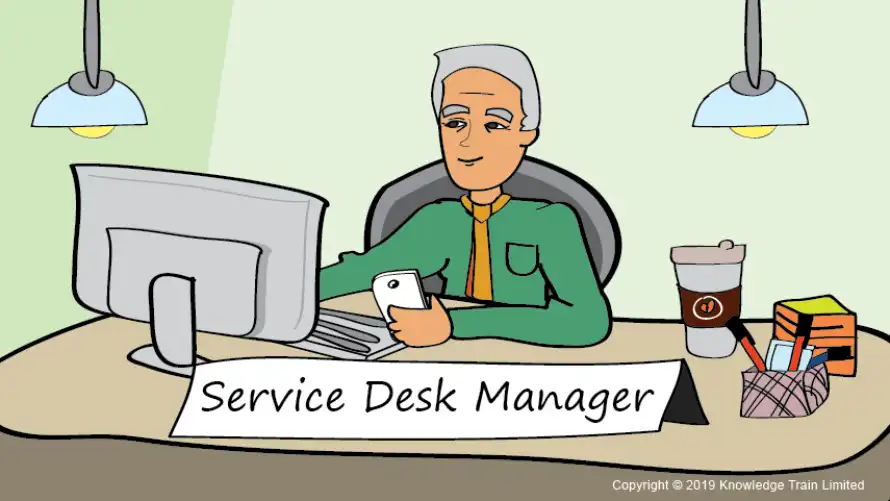
Service Desk Technician
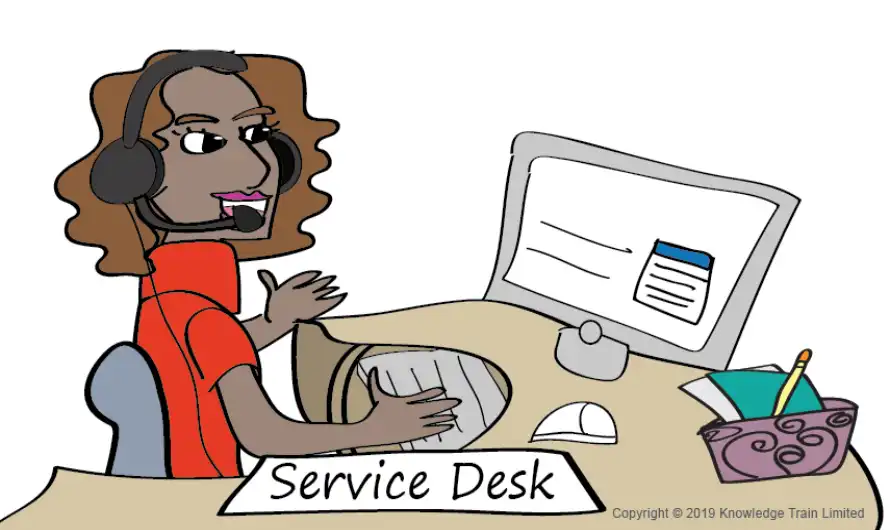
This role provides technical support to end-users. This is the most common role within IT service management and you’ve probably already received such support whenever you’ve had a computer problem.
These staff fix technical faults, answer queries and fulfil service requests such as assisting with software issues, lost passwords and user accounts.
The work is often done over the phone, by email or through remote login. This role requires good communication skills to diagnose faults and explain technical issues to non-experts.
This is a good entry level role for people without IT qualifications.
IT Support TechnicianPeople in PRINCE2: Free ebook
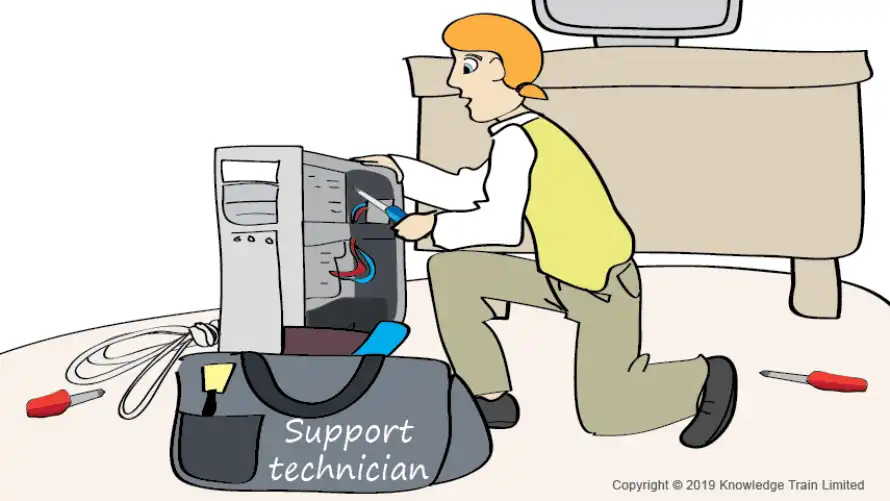
This role finds and fixes software or hardware problems which are disrupting IT systems or services business users depend on. They often work on incidents which front line service desk support staff have escalated. Crucially, the systems are live, so the issues usually need prompt attention. This role requires someone with a cool head, able to work under pressure.
This role needs a wide technical knowledge of the specialist systems they are responsible for (e.g. networks, databases, operating systems, servers).Simon Buehring



This role is involved in establishing incident management policies and processes and implementing a quality incident management process across the organisation.
It also monitors and reports trends in incidents, issues and risks, and performs command and control during major incidents.PRINCE2 Agile glossary
Supplier Relationship Manager
This role procures IT products and services on behalf of the IT function and the business.Simon Buehring
Release Manager19 Feb 2026
This role plans and manages the release of new or changed software and hardware into test and live environments.
IT Change ManagerAccess a comprehensive glossary of terms from PRINCE2 Agile to enhance your understanding of its unique vocabulary. Essential for practitioners.

This role is responsible for standardizing the ways used to achieve prompt changes to the IT infrastructure.
IT Configuration Manager
This role identifies all the organisation’s IT infrastructure (software, hardware, virtual machines, cloud services mobile services) and for recording accurate information in a configuration management system. This information is critical for planning, resolution of incidents and to ensure continuity of service with recovery plans.
The role requires great attention to detail.
Cyber Resilience Manager
This role leads the roll-out of cyber resilience policies and practices to ensure protection and security of information assets.