Key takeawaysCompliance Learning Library (CLL)™
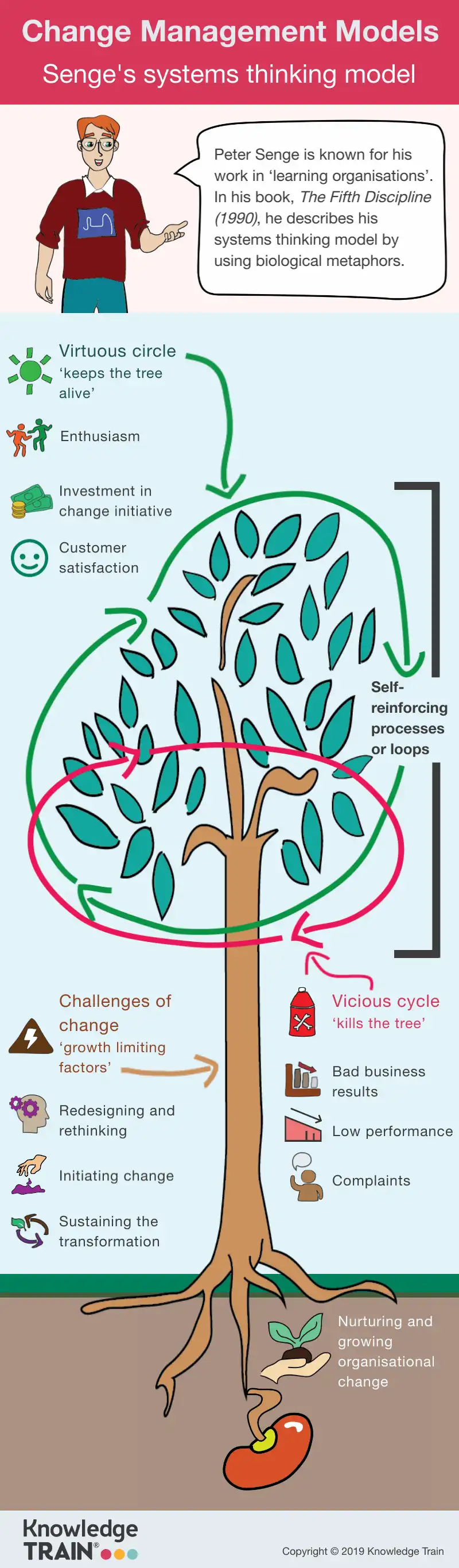
Senge’s model improves change outcomes by treating organisations as connected systems, not isolated events.IT Learning Library (ITLL)™
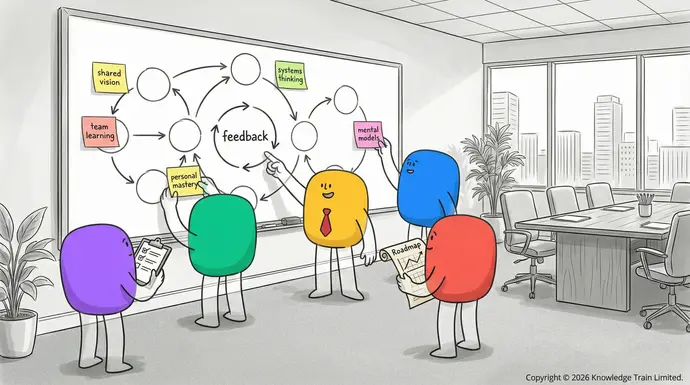
- Systems thinking links the other four disciplines and helps reveal feedback loops, delays, and recurring patterns.Business solutions
- Personal mastery and clear shared vision create alignment and motivation during change._blank
- Challenging mental models reduces bias and makes new ways of working easier to adopt.About
- Team learning strengthens problem-solving through dialogue, discussion, and fewer defensive routines._blank
- Implementation works best with leadership role-modelling, training, and small pilots that prove value.Blog
Applications of Senge’s system thinking modelSelect your preferred training course below:
Organisational strategy and change management
Strategic planningSCRUM COURSES
System thinking plays a crucial role in strategic planning by offering a comprehensive view of organisational dynamics. It encourages leaders to consider the long-term effects of their decisions. By recognising patterns and feedback loops, organisations can develop robust strategies that anticipate potential challenges. This approach ensures that plans are adaptable and aligned with the organisation’s vision.Select your preferred training course below:
Change management
In the realm of LEAN SIX SIGMA COURSES change managementSelect your preferred training course below: , system thinking provides a framework for understanding the complexities of organisational transitions. It helps identify underlying causes of resistance and facilitates smoother implementation of change initiatives. By focusing on relationships and interdependencies, leaders can craft strategies that address concerns and engage stakeholders effectively. This holistic view reduces disruptions and enhances the success of change efforts.
Problem-solving and decision-makingBUSINESS ANALYST COURSES
Enhanced problem-solvingSelect your self-paced training course topic.
System thinking significantly improves problem-solving by shifting the focus from symptoms to root causes. It enables teams to identify and address the underlying issues affecting performance. By analysing the connections between various elements, organisations can develop solutions that are both effective and sustainable. This approach minimises recurring problems and fosters a culture of continuous improvement.
Informed decision-makingBCS BUSINESS ANALYST COURSES
Informed decision-making benefits greatly from system thinking, as it promotes a thorough understanding of the implications of decisions. By considering the wider impact, leaders can make choices that align with long-term goals and values. This method reduces the likelihood of unintended consequences and enhances organisational resilience. It also encourages transparency and accountability, leading to more ethical and sustainable practices.Select your preferred training course below:
Practical applications and psychological benefits
The practical applications of system thinking in workplace settings are extensive. It enhances collaboration by encouraging open communication and shared understanding. Teams can work more effectively by recognising their interdependence and focusing on common objectives. This collective mindset fosters innovation and adaptability, essential for thriving in complex environments.CHANGE MANAGEMENT COURSES
System thinking can enhance understanding of organisational dynamics. When team members better understand their role in the larger system, they often report improved engagement and clarity of purpose. Employees feel more engaged and motivated when they understand how their efforts contribute to the bigger picture. This clarity enhances job satisfaction and overall well-being, creating a positive organisational culture.Select your self-paced training course topic.
In summary, applying Senge’s system thinking model in strategic planning, change management, problem-solving, and decision-making leads to more efficient and resilient organisations. By embracing this holistic approach, businesses can navigate challenges with confidence and create sustainable success.
Benefits and challenges of implementing Senge’s modelAPMG CHANGE MANAGEMENT COURSES
Key benefitsSelect your preferred training course below:
Improved efficiency and innovation
Select your self-paced training course topic.
ITIL COURSES
Select your preferred training course below:
IT QUALIFICATIONS
Select your preferred qualification.
ITIL COURSES
Select your preferred training course below:
LEARNING LIBRARIES
Select your preferred training course topic.
AI QUALIFICATIONS & WORKSHOPS
Select your preferred qualification or workshop.
AIPGF COURSES
Select your preferred training course below:
BCS AI COURSESSelect your preferred training course below:
AIPGF COURSES
Select your preferred training course below:
AI WORKSHOPS
Select your preferred workshop below:
Knowledge Train is a PRINCE2 Accredited Training Organization.
Knowledge Train is an AgilePM Accredited Training Organization.
Knowledge Train is a PRINCE2 Agile Accredited Training Organization.
Knowledge Train is a Better Business Cases Accredited Training Organization.
Knowledge Train is a P3O Accredited Training Organization.