- Project management triangle Knowledge Train
- 19 Feb 2026
Contents
Introduction Understanding the project triangle Benefits of the project triangle
Managing the project triangle
Strategies for balancing constraints Tools for managing the project triangle Common challenges and solutions Project management triangle best practices Applying the project management triangle Conclusion
- FAQs
- InfographicIntroduction
- The project management triangle
- , also known as the triple constraint model, is a concept that visualises the constraints of scope
- , time
, and
cost
in project management. It highlights the interconnected nature of these three aspects in delivering a successful project.
The triangle model is a crucial tool for project managers to understand and balance the competing demands of a
project
. The scope refers to the project’s requirements, objectives, and deliverables. Time refers to the schedule and deadlines. Cost encompasses the budget and resources. The challenge is to optimise all three to meet project goals.Each corner of the triangle is dependent on the other two. A change in one element typically results in a change in at least one other. By understanding and managing these constraints, project teams can make informed decisions and adjustments to ensure project success.The project management triangle is a fundamental concept that helps
project managers
visualise and optimise the key constraints of any project. By balancing scope, time, and cost, project teams can deliver successful outcomes that meet stakeholder expectations.
Understanding the project management triangle
The three constraints explained
- The project management triangle is made up of three main constraints: scope
- , time
- and cost
- . Let’s have a detailed look at each of these. Scope
: Scope refers to the boundaries, objectives and deliverables of a project. It includes the goals and requirements of the project, as well as the specific features, functionalities and quality standards.
Time
Lean Six Sigma: The time constraint of a project refers to its duration and schedule. It involves factors such as the project start and end dates, milestones and deadlines, as well as the sequencing and dependencies of tasks.Yellow Belt CostSelf-paced training course to gain LSS Yellow Belt.: The cost constraint relates to the financial and resource aspects of a project. This includes the budget allocated to the project as well as the human resources and labour costs, and equipment and material expenses.
PMIRelationship between constraints
®The three constraints of scope, time and cost are interconnected and can impact each other. Changes to one constraint will likely influence the other constraints. For example, an increase in scope will often require additional time and resources, whereas a reduction in time may increase costs or decrease scope. Similarly, a reduction in budget may affect the project scope or timeline.
- Highlight benefitsPMI-ACP Project managers : Clearly articulate the personal and organisational benefits of the change.Self-paced course to prepare you for the exam (exam not included). must carefully balance these constraints throughout the project lifecycle.
- Engage employeesKanbanImpact on project quality : Involve them in planning and decision-making processes to create a sense of ownership.Estimating for Agile FoundationThe balance of scope, time and cost also has an impact on the
- Recognise contributionsAgile Learning Library (ALL)™quality : Acknowledge and reward early adopters and change champions to motivate others.BUSINESS ANALYSIS of the project outcomes. If the three constraints are well-balanced, the project is more likely to achieve high-quality results. On the other hand, if there is an imbalance in any of the constraints, the quality of the project may be compromised. For example:
Measuring desire levelsBCS Business AnalysisA tight deadline may lead to a rushed project, resulting in lower quality outputs.
Understanding the level of desire is essential for gauging readiness. This can be achieved through:Business Analysis Foundation A limited budget may result in a project being understaffed or under-resourced, which may also affect quality.
- Surveys and feedbackLearn the fundamentals of business analysis.A project with an overambitious scope can strain resources and time, leading to poor results. : Gather input on employee sentiments towards the change.Modelling Business Processes Successful project management involves finding the right balance and making trade-offs between the three constraints while maintaining the desired level of quality. By understanding the impact of these constraints on each other, project managers can make informed decisions to lead the
- ObservationGain practitioner certificate in modelling business processes.project : Monitor engagement levels during change-related activities.Business Analysis Practices to a successful outcome.
- InterviewsGain practitioner certificate in business analysis practices.Benefits of using the project management triangle : Conduct one-on-one discussions to explore individual concerns and motivations.Requirements Engineering Utilising the project management triangle provides some distinct benefits to the project team and stakeholders. These are as follows.
Assessing desire helps tailor support and interventions, ensuring greater engagement. It’s crucial to understand that while organisations can create an environment that fosters desire, the ultimate decision to participate in the change is a personal choice that cannot be forced. Leaders can influence desire by addressing the question ‘What’s in it for me?’ (WIIFM) but must recognize that genuine commitment cannot be mandated.Gain practitioner certificate in requirements engineering.Easier change management
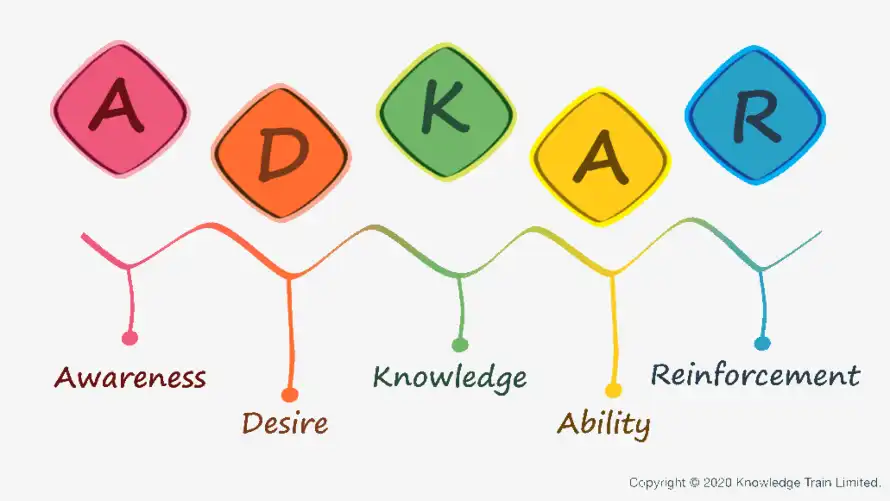
Element 3: KnowledgeBusiness Analysis International Diploma The triangle model helps to
The third element of ADKAR addresses the practical aspects of change implementation. The All 4 courses bundled into this Diploma certification package.make changes easier KnowledgeAgileBA. This is because if a change arises, the project managers can easily evaluate how this change will affect the scope, time and cost, decide, as such it helps to quickly evaluate a change request, understand the ripple effects, and make an informed decision on change. element focuses specifically on how to implement the change. This includes two critical types of knowledge: understanding how to change (the required skills, processes, and behaviours) and what to do during the transition state. This goes beyond just sharing information – it requires detailed training on new processes, systems, and roles that will be part of the change.®Priority clarification
Knowledge acquisition – Agile Business AnalysisVisualising the three constraints helps to
To facilitate knowledge acquisition:Foundation training clarify priorities
- Structured trainingLearn the fundamentals of Agile Business Analysis.. This will make it possible for the team to quickly identify important elements in the project, direct resources to important tasks and make trade-offs as required based on the project goals. : Provide comprehensive training programmes tailored to different learning styles.Practitioner Improved client communication
- Mentorship4-day course including Foundation.The triangle is a helpful : Pair employees with mentors to offer guidance and support.PMIcommunication tool
- Self-paced learning® to both communicate with and educate clients. The project managers can use the triangle to show the project’s constraints to the clients, visualise how changes would affect them, and set realistic expectations regarding project deliverables. : Use e-learning platforms for flexible, on-demand knowledge access.PMI-PBA Risk reduction
Tools for knowledge transferSelf-paced course to prepare you for the exam (exam not included). Utilising the triangle will help in
Effective tools include:Business Analysis Learning Library (BALL)™ managing risks
- Workshops and seminarsCHANGE MANAGEMENT . This is possible because this will help the team to predict potential problems earlier in the process, have a contingency plan, and balance the risks in all three constraints.
- : Offer continuous learning opportunities.See all dates Specialist: CDS
- Access to resourcesManaging the project management triangle 3-day ITIL Specialist: Create, Deliver and Support (CDS) course.: Ensure availability of tools and materials needed for skill application.Maintaining the balance of the project management triangle requires strategic decisions and careful trade-offs between scope, time, and cost. Here are some tips to help: IT Learning Library (ITLL)™
- Peer supportChoose at least one flexible constraint BUSINESS LEARNING LIBRARY (BLL)™: Foster a network of colleagues who can offer assistance and advice.One constraint should be identified as more flexible than the others. This allows some wiggle room when dealing with changes or issues. Ask yourself: Agile Learning Library (ALL)™
These systems bolster the ability to adapt successfully.Which constraint is easiest or least impactful to change? Business Analysis Learning Library (BALL)™
Element 5: ReinforcementAre stakeholders willing to adjust scope, extend deadlines, or increase budget if necessary? Compliance Learning Library (CLL)™
The How will increased flexibility in one constraint impact the other two? IT Learning Library (ITLL)™ReinforcementIdentifying a flexible constraint up-front allows for better risk management and issue resolution. Business solutions element ensures that changes are sustained over time.Prioritise features and requirements_blank
Sustaining changeIt is important to carefully evaluate the importance of each project deliverable. This will help you focus on what is essential to project success. Create a comprehensive list of features and requirements, then:About
To sustain change:Rank or score each based on value and importance_blank
- Celebrate successesClearly define “must-have” vs. “nice-to-have” featuresBlog : Recognise achievements to reinforce positive behaviour.Leverage prioritisation to inform trade-off decisions.
- Continuous feedbackThis prioritisation process allows for objective trade-off discussions if needed.EXPLORE SUBJECTS : Provide regular updates and feedback to maintain momentum.Develop a risk management planSelect your preferred subject.
- Adjust strategiesProactively identifying and managing risks will help avoid imbalances in the triangle. A : Be flexible and willing to adapt strategies based on feedback.risk managementPROJECT MANAGEMENT QUALIFICATIONS & WORKSHOPS
Monitoring progress planSelect your preferred qualification or workshop.
Monitoring progress involves: should include:
- Performance metricsIdentification of risks that could impact any of the constraintsPRINCE2 COURSES : Track key indicators to assess change impact.Risk scoring based on probability and impactSelect your preferred training course below:
- Regular reviewsDetailed contingency plans for high-priority risks : Schedule periodic evaluations to identify areas for improvement.A monitoring process to reassess risks throughout the project.APM COURSES
- Feedback channelsRisk managementSelect your preferred training course below: : Maintain open lines for employee input and suggestions. ensures prevention of imbalances before they happen.
Through reinforcement, organisations can ensure that new behaviours become ingrained, leading to lasting successCreate a change management planAGILE PROJECT MANAGEMENT COURSES