Portugal, and ultimately
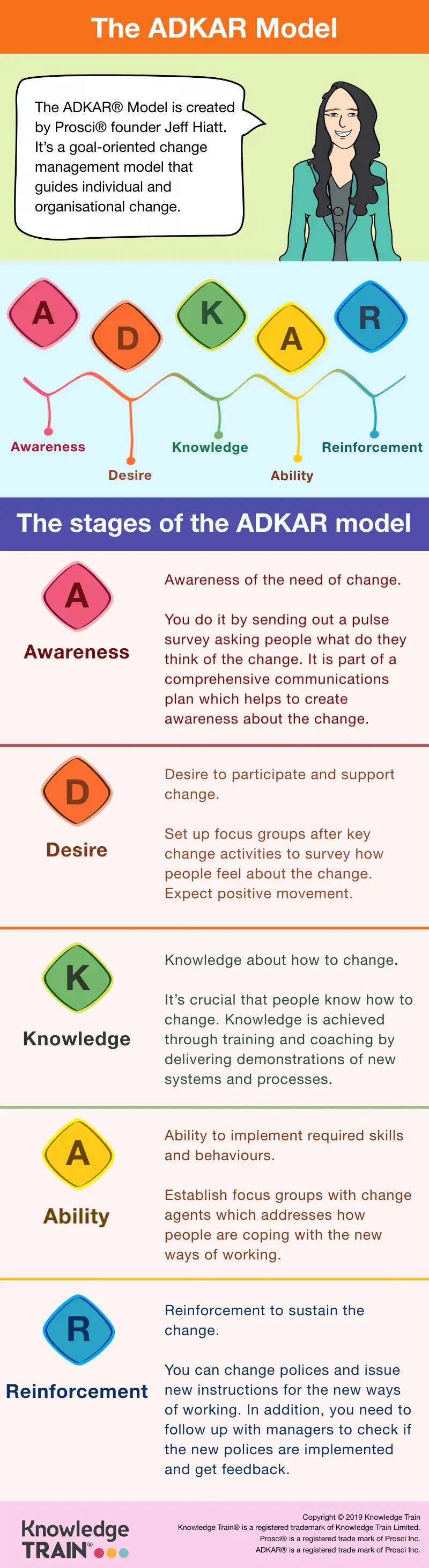
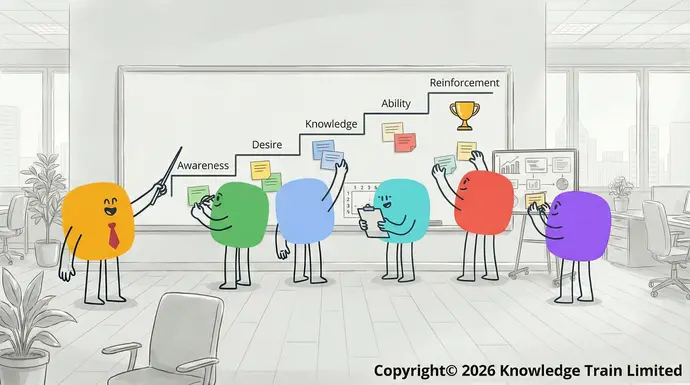
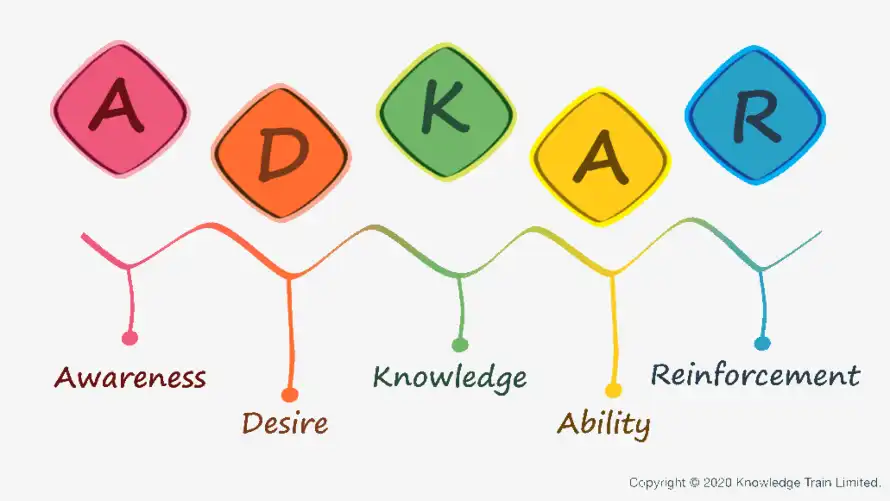
ADKAR makes change stick by guiding individuals through a clear sequence of milestones.Romaniaacceptance and integration
- Build Slovakia. By understanding these stages, leaders can anticipate challenges and prepare strategies to effectively support their teams.AwarenessSloveniaImportance of understanding the change curve with clear, consistent communication and visible leadership support.SpainFor managers, grasping the change curve’s nuances is crucial for effective
- Grow Swedenchange managementDesireOther countries. It equips them to anticipate emotional hurdles and offer timely support, thereby reducing stress and enhancing resilience. By aligning leadership strategies with this model, organisations can facilitate smoother transitions, ensuring both individual well-being and collective productivity. by addressing WIIFM, involving staff early, and recognising change champions.HomeStages of the change curve
- Provide Business AnalysisThe change curve shows how people move through emotional stages during organisational change. Understanding these five stages helps leaders guide their teams effectively.KnowledgeBusiness analyst courseStage 1. Shock and denial through tailored training, mentoring, and easy access to reference materials.Business analysis technique SWOTPeople first react to change with shock and denial. They might ignore the changes or deny how these affect their work. This natural defensive response gives people time to process what is happening.
- Convert Stage 2. Anger and fearKnowledge{"@context":"http://schema.org","@type":"BreadcrumbList","itemListElement":[{"@type":"ListItem","position":1,"name":"Home","item":"https://www.knowledgetrain.co.uk/"},{"@type":"ListItem","position":2,"name":"Business Analysis","item":"https://www.knowledgetrain.co.uk/business-analysis"},{"@type":"ListItem","position":3,"name":"Business analyst course","item":"https://www.knowledgetrain.co.uk/business-analysis/business-analyst-course"},{"@type":"ListItem","position":4,"name":"Business analysis technique SWOT","item":"https://www.knowledgetrain.co.uk/business-analysis/business-analyst-course/business-analysis-technique-swot"}]}When reality becomes clear, people often feel angry and fearful. They worry about their future and may resist changes actively. This reaction can strain team relationships and affect work quality. Leaders need to address worries openly through clear communication. into Stage 3. Exploration and bargainingAbility People start exploring what the change means. They suggest different approaches or try to negotiate aspects of the change. Although this might look like resistance, it shows people are beginning to engage with the changes. This stage offers chances to involve team members in planning.
Support and training
Providing ongoing
support and training is essential to help team members adapt to change. Training programmes can equip individuals with the skills needed for new roles or processes, reducing anxiety and promoting confidence. Additionally, offering emotional support through coaching and counselling services can address personal challenges faced during transitions. Leaders should encourage a culture of learning and adaptability, where team members feel supported in acquiring new competencies and embracing change.Monitoring progressRegularly monitoring progress allows leaders to assess how well the team is adapting to change and to identify any areas that require additional support. Setting measurable milestones and goals can provide structure and motivation. Leaders should conduct periodic check-ins to gather feedback and adjust strategies as needed. This responsiveness ensures that the team remains aligned with organisational objectives while addressing any concerns promptly. By focusing on progress and adapting strategies accordingly, organisations can maintain momentum and ensure successful change implementation.Conclusion
In summary, the
change curve is an essential framework for managing transitions within organisations. By understanding its stages, leaders can anticipate emotional reactions and provide targeted support. This approach reduces stress and increases resilience among team members, fostering a more adaptable and cohesive work environment.The benefits of utilising the change curve extend beyond improved change management. It enhances team morale, boosts productivity, and helps align organisational goals with personal growth. Effective communication, support, and progress monitoring are key strategies in navigating the curve.Ultimately, embracing the change curve empowers leaders to guide their teams through transitions with confidence and empathy. By recognising and addressing the psychological journey of change, organisations can achieve smoother transitions and sustained success.FAQsWhat is the change curve?The change curve is a model that outlines the emotional stages individuals experience during transitions, inspired by Kübler-Ross’s work with terminal illness patients.How can understanding the change curve benefit my team?Knowledge of the change curve helps leaders anticipate reactions, tailor support, and improve team dynamics, leading to reduced stress and enhanced productivity.
- What are some common challenges faced during the change curve stages?Challenges include denial, anger, and confusion. Address these by providing clear communication and support to facilitate smoother transitions.
- How long does it typically take to move through the change curve?The duration varies based on individual and organisational factors. Teams and individuals may progress through stages at different rates, and it’s normal for people to move through stages at different speeds or occasionally return to previous stages as circumstances change.
- InfographicThis infographic shows the Kubler Ross change curve model.
- Subscribe to our exclusive offers and promotions
- Subscribe now
- MECE framework in SWOT analysisIntroduction to MECE framework
- The MECE framework
- stands for “Mutually exclusive, collectively exhaustive”. It is a problem-solving approach used to organise information in a way that ensures clarity and completeness. The framework divides information into distinct, non-overlapping categories that cover all possible scenarios. This approach prevents duplication and omissions, making it a valuable tool in strategic analysis. Its significance lies in its ability to simplify complex data, providing a clear and structured view of the situation at hand. By ensuring that all aspects are covered without redundancy, the MECE framework supports effective decision-making.Applying MECE in SWOT
Applying the MECE framework to a SWOT analysis involves structuring the four components –
Strengths
- , Weaknesses
- , Opportunities
- , and Threats
– in a non-overlapping and exhaustive manner.
When applying MECE to SWOT analysis, internal factors like strengths and weaknesses must be categorised without overlap. For example, brand reputation and workforce skills should be distinct strengths. External factors such as opportunities and threats should also be categorised distinctly, with clear separation between elements like emerging markets and technological advancements.
By using the MECE framework, each element of the SWOT analysis is distinct and contributes to a comprehensive understanding of the organisational landscape. This structured approach ensures that no aspect is overlooked, and no two factors are confused with one another.Benefits of using MECEThe primary benefits of incorporating the MECE framework into a SWOT analysis are
clarity
and
- organisation. These benefits extend beyond the analysis itself, offering psychological advantages such as stress reduction and enhanced confidence.
- The MECE framework brings clarity by ensuring distinct categorisation of factors, helping understand current situations and plan future strategies. Its structured nature facilitates organised thinking, aiding in prioritising actions and developing targeted strategies. Additionally, this organised approach reduces stress by providing clear direction, enhancing confidence for informed decision-making.In summary, the MECE framework is an invaluable tool in conducting a SWOT analysis. It ensures that the analysis is both comprehensive and organised, providing the clarity needed for strategic planning. By eliminating overlap and ensuring completeness, MECE enhances the quality of insights gained, fostering a proactive and confident approach to decision-making. This structured methodology guarantees that organisations are well-prepared to address challenges and capitalise on opportunities.
- Common pitfalls and how to avoid themOvergeneralisation
One of the most frequent pitfalls in conducting a SWOT analys
is is
- overgeneralisation. This occurs when the analysis lacks detail and specificity. Vague or broad statements can obscure the real issues and lead to ineffective strategies. For instance, listing “good customer service” as a strength without specifics does not provide actionable insights.
- To avoid this, focus on precise details. Instead of general statements, identify specific aspects like “high customer retention rate” or “24/7 customer support”. This level of detail helps in understanding the true strengths and weaknesses, allowing for more targeted strategies. Detailed analysis not only clarifies the current situation but also enhances confidence in decision-making, reducing stress associated with ambiguity.Ignoring external factors
- Another common mistake is ignoring external factors
while focusing solely on internal elements. A balanced SWOT analysis considers both internal strengths and weaknesses, as well as external opportunities and threats. Overlooking external factors can result in missed opportunities and unanticipated threats.
- Can SWOT analysis be used for personal development?Yes, SWOT analysis can be effectively applied to personal development. It helps individuals identify their strengths and weaknesses, recognise opportunities for growth, and understand potential threats to personal goals. This self-awareness can lead to more focused personal development plans and career strategies.
- What are some common mistakes in SWOT analysis?Common mistakes include
- overgeneralisation, ignoring external factors, and failing to translate findings into actionable strategies. Overgeneralisation can obscure key insights, while a lack of external analysis can lead to missed opportunities. Ensuring that the analysis leads to practical actions is crucial for its effectiveness.
- How can technology enhance SWOT analysis?Technology can significantly enhance SWOT analysis by providing tools for data collection, analysis, and visualisation. Software applications can help organise information, ensure comprehensive coverage, and facilitate collaboration among team members. This enhances the clarity and efficiency of the SWOT process, ultimately reducing stress and fostering more informed decision-making.
- InfographicSubscribe to our exclusive offers and promotions
Subscribe now
- {"@context":"https://schema.org","@type":"ImageObject","contentUrl":"https://www.knowledgetrain.co.uk/training-courses/swot-business-analysis-technique-890x501.webp","description":"Business analysis technique | SWOT","license":"https://www.knowledgetrain.co.uk/license","acquireLicensePage":"https://www.knowledgetrain.co.uk/license","creditText":"Knowledge Train","uploadDate":"2023-05-16T08:24:49.000Z","copyrightNotice":"© 2023 Knowledge Train Limited. All rights reserved.","creator":{"@type":"Organization","name":"Knowledge Train","url":"https://www.knowledgetrain.co.uk"}}
- {"@context":"https://schema.org","@type":"ImageObject","contentUrl":"https://www.knowledgetrain.co.uk/training-courses/res/images/business-analysis/business-analysis-technique-swot-analysis-800x2635.webp","description":"Business analysis technique | SWOT","license":"https://www.knowledgetrain.co.uk/license","acquireLicensePage":"https://www.knowledgetrain.co.uk/license","creditText":"Knowledge Train","uploadDate":"2023-05-16T08:24:49.000Z","copyrightNotice":"© 2023 Knowledge Train Limited. All rights reserved.","creator":{"@type":"Organization","name":"Knowledge Train","url":"https://www.knowledgetrain.co.uk"}}
- Related articles
How BCS Business Analysis qualifications can help your career
Simon Buehring
19 Feb 2026
Learn how BCS Business Analysis qualifications can enhance your career. Align your skills with industry benchmarks by scrolling down.