is crucial. Organisations must adapt to remain competitive and relevant. Practitioner Change managementIncludes Foundation & Practitioner combined option. provides a structured approach to transitioning individuals, teams, and whole organisations from a current state to a desired future state. The goal is to minimise resistance and maximise engagement. Here, the AI Project Governance Framework (AIPGF) ADKARFoundation United Kingdom model shines as a strategic framework. It offers a clear, step-by-step process that leaders can use to guide their teams through change effectively.Learn the fundamentals of the governance framework.
Origins and purpose of ADKARPractitioner
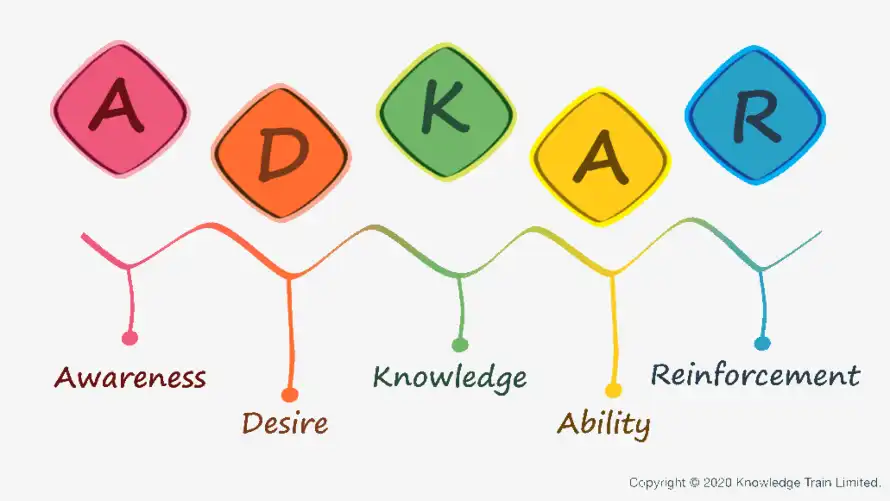
The ADKAR model was developed by Jeff Hiatt, founder of Prosci, through research conducted from 1994 to 2002. This research analysed the change patterns of over 700 organisations, leading to a practical, results-oriented approach to managing change at the individual level. Prosci’s research revealed that successful change occurs when Includes Foundation & Practitioner combined option. organisational change managementBetter Business Cases and individual change management intersect. It comprises five key elements: ™ AwarenessFoundation , Learn the fundamentals of Better Business cases.SearchDesirePractitioner , Includes Foundation & Practitioner combined option. KnowledgeP3O , ® AbilityFoundation , and Learn the fundamentals of the P3O project management office.United KingdomReinforcementPractitioner Austria. Each element represents a milestone that individuals must achieve to embrace and sustain change thoroughly.Includes Foundation & Practitioner combined option.Belgium
- AwarenessWorkshopsBulgaria: Recognising the need for change.Introduction to Project Management Croatia
- Desire1-day workshop to learn the basics of project management.Cyprus: Building the motivation to participate.Project Management Essentials Czech Republic
- Knowledge2-day workshop to learn how to manage projects without getting certified.Denmark: Acquiring the necessary information and skills.Writing Business Cases Estonia
- AbilityHalf-day workshop to learn to write robust business cases.Finland: Implementing new skills and behaviours.AI in Project Management France
- ReinforcementLearn how to use AI tools in everyday project work.Germany: Sustaining the change over time.ARTIFICIAL INTELLIGENCE (AI)Greece
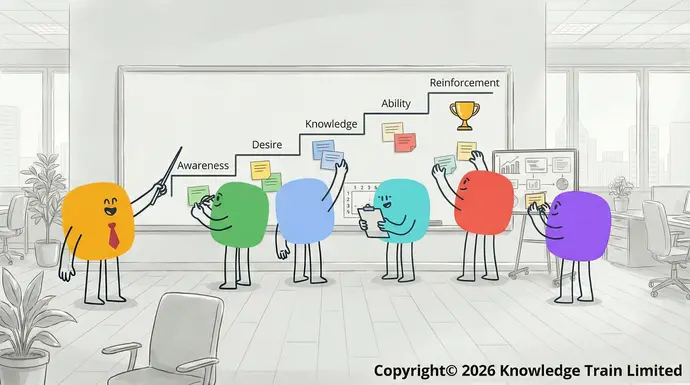
These elements work in sequence, with each building upon the previous ones. For instance, it’s difficult to create genuine desire for change without first establishing awareness of why the change is needed. Similarly, knowledge can only be effectively absorbed once someone has the desire to learn. This sequential nature is crucial for successful implementation.BCS AIIreland
This model’s purpose is to facilitate a smooth transition by focusing on the psychological aspects of change. By addressing these individual milestones, the ADKAR model reduces stress and enhances overall productivity. Its structured approach ensures that all critical elements of change are methodically covered, minimising confusion. Consequently, organisations can navigate the challenges of transformation with greater confidence and success.Foundation Italy
In summary, the ADKAR model serves as a comprehensive guide for Learn the fundamentals of artificial intellegence.Latviamanaging changeAI Project Governance Framework (AIPGF)Lithuania. It aligns with the psychological needs of individuals, ensuring that change is not only implemented but also sustained effectively.Foundation Luxemburg
The five elements of the ADKAR modelLearn the fundamentals of the governance framework.Malta
Element 1: AwarenessPractitioner Netherlands
- Adjust strategiesSWOT analysis enhances clarity by breaking down complex scenarios into manageable components, providing a clearer picture of the current situation. It guides resource allocation through understanding strengths and weaknesses, helping prioritise resources effectively. The approach stimulates proactive thinking by identifying opportunities and threats, encouraging forward-looking strategies rather than reactive measures.
Psychological benefits
are also noteworthy. Engaging in a SWOT analysis can reduce stress by providing a structured approach to problem-solving. By mapping out a plan, individuals and teams experience enhanced focus and confidence. The process encourages open discussion and collaboration, which can lead to innovative solutions. This comprehensive approach makes SWOT analysis an invaluable tool in both personal and professional contexts.
- In essence, SWOT analysis is not just a list-making exercise; it is a dynamic tool that guides strategic planning and fosters a proactive mindset in navigating challenges and seizing opportunities.Conducting a SWOT analysis
- Preparing for the SWOT analysisConducting a
- SWOT analysis begins with meticulous
preparation
Implementing the ADKAR model in your organisationP3O COURSES
Preparing for changeSelect your preferred training course below:
Implementing the ADKAR model requires careful preparation to ensure a smooth transition. Start by assessing the current organisational landscape. Identify areas where change is necessary and align them with strategic goals. It is critical to secure Self-pacedleadership supportWORKSHOPSBCS Foundation Certificate in Business Analysis self-paced online early on, as this endorsement sets the tone for the entire process.Select your preferred workshop below:
Next, communicate the impending change effectively. Use clear and consistent messaging to build awareness and desire among employees. Establish a timeline with specific milestones to track progress. This structured approach helps to minimise confusion and ensures that all critical elements of change management are addressed. £499 +vat
Customising the modelAGILE QUALIFICATIONS
Every organisation is unique, so customising the ADKAR model to fit specific needs is essential. Begin by analysing the organisational culture and existing processes. This understanding will guide how each element of the model is tailored.Select your preferred qualification.
- Awareness : Adapt communication strategies to suit the organisation’s culture, ensuring messages resonate with employees.AGILE PROJECT MANAGEMENT COURSESSelf-paced
- DesireSelect your preferred training course below:BCS International Diploma in Business Analysis self-paced online: Identify key motivators for different employee groups and leverage these to build desire.
- KnowledgePRINCE2 AGILE COURSES£2,199 +vat: Customise training programmes to align with the skills required for the change.Select your preferred training course below:
- Ability : Develop targeted support systems that cater to varying levels of ability within the organisation.SCRUM COURSES
- ReinforcementSelect your preferred training course below:Self-paced: Design reinforcement strategies that are relevant and meaningful to the organisation’s context. BCS Business Analysis Practice self-paced online
By tailoring the model, organisations can address specific challenges and enhance the effectiveness of the change process.AGILE BUSINESS ANALYSIS COURSES
Overcoming challengesSelect your preferred training course below:£749 +vat
Implementing the ADKAR model is not without challenges. Common obstacles include resistance to change, lack of engagement, and inadequate resources. Addressing these issues requires proactive strategies. MECE framework in SWOT analysis
- ResistanceBUSINESS ANALYSIS QUALIFICATIONSIntroduction to MECE framework: Engage stakeholders early and involve them in decision-making processes. This involvement can reduce resistance and foster a sense of ownership.Select your preferred qualification.The
- Engagement MECE framework: Maintain open lines of communication and provide regular updates. Transparency builds trust and keeps employees engaged. stands for “Mutually exclusive, collectively exhaustive”. It is a problem-solving approach used to organise information in a way that ensures clarity and completeness. The framework divides information into distinct, non-overlapping categories that cover all possible scenarios. This approach prevents duplication and omissions, making it a valuable tool in strategic analysis. Its significance lies in its ability to simplify complex data, providing a clear and structured view of the situation at hand. By ensuring that all aspects are covered without redundancy, the MECE framework supports effective decision-making.BCS BUSINESS ANALYSIS COURSES
- ResourcesApplying MECE in SWOTSelect your preferred training course below:: Ensure that adequate resources, such as time and funding, are allocated to support the change initiative.Applying the MECE framework to a SWOT analysis involves structuring the four components –
A key component of implementing ADKAR is using the ADKAR Assessment tool. This diagnostic instrument helps identify which elements are acting as barriers to change for individuals or groups. By rating each element on a scale of 1 to 5, StrengthsAGILE BUSINESS ANALYSIS COURSESchange managers, Select your preferred training course below: can pinpoint where additional focus is needed. For example, if Ability scores are low but Knowledge scores are high, this suggests the need for more practical application opportunities rather than additional training.Weaknesses
Psychologically, the structured approach of the ADKAR model reduces stress and enhances confidence among employees. By focusing on individual change, it ensures that employees are well-equipped to adopt new behaviours. This focus leads to sustained improvements and long-term success., CHANGE MANAGEMENT QUALIFICATIONS
Best practices for each ADKAR elementOpportunitiesSelect your preferred qualification.
Aligning goals with elements, and
Aligning organisational goals with the elements of the ThreatsAPMG CHANGE MANAGEMENT COURSESADKAR model – in a non-overlapping and exhaustive manner.Select your preferred training course below: is essential for a cohesive change process. Begin by clearly defining your organisational objectives. Ensure that each of the ADKAR elements – Awareness, Desire, Knowledge, Ability, and Reinforcement – supports these objectives.When applying MECE to SWOT analysis, internal factors like strengths and weaknesses must be categorised without overlap. For example, brand reputation and workforce skills should be distinct strengths. External factors such as opportunities and threats should also be categorised distinctly, with clear separation between elements like emerging markets and technological advancements.
- AwarenessBy using the MECE framework, each element of the SWOT analysis is distinct and contributes to a comprehensive understanding of the organisational landscape. This structured approach ensures that no aspect is overlooked, and no two factors are confused with one another.PROGRAMME MANAGEMENT QUALIFICATIONS: Align awareness efforts with the strategic vision. Ensure that the need for change is communicated in a way that reflects organisational goals.Benefits of using MECESelect your preferred qualification.
- DesireThe primary benefits of incorporating the MECE framework into a SWOT analysis are : Motivate employees by linking personal benefits to broader organisational aims.clarityMSP COURSES
- Knowledge and Select your preferred training course below:: Tailor training programs to impart skills that directly contribute to achieving strategic goals.organisation
- Ability. These benefits extend beyond the analysis itself, offering psychological advantages such as stress reduction and enhanced confidence.PMI COURSES: Develop capabilities that are necessary for meeting long-term objectives.The MECE framework brings clarity by ensuring distinct categorisation of factors, helping understand current situations and plan future strategies. Its structured nature facilitates organised thinking, aiding in prioritising actions and developing targeted strategies. Additionally, this organised approach reduces stress by providing clear direction, enhancing confidence for informed decision-making.Select your preferred training course below:
- ReinforcementIn summary, the MECE framework is an invaluable tool in conducting a SWOT analysis. It ensures that the analysis is both comprehensive and organised, providing the clarity needed for strategic planning. By eliminating overlap and ensuring completeness, MECE enhances the quality of insights gained, fostering a proactive and confident approach to decision-making. This structured methodology guarantees that organisations are well-prepared to address challenges and capitalise on opportunities. : Design reinforcement strategies that celebrate achievements aligned with organisational success.Common pitfalls and how to avoid themPMI COURSES
This alignment ensures that change initiatives are not only implemented but also contribute meaningfully to the organisation’s mission.OvergeneralisationSelect your preferred training course below:
Continuous improvementOne of the most frequent pitfalls in conducting a SWOT analys
Continuous improvement is vital in refining the ADKAR process. It involves regularly assessing and enhancing each element to ensure effectiveness.PRINCE2 COURSESis is
- Feedback loopsSelect your preferred training course below:overgeneralisation: Establish mechanisms for collecting feedback at each element. Use surveys, interviews, and performance metrics to gather insights. . This occurs when the analysis lacks detail and specificity. Vague or broad statements can obscure the real issues and lead to ineffective strategies. For instance, listing “good customer service” as a strength without specifics does not provide actionable insights.
- Regular reviewsAPM COURSESTo avoid this, focus on precise details. Instead of general statements, identify specific aspects like “high customer retention rate” or “24/7 customer support”. This level of detail helps in understanding the true strengths and weaknesses, allowing for more targeted strategies. Detailed analysis not only clarifies the current situation but also enhances confidence in decision-making, reducing stress associated with ambiguity.: Conduct periodic evaluations to identify strengths and areas for improvement within the ADKAR elements.Select your preferred training course below:Ignoring external factors
- Adaptive strategies Another common mistake is : Be willing to modify strategies based on feedback and evolving organisational needs.AGILE PROJECT MANAGEMENT COURSESignoring external factors
The psychological benefits of this approach are significant. Continuous improvement reduces stress and enhances confidence by ensuring that the change process is dynamic and responsive. Employees feel valued and understood, fostering a positive environment for sustained change. This iterative process not only refines the ADKAR model but also reinforces a culture of adaptability and growth within the organisation.Select your preferred training course below: while focusing solely on internal elements. A balanced SWOT analysis considers both internal strengths and weaknesses, as well as external opportunities and threats. Overlooking external factors can result in missed opportunities and unanticipated threats.
Conclusion To maintain balance, ensure that your analysis gives equal weight to external conditions. This includes market trends, regulatory changes, and competitive dynamics. Incorporating external analysis provides a comprehensive view of the environment, enabling more informed strategic decisions. Addressing both internal and external factors reduces uncertainty, fostering a sense of preparedness and confidence.
Recap of the ADKAR modelPRINCE2 AGILE COURSESLack of actionable insights
The Select your preferred training course below:A SWOT analysis should culminate in ADKAR model actionable insights offers a structured and effective framework for BUSINESS CASE COURSES that inform strategy. However, a common pitfall is failing to translate findings into practical strategies. A list of strengths, weaknesses, opportunities, and threats is of little use without a plan of action.managing changeSelect your preferred training course below:To avoid this, ensure that each element of the analysis leads to specific strategic actions. For example, if an opportunity is identified in an emerging market, develop a plan to enter that market. Actionable insights transform the analysis from a theoretical exercise into a strategic tool. This approach not only enhances clarity and direction but also reduces stress by providing a clear path forward. within organisations. It comprises five pivotal elements: Awareness, Desire, Knowledge, Ability, and Reinforcement. Each element is crucial for guiding both leaders and employees through the change process. By systematically addressing these elements, organisations can ensure that all critical elements of change management are covered, minimising confusion and resistance. The model’s structured approach not only facilitates successful transitions but also fosters alignment with organisational goals. In summary, avoiding these common pitfalls ensures that a SWOT analysis remains a powerful tool for strategic planning. By focusing on detail, balancing internal and external factors, and ensuring actionable outcomes, organisations can leverage SWOT to its fullest potential. This comprehensive approach not only enhances strategic decision-making but also reduces stress and fosters confidence in navigating future challenges.
Encouragement to adopt ADKARAGILE COURSESReal-world applications of SWOT analysis
Adopting the ADKAR model can significantly enhance an organisation’s Select your self-paced training course topic.Case studieschange management Successful implementation efforts. It provides a clear roadmap that supports both individual and organisational transformation. By following its principles, organisations can reduce stress and uncertainty while boosting employee engagement and commitment. The psychological benefits are substantial, as employees feel more informed, involved, and confident throughout the change process. Implementing ADKAR can lead to more sustainable and successful change initiatives, making it a valuable tool for any organisation striving for effective transformation.AGILE PROJECT MANAGEMENT COURSESA well-documented success story of SWOT analysis comes from
FAQsSelect your preferred training course below:Starbucks
What is the ADKAR model? . The company effectively utilised SWOT to refine its strategy and enhance its market position. By identifying internal strengths such as brand recognition and a loyal customer base, Starbucks capitalised on these assets to expand its global footprint. The company also recognised weaknesses, including high operational costs, and addressed them through efficiency improvements.
The ADKAR model is a goal-oriented change management framework focusing on individual-level change. It comprises five elements: Awareness, Desire, Knowledge, Ability, and Reinforcement. These elements guide individuals in adopting and sustaining change within an organisation.PRINCE2 AGILE COURSESExternally, Starbucks identified opportunities in emerging markets and digital innovation. It leveraged these by expanding into new regions and enhancing its digital platforms. The company also acknowledged threats such as economic downturns and increased competition. By using SWOT, Starbucks developed strategies to mitigate these risks, ensuring continued growth and resilience. This structured approach not only facilitated strategic clarity but also reduced the uncertainty associated with expanding into new markets.
Why is awareness important in the ADKAR model?Select your preferred training course below:Lessons from failures
Awareness is crucial because it helps individuals understand the necessity for change. It prepares them for the transition by clarifying the reasons behind it, thereby reducing resistance and confusion. The case of
How can organisations measure the desire for change?SCRUM COURSESKodak
Organisations can assess desire through several methods, including surveys and interviews. Monitoring employee engagement levels also provides insights into their motivation to support the change.Select your preferred training course below: provides a cautionary tale. Despite conducting SWOT analyses, Kodak struggled to adapt to technological shifts, particularly the transition from film to digital photography. The company identified its brand strength and technical expertise as assets. However, it failed to act on the identified threats posed by the digital revolution.
What tools are effective for knowledge transfer in the ADKAR model? Kodak’s SWOT analysis highlighted the opportunity in digital photography, yet the company hesitated to embrace it fully. This reluctance led to missed opportunities and eventual obsolescence. The lesson here is that a SWOT analysis is only as valuable as the actions it inspires. Without a proactive approach, even well-identified strengths and opportunities can go unexploited. This case underscores the importance of translating SWOT insights into timely and decisive strategies.
Effective tools for knowledge transfer include workshops, training sessions, and e-learning platforms. These resources help ensure that employees acquire the necessary information and skills to adapt to change.LEAN SIX SIGMA COURSESIndustry-specific applications
How can an organisation reinforce changes effectively?Select your preferred training course below:SWOT analysis is highly adaptable and can be tailored to various
Reinforcement is achieved through regular feedback and incentives. Continuous support mechanisms ensure that new behaviours are sustained over time, reducing stress and enhancing confidence among employees. industries
InfographicBUSINESS ANALYST COURSES. Each sector has unique characteristics, and a well-executed SWOT analysis can help address these specific needs.
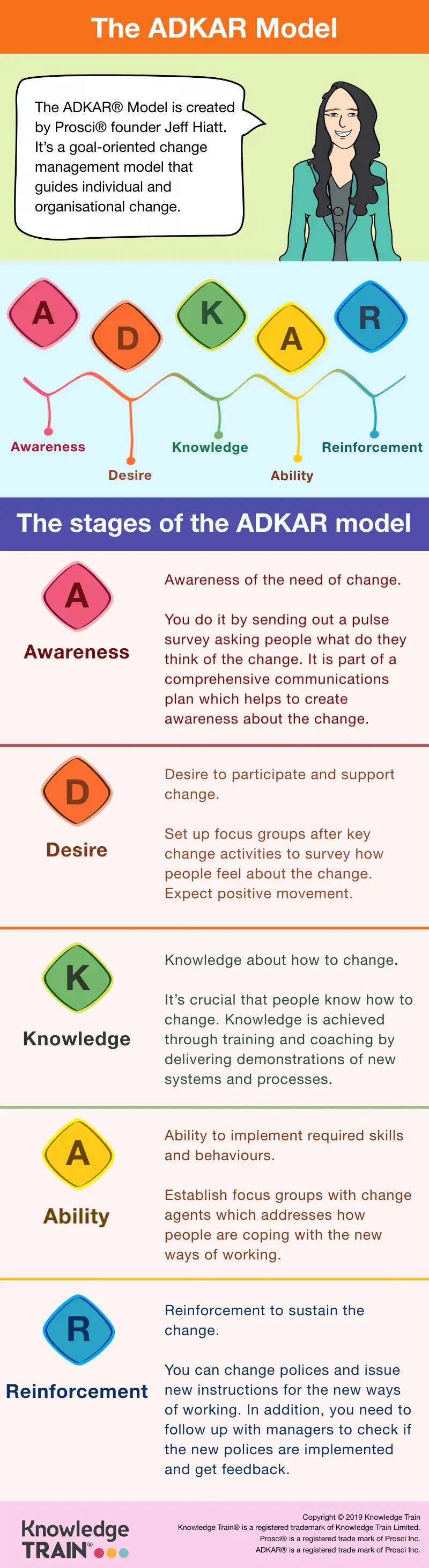
The ADKAR change management model is summarised in this colourful infographic.Select your self-paced training course topic.In the healthcare sector, SWOT identifies strengths like advanced medical technology and addresses weaknesses such as regulatory compliance challenges, with opportunities in telemedicine and threats from changing healthcare policies. Retail businesses often find strengths in brand presence while managing supply chain inefficiencies, with opportunities in e-commerce growth and threats from shifting consumer preferences. The tech industry leverages strengths in innovation capabilities while addressing cybersecurity risks, pursuing opportunities in emerging trends while managing threats from rapid technological changes.