How ADKAR can revolutionise your change management strategy

Key takeawaysPlanning and scheduling
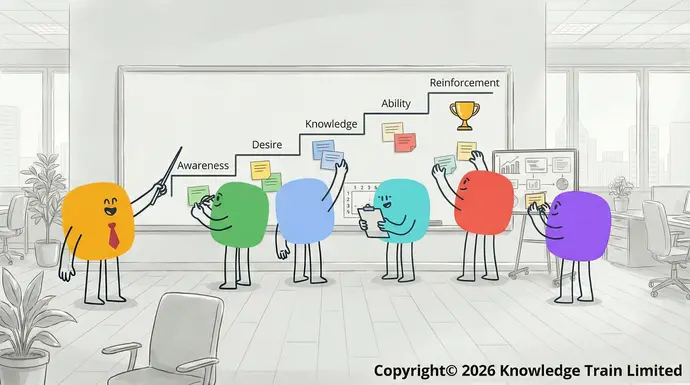
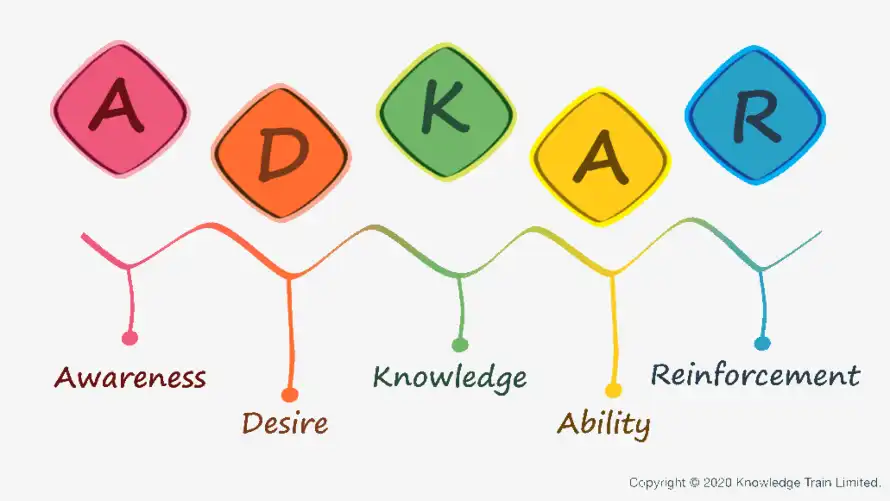
ADKAR makes change stick by guiding individuals through a clear sequence of milestones.Creating comprehensive project plans
- Build Project plansAwareness are a vital tool for ensuring that initiatives are completed on time and on budget. A well-designed plan should include: with clear, consistent communication and visible leadership support.Project objectives
- Grow Desire by addressing WIIFM, involving staff early, and recognising change champions.Scope of the work
- Provide Work Breakdown StructureKnowledge ( through tailored training, mentoring, and easy access to reference materials.WBS
- Convert )KnowledgeResource plan into Milestones and deliverables.AbilityUse a recognised with practice, coaching, and performance-based feedback.Agile
- Project managers must be skilled in making : Be flexible and willing to adapt strategies based on feedback.
Monitoring progress
Monitoring progress involves:
- Performance metrics: Track key indicators to assess change impact.
- Regular reviewsinformed decisions and solving complex problems:: Schedule periodic evaluations to identify areas for improvement.Gather and analyse relevant data before making decisions
- Feedback channelsConsider multiple alternatives and weigh their potential consequences: Maintain open lines for employee input and suggestions.Use structured problem-solving techniques (e.g., root cause analysis)
Through reinforcement, organisations can ensure that new behaviours become ingrained, leading to lasting successBalance short-term project needs with long-term strategic objectives.
- Microsoft Project
- Knowledge: Use Microsoft Project to plan, schedule, and monitor project tasks and resources: Customise training programmes to align with the skills required for the change.Jira
- Ability: Master Jira for : Develop targeted support systems that cater to varying levels of ability within the organisation.Agile project management
- Reinforcement and issue tracking: Design reinforcement strategies that are relevant and meaningful to the organisation’s context.Trello
By tailoring the model, organisations can address specific challenges and enhance the effectiveness of the change process.: Learn Trello for visual task management using boards and cards
Overcoming challengesAsana
Implementing the ADKAR model is not without challenges. Common obstacles include resistance to change, lack of engagement, and inadequate resources. Addressing these issues requires proactive strategies.: Get proficient in Asana for team collaboration and workflow management.
- ResistanceCollaboration and communication tools: Engage stakeholders early and involve them in decision-making processes. This involvement can reduce resistance and foster a sense of ownership.Equip yourself with tools that enhance communication and collaboration within your team and with stakeholders. Some of the most essential tools are:
- EngagementSlack: Maintain open lines of communication and provide regular updates. Transparency builds trust and keeps employees engaged.: Use Slack for real-time messaging, file sharing, and team collaboration
- ResourcesMicrosoft Teams: Ensure that adequate resources, such as time and funding, are allocated to support the change initiative.: Learn Microsoft Teams for video conferencing and document collaboration
A key component of implementing ADKAR is using the ADKAR Assessment tool. This diagnostic instrument helps identify which elements are acting as barriers to change for individuals or groups. By rating each element on a scale of 1 to 5, Zoomchange managers: Get familiar with Zoom for virtual meetings and webinars can pinpoint where additional focus is needed. For example, if Ability scores are low but Knowledge scores are high, this suggests the need for more practical application opportunities rather than additional training.Google Workspace
Psychologically, the structured approach of the ADKAR model reduces stress and enhances confidence among employees. By focusing on individual change, it ensures that employees are well-equipped to adopt new behaviours. This focus leads to sustained improvements and long-term success.: Become proficient in Google Workspace for cloud-based document creation and sharing.
Best practices for each ADKAR elementData analysis and reporting
Aligning goals with elementsCreating and interpreting project reports
Aligning organisational goals with the elements of the Gain the ability to create and interpret project reports. Here are some of the essential skills:ADKAR modelGenerating project status reports using is essential for a cohesive change process. Begin by clearly defining your organisational objectives. Ensure that each of the ADKAR elements – Awareness, Desire, Knowledge, Ability, and Reinforcement – supports these objectives.project management software
- AwarenessCreating visual representations of data (charts, graphs): Align awareness efforts with the strategic vision. Ensure that the need for change is communicated in a way that reflects organisational goals.Customising reports for different stakeholders
- DesireInterpreting Key Performance Indicators (KPIs) and metrics.: Motivate employees by linking personal benefits to broader organisational aims.Data-driven decision-making
- KnowledgeDevelop skills to make data-informed decisions to guide projects towards success. Here are some steps to achieve that:: Tailor training programs to impart skills that directly contribute to achieving strategic goals.Collect and analyse project performance data
- AbilityUse statistical tools to identify trends and patterns: Develop capabilities that are necessary for meeting long-term objectives.Employ predictive analytics for risk assessment
- ReinforcementPresent data-driven recommendations to stakeholders.: Design reinforcement strategies that celebrate achievements aligned with organisational success.Project managers can enhance their ability to streamline processes, improve communication, and make informed decisions based on accurate data analysis by developing proficiency in these technical skills.
This alignment ensures that change initiatives are not only implemented but also contribute meaningfully to the organisation’s mission.Developing your project management skills
Continuous improvementAs a project manager, you may wish to build or enhance your knowledge of this valuable role. There are several ways in which this can be achieved:
Continuous improvement is vital in refining the ADKAR process. It involves regularly assessing and enhancing each element to ensure effectiveness.Formal education and training
- Feedback loopsEnrol in advanced degrees or specialised : Establish mechanisms for collecting feedback at each element. Use surveys, interviews, and performance metrics to gather insights.courses in project management
- Regular reviews:: Conduct periodic evaluations to identify strengths and areas for improvement within the ADKAR elements.A master’s degree in project management
- Adaptive strategiesSpecialised courses or workshops on a particular methodology (such as : Be willing to modify strategies based on feedback and evolving organisational needs.Agile
The psychological benefits of this approach are significant. Continuous improvement reduces stress and enhances confidence by ensuring that the change process is dynamic and responsive. Employees feel valued and understood, fostering a positive environment for sustained change. This iterative process not only refines the ADKAR model but also reinforces a culture of adaptability and growth within the organisation. or
ConclusionPRINCE2
Recap of the ADKAR model)
The Upon online learning platforms like GainCert.ADKAR modelProfessional certifications offers a structured and effective framework for Certifications are industry-recognised credentials that validate your knowledge and skills in project management. Some examples of project manager certifications include:managing changeProject Management Professional within organisations. It comprises five pivotal elements: Awareness, Desire, Knowledge, Ability, and Reinforcement. Each element is crucial for guiding both leaders and employees through the change process. By systematically addressing these elements, organisations can ensure that all critical elements of change management are covered, minimising confusion and resistance. The model’s structured approach not only facilitates successful transitions but also fosters alignment with organisational goals. (PMP)
Encouragement to adopt ADKAR by the Project Management Institute (
Adopting the ADKAR model can significantly enhance an organisation’s PMIchange management) efforts. It provides a clear roadmap that supports both individual and organisational transformation. By following its principles, organisations can reduce stress and uncertainty while boosting employee engagement and commitment. The psychological benefits are substantial, as employees feel more informed, involved, and confident throughout the change process. Implementing ADKAR can lead to more sustainable and successful change initiatives, making it a valuable tool for any organisation striving for effective transformation.PRINCE2 Practitioner
FAQsCertified ScrumMaster (CSM).
What is the ADKAR model?On-the-job experience and mentoring
The ADKAR model is a goal-oriented change management framework focusing on individual-level change. It comprises five elements: Awareness, Desire, Knowledge, Ability, and Reinforcement. These elements guide individuals in adopting and sustaining change within an organisation.Hands-on experience is one of the most effective ways of building and honing your skills as a project manager. You can gain experience by:
Why is awareness important in the ADKAR model?Taking on challenging projects
Awareness is crucial because it helps individuals understand the necessity for change. It prepares them for the transition by clarifying the reasons behind it, thereby reducing resistance and confusion.Learning from others with experience
How can organisations measure the desire for change?Working on cross-functional projects
Organisations can assess desire through several methods, including surveys and interviews. Monitoring employee engagement levels also provides insights into their motivation to support the change.Seeking out a mentor to help you grow.
What tools are effective for knowledge transfer in the ADKAR model?Continuous learning and self-improvement
Effective tools for knowledge transfer include workshops, training sessions, and e-learning platforms. These resources help ensure that employees acquire the necessary information and skills to adapt to change.The field of project management is constantly evolving, so it’s important to keep up with the latest trends and best practices. To do this, you can:
How can an organisation reinforce changes effectively?Read books, blogs, and other project management publications
Reinforcement is achieved through regular feedback and incentives. Continuous support mechanisms ensure that new behaviours are sustained over time, reducing stress and enhancing confidence among employees.Attend conferences and networking events
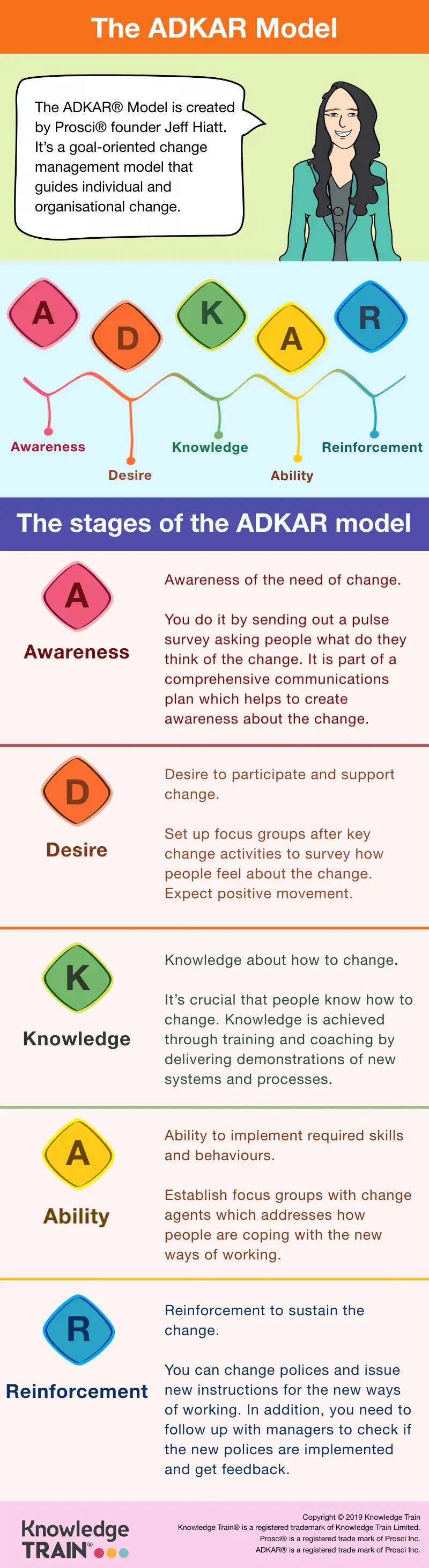
InfographicJoin professional associations such as
The ADKAR change management model is summarised in this colourful infographic.PMI