How ADKAR can revolutionise your change management strategy

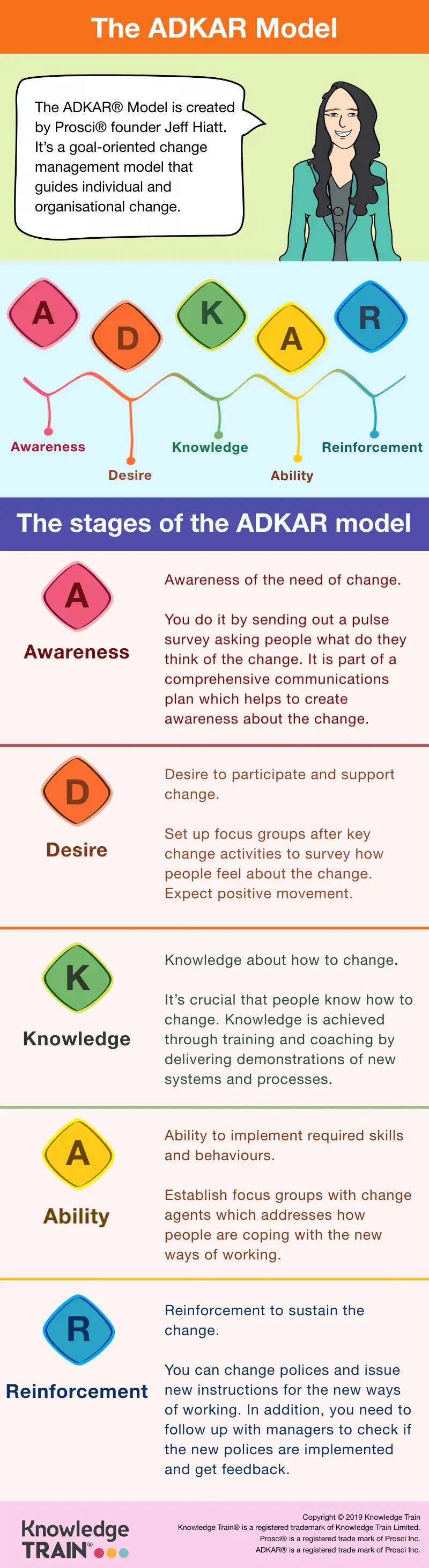
Key takeawaysFoundation
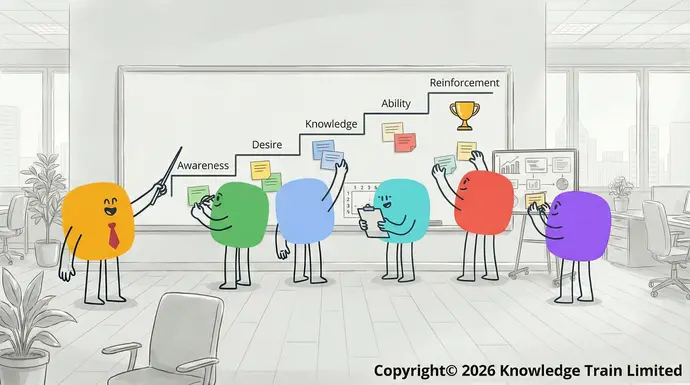
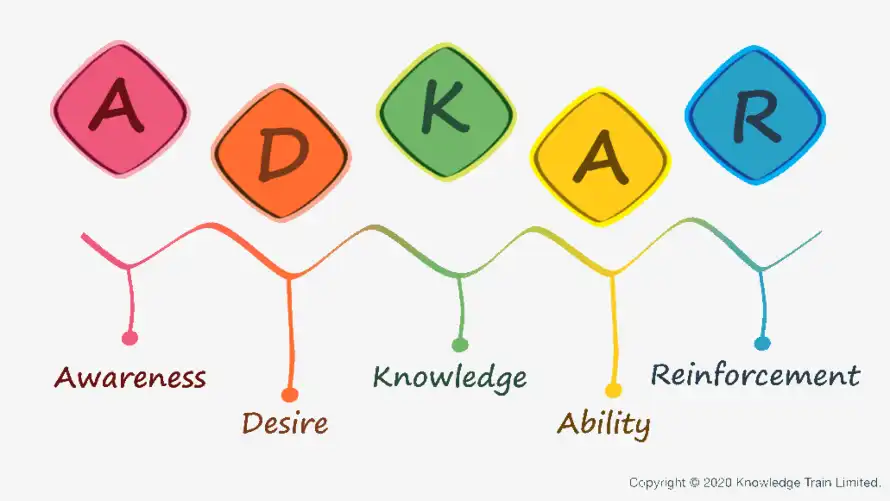
ADKAR makes change stick by guiding individuals through a clear sequence of milestones.Learn the fundamentals of the PRINCE2 method.
- Build Practitioner AwarenessIncludes Foundation & Practitioner combined option. with clear, consistent communication and visible leadership support.Association for Project Management (APM)
- Grow Project Fundamentals Qualification (PFQ) DesireStart your APM project management career. by addressing WIIFM, involving staff early, and recognising change champions.Project Management Qualification (PMQ)
- Provide Advance your APM project management expertise.KnowledgeProject Risk Single Certificate Level 1 through tailored training, mentoring, and easy access to reference materials.Enhance your project risk management skills.
- Convert AgilePMKnowledge® into – Agile Project ManagementAbilityFoundation with practice, coaching, and performance-based feedback.Learn the key principles of Agile Project Management.
- Use Practitioner ReinforcementIncludes Foundation & Practitioner combined option. to sustain new behaviours via celebration, metrics, regular reviews, and adaptive improvements.PRINCE2
- PMI-PBA : Provide comprehensive training programmes tailored to different learning styles.
- MentorshipSelf-paced course to prepare you for the exam (exam not included).: Pair employees with mentors to offer guidance and support.Business Analysis Learning Library (BALL)™
- Self-paced learningCHANGE MANAGEMENT: Use e-learning platforms for flexible, on-demand knowledge access.APMG Change Management
Tools for knowledge transferFoundation
Effective tools include:Learn the fundamentals of enterprise change management.
- Workshops and seminarsPractitioner : Offer hands-on experience and practical insights.Includes Foundation & Practitioner combined option.
- Knowledge repositoriesPROGRAMME MANAGEMENT: Maintain accessible databases for quick reference.MSP
- Peer learning®: Encourage knowledge sharing through peer networks.Foundation
These tools ensure that employees have the required knowledge to succeed.Learn the fundamentals of programme management.
Element 4: AbilityPractitioner
The Includes Foundation & Practitioner combined option.AbilityINFORMATION TECHNOLOGY (IT) element represents the actual execution of the change – turning knowledge into action. Whilst Knowledge is about understanding how to change, Ability is about demonstrating performance in real-world conditions. This element often requires time for practice, coaching, and feedback as people develop proficiency in new skills or behaviours. Success in this element is measured by actual performance rather than just completing training.ITIL
Developing ability®
Developing ability involves:Foundation
- Practical trainingLearn the fundamentals of ITIL service management.: Conduct real-world exercises to build confidence.Strategist DPI
- Feedback loops3-day ITIL Strategist: Direct, Plan & Improve (DPI) course.: Provide constructive feedback to refine skills.Specialist: DSV
- Supportive environment3-day ITIL Specialist: Drive Stakeholder Value (DSV) course.: Create a culture that encourages experimentation and learning.
Training and support systems
Training and support systems are vital for ability development:
- Ongoing training: Offer continuous learning opportunities.
Select your preferred qualification or workshop.
Monitoring progress involves:
- Performance metricsPRINCE2 COURSES: Track key indicators to assess change impact.Select your preferred training course below:
- Regular reviews : Schedule periodic evaluations to identify areas for improvement.APM COURSES
- Feedback channelsSelect your preferred training course below:: Maintain open lines for employee input and suggestions.
Through reinforcement, organisations can ensure that new behaviours become ingrained, leading to lasting successAGILE PROJECT MANAGEMENT COURSES
Implementing the ADKAR model in your organisation
Preparing for changeBUSINESS ANALYSIS QUALIFICATIONS
Implementing the ADKAR model requires careful preparation to ensure a smooth transition. Start by assessing the current organisational landscape. Identify areas where change is necessary and align them with strategic goals. It is critical to secure Select your preferred qualification.leadership support early on, as this endorsement sets the tone for the entire process.BCS BUSINESS ANALYSIS COURSES
Next, communicate the impending change effectively. Use clear and consistent messaging to build awareness and desire among employees. Establish a timeline with specific milestones to track progress. This structured approach helps to minimise confusion and ensures that all critical elements of change management are addressed.Select your preferred training course below:
Customising the model
Every organisation is unique, so customising the ADKAR model to fit specific needs is essential. Begin by analysing the organisational culture and existing processes. This understanding will guide how each element of the model is tailored.AGILE BUSINESS ANALYSIS COURSES
- AwarenessSelect your preferred training course below:: Adapt communication strategies to suit the organisation’s culture, ensuring messages resonate with employees.
- DesireCHANGE MANAGEMENT QUALIFICATIONS: Identify key motivators for different employee groups and leverage these to build desire.Select your preferred qualification.
- Knowledge : Customise training programmes to align with the skills required for the change.APMG CHANGE MANAGEMENT COURSES
- AbilitySelect your preferred training course below:: Develop targeted support systems that cater to varying levels of ability within the organisation.
- ReinforcementPROGRAMME MANAGEMENT QUALIFICATIONS: Design reinforcement strategies that are relevant and meaningful to the organisation’s context.Select your preferred qualification.
By tailoring the model, organisations can address specific challenges and enhance the effectiveness of the change process.
Overcoming challengesMSP COURSES
Implementing the ADKAR model is not without challenges. Common obstacles include resistance to change, lack of engagement, and inadequate resources. Addressing these issues requires proactive strategies.Select your preferred training course below:
- Resistance : Engage stakeholders early and involve them in decision-making processes. This involvement can reduce resistance and foster a sense of ownership.PMI COURSES
- Select your preferred training course below:: Maintain open lines of communication and provide regular updates. Transparency builds trust and keeps employees engaged.
- ResourcesPMI COURSES: Ensure that adequate resources, such as time and funding, are allocated to support the change initiative.Select your preferred training course below:
PRINCE2 COURSESSelect your preferred training course below:
APM COURSES
Select your preferred training course below: