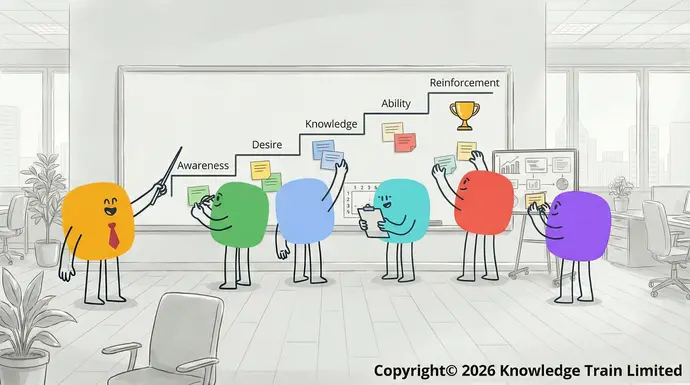
Introduction to the ADKAR modelInfographic
Understanding change managementIntroduction to the ADKAR model
In today’s constantly changing organisational landscape, Understanding change managementchange managementIn today’s constantly changing organisational landscape, is crucial. Organisations must adapt to remain competitive and relevant. change managementChange management is crucial. Organisations must adapt to remain competitive and relevant. provides a structured approach to transitioning individuals, teams, and whole organisations from a current state to a desired future state. The goal is to minimise resistance and maximise engagement. Here, the Change managementADKAR provides a structured approach to transitioning individuals, teams, and whole organisations from a current state to a desired future state. The goal is to minimise resistance and maximise engagement. Here, the model shines as a strategic framework. It offers a clear, step-by-step process that leaders can use to guide their teams through change effectively.ADKAR
Origins and purpose of ADKAR model shines as a strategic framework. It offers a clear, step-by-step process that leaders can use to guide their teams through change effectively.
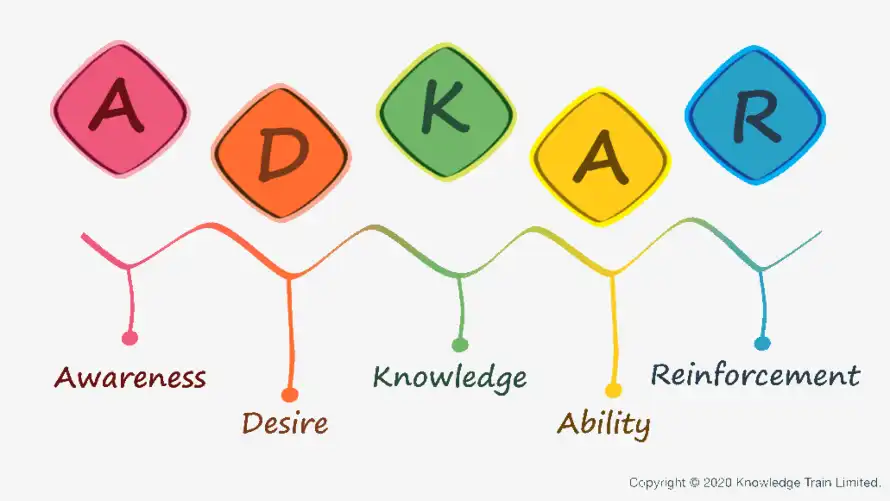
The ADKAR model was developed by Jeff Hiatt, founder of Prosci, through research conducted from 1994 to 2002. This research analysed the change patterns of over 700 organisations, leading to a practical, results-oriented approach to managing change at the individual level. Prosci’s research revealed that successful change occurs when Origins and purpose of ADKARorganisational change managementThe ADKAR model was developed by Jeff Hiatt, founder of Prosci, through research conducted from 1994 to 2002. This research analysed the change patterns of over 700 organisations, leading to a practical, results-oriented approach to managing change at the individual level. Prosci’s research revealed that successful change occurs when and individual change management intersect. It comprises five key elements: organisational change managementAwareness and individual change management intersect. It comprises five key elements: , Awareness
- MentorshipMentorship
: Be willing to modify strategies based on feedback and evolving organisational needs.Conclusion
Recap of the ADKAR modelThe psychological benefits of this approach are significant. Continuous improvement reduces stress and enhances confidence by ensuring that the change process is dynamic and responsive. Employees feel valued and understood, fostering a positive environment for sustained change. This iterative process not only refines the ADKAR model but also reinforces a culture of adaptability and growth within the organisation.
The ConclusionADKAR modelRecap of the ADKAR model offers a structured and effective framework for The managing changeADKAR model within organisations. It comprises five pivotal elements: Awareness, Desire, Knowledge, Ability, and Reinforcement. Each element is crucial for guiding both leaders and employees through the change process. By systematically addressing these elements, organisations can ensure that all critical elements of change management are covered, minimising confusion and resistance. The model’s structured approach not only facilitates successful transitions but also fosters alignment with organisational goals. offers a structured and effective framework for
Encouragement to adopt ADKARmanaging change
Adopting the ADKAR model can significantly enhance an organisation’s within organisations. It comprises five pivotal elements: Awareness, Desire, Knowledge, Ability, and Reinforcement. Each element is crucial for guiding both leaders and employees through the change process. By systematically addressing these elements, organisations can ensure that all critical elements of change management are covered, minimising confusion and resistance. The model’s structured approach not only facilitates successful transitions but also fosters alignment with organisational goals.change managementEncouragement to adopt ADKAR efforts. It provides a clear roadmap that supports both individual and organisational transformation. By following its principles, organisations can reduce stress and uncertainty while boosting employee engagement and commitment. The psychological benefits are substantial, as employees feel more informed, involved, and confident throughout the change process. Implementing ADKAR can lead to more sustainable and successful change initiatives, making it a valuable tool for any organisation striving for effective transformation.Adopting the ADKAR model can significantly enhance an organisation’s
FAQschange management
What is the ADKAR model? efforts. It provides a clear roadmap that supports both individual and organisational transformation. By following its principles, organisations can reduce stress and uncertainty while boosting employee engagement and commitment. The psychological benefits are substantial, as employees feel more informed, involved, and confident throughout the change process. Implementing ADKAR can lead to more sustainable and successful change initiatives, making it a valuable tool for any organisation striving for effective transformation.
The ADKAR model is a goal-oriented change management framework focusing on individual-level change. It comprises five elements: Awareness, Desire, Knowledge, Ability, and Reinforcement. These elements guide individuals in adopting and sustaining change within an organisation.FAQs
Why is awareness important in the ADKAR model?What is the ADKAR model?
Awareness is crucial because it helps individuals understand the necessity for change. It prepares them for the transition by clarifying the reasons behind it, thereby reducing resistance and confusion.The ADKAR model is a goal-oriented change management framework focusing on individual-level change. It comprises five elements: Awareness, Desire, Knowledge, Ability, and Reinforcement. These elements guide individuals in adopting and sustaining change within an organisation.
How can organisations measure the desire for change?Why is awareness important in the ADKAR model?
Organisations can assess desire through several methods, including surveys and interviews. Monitoring employee engagement levels also provides insights into their motivation to support the change.Awareness is crucial because it helps individuals understand the necessity for change. It prepares them for the transition by clarifying the reasons behind it, thereby reducing resistance and confusion.
What tools are effective for knowledge transfer in the ADKAR model?How can organisations measure the desire for change?
Effective tools for knowledge transfer include workshops, training sessions, and e-learning platforms. These resources help ensure that employees acquire the necessary information and skills to adapt to change.Organisations can assess desire through several methods, including surveys and interviews. Monitoring employee engagement levels also provides insights into their motivation to support the change.
How can an organisation reinforce changes effectively?What tools are effective for knowledge transfer in the ADKAR model?
Reinforcement is achieved through regular feedback and incentives. Continuous support mechanisms ensure that new behaviours are sustained over time, reducing stress and enhancing confidence among employees.Effective tools for knowledge transfer include workshops, training sessions, and e-learning platforms. These resources help ensure that employees acquire the necessary information and skills to adapt to change.
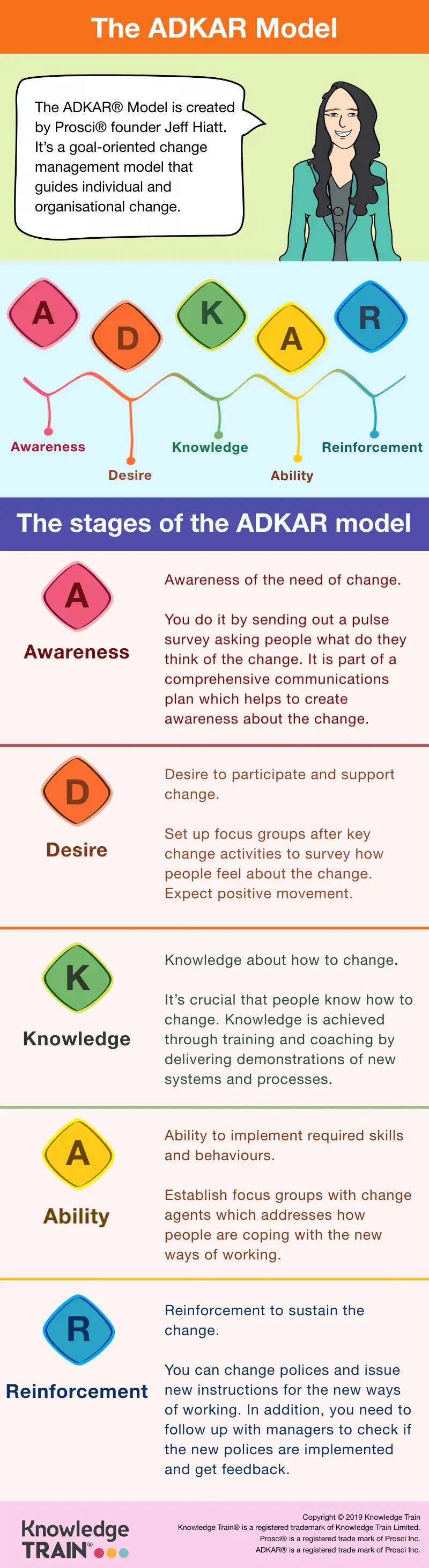
InfographicHow can an organisation reinforce changes effectively?
The ADKAR change management model is summarised in this colourful infographic.Reinforcement is achieved through regular feedback and incentives. Continuous support mechanisms ensure that new behaviours are sustained over time, reducing stress and enhancing confidence among employees.